Home > Stories by TimeLine Auctions
Stories by TimeLine Auctions
A Short History: The Etruscans
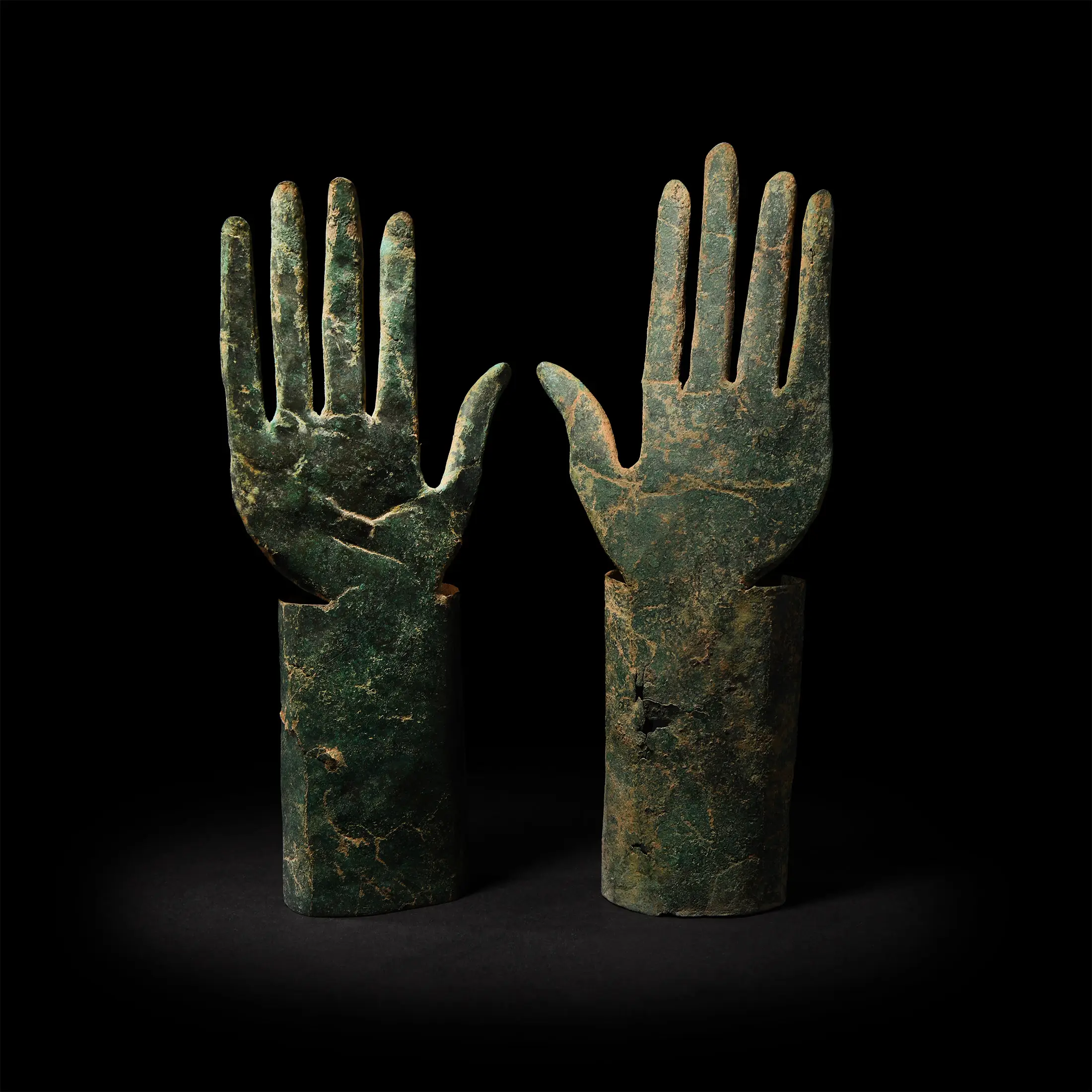
The Tyrrhenian Sea still carries their name. So does Tuscany. Yet when we speak of ancient Italy, Rome dominates the conversation, as if the peninsula had been waiting, empty and quiet, for Romulus to draw his furrow in the earth. The truth is rather different. For centuries before Rome became anything more than a cluster of hilltop villages, the Etruscans commanded a civilization that stretched across much of what we now call Italy. At their height, they controlled more territory than Rome would hold until the 3rd century BCE: a domain comparable in ambition, if not in scale, to what the Greeks achieved across their scattered city-states. They built cities, forged trade networks across the Mediterranean, and developed a culture sophisticated enough to awe their neighbours. The Greeks called them Tyrrhenoi. The Romans knew them as Tusci or Etrusci. They called themselves Rasenna.
When Greek poet Hesiod first mentioned them in the 8th century BCE, he placed them "very far off in a recess of sacred islands." A century later, the Homeric Hymn to Dionysus described them as pirates "moving swiftly over the dark wine-sea." These early glimpses tell us that the Etruscans were, from the beginning, a maritime people, known and perhaps feared across the waters that would eventually bear their name.
The Question Nobody Could Answer
Where did they come from? The ancient world argued about this endlessly, and the debate never reached a satisfying conclusion. Herodotus, Thucydides, and the geographer Strabo all repeated versions of a migration story: a prince named Tyrsenos had led his people from Lydia in Asia Minor, sailing west to settle in Italy. The Pelasgians, those mysterious wanderers of Greek legend, featured in several accounts. One version placed them on the island of Lemnos before they joined the Lydians in their westward voyage.
Dionysius of Halicarnassus, writing in the 1st century BCE, rejected these theories outright. He pointed out that Xanthus of Lydia, the greatest historian of his own homeland in the 5th century BCE, knew nothing of any supposed Lydian migration to Italy. Dionysius concluded that the Etruscans were autochthonous, native to the land they occupied: "Those probably come nearest to the truth who declare that the nation migrated from nowhere else, but was native to the country."
The Romans, for their part, connected the Etruscans to their Alpine neighbours, the Raeti. Livy claimed the mountain tribe descended from Etruscans who had been "rendered so savage by the very nature of the country, as to retain nothing of their ancient character, save the sound of their speech, and even that is corrupted." Pliny the Elder agreed, noting that the Raeti were "believed to be a people of Tuscan origin, driven out by the Gauls."
Modern linguistics offers partial support for these connections. The Etruscan language was not Indo-European, making it utterly unlike the Latin, Umbrian, and Oscan spoken by their Italian neighbours. Linguists now group Etruscan with Raetic and the mysterious Lemnian language (recorded on a 6th-century BCE stele from the island of Lemnos) into something called the Tyrsenian family. Whether this sheds light on the old Pelasgian hypothesis remains uncertain.
What archaeology tells us is less romantic but perhaps more reliable. The Bronze Age cultures of central Italy, particularly the Apennine and later Proto-Villanovan peoples, show continuous development into what we recognize as Etruscan civilization. By 900 BCE, the regions of Tuscany, Lazio, and Umbria had emerged as distinctly Etruscan. There may have been no single migration, no fleet of ships from the east. The Etruscans may simply have been there all along, gradually becoming themselves.
Twelve Cities, One People
The Etruscans never formed a single kingdom. Their political unit was the methlum, the city-state, and each one guarded its independence fiercely. The original league of twelve cities, which they called mech Rasnal, included Tarchuna (Tarquinia), Veis (Veii), Gaisra (Caere), Velch (Vulci), Clevsin (Clusium), Velzna (Volsinii), and several others, depending on the period. Representatives met once a year at the Shrine of Voltumna, a sacred site whose exact location remains unknown. They elected a magistrate, the zilath mechl Rasnal, though his authority appears to have been largely ceremonial. The League could not compel its members to act in concert, which would prove a fatal weakness in the centuries to come.
In times of existential threat, however, the League could appoint a mastarna, a dictator with enhanced powers to command a combined military force. The Romans would later adopt this practice, almost certainly learning it from their Etruscan neighbours.
The early city-states were monarchies, ruled by kings who bore the title lauchme (borrowed into Latin as lucumo). These kings held both judicial and military authority. Over time, many cities abolished their monarchies and replaced the king with an annually elected chief magistrate, the zilath. The position was not hereditary, though a capable individual might be elected repeatedly. Various lesser magistrates assisted in governing: the maru handled religious or civic duties; the macstrev may have been something like a Roman magister; the marunch oversaw public works. The details of these offices remain frustratingly unclear, but the bureaucratic complexity is evident.
Above the ordinary citizens stood the aristocratic clans, tracing their lineages to the earliest times. These powerful families controlled the city assemblies and filled the magistracies. Below them, common people worked as farmers, craftsmen, merchants, and sailors. At the bottom stood the slaves, without freedom or rights.
Women at the Banquet
The Greeks and Romans found Etruscan women scandalous. They attended banquets alongside their husbands. They kept their family names after marriage, a practice recorded on countless frescoes and tomb inscriptions. Patrician women dressed fashionably, wore elaborate jewellery, and displayed their wealth openly. While they could not hold public office, Etruscan women apparently possessed legal status and could own property in their own names.
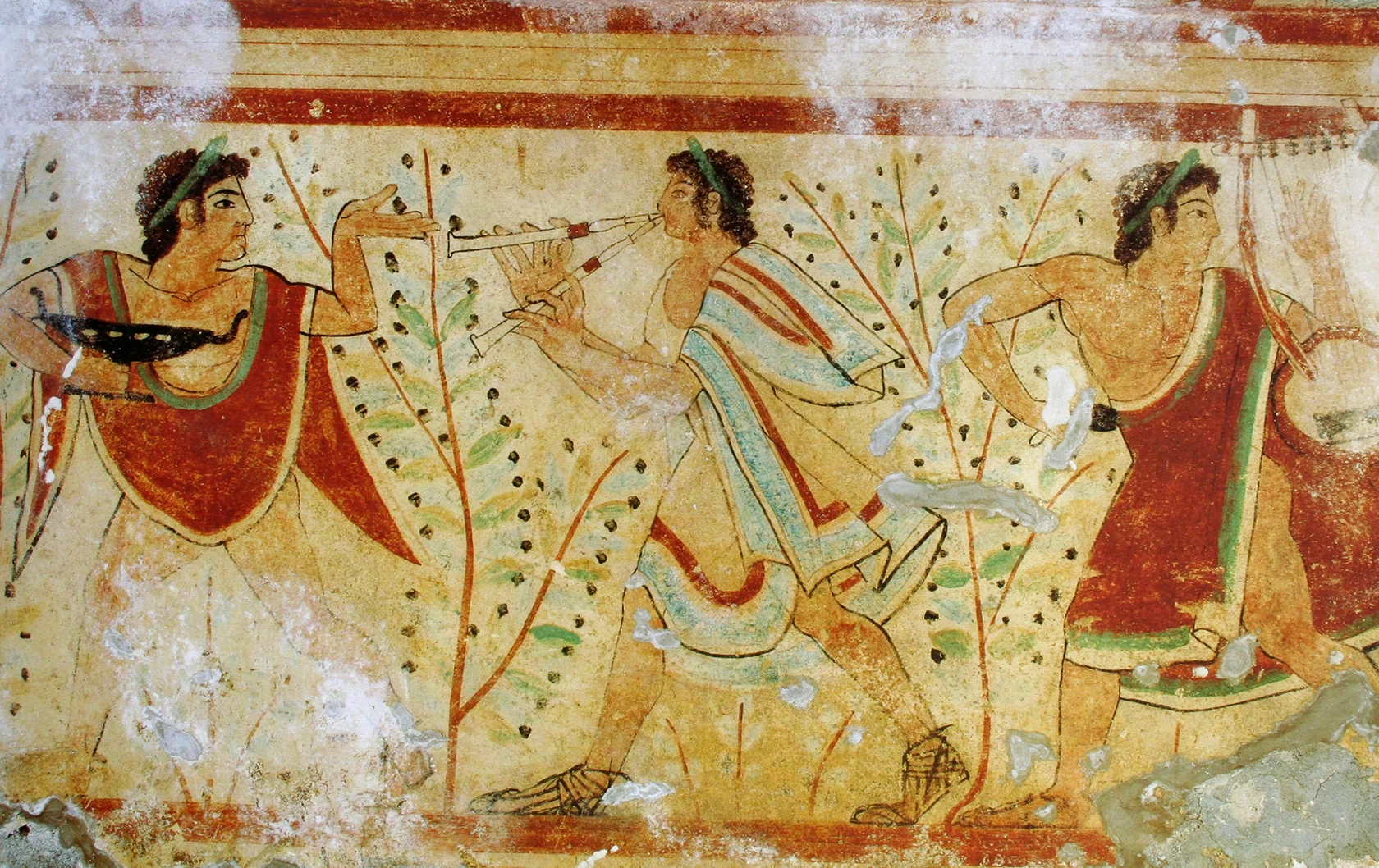
The tomb paintings that survive from cities like Tarchuna show couples reclining together at feasts, something unthinkable in contemporary Athens, where respectable women remained confined to the domestic quarters. To Greek observers, this could only mean one thing: Etruscan women were immoral. The charge says more about Greek attitudes than Etruscan ones.
Gods from the Earth
The Etruscans believed that a prophet named Tarchies (Latinized as Tages) had sprung from the earth itself to teach them divination. This founding myth positioned their religious practices as literally autochthonous, born from the soil of their homeland. Tages instructed the people in the Etrusca Disciplina, the complex system of rules governing the interpretation of omens, the foundation of cities and shrines, the measurement of space, and the division of time. A nymph called Vecuia contributed additional regulations. The priestly college that interpreted these rules held enormous prestige in each city; in Tarchuna alone, there were sixty priests.
Their gods largely mirrored the Greek pantheon. Tinia ruled the skies like Zeus. Uni, his wife, corresponded to Hera. Menrva, their daughter, bore the attributes of Athena. Apulu governed sun and health; Turan was goddess of love; Fufluns presided over wine and happiness. Nethuns began as an Umbrian water deity before evolving into something closer to Poseidon, complete with trident and dolphins. The Romans would inherit many of these gods, though they remembered their Etruscan versions less often than their Greek ones.
Some deities were uniquely Etruscan: Culsans, a two-faced god of doorways (later echoed in Roman Janus); Selvans, god of woodlands and sacred boundaries; Phersu, the masked deity who may have given his name to the Latin persona.
The Alphabet Crosses the Water
Greek colonists began arriving in southern Italy during the 8th century BCE, founding cities like Cumae and Pithekoussai. They brought their gods, their pottery, their architecture, and their alphabet. The Etruscans, already connected to Mediterranean trade networks, engaged with these newcomers enthusiastically. By the late 8th century, they had adapted the Euboean Greek script to write their own language.
This marks the transition from what archaeologists call the Villanovan period to the Orientalizing period, when Etruscan culture absorbed Greek and Near Eastern influences at an accelerating pace. Wealth poured in. Tombs grew increasingly elaborate. The Regolini-Galassi tomb at Caere, dating to the early 7th century, contained spectacular gold objects buried with a leading family. An inscription on a Phoenician bowl names its owner as Larthia Velthurus. We do not know if she was a queen, or the wife of a zilath, or simply a member of an exceptionally powerful clan. Her grave goods suggest the distinction may not have mattered much.
The Latins, meanwhile, learned the alphabet from the Etruscans and adapted it in turn. The script you are reading now descends from that transmission.
Kings in Rome
By the late 7th century BCE, Etruscan influence over Latium had become overwhelming. Rome itself, still a minor settlement, fell under the rule of Etruscan kings. Following the death of King Ancus Marcius in 616 BCE, a nobleman from Tarchuna named Lucius Tarquinius Priscus took the throne. The Roman tradition claims that Marcius had appointed him guardian of his underage sons, but Priscus used his position to secure popular acclaim for himself.
He would be assassinated in 578 in a plot orchestrated by the sons of Ancus Marcius. But the Etruscan dynasty survived. The late king's wife, Tanaquil, immediately ordered the palace sealed and announced that the king was merely wounded, not dead. She proclaimed that his son-in-law, Servius Tullius, would serve as regent. By the time the truth emerged, Tullius had consolidated power.
The historical evidence suggests the story may be more complicated. From the city of Velch, we know of two brothers, Caile and Avile Vipina, who commanded an Etruscan army in conflicts that included Rome. Ceramic fragments dated to the mid-6th century bear the inscription "Avile Vipina dedicated me." Their companion Mastarna was identified by later Roman writers, including the Emperor Claudius, with Servius Tullius himself. If this identification is correct, the traditional narrative of peaceful succession dissolves into something messier: warfare among Etruscan factions, with Rome as one of the prizes.
The dynasty ended in 509 BCE when Lucius Tarquinius Superbus was overthrown in a popular uprising. The Roman Republic was born. Tarquinius did not accept his exile quietly. He sought help from Tarchuna and Veis, then from Lars Porsenna of Clevsin. Porsenna laid siege to Rome but failed to take it; his subsequent attempt to save face by attacking the Latin city of Aricia ended in disaster when Greek forces from Cumae destroyed his army. Tarquinius eventually found refuge at the court of Aristodemus in Cumae, the very city whose soldiers had defeated his Etruscan allies. He died there, far from Rome.
The Sea Turns Against Them
The Greeks and Phoenicians were not merely trading partners. They were rivals. When Phocaean colonists founded Massalia (modern Marseille) around 600 BCE, they disrupted trade routes the Phoenicians had long controlled. The Etruscans allied with Carthage, the rising Phoenician power, to push back against Greek expansion. In 540, a combined Etruscan-Carthaginian fleet defeated the Phocaeans at Alalia off the coast of Corsica.
But the dynamics shifted in the 5th century. The Campanian Etruscans, led by Capua, dreamed of breaking Greek power in southern Italy once and for all. In 474, their fleet sailed against Cumae. Hieron I of Syracuse answered the Cumaean call for help. Off the shores of Cumae, the Greek fleet destroyed the Etruscan armada.
Hieron dedicated a captured bronze helmet at Olympia, inscribed to commemorate his victory. If you were to examine such a helmet today, you might note how the Etruscans worked their bronze: strong, practical, and often decorated with remarkable skill.
The defeat shattered Campanian Etruscan power. Capua never fully recovered. Within decades, the Italic Samnites had reduced it to a tributary.
Rome Strikes Back
Veis was the closest Etruscan city to Rome, and tension between them had simmered since the fall of the Tarquin monarchy. In 477 BCE, war finally erupted. The Veientines won the first battles, but they could not take Rome itself. The war dragged on for years, exhausting both sides.
Then came a long pause. Rome fought other enemies; Veis consolidated its position. But in the early 4th century, Rome returned under the dictator Marcus Furius Camillus. After a prolonged siege, his soldiers tunnelled beneath the city walls, infiltrated the sewage system, and entered from within. The slaughter that followed was total. Every male was killed. Every woman and child was sold into slavery.
The Etruscan League did nothing. Some cities, like Gaisra, even maintained friendly relations with Rome. Perhaps they viewed the arrogant Veientines, who still clung to monarchy when others had moved to elected magistrates, as having received their due punishment. If so, they misjudged badly.
The Gauls and After
In the 390s BCE, a greater threat emerged. The Gauls swept down from the north, overrunning the Etruscan cities of the Po Valley. Felsina fell to the Boii tribe and became Bononia. Then the Senones, led by the chieftain Brennus, pushed deeper into Italy. They sacked Rome itself around 390.
The Etruscans, led by Tarchuna, allied with Rome's enemies. Gaisra proved an exception, providing shelter to Roman refugees. When the Romans rallied and expelled the Gauls, they remembered who had helped them and who had not.
The wars that followed, spanning most of the 4th and 3rd centuries, were catastrophic for the Etruscans. They allied with Samnites, Gauls, Umbrians, anyone who might check Roman expansion. They fought at Sentinum in 295. They fought at Lake Vadimo twice, in 310 and 283. Each time, they lost.
By 280, the league was broken. Individual cities signed separate treaties with Rome. When Pyrrhus of Epirus invaded Italy that year, hoping that Rome's subjects would rise against their masters, he found the Etruscans firmly in the Roman camp. There was nowhere else for them to go.
Becoming Roman
The process of assimilation was gradual but inexorable. Rome annexed Etruria during the First Punic War. The last independent Etruscan settlement, the Corsican port of Alalia, passed to Roman control as part of the same conflict.
Etruscan institutions persisted for a time. We have records of a zilath in Velch named Larth Tute who held the office eight times during the 2nd century BCE. The language continued to be spoken, though Latin steadily displaced it. During the Social War of 91 to 87 BCE, the Etruscans sided with Rome against the Italian rebels and were rewarded with full Roman citizenship.
The Emperor Claudius, whose wife Urgulanilla was of Etruscan descent, wrote a twenty-volume study of the Etruscans called the Tyrrhenika. It has not survived. Neither has the language it described. Scholars believe Etruscan became extinct by the end of the 1st century CE.
What Remains
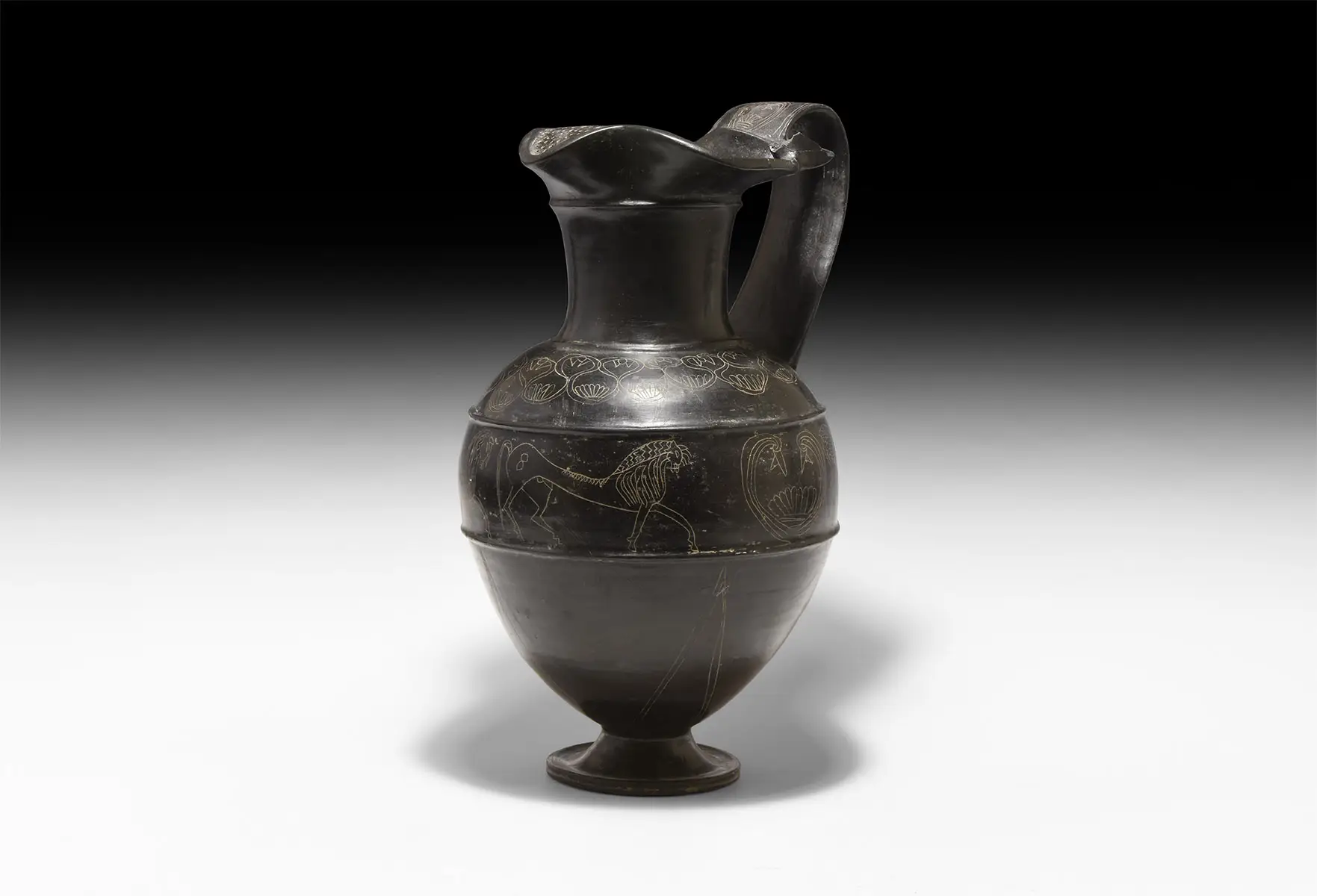
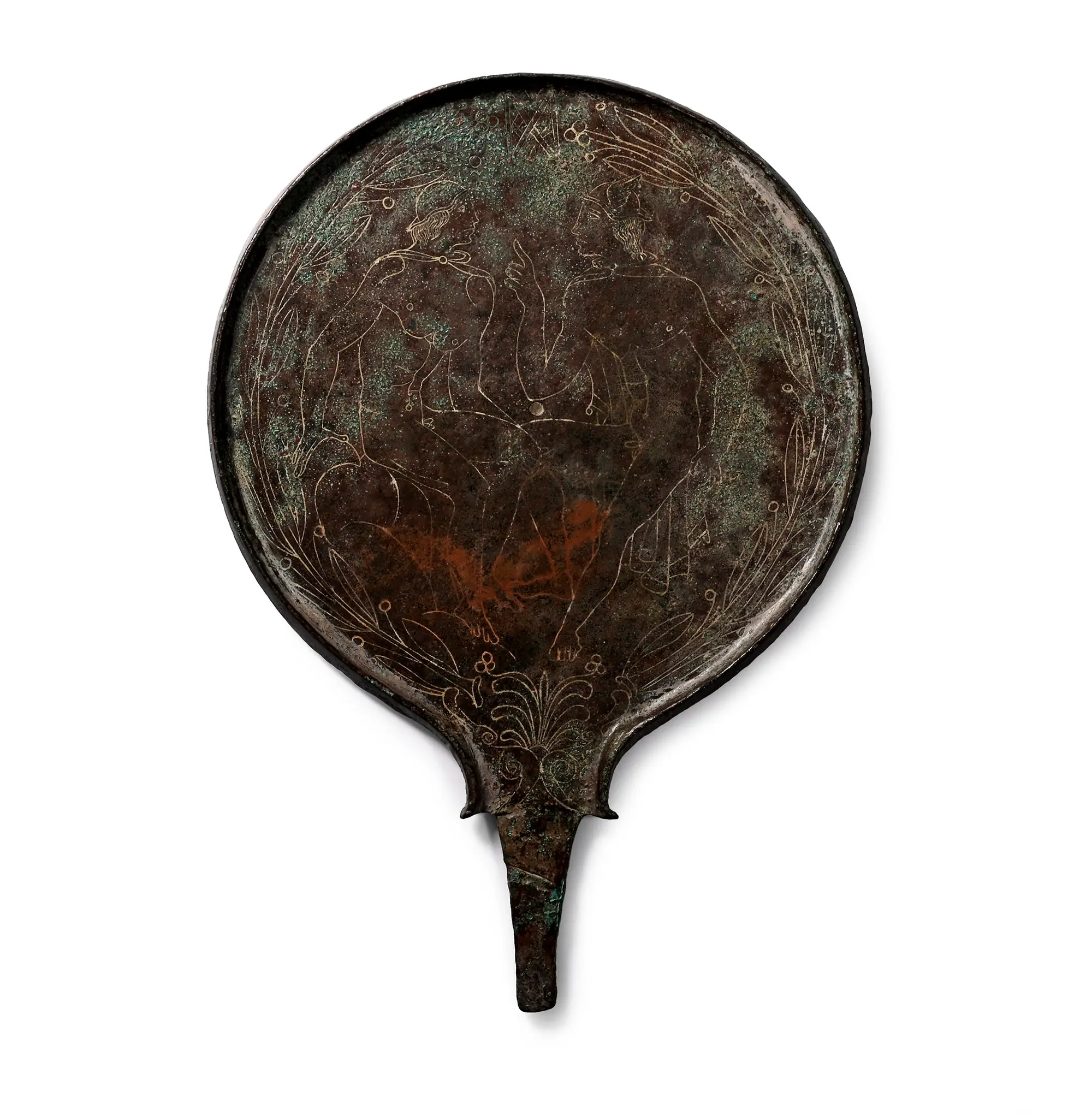
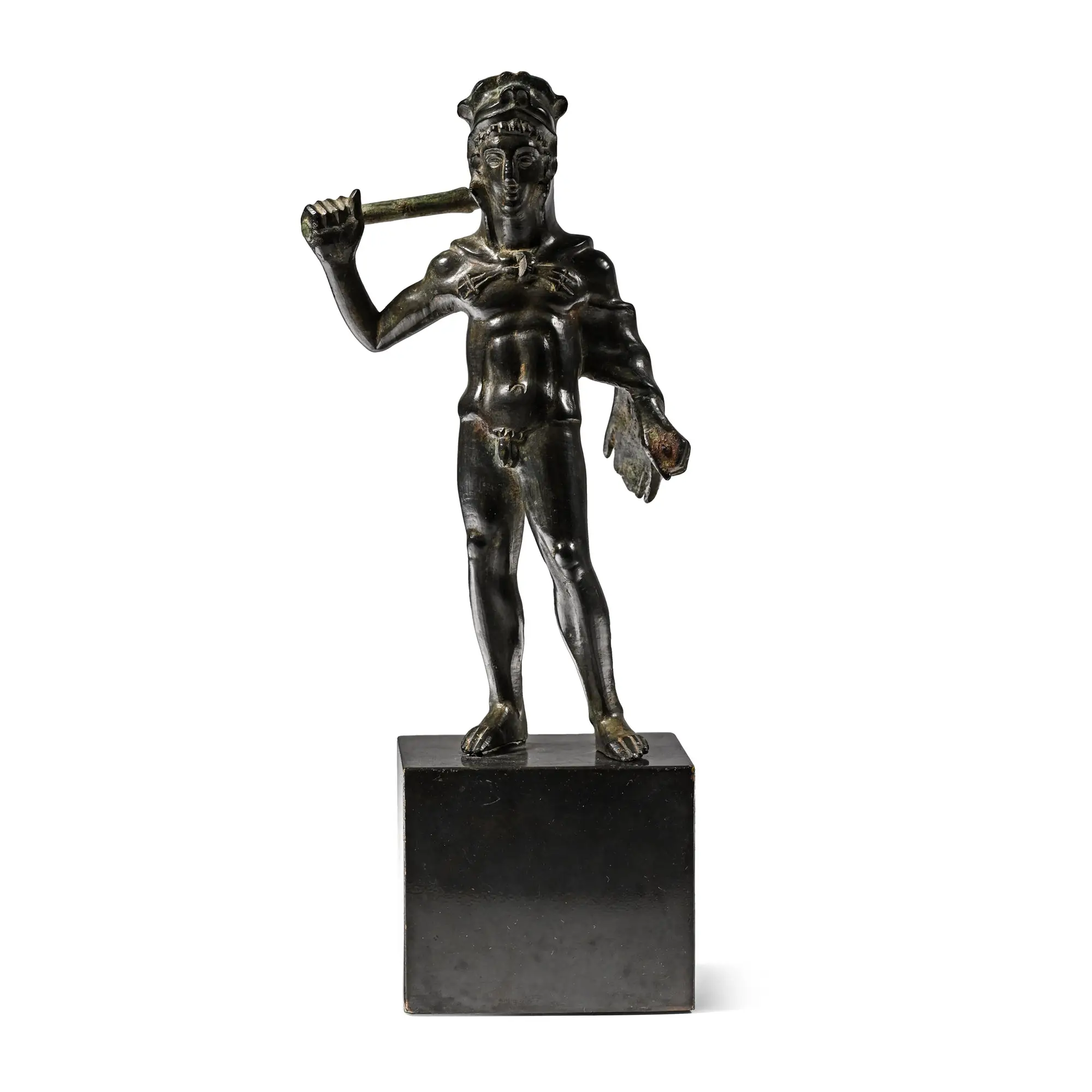
When we handle Etruscan objects today (whether bronze mirrors, painted ceramics, or votive figures) we hold evidence of a civilization that shaped Rome profoundly but remains only partially understood. Their alphabet became the foundation for Latin script. Their religious practices influenced Roman ritual for centuries. Their engineering and urban planning left marks on cities that would outlast them by millennia.
The Etruscans produced exquisite metalwork, vivid tomb paintings, and terracotta sculptures of remarkable sophistication. These pieces survive because they were made to last, crafted with materials and techniques designed to endure. They were also, often, made to be buried with the dead.
For collectors drawn to the ancient world, Etruscan objects offer something that Greek and Roman pieces cannot: a window into a culture that was both familiar and fundamentally different, influential yet mysterious, successful yet ultimately absorbed into something larger. Browse our current catalogue to explore available pieces from this remarkable civilization.
The Tyrrhenian Sea still carries their name. A few words survive in Latin, and in the languages that descended from it. Their gods became Roman gods. Their alphabet became ours. The Etruscans themselves vanished, but they had already given away everything they knew.
TimeLine Auctions, 9th May 2026