Home > Stories by TimeLine Auctions
Stories by TimeLine Auctions
An 11,000-Year-Old Girl, Identified by DNA, Is Northern Britain's Oldest Known Human
The oldest known human remains from northern Britain belong to a girl who died between the ages of two and a half and three and a half, around 11,000 years ago, according to a study of ancient DNA from a cave in Cumbria. The find sets a securely sexed individual, her age at death fixed to within a year, at the very start of the region's human record, in the centuries after the last Ice Age.
The bones came from Heaning Wood Bone Cave, near Great Urswick on the Furness peninsula, where the local archaeologist Martin Stables has excavated since 2016. An international team led by Dr Rick Peterson of the University of Central Lancashire recovered enough ancient DNA, the genetic material that can survive in old bone and teeth, to confirm the child was female and to settle her age at death. "It is the first time we have been able to be so specific about the age of a child whose remains are so old and be certain that they are from a female," Peterson said. The work is published in the Proceedings of the Prehistoric Society, in a peer-reviewed paper whose first author is Keziah Warburton.
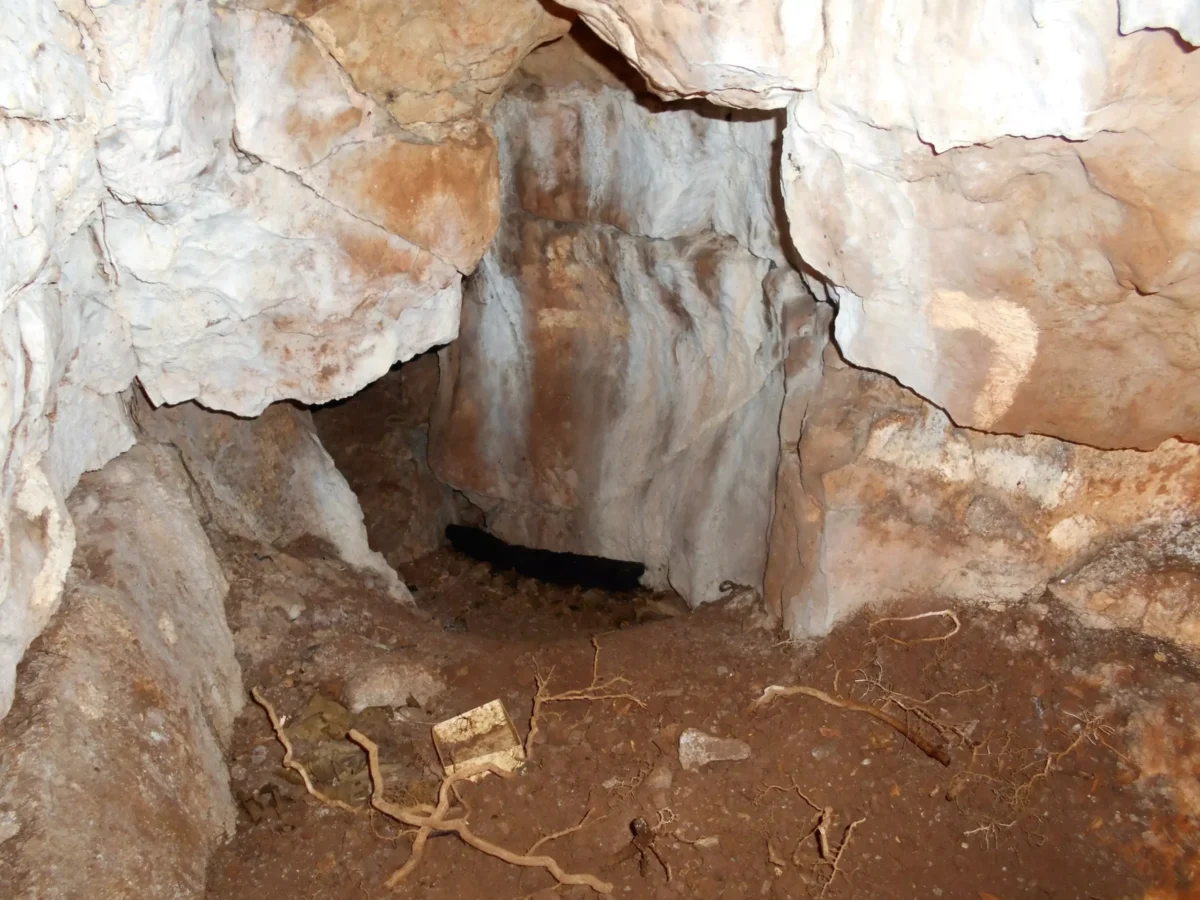 Inside Heaning Wood Bone Cave, the small Cumbrian limestone cave that held burials across the Mesolithic, Neolithic, and Bronze Age. Photo: University of Central Lancashire.
Radiocarbon dating placed the burial at roughly 11,000 years ago, in the Early Mesolithic. The perforated deer tooth and shell beads found with her returned the same age, which the team takes as a sign she was buried on purpose rather than washed into the cave by chance. Peterson said dating the ornaments "to the same time frame as the remains provides more evidence that this was a deliberate burial and opens up conversations about the significance of cave burials during this period." The team gave the child a local name, the "Ossick Lass," dialect for "Urswick girl."
Heaning Wood was used for burial more than once. The cave holds the remains of at least eight people, the team reports, across three widely separated phases: the Early Mesolithic around 11,000 years ago, the Early Neolithic about 5,500 years ago, and the Early Bronze Age some 4,000 years ago. People came back to the same small cave to bury their dead over a span of roughly seven thousand years.
By the paper's account, the remains are the oldest known from northern Britain and among the three oldest Mesolithic burials so far identified in north-west Europe. For most British remains of this age, biological sex is estimated from fragmentary bone, if it can be read at all; at Heaning Wood it came directly from the child's surviving DNA.
TimeLine Auctions, 1st July 2026