Home > Stories by TimeLine Auctions
Stories by TimeLine Auctions
Ancient Gods: The Gods & Heroes of Ancient Greece
The Smoke Rising from the Altar
A man stands before a marble altar in the grey light before dawn, his hands wet with barley grains and water. Behind him, other worshippers wait in silence. The sacrifice today is a young goat, its throat to be cut so that the blood runs down the stone grooves carved for exactly this purpose. The smell of burning thigh-bones wrapped in fat will soon rise into the air, carrying prayers upward to the gods on Mount Olympus. This is not metaphor. The Greeks believed the gods literally consumed the smoke of sacrifices, that the sweet savour of roasting meat pleased them as it pleased mortals. When the sacrifice was complete, the worshippers would feast on the remaining flesh, sharing a meal with the immortals who had taken their portion first.
This scene repeated itself thousands of times daily across the Greek world, from the great temples of Athens and Delphi to humble household altars in fishing villages along the Aegean coast. Religion in ancient Greece was not a private matter of personal belief. It was a public obligation, woven into the fabric of civic life, family identity, and the rhythms of the agricultural year. When the Greeks went to war, they sacrificed first. When they founded a colony, they brought sacred fire from the mother city. When a child was born, when a marriage was celebrated, when the harvest came in or failed to come, the gods were present and demanded attention.
What makes Greek religion remarkable, and what separates it fundamentally from the traditions of Egypt or Mesopotamia, is the character of its gods. The Egyptians developed a religious system of staggering complexity over three thousand years, with hundreds of deities representing cosmic forces, natural phenomena, and abstract principles. The Greeks did something different. They imagined their gods as essentially human. The Olympians quarrelled, deceived one another, fell in love with mortals, felt jealousy and anger and wounded pride. They were not cosmic abstractions but personalities, as vivid and flawed as any character in a novel. This anthropomorphism (giving human form and character to the divine) was not primitive confusion but a deliberate theological choice, one that shaped Western civilization's conception of divinity for millennia.
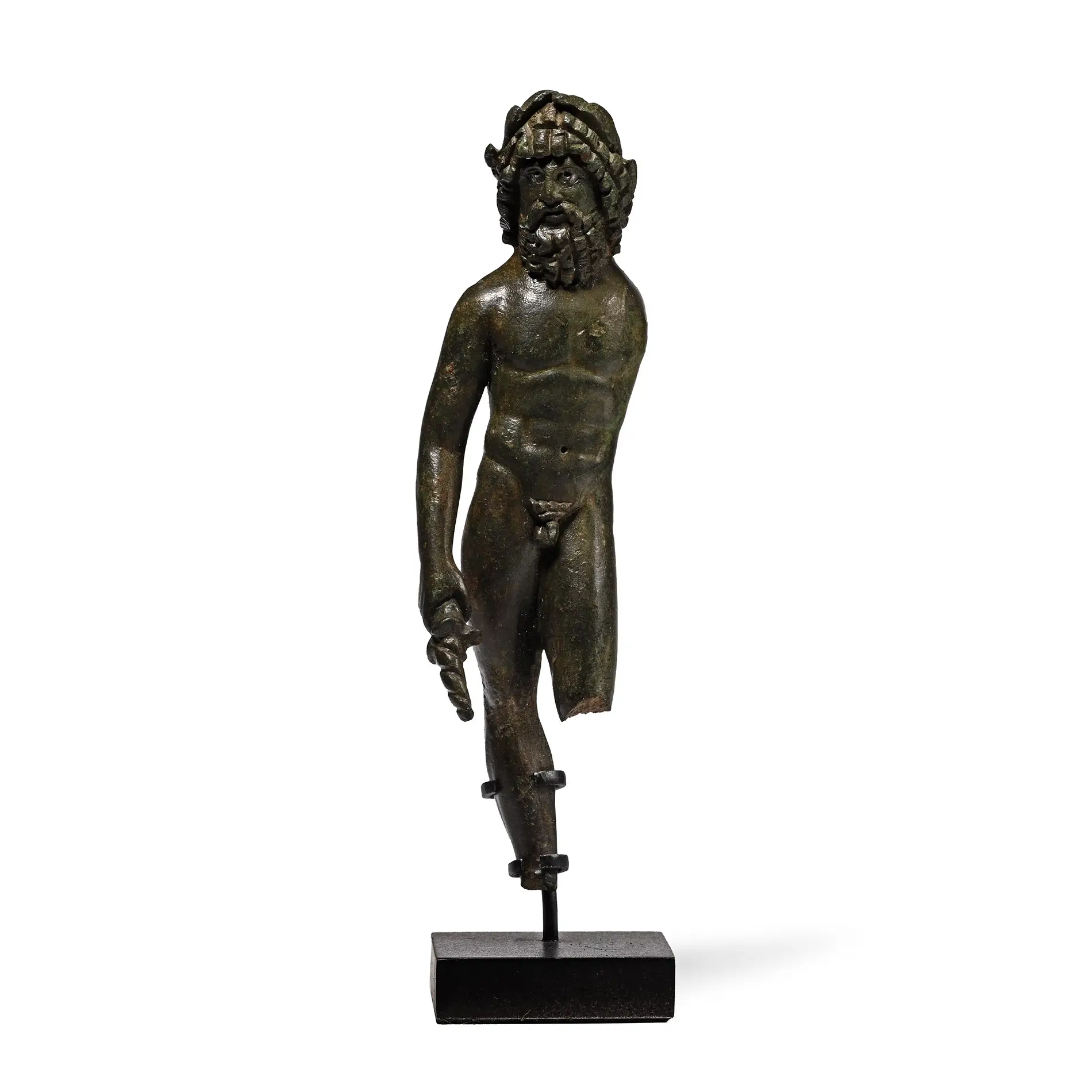
The objects that survive from ancient Greek religion carry this human quality. When we hold a bronze figurine of Zeus in our cataloguing room at TimeLine, we are not handling an abstraction but a representation of a personality: the cloud-gatherer, the thunderer, the father of gods and men who could be wise and just but also petty and cruel. The Greeks knew their gods were flawed. They worshipped them anyway, because the gods were powerful, and because ignoring them brought consequences. This pragmatic piety, so different from the mystical devotion of Egypt, produced religious objects of remarkable beauty and directness. A Greek bronze speaks to us across the centuries not as a symbol of incomprehensible cosmic forces but as an image of a god we can almost understand.
Before the Olympians: The Birth of the Gods
The Greeks did not believe that the gods created the universe. This is perhaps the most startling difference between Greek religion and the traditions of the Near East. In Egyptian mythology, in Mesopotamian mythology, in the later traditions of Judaism and Christianity, a god or gods exist before creation and bring the world into being. The Greeks reversed this sequence entirely. The universe created the gods.
In the beginning, according to the poet Hesiod writing around 700 BC, there was Chaos (a yawning void), and from Chaos emerged Gaia (Earth) and Tartarus (the depths beneath the earth) and Eros (desire). Gaia produced Uranus (Heaven), and from the union of Earth and Heaven came the first generation of gods, the Titans. The Titans were enormous, of incredible strength, and for ages beyond counting they ruled supreme. The most important among them was Cronus, father of time, who overthrew his own father Uranus and seized power for himself.
But Cronus had learned from his father's fate. Uranus, as he was overthrown, had prophesied that Cronus too would be deposed by his own son. To prevent this, Cronus devoured each of his children as they were born: Hestia, Demeter, Hera, Hades, Poseidon. When the sixth child, Zeus, was about to be born, the Titan's wife Rhea hid herself on the island of Crete and gave birth in secret. She wrapped a stone in swaddling clothes and gave it to Cronus, who swallowed it without suspecting the trick.
Zeus grew to manhood in hiding. When he was strong enough, he returned to challenge his father, forced him to disgorge the stone and with it all the children he had swallowed (they emerged alive, being immortal), and led his siblings in a cosmic war against the Titans. This was the Titanomachy, a battle that shook the foundations of the world. The young gods eventually prevailed. The defeated Titans were cast down into Tartarus, bound in chains of darkness beneath the earth, while Zeus and his brothers and sisters established themselves on Mount Olympus as the new rulers of the universe.
This myth of generational conflict, of children overthrowing parents, shaped Greek religious thought profoundly. The gods were not eternal in the way that the Egyptian concept of Maat was eternal. They had a beginning, they had won their power through violence, and (though the Greeks did not often dwell on this) they might conceivably lose it someday. The succession myth introduced history into divinity, making even the immortals subject to time and change. It also established a pattern that would repeat throughout Greek mythology: the son who surpasses the father, the young hero who overcomes ancient powers.
The Twelve Who Rule: Meeting the Olympians
After the Titans were defeated, Zeus and his brothers cast lots for their shares of the universe. To Poseidon fell the sea. To Hades fell the underworld and the rule over the dead. To Zeus fell the sky, with its thunder and lightning, and with it supremacy over all the other gods. Olympus, the mountain whose peak touched heaven, became the home of the divine family.
The Greeks counted twelve great Olympians, though the exact membership of this group varied somewhat from city to city and poet to poet. The core remained constant: Zeus, king of the gods; his wife and sister Hera, protector of marriage; Poseidon, lord of the sea; Athena, goddess of wisdom and warfare; Apollo, god of light, music, and prophecy; Artemis, his twin sister, goddess of the hunt and the moon; Aphrodite, goddess of love and beauty; Ares, god of war; Hephaestus, the divine craftsman; Hermes, messenger of the gods and guide of souls; Demeter, goddess of the harvest; and either Hestia, goddess of the hearth, or Dionysus, god of wine, depending on who was counting.
When we speak of these gods, we must speak of personalities. This is what distinguishes Greek religion from so many others. Each Olympian had not only a sphere of influence but a character, a biography, a set of preferences and aversions that worshippers needed to understand.
Zeus: The Thunderer on His Throne
Zeus, whose name is etymologically connected to the Indo-European word for "sky," began as a weather god, the bringer of rain to a rocky land that desperately needed it. By the time of Homer, around 800 BC, he had become something far greater: the supreme ruler of gods and mortals, the upholder of justice and the punisher of oath-breakers, the father (literally, in many cases) of gods and heroes alike.
His weapon was the thunderbolt, forged for him by the Cyclopes during the war against the Titans. His bird was the eagle, his tree the oak. His great sanctuary was at Dodona in northwestern Greece, where priests interpreted his will from the rustling of oak leaves and the flight of doves. Later, the temple at Olympia, site of the famous games held in his honour, housed one of the Seven Wonders of the ancient world: a colossal statue of the seated god, covered in gold and ivory, created by the sculptor Phidias.
The myths present Zeus as a figure of considerable complexity. He was the cloud-gatherer, the storm-bringer, whose power exceeded that of all the other gods combined. In the Iliad, he boasts that if the other Olympians took hold of one end of a golden rope and he of the other, he could pull them all up to Olympus along with the earth and sea besides. Yet he was not omnipotent. He could be deceived, even by his own wife. Other powers, particularly the mysterious force called Fate or Necessity, sometimes constrained even his will.
Most notoriously, Zeus was an incorrigible lover, pursuing goddesses and mortal women with equal enthusiasm and resorting to remarkable stratagems to achieve his desires. He appeared to Europa as a beautiful white bull, to Leda as a swan, to Danaë as a shower of gold. These myths troubled later Greeks, who struggled to reconcile them with Zeus's role as guardian of justice and morality. Modern scholars explain them as the result of syncretism: when Zeus's worship spread to a new region, local gods were absorbed into him, and their consorts became his lovers. Whether or not this explanation satisfies, the myths themselves remain, presenting a god who was simultaneously the supreme moral authority and a serial adulterer.
Athena: Grey-Eyed Guardian of Cities
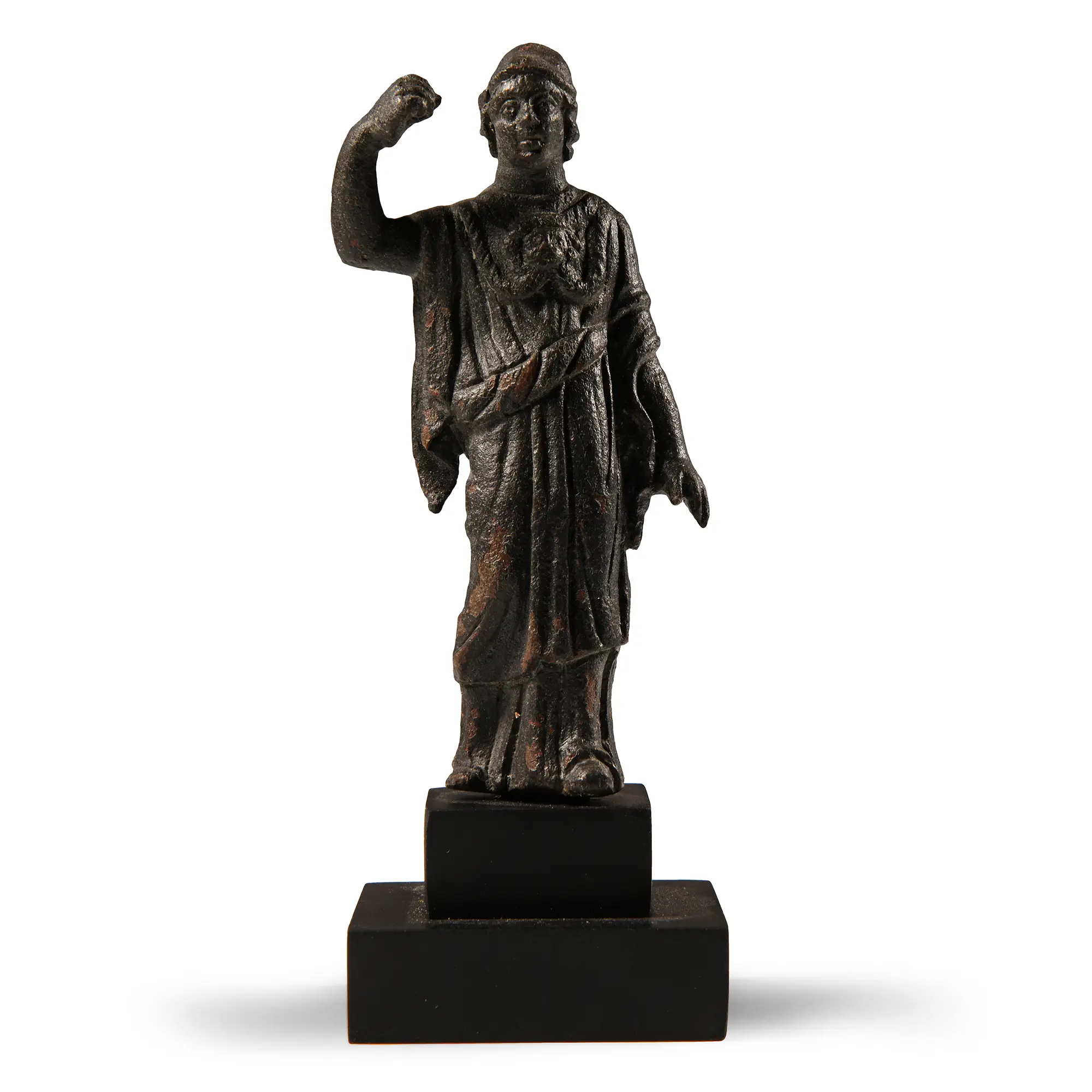
No god was more important to the greatest of Greek cities than Athena was to Athens. She was born fully armed from the head of Zeus, who had swallowed her mother Metis (whose name means wisdom or cunning) to prevent a prophecy that any son she bore would be greater than his father. The birth was dramatic: Zeus suffered terrible headaches until Hephaestus split his skull with an axe, and out sprang Athena in full armour, giving a great war-cry.
She was a virgin goddess, one of three Olympians (with Hestia and Artemis) who never married or took lovers. Her virginity was central to her cult and her character; she was the goddess of reasoned warfare, of strategy rather than bloodlust, of the kind of combat that civilization required. She was also goddess of wisdom, of crafts (particularly weaving), and of the practical arts by which humans survived and prospered. The owl was her bird, the olive tree her gift to humanity.
The Parthenon on the Athenian Acropolis, perhaps the most famous building in the Western world, was her temple. Inside it stood another masterwork by Phidias: a standing figure of Athena, forty feet tall, covered in gold and ivory, holding a six-foot statue of Nike (Victory) in her extended right hand. Athenians believed that as long as this statue stood, their city could not fall.
Athena appears throughout Greek mythology as a helper of heroes. She guided Perseus in his quest to slay the Gorgon Medusa, providing him with a polished shield that served as a mirror so he could avoid the monster's petrifying gaze. She assisted Odysseus throughout his long journey home from Troy. She stood beside Heracles in his labours. Her favour could make the difference between triumph and disaster.
Objects associated with Athena, from small bronze figurines to ceramic vessels depicting her myths, constitute one of the most substantial categories of Greek religious artifact. The owl, her sacred bird, became such a powerful symbol of Athens that it appeared on Athenian coinage for centuries and remains recognizable today.
Apollo: The Shining One
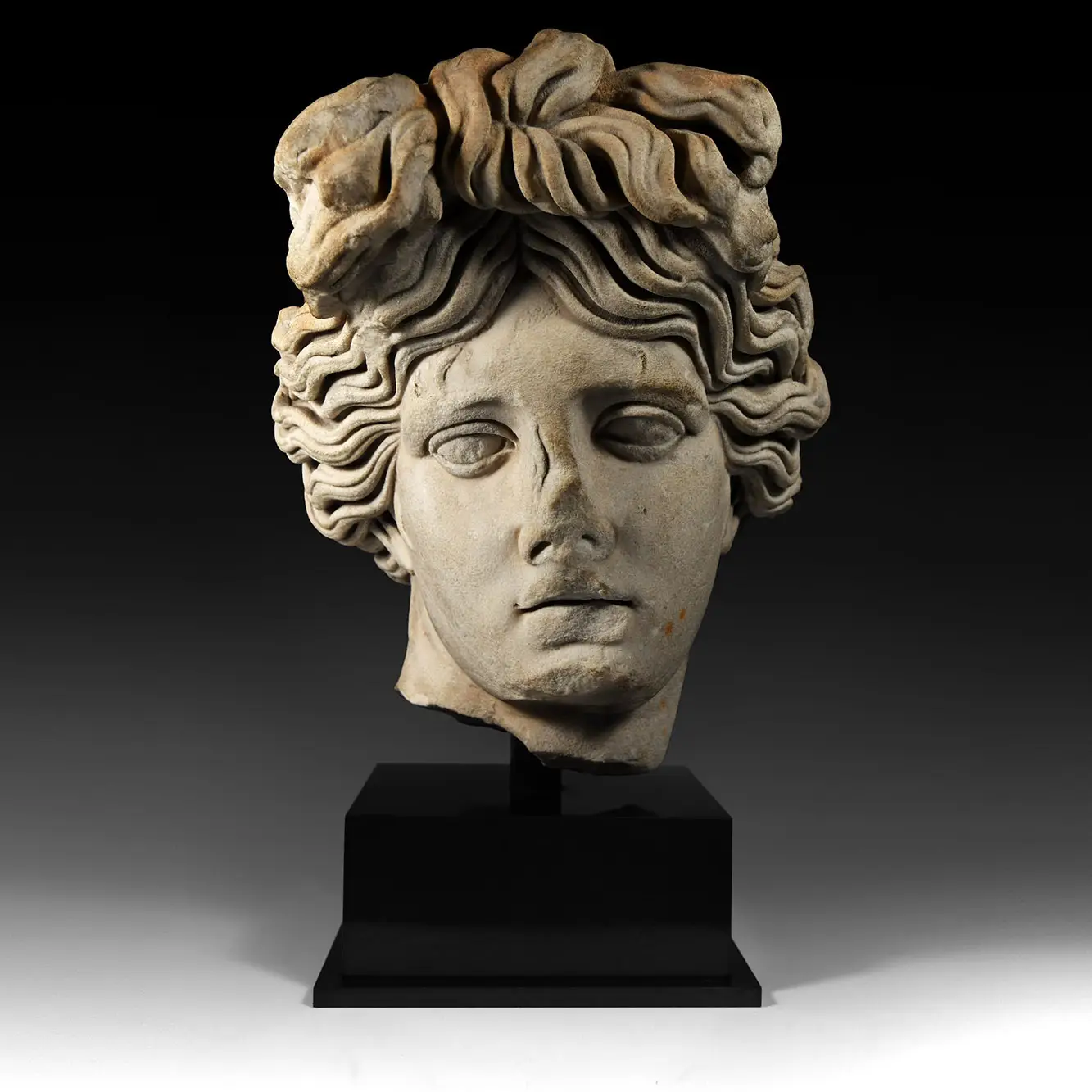
If any Greek god embodied the ideals of Greek civilization, it was Apollo. He was the god of light and the sun, of music and poetry, of healing and plague, of prophecy and truth. He was depicted as the most beautiful of the gods, the model of youthful male perfection, and his cult centres at Delphi and Delos were among the most sacred sites in the Greek world.
His birth was dramatic. His mother Leto, pregnant by Zeus, was pursued across the earth by the jealous Hera, who forbade any land from giving her shelter. Finally the floating island of Delos took her in, and there she gave birth to Apollo and his twin sister Artemis. The island was rewarded by being fixed in place and becoming one of the holiest sites in Greece.
Apollo's oracular shrine at Delphi was the religious centre of the Greek world. Here, on the slopes of Mount Parnassus, the god spoke through his priestess, the Pythia, who sat on a tripod over a chasm in the earth and delivered prophecies in a state of divine possession. Greeks from across the Mediterranean consulted the oracle on matters both personal and political. Cities sent embassies to ask whether they should go to war. Kings inquired about their fates. The responses, often ambiguous, were delivered in hexameter verse and interpreted by priests. "Know thyself" and "Nothing in excess" were inscribed on the temple, maxims that captured the Greek ideal of wisdom through self-knowledge and moderation.
Apollo was also the leader of the Muses, the nine goddesses of artistic inspiration. He played the lyre, an instrument he had received from Hermes in exchange for the cattle Hermes had stolen from him (gods, like mortals, engaged in complex transactions). When he played, even the gods fell silent to listen. He was called Phoebus (the bright one) and associated with the sun, though technically the sun god Helios was a distinct deity who drove the solar chariot across the sky.
The flip side of Apollo's radiance was his capacity for destruction. He was a god of plague as well as healing, and his silver arrows brought sudden death. In the Iliad, it is Apollo who sends the pestilence that devastates the Greek camp at Troy. He was a god to be feared as well as loved, and the Greeks knew that his favour could turn to wrath in an instant.
Bronze and marble representations of Apollo emphasize his beauty and youthful vigour. The kouros statues of Archaic Greece, standing nude male figures with one foot forward and a faint smile, may originally have represented Apollo or at least borrowed heavily from his iconography. Later depictions show him with the lyre, the laurel wreath (commemorating his pursuit of the nymph Daphne, who was transformed into a laurel tree to escape him), or the bow and arrows that marked his role as divine archer.
Dionysus: The God Who Came
Among the Olympians, Dionysus stands apart. He was a latecomer to the divine family, at least in terms of Greek mythological chronology, and his worship had a character unlike that of the other gods. Where they demanded sacrifice and received formal hymns, Dionysus inspired ecstasy. His followers, primarily women called Maenads or Bacchants, danced on mountainsides at night, intoxicated by wine and the presence of the god. The worship of Dionysus was about losing control, about becoming possessed by divine madness, about transcending the ordinary boundaries of human existence.
He was the son of Zeus and a mortal woman, Semele, princess of Thebes. Hera, ever jealous, tricked Semele into asking Zeus to appear to her in his true divine form. Zeus had sworn to grant her any wish, and when he appeared as the lord of thunder and lightning, the mortal woman was consumed by fire. Zeus snatched the unborn child from her womb and sewed him into his own thigh, from which Dionysus was later born. This double birth (once from his mother, once from his father) marked him as unique among the gods.
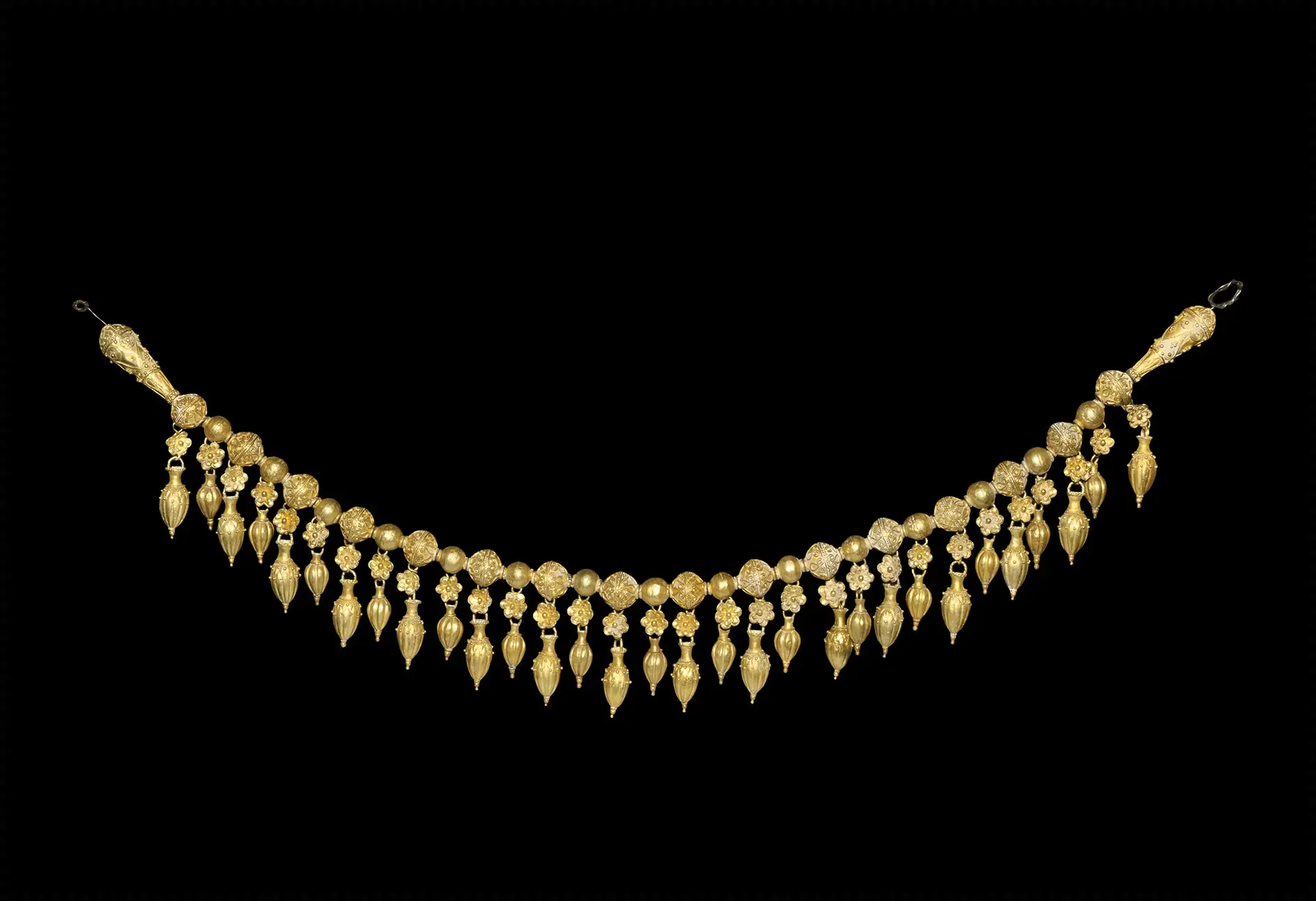
The myths of Dionysus are filled with violence and transformation. He was twice-born, he was raised in secret, he travelled the world spreading his worship and destroying those who refused to accept it. The story of Pentheus, king of Thebes, who rejected the god and was torn apart by his own mother in a Bacchic frenzy, illustrated the danger of resisting Dionysus. As Euripides has the god say in his play The Bacchae: "He is most terrible, and yet most gentle, to mankind."
Wine was his gift to humanity, and with it came both blessing and danger. The Greeks understood perfectly well that wine brought joy and sociability but also violence and degradation. Dionysus embodied both aspects. His worship could be a release from the constraints of daily life, a glimpse of divine ecstasy; it could also be a descent into bestiality and madness. The god demanded that humans acknowledge this dual nature, that they accept the irrational as part of their own souls.
In art, Dionysus appears as a youthful, effeminate figure with long curls, often holding a thyrsus (a staff wound with ivy and topped with a pine cone) and accompanied by satyrs, Maenads, or leopards. Wine cups and mixing vessels were natural surfaces for his imagery, and some of the finest Greek vase painting depicts Dionysiac scenes. These objects connected their users to the god every time wine was poured and drunk.
The Heroes: Mortals Who Became Immortal
Greek mythology is populated not only by gods but by heroes, mortals of extraordinary ability who accomplished feats beyond ordinary human capacity. The heroes occupied a space between gods and men. They were born of mixed parentage (often a god and a mortal), they possessed superhuman strength or cunning, they achieved deeds that would be remembered forever, and after death many of them received cult worship as minor divinities. The hero cult was a distinctive feature of Greek religion, and the tombs of heroes were sites of pilgrimage and prayer.
Heracles: The Greatest of All
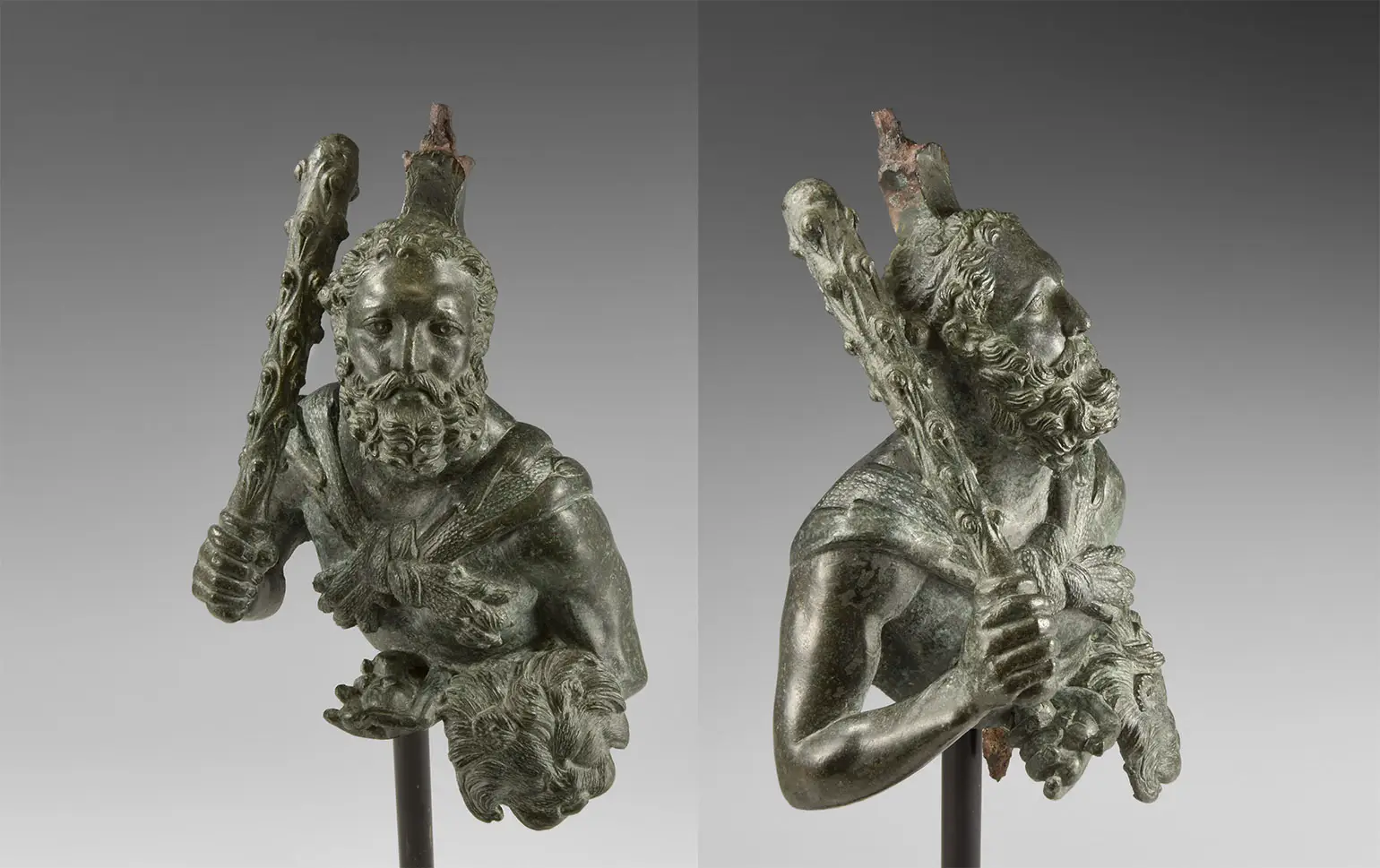
No hero was greater than Heracles (called Hercules by the Romans). He was the son of Zeus and the mortal woman Alcmene, and from the moment of his birth the goddess Hera (whose name his own ironically celebrates, meaning "glory of Hera") pursued him with relentless hatred. Zeus had boasted that a child of his blood would rule over Mycenae, and Hera delayed Heracles' birth while hastening that of his cousin Eurystheus, who thus became king instead.
The hatred of Hera shaped Heracles' life. She sent serpents to strangle him in his cradle (the infant Heracles killed them with his bare hands). She drove him mad so that he murdered his own wife and children. It was to atone for this crime, committed in a state of god-induced insanity, that Heracles undertook his famous Twelve Labours at the command of Eurystheus.
The Labours took him across the known world and beyond. He killed the Nemean Lion, whose skin could not be pierced by any weapon (he strangled it and ever after wore its hide as armour). He slew the nine-headed Hydra, whose heads regrew as fast as they were cut off (his nephew Iolaus cauterized each stump with fire). He captured the Erymanthian Boar, cleaned the Augean Stables by diverting two rivers through them, drove away the Stymphalian Birds with a bronze rattle made by Hephaestus, captured the Cretan Bull, stole the man-eating Mares of Diomedes, obtained the girdle of Hippolyta queen of the Amazons, seized the cattle of the three-bodied giant Geryon, fetched the golden apples of the Hesperides from the garden at the edge of the world, and descended to the underworld to capture Cerberus, the three-headed dog who guarded its gates.
Beyond the Labours, Heracles participated in numerous other adventures. He rescued the Titan Prometheus from his eternal punishment. He killed the giant Antaeus by lifting him off the earth (from which he drew his strength). He served for a time as a slave to Queen Omphale of Lydia. He sacked Troy a generation before the war that Homer would immortalise.
His death was characteristically violent and strange. His wife Deianira, fearing he no longer loved her, sent him a robe anointed with what she believed was a love potion but was in fact the poisoned blood of the centaur Nessus, whom Heracles had killed. The poison burned into his flesh, and in his agony Heracles built his own funeral pyre and lay upon it. As the flames consumed his mortal part, his divine half ascended to Olympus, where he was reconciled with Hera and married her daughter Hebe, goddess of youth.
Heracles was worshipped throughout the Greek world, and representations of him and his labours were extremely common. He is typically shown nude, with a club and lion-skin, his muscular physique embodying heroic strength. Bronze figurines of Heracles were popular votive offerings, and scenes of his labours decorated temple sculptures, vase paintings, and relief carvings. When we encounter such objects, we handle the image of the hero who embodied what the Greeks believed humans could achieve, even against the hostility of the gods themselves.
Perseus: The Gorgon-Slayer
Perseus, son of Zeus and the mortal princess Danaë, accomplished the most famous monster-slaying feat in Greek mythology: the killing of Medusa, the Gorgon whose gaze turned men to stone.
His story began before his birth. An oracle warned Danaë's father, King Acrisius of Argos, that his daughter's son would kill him. To prevent this, Acrisius imprisoned Danaë in a bronze chamber underground. But Zeus came to her as a shower of golden light, and she conceived Perseus. When Acrisius discovered the child, he could not bring himself to kill his own grandson directly; instead, he set mother and child adrift in a wooden chest on the sea. They washed ashore on the island of Seriphos, where a fisherman named Dictys rescued them.
Years later, the king of Seriphos, desiring to marry Danaë and wishing to be rid of her protective son, sent Perseus on what seemed an impossible quest: to bring back the head of Medusa. Perseus succeeded through divine assistance and heroic courage. The god Hermes gave him a sword that could not be bent or broken. The goddess Athena gave him a polished bronze shield to use as a mirror. From the nymphs of the North he obtained winged sandals, a magic wallet that would resize to hold anything, and a cap that made its wearer invisible.
Thus equipped, Perseus flew to the western edge of the world where the Gorgons lived. He approached them while they slept, looking only at their reflection in his shield to avoid their deadly gaze, and with a single stroke of his sword he severed Medusa's head. The other two Gorgons, who were immortal, could not pursue him because he wore the cap of invisibility. From Medusa's severed neck sprang Pegasus, the winged horse, and the giant Chrysaor.
On his return journey, Perseus rescued Andromeda, an Ethiopian princess who had been chained to a rock as a sacrifice to a sea monster. He killed the monster, married Andromeda, and eventually returned to Seriphos, where he used Medusa's head to turn the hostile king to stone. The head was later given to Athena, who mounted it on her shield, the aegis.
The story culminates in the fulfilment of the original prophecy. At an athletic contest, Perseus threw a discus that went astray and struck an old man in the crowd. The old man was Acrisius, his grandfather, who had been travelling and happened to be present. Thus the oracle was fulfilled despite all attempts to prevent it, a theme central to Greek thought about fate and human effort.
Representations of Perseus typically show him with his divine gifts: the curved sword (called a harpe), the winged sandals, the cap, and often Medusa's head either in his hand or already in the magic wallet. Medusa herself, with her face surrounded by writhing snakes, was a popular protective image, appearing on shields, architectural elements, and amulets. The Greeks believed her face could ward off evil. Such objects transformed a terrifying myth into practical protection.
Theseus: The Athenian Hero
Every great Greek city had its local hero, and Athens claimed Theseus. He was to Athens what Heracles was to Greece as a whole: the greatest of heroes, the accomplisher of impossible tasks, the liberator of his people.
Theseus was the son of Aegeus, king of Athens, though some sources say his true father was Poseidon, the sea god. He grew up in his mother's city in southern Greece, far from Athens. When he came of age, his mother showed him a great rock under which his father had hidden a sword and a pair of sandals. If the boy could lift the stone and retrieve these tokens, he could go to Athens and claim his birthright. Theseus lifted the stone easily.
He chose to travel to Athens by land rather than by sea, although the land route was far more dangerous, infested with bandits and monsters. This was deliberate. Theseus wanted to prove himself a hero, and easy safety was not the path to glory. He killed every bandit he encountered, using on each the method by which that bandit had killed his own victims. Procrustes, who tied travellers to an iron bed and stretched them or cut them to fit it, was fitted to his own bed. Sciron, who kicked travellers off a cliff, was kicked off the same cliff. By the time Theseus reached Athens, all of Greece was celebrating the young hero who had made the roads safe.
His greatest adventure came soon after. For years, Athens had been forced to send seven youths and seven maidens to Crete every nine years as tribute to King Minos. These young Athenians were fed to the Minotaur, a monster half man and half bull that dwelt in the Labyrinth, a maze so complex that none who entered it could find their way out. Theseus volunteered to be one of the victims, intending to kill the Minotaur and end the tribute forever.
In Crete, Minos's daughter Ariadne fell in love with Theseus at first sight. She gave him a ball of thread, which he fastened at the entrance of the Labyrinth and unwound as he went. He found the Minotaur asleep and battered it to death with his bare fists. Following the thread back, he escaped the Labyrinth, gathered his companions and Ariadne, and sailed for Athens.
The story has a dark ending. Theseus abandoned Ariadne on the island of Naxos (where Dionysus found her and made her his bride). And he forgot to change the sails of his ship from black to white, the signal he had arranged with his father to indicate success. Aegeus, watching from the cliffs, saw the black sails, believed his son dead, and threw himself into the sea, which has been called the Aegean ever since.
Theseus became king of Athens and was credited with unifying the scattered communities of Attica into a single city-state. The Athenians honoured him as their founding hero, and his tomb became a sanctuary for the poor and defenceless.
Representations of Theseus, particularly his combat with the Minotaur, were among the most popular subjects in Greek art. The scene appears on countless vases, temple sculptures, and relief carvings. He is typically shown as a nude athletic youth, often beardless to emphasize his youth, grappling with or stabbing the bull-headed monster. These images celebrated not only the hero but the city that claimed him.
The Gods Among Us: Religion in Daily Life
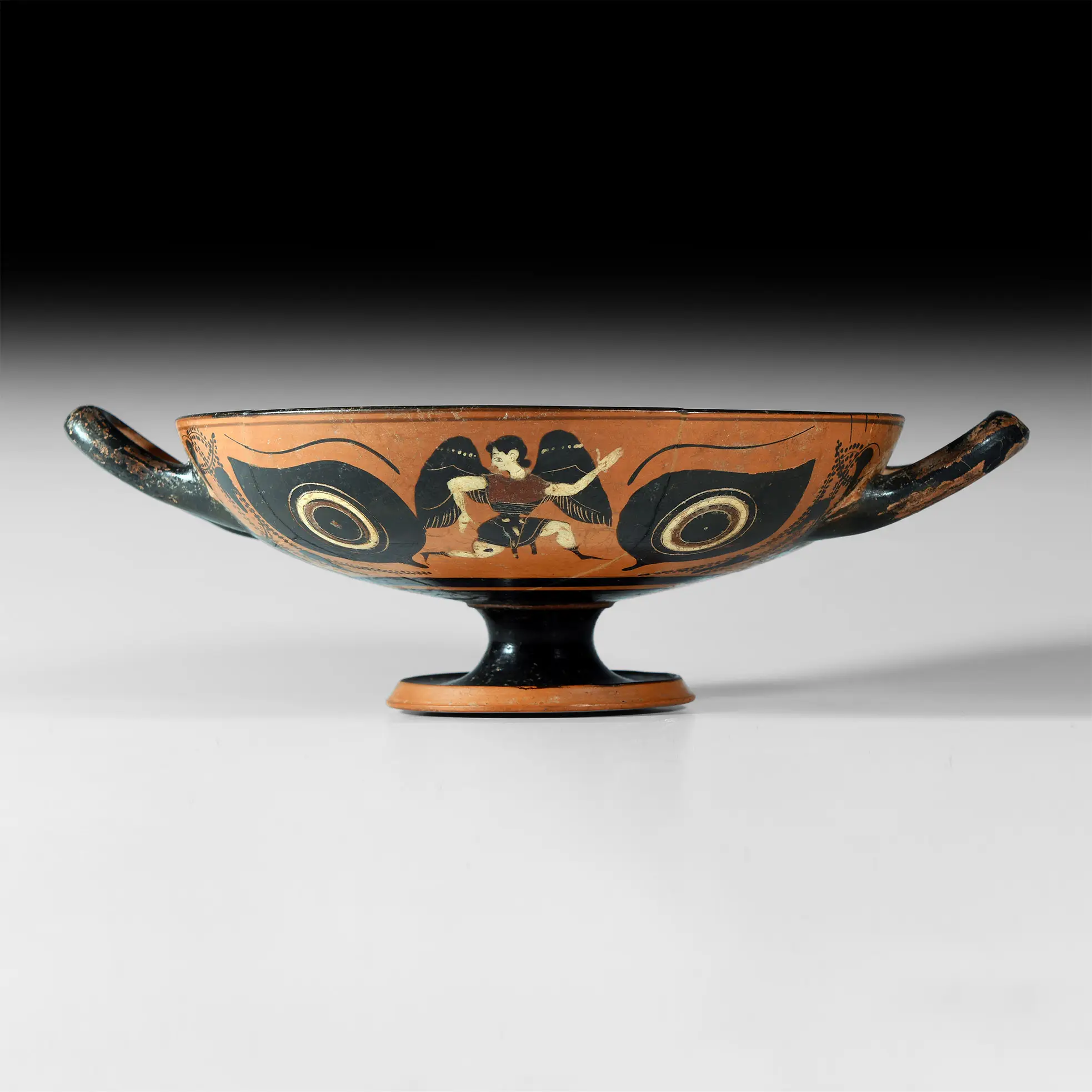
Greek religion was not a matter of weekly attendance at a central place of worship. It pervaded daily life in ways that might surprise a modern observer. Every meal began with a small offering to the gods, a few drops of wine poured out onto the ground or into the fire. Every journey began with a prayer for safe travel. Every business transaction was undertaken with an oath invoking divine witnesses. The gods were everywhere, always watching, always potentially interested in human affairs.
The household had its own religious life centred on the hearth. Hestia, goddess of the hearth, received the first and last offerings at every meal. The fire that burned on the hearth was never allowed to go out if it could be helped; when a new colony was founded, fire from the mother city's hearth was carried to kindle the new city's sacred flame. The doorway, the boundary between the protected space of home and the dangerous outside world, was sacred to Hermes and Apollo, and their images (herms, rectangular pillars topped with a head of Hermes, and sometimes a statue of Apollo) stood outside many houses.
Beyond the household, each city had its public cults, its great temples, and its festival calendar. Athens alone celebrated over 120 days of festivals each year, from small local observances to great Panhellenic celebrations like the Panathenaea, when a new robe was carried in procession to the ancient wooden statue of Athena on the Acropolis. The Dionysia, festival of Dionysus, was the occasion for dramatic performances; the tragedies and comedies of classical Athens were religious events, offerings to the god.
The physical remains of Greek religion are extensive but fragmentary. The great temples survive in various states of ruin, from the nearly complete Parthenon to scattered column drums in obscure sanctuaries. But the small objects of daily religious practice survive in far greater numbers: terracotta figurines offered at shrines, bronze statuettes dedicated by grateful worshippers, ceramic vessels used in ritual, amulets worn for protection. These objects provide our most direct access to lived Greek religion, to the faith of ordinary people rather than the speculations of philosophers.
When such objects come to auction, they carry within them the religious life of men and women who lived two thousand years ago and more. A small terracotta figure of a goddess may have been purchased at a sanctuary and left there as an offering by a woman praying for safe childbirth. A bronze figurine of Heracles may have stood in a household shrine for generations, receiving small offerings and silent prayers. These were not decorative objects but working tools of religious practice.
The Trojan War: Where Gods and Heroes Met
The greatest story the Greeks told about their gods and heroes was the story of the Trojan War. It was not, strictly speaking, a religious narrative; it was an epic of human warfare and heroic achievement. But the gods were present throughout, taking sides, intervening in battles, shaping the fates of men and cities. The war demonstrated both the intimacy and the danger of divine involvement in human affairs.
The war began, according to myth, at a wedding. The goddess Eris (Strife), offended at not being invited to the marriage of Peleus and the sea-nymph Thetis, threw a golden apple inscribed "For the Fairest" among the goddesses. Three of them (Hera, Athena, and Aphrodite) each claimed the apple, and Zeus, wisely refusing to judge between them, appointed the Trojan prince Paris to decide. Each goddess offered him a bribe: Hera promised power, Athena promised wisdom and victory in battle, Aphrodite promised the most beautiful woman in the world. Paris chose Aphrodite, earned the eternal enmity of the other two goddesses, and set in motion the chain of events that would destroy his city.
The most beautiful woman in the world was Helen, wife of Menelaus, king of Sparta. When Paris arrived as a guest in Menelaus's palace and absconded with Helen (whether she went willingly or was abducted is told differently in different sources), all the kings of Greece were bound by oath to help recover her. They gathered the greatest fleet ever assembled, a thousand ships, and sailed for Troy.
Ten years of war followed. The Iliad, Homer's great epic, covers only a few weeks of the final year, but it established the pattern that later poets would elaborate. The heroes fought in single combat before the walls, their names and genealogies announced before each encounter. The gods watched from Olympus, placed bets on the outcome, and repeatedly intervened. Apollo supported Troy, sending plague upon the Greeks when his priest was dishonoured. Athena and Hera supported the Greeks, remembering Paris's insult. Zeus tried to maintain neutrality but repeatedly failed.
The deaths multiplied. Patroclus, beloved companion of Achilles, fell to Hector, prince of Troy. Achilles, in vengeance, killed Hector and dragged his body behind his chariot in desecration of all decent custom. The poem ends with the funeral of Hector, but the war continued. Achilles himself fell, struck in his vulnerable heel by an arrow guided by Apollo. Ajax went mad and killed himself. The war seemed endless.
It ended through cunning rather than combat. Odysseus devised the stratagem of the Wooden Horse, a great hollow structure in which Greek warriors hid while the rest of the army pretended to sail away. The Trojans, believing the war over, dragged the horse into their city. That night, the Greeks emerged, opened the gates to their returning army, and Troy fell in fire and slaughter.
The aftermath was as terrible as the war itself. The Trojan men were killed, the women enslaved. Hector's infant son was thrown from the city walls. Helen returned to Sparta with Menelaus. The Greek heroes dispersed to their homelands, and many met strange fates on their journeys. Odysseus wandered for ten years before reaching Ithaca. Agamemnon was murdered by his wife on the day of his return. The war that had united the Greeks ultimately destroyed many of them.
Objects depicting Trojan War themes were immensely popular throughout antiquity. Scenes from the Iliad and its associated myths appear on vases, reliefs, gems, and metalwork from the Archaic period through Roman times. The heroes of the war, particularly Achilles, Ajax, Odysseus, and Hector, were depicted in characteristic poses and equipment that made them immediately recognizable. These images connected their owners to the foundational epic of Greek civilization.
The Underworld: What Waited After Death
Greek religion offered no consoling vision of the afterlife. The majority of the dead went to Hades, the gloomy kingdom beneath the earth, and the existence they found there was shadowy at best. In Homer, the ghosts in the underworld are described as flitting about like bats, squeaking, substanceless, barely conscious. When Odysseus summons them by pouring blood into a trench, they crowd around desperately, eager to drink and thus gain a moment of awareness. The great Achilles, meeting Odysseus in the underworld, tells him bitterly that he would rather be a slave to the poorest farmer on earth than king of all the dead.
The geography of the underworld was elaborated over time. The dead crossed the river Styx (or sometimes Acheron) in the boat of Charon, the ferryman, paying for their passage with a coin placed under their tongue at burial. Those who had not received proper burial could not cross and were condemned to wander the near shore forever, a fate that made the burial of the dead one of the most sacred obligations in Greek society. Beyond the river, Cerberus the three-headed dog guarded the gates, allowing all to enter but none to leave.
For most of the dead, that was essentially the end: an eternity of grey existence in grey fields, with no hope and no pleasure. But a few faced different fates. The exceptionally wicked, those who had offended the gods directly, were punished eternally. Tantalus, who had served his own son as food to the gods, stood in water up to his chin beneath branches heavy with fruit, but both water and fruit receded whenever he tried to drink or eat. Sisyphus, who had cheated Death itself, was condemned to roll a boulder up a hill forever; each time he neared the top, it escaped him and rolled back down.
And a few, a very few, were granted a blessed afterlife in the Elysian Fields, a place of eternal sunshine and gentle breezes far to the west. Heroes beloved of the gods, those who had accomplished great deeds and earned divine favour, might find themselves there. The philosopher Pindar, writing in the fifth century BC, described a more elaborate system of judgment and rebirth, but this remained a minority view. For most Greeks, death meant Hades, and there was nothing to be done about it.
This grim vision shaped Greek attitudes toward life. If the afterlife offered nothing, then this life was all the more precious. Fame and glory, the only forms of immortality reliably available, became paramount concerns. Heroes risked their lives not despite the certainty of death but because of it; only through heroic achievement could they live on in the songs of poets after their bodies had gone down to Hades.
Objects related to death and burial form a substantial category of Greek antiquities. Funerary stelae (upright stone slabs) marked graves and often depicted the deceased, sometimes with family members, in idealized scenes of daily life. Lekythoi, white-ground oil flasks, were specifically produced for funerary use and often show moving scenes of mourning or the departure of the dead. Coins placed in mouths as Charon's fare sometimes survive. These objects connected the living to their dead and acknowledged the universal fate that awaited everyone.
Oracles and Prophecy: Seeking Divine Guidance
The Greeks believed that the gods knew the future and that, under the right circumstances, they could be persuaded to share that knowledge. Throughout the Greek world, oracle sites offered mortals the opportunity to ask questions of the divine and receive answers that, properly interpreted, could guide them through life's uncertainties.
The greatest oracle was at Delphi, sacred to Apollo. Here, on the slopes of Mount Parnassus, a priestess called the Pythia sat upon a tripod over a cleft in the rock and delivered the god's responses in a state of ecstatic possession. The consultations followed elaborate rituals: preliminary sacrifices, payments to the temple, formal questions submitted in writing. The Pythia's responses, often cryptic or ambiguous, were interpreted by temple priests and delivered to the questioner.
The famous ambiguity of Delphic responses was not a bug but a feature. When Croesus, king of Lydia, asked whether he should attack Persia, the oracle replied that if he did, he would destroy a great empire. Encouraged, he attacked, and destroyed a great empire: his own. The oracle had not lied; Croesus had simply interpreted it as he wished. This pattern repeated throughout Greek history. The oracle's ambiguity forced questioners to think carefully, to consider multiple possibilities, to recognise that the future was not fixed and that their own choices mattered.
Other oracles existed throughout Greece. The oracle of Zeus at Dodona in northwestern Greece was perhaps even older than Delphi; there, priests interpreted the god's will from the rustling of sacred oak leaves and the cooing of doves. The oracle of Apollo at Didyma near Miletus served the Greek cities of Asia Minor. The oracle of the dead at the Necromanteion of Acheron allowed the living to consult the ghosts of their ancestors. Each had its own procedures, its own specialties, its own reputation.
Consulting an oracle was expensive and time-consuming, but for important decisions (should we go to war? should I marry this person? will my business venture succeed?) the Greeks considered it essential. The responses, preserved in stone inscriptions and literary sources, provide fascinating evidence for what ordinary people worried about. Most questions were not about great political affairs but about everyday concerns: health, travel, marriage, lost property, troubled dreams.
Objects associated with oracular practice occasionally survive: tripods like the one the Pythia sat upon, inscribed tablets recording questions and responses, votive offerings left in gratitude for accurate prophecies. These objects connected their users to the divine communication network that Greeks believed linked heaven and earth.
The Mystery Cults: Secrets of Salvation
Alongside the public religion of sacrifice and festival, Greece developed a tradition of mystery cults that offered their initiates a more personal and (it was claimed) more rewarding relationship with the divine. The details of these mysteries were closely guarded secrets, and initiates were forbidden to reveal what they had learned on pain of death. Consequently, we know tantalizingly little about their actual content.
The most famous mysteries were celebrated at Eleusis, near Athens, in honour of Demeter and her daughter Persephone. The myth underlying the cult told how Persephone was abducted by Hades, lord of the underworld, and how her grieving mother searched the world for her. In her anger, Demeter caused the earth to become barren; nothing grew, and humanity faced extinction. Zeus intervened, and a compromise was reached: Persephone would spend part of each year with her husband in the underworld and part with her mother on earth. This was why (the Greeks said) winter came: Demeter mourned her daughter's annual departure, and nothing grew until she returned.
What the initiates experienced during the Eleusinian Mysteries is unknown, but ancient sources agree that the experience was transformative. Those who had been initiated faced death with less fear, believing that they would enjoy a better afterlife than the uninitiated. The mysteries were open to anyone who spoke Greek and was not guilty of murder (even women and slaves could be initiated), and over the centuries they attracted participants from across the Mediterranean world.
Other mystery cults developed around other gods. The mysteries of Dionysus, with their emphasis on ecstatic experience and divine possession, spread throughout Greece. The mysteries of the Cabiri on the islands of Samothrace and Lemnos promised protection at sea. Later, in the Hellenistic and Roman periods, the mysteries of Isis and Mithras would attract huge followings.
The mysteries left few physical traces, precisely because their content was secret. Objects associated with the cults (vessels used in rituals, symbols of initiation, votive offerings) occasionally surface, but their interpretation is often uncertain. When such objects can be securely identified, they provide precious glimpses into the esoteric dimension of Greek religion.
Greek Religion Beyond Greece
The conquests of Alexander the Great in the late fourth century BC carried Greek culture, including Greek religion, across the ancient world. From Egypt to Afghanistan, Greek gods were worshipped in new temples, often merging with local deities to create new hybrid forms. This process, called syncretism, transformed Greek religion into something more universal and more complex.
In Egypt, the Greeks identified their gods with Egyptian counterparts: Zeus with Amun, Aphrodite with Hathor, Hermes with Thoth. The Ptolemaic dynasty, which ruled Egypt for nearly three centuries after Alexander, patronised both Greek and Egyptian cults, building temples in both traditions. The god Serapis, a deliberate creation combining aspects of Osiris and Apis with Greek divine attributes, became one of the most popular deities of the Hellenistic world.
The Greek gods travelled to Rome, where they acquired Latin names but retained their essential characters. Zeus became Jupiter, Hera became Juno, Athena became Minerva, Aphrodite became Venus. Roman religion adopted Greek mythology wholesale, and the stories of the gods became as much a part of Roman culture as they had been of Greek. Through Rome, Greek religion influenced all of Western civilization.
The spread of Christianity did not immediately end the worship of the Greek gods. Temples remained open for centuries, and the old rites continued to be performed. The last oracular response from Delphi was reportedly delivered in the fourth century AD, and the Eleusinian Mysteries were not suppressed until 392 AD. Even after Christianity became the dominant religion of the Mediterranean, Greek mythology retained its cultural power. The Renaissance rediscovered the gods, and they have remained central to Western art and literature ever since.
Objects of Devotion: Collecting Greek Religious Antiquities
The religious objects of ancient Greece offer collectors an extraordinary opportunity. Unlike the monumental sculptures that properly belong in museums, the smaller expressions of Greek piety (bronze figurines, terracotta votives, ceramic vessels, gem engraved seals, coins bearing divine imagery) appear regularly on the legitimate market with established provenance and accessible prices.
What distinguishes these objects is their connection to lived experience. A bronze figurine of Athena was not made for aesthetic contemplation. It was made to be offered at a sanctuary, to stand before the goddess as permanent evidence of a worshipper's devotion. A terracotta figure of Demeter may have been purchased by a woman praying for fertility, carried in procession to a shrine, and left there as a gift. A coin bearing the image of Apollo was not merely currency but a statement of civic identity, connecting the city that minted it to the god whose temple stood within its walls.
When we hold such objects in our cataloguing room at TimeLine, we are conscious of these histories. The wear on a bronze comes from handling, perhaps from repeated ritual gestures over generations. The break on a terracotta figure may have occurred when the temple that housed it was destroyed by war or earthquake. The patina on a coin records centuries of burial in the earth of a sanctuary or cemetery. These are not merely beautiful objects. They are participants in religious lives lived long ago.
The condition of Greek antiquities varies enormously. Bronze survives well in favorable conditions but corrodes to fragments in others. Terracotta is fragile but abundant. Ceramics break easily but can often be reconstructed. Provenance documentation has become increasingly important, and reputable dealers provide information establishing how objects came to market. The pleasure of collecting lies not only in possession but in research: identifying the deity represented, understanding the context of use, tracing the history of the object from ancient hands to one's own.
At TimeLine Auctions, we regularly offer Greek religious objects ranging from modest terracotta figurines to significant bronzes and fine painted ceramics. Each lot carries information about historical context and significance. The gods of Greece created a religious tradition that shaped Western civilization; the objects that embodied that tradition allow us to touch that ancient world directly.
The Gods Endure
In the National Archaeological Museum in Athens, in a room devoted to bronze sculpture, stands a figure recovered from the sea off Cape Artemision. It represents either Zeus hurling a thunderbolt or Poseidon throwing his trident; scholars still debate which god is shown. The figure is just over two metres tall, nude, bearded, with arms outstretched in the moment before the throw. The face is calm, focused, intensely alive. Looking at it, one understands immediately why the Greeks worshipped these gods. They embodied human perfection, human power raised to superhuman heights.
The bronze was cast around 460 BC, and it spent centuries at the bottom of the Aegean before fishermen brought it up in pieces in 1926 and 1928. The ship that carried it must have been transporting it to some destination when disaster struck. We do not know where it came from or where it was going. We do not know what temple or sanctuary originally housed it. What we know is that someone thought it valuable enough to ship across the sea, and that the sea kept it safe for us.
The Greek gods are no longer worshipped. Their temples are ruins, visited by tourists rather than pilgrims. The oracles are silent. No smoke of sacrifice rises to Olympus. Yet the gods persist. They live in the stories we still tell, in the images we still recognise, in the very vocabulary of our culture: we speak of Herculean tasks and Achilles' heels, of Pandora's boxes and Oedipal complexes, of the Midas touch and the judgment of Paris. The myths have become part of us.
And the objects remain. In museums and private collections around the world, the physical expressions of Greek religious devotion survive. Bronze and terracotta and stone and ceramic: materials that outlast empires, that carry meaning across millennia. When we collect these objects, we become custodians of that meaning. We hold in our hands what ancient worshippers held in theirs, and through these small fragments of the past we connect with minds that saw the world differently but not incomprehensibly.
The gods of Greece asked for sacrifice and received it for a thousand years. They asked for devotion and inspired masterpieces of art and literature. They asked for worship and got a civilization. What they left behind, scattered across the Mediterranean world and beyond, continues to speak to anyone who will listen. The conversation between mortals and immortals ended long ago, but the objects that facilitated it remain, waiting.
TimeLine Auctions, 8th March 2026