Home > Stories by TimeLine Auctions
Stories by TimeLine Auctions
Ancient Gods: The Gods of Ancient Egypt
When the Dead Required Attention
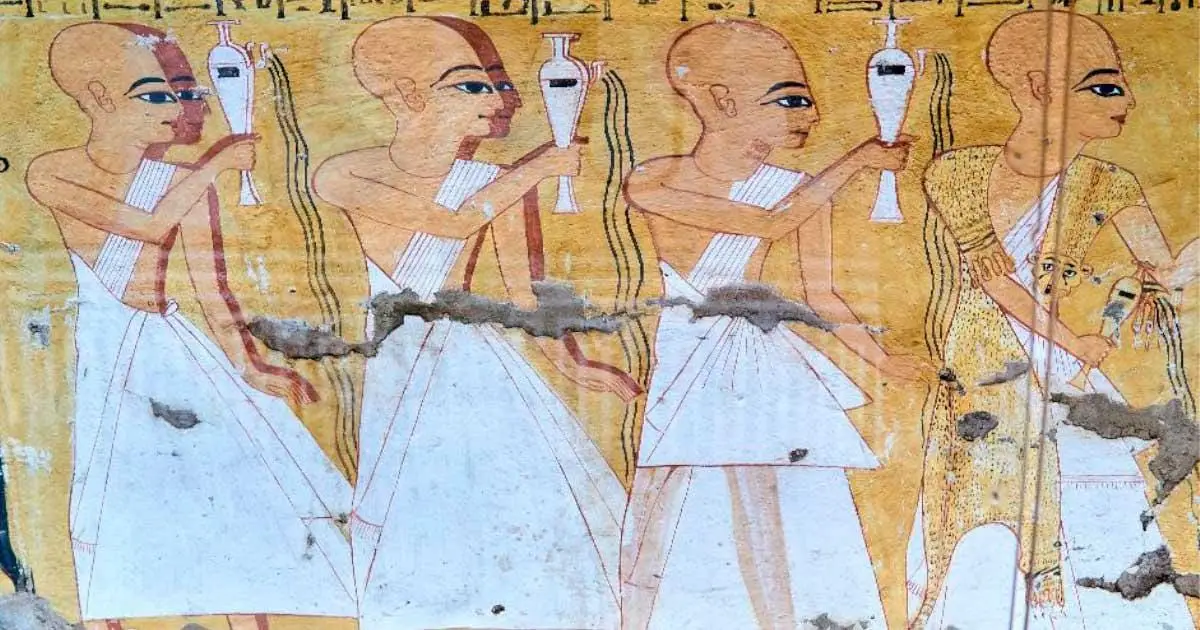
A priest stands in the half-darkness before dawn, the air still cool and carrying the green scent of the Nile. In his hands he holds a small vessel of natron water. Beyond the cedar doors of the innermost sanctuary, in a shrine of gilded acacia wood no larger than a modern wardrobe, waits the god. The statue is perhaps eighteen inches tall, carved from hard black diorite and finished with eyes of obsidian and lapis lazuli. The priest does not see a statue. He sees the living body of a deity who has condescended to dwell, temporarily, in this material form. He will wash the god's face. He will dress the god in fresh linen. He will offer incense, bread, and beer. The god, it is believed, actually consumes the spiritual essence of these offerings while the physical matter remains for the temple staff to eat later (a practical arrangement, given the quantities involved). This ritual, repeated in hundreds of temples from the Mediterranean marshes to the cataracts of Nubia, continued without significant interruption for over three thousand years.
Three thousand years. The span of time separating Tutankhamun from the birth of Christ is roughly equivalent to the span separating Christ from ourselves. Yet the rituals performed in the tomb of Tutankhamun were already ancient when that young king was laid to rest. The Egyptian gods represent the longest continuously practiced religious tradition in recorded human history. When Herodotus declared that the Egyptians were "religious beyond measure, more than any other people," he was observing something the Egyptians themselves would have readily acknowledged. Religion was the atmosphere in which Egyptian life existed.
The material evidence of this devotion surrounds us still. Every year, excavations across Egypt yield thousands of objects created in service to the gods: amulets worn against misfortune, bronze votive figures offered at temple shrines, painted funerary papyri guiding the deceased through the perils of the underworld, limestone stelae recording prayers answered and favours requested. When we hold such objects in our cataloguing room at TimeLine, we handle artifacts that were never intended to be museum pieces or collector's items. They were made to work. A faience amulet of the god Bes served as protection, worn on the body of a pregnant woman or placed beside a sleeping child to frighten away malevolent spirits.. A bronze figure of Osiris was an offering, deposited in a temple with the expectation that the god would notice, and perhaps respond. The objects we sell participated in an ongoing conversation between mortals and the divine. That conversation has ended, but the objects that facilitated it remain, silent witnesses to one of humanity's most elaborate and enduring engagements with the supernatural.
The Birth of the Gods
The origins of Egyptian religion reach back into the Predynastic Period, before the unification of Upper and Lower Egypt around 3000 BC, and the evidence from those earliest times suggests a religious landscape already rich with divine presences. Archaeological excavations at sites like Hierakonpolis in Upper Egypt have uncovered evidence of animal cults and divine associations that would persist for millennia. Falcon imagery appears on objects from this period that clearly anticipate the later worship of Horus, the great sky god whose falcon form would become one of the most enduring symbols of Egyptian kingship. Bovine imagery, associated with the great goddess Hathor, likewise appears in contexts suggesting established cultic significance.
By the time the first hieroglyphic texts appear in the Old Kingdom, the Egyptian pantheon was already sprawling and complex. The Pyramid Texts, inscribed on the walls of royal burial chambers beginning in the Fifth Dynasty (roughly 2400 BC), mention hundreds of deities by name and allude to myths and cult practices that must have developed over centuries of unrecorded religious activity. These texts are the oldest surviving religious literature from any civilization, and they reveal a theological system of remarkable sophistication. The gods are participants in cosmic dramas of creation, death, and renewal that give meaning to the existence of the universe itself.
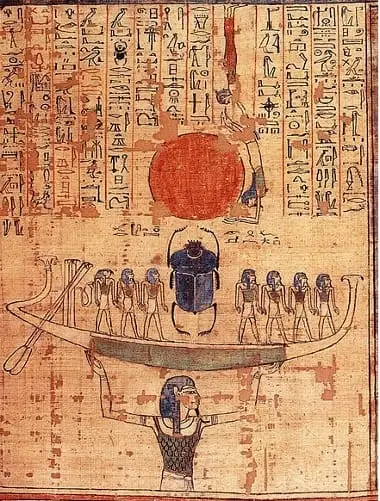
Egyptian creation myths varied by region, but they shared certain fundamental assumptions. Before creation, there existed only the primordial waters of chaos, called Nun. From these dark and formless waters emerged the creator god, whether conceived as Atum at Heliopolis, Ptah at Memphis, or other deities at other cult centres. The act of creation was simultaneously an act of ordering, the imposition of structure and meaning upon chaos. This order was personified by the goddess Maat, whose name denotes concepts we might translate variously as truth, justice, balance, and cosmic regularity. The maintenance of Maat was the fundamental obligation of Egyptian religion. Every temple ritual, every offering, every prayer was ultimately directed toward preserving the ordered cosmos against the constant threat of dissolution back into primordial chaos.
The gods themselves, though immensely powerful and enduring, were not exempt from time. Egyptian mythology explicitly acknowledged that the gods aged, that they could be injured or tricked, and that they would eventually share in the final dissolution of the created world. Even Re, the mighty sun god, was described in certain texts as becoming old and feeble, his bones like silver, his flesh like gold, his hair like genuine lapis lazuli. This vision of divine mortality made the gods curiously relatable. They participated in the same temporal existence that shaped human life, albeit on a vastly extended scale. A god could live for millions of years, but eventually, time would run out for gods and mortals alike.
Families of Heaven: How the Gods Were Organised
The Egyptian pantheon never achieved systematic theological organisation. Different cult centres promoted different gods as supreme, regional traditions coexisted with national cults, and the Egyptians themselves seemed unbothered by apparent contradictions in their religious narratives. A god might be the son of one deity in one text and the father of that same deity in another. Mythological genealogies shifted and adapted according to context and purpose. This theological flexibility strikes modern observers as confusing, but to the Egyptians it was simply how divine reality worked. The gods were too complex to be captured in any single systematic account.
Nonetheless, certain organisational patterns did emerge. The most fundamental was the grouping of deities by number, with different numbers carrying different symbolic significance. Pairs of gods (dyads) expressed the Egyptian fascination with duality and complementarity. The universe itself was conceived in terms of paired opposites: heaven and earth, male and female, desert and fertile land, day and night. These dualities were not contradictions but necessary complements, each half requiring the other for completion. Divine pairs reflected this cosmic structure. Shu and Tefnut, air and moisture, represented the first differentiation within the created world. Geb and Nut, earth and sky, formed the arena within which all subsequent creation occurred. Osiris and Isis, the divine couple whose myth of death, resurrection, and succession would become central to Egyptian religion, embodied the themes of legitimate kingship and the promise of eternal life.
Triads, groups of three deities, typically followed the model of the human family: father, mother, and child. The most famous Egyptian triad consisted of Osiris, Isis, and their son Horus, but each major cult centre developed its own triadic grouping. At Memphis, Ptah the creator god was paired with the lioness goddess Sekhmet and the lotus god Nefertem. At Thebes, the great god Amun was joined by his consort Mut and their child Khonsu. These local triads served important theological and political functions, linking major deities together in bonds of divine kinship and providing a template for royal ideology. The Egyptian king was regularly depicted as the divine child of such triads, nursing at the breast of the goddess mother, receiving the blessing of the god father.
Larger groupings carried their own symbolic weight. The number four represented spatial completeness, the four cardinal directions encompassing the totality of space. Groups of four deities, such as the four sons of Horus who guarded the canopic jars containing the mummified viscera of the deceased, represented comprehensive protection. The number eight (four doubled) intensified this symbolism, and the famous Ogdoad of Hermopolis consisted of four pairs of primordial deities representing the conditions that existed before creation: Nun and Naunet (primordial water), Heh and Hauhet (infinity), Kek and Kauket (darkness), and Amun and Amaunet (hiddenness or air). The number nine represented plurality itself, and the Great Ennead of Heliopolis brought together nine deities in a mythological narrative that traced the creation of the world through successive divine generations.
When we examine Egyptian artifacts today, awareness of these numerical groupings enriches our understanding. A pectoral ornament showing four protective deities invokes spatial completeness. A coffin depicting the nine gods of the Heliopolitan Ennead places the deceased within the founding narrative of creation itself. The numbers were not arbitrary; they encoded theological meaning in visual form.
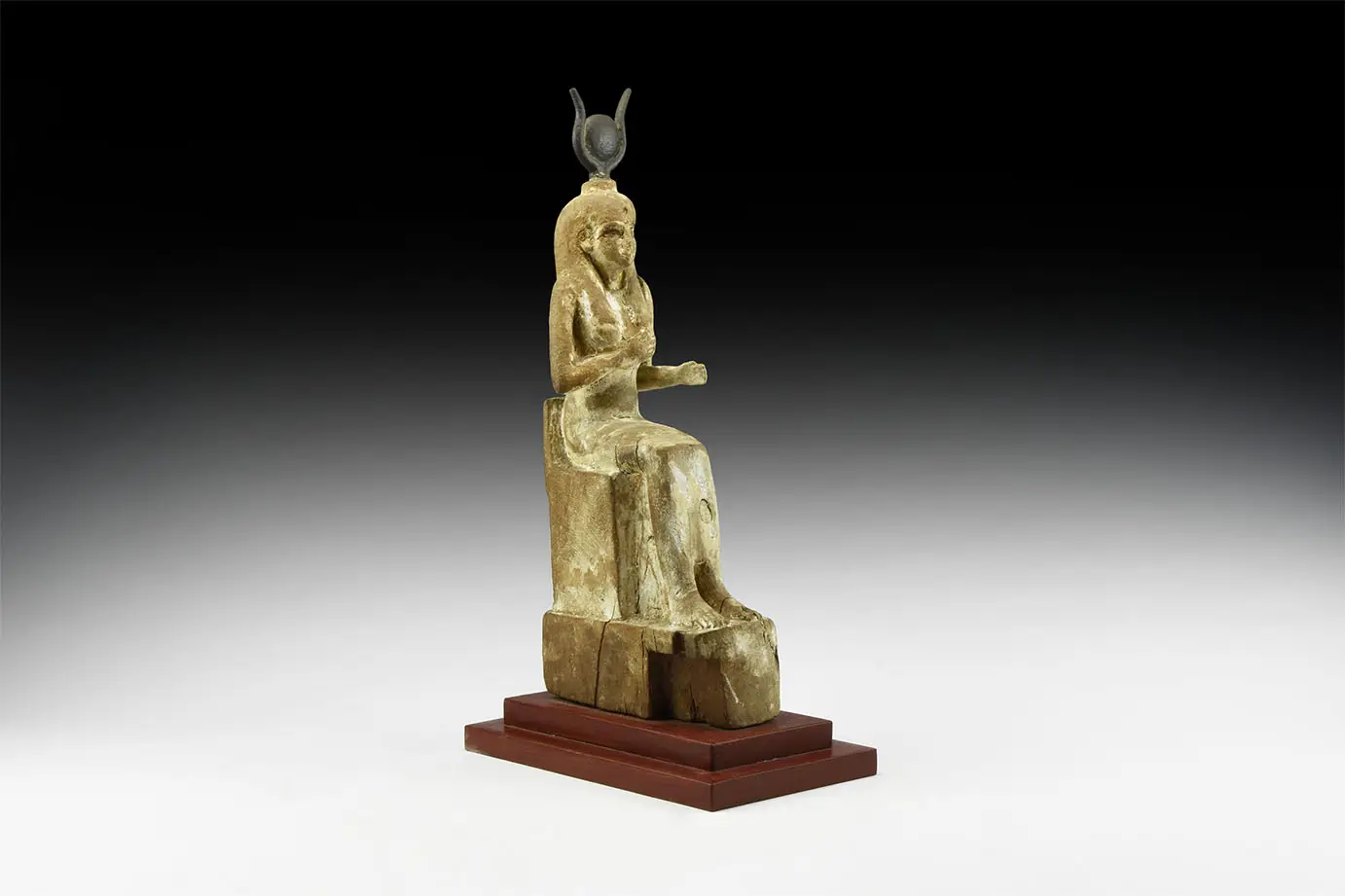
Ancient Egyptian artifacts are often closely related to their religious beliefs and practices, in the image above we can see a rare wooden figure of Isis that we sold in our 4th of September 2018 auction, lot 3 for £5,000.
The Hidden One: Amun and the Rise of Thebes
Among the hundreds of deities worshipped in ancient Egypt, a relatively small number rose to positions of exceptional prominence, often in connection with the fortunes of particular dynasties or cult centres. Perhaps the most dramatic example of this phenomenon is the god Amun, whose transformation from an obscure local deity into the "king of the gods" offers a fascinating case study in the interplay of religion and politics in ancient Egypt.
Amun's name means "the hidden one," and his original character was closely connected with invisibility and air. He was one of the eight primordial deities of the Hermopolitan Ogdoad, representing the hiddenness or invisibility that preceded creation. His cult was established at Thebes (modern Luxor) from at least the Eleventh Dynasty, but it was during the New Kingdom (beginning around 1550 BC) that Amun achieved supreme status within the Egyptian pantheon.
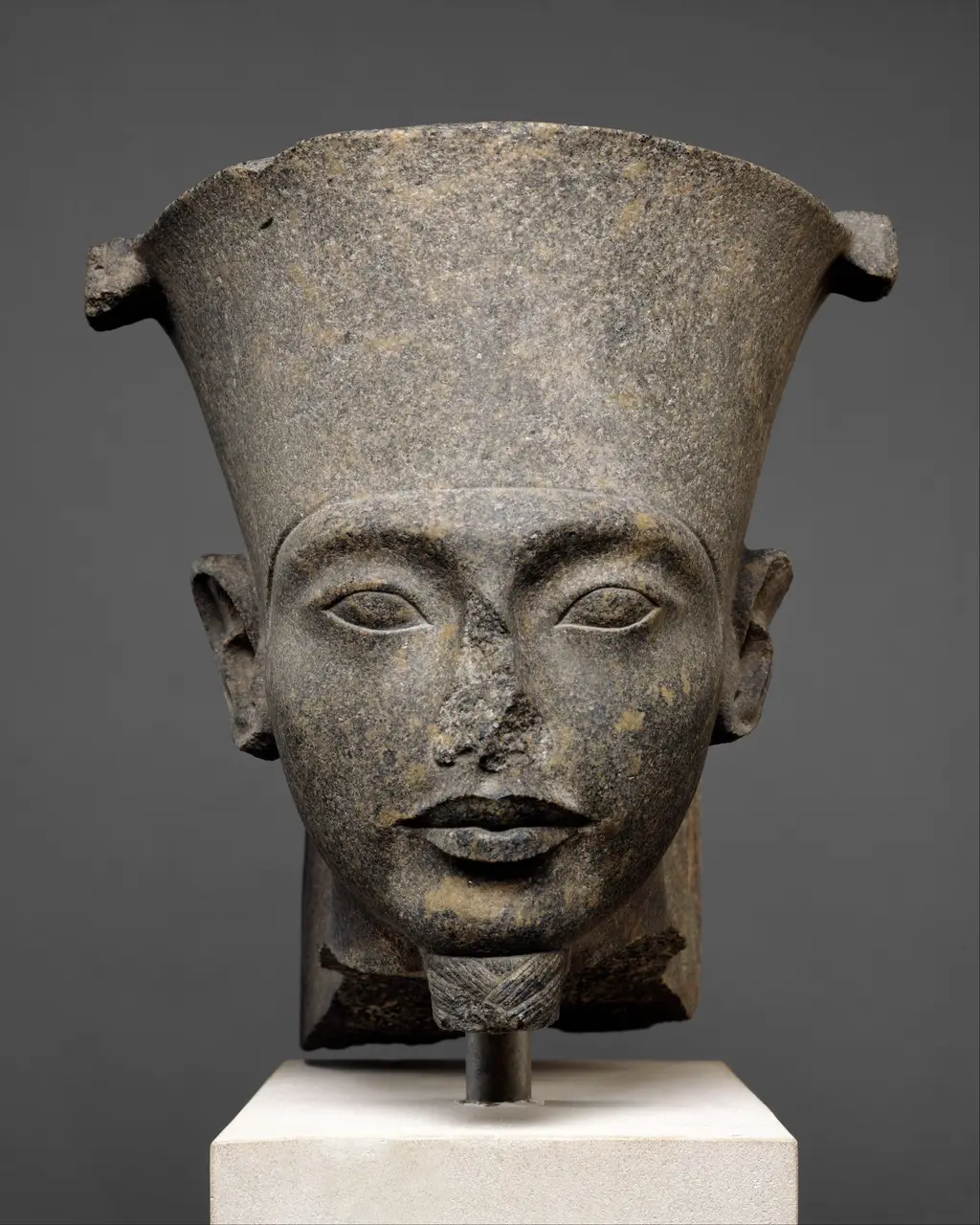
The reasons for this elevation were partly theological but largely political. The pharaohs of the Eighteenth Dynasty, who expelled the foreign Hyksos rulers and inaugurated Egypt's imperial age, came from Thebes. As their power grew, so did the importance of their local god. Amun was identified with Re, the ancient sun god of Heliopolis, to form the composite deity Amun-Re, combining the hidden, mysterious nature of Amun with the manifest, life-giving power of the sun. Vast wealth flowed into the temple of Amun at Karnak, making it the largest religious complex ever constructed. At its height, the temple employed thousands of priests and owned extensive agricultural lands, herds of cattle, and mining operations.
The theology of Amun developed to match his elevated status. He was hailed as a creator god, a cosmic deity whose power transcended the visible world. Hymns praised him in language approaching monotheism:
"He is hidden from the gods, and his aspect is unknown. He is farther than the sky, he is deeper than the Duat [the underworld]..."
This language of transcendence, recorded in documents like Papyrus Leiden I 350, represents one of the most sophisticated theological achievements of ancient Egypt. Amun was not simply the most powerful god; he was in some sense the underlying reality of which all other gods were manifestations. The polyvalent logic of Egyptian thought allowed this near-monotheistic vision to coexist with traditional polytheistic practice. Egyptians could acknowledge the underlying oneness of the divine while continuing to worship the divine in its many particular forms.
Statues and amulets of Amun typically show him as a man wearing a distinctive crown with two tall plumes, or as a ram (particularly in his association with the Kushite kingdoms to the south), or as a figure with blue skin representing his celestial nature. The small scale of many surviving Amun figures reminds us that this cosmic deity was also a god of personal piety, invoked by ordinary Egyptians seeking divine assistance in their daily lives.
Lord of the Underworld: Osiris and the Promise of Eternal Life
If Amun represented the heights of Egyptian theological speculation, Osiris represented something perhaps more fundamental: the human desire to survive death. The Osiris myth, pieced together from allusions in Egyptian texts and preserved most completely in Plutarch's Greek account, tells of a god who ruled on earth during a golden age, was murdered by his jealous brother Seth, and was resurrected through the magical power of his sister-wife Isis to reign eternally as lord of the underworld. This narrative touched nearly every aspect of Egyptian religious practice, from kingship ideology to funerary ritual to personal devotion.
The murder of Osiris varies in detail across different accounts, but the essential elements remain consistent. Seth, representing disorder and violence, kills Osiris and dismembers his body, scattering the parts throughout Egypt. Isis, the devoted wife, searches tirelessly for her husband's remains, eventually gathering them together and reassembling the body. Through her magical powers (Isis was known as "great of magic"), she revives Osiris sufficiently for them to conceive a child, Horus, who will eventually avenge his father and claim his rightful inheritance as king of Egypt. Osiris himself, though restored to life, does not return to rule on earth. Instead, he becomes lord of the Duat, the underworld, where he presides over the judgment of the dead.
This myth resonated powerfully with Egyptian concerns about death and the afterlife. Every Egyptian who hoped for eternal life sought identification with Osiris. The spells of the Pyramid Texts, initially reserved for royalty, identify the deceased king with Osiris, asserting that as Osiris was restored to life, so too would the king live forever. By the Middle Kingdom, this Osirian afterlife had been democratised; ordinary Egyptians could aspire to become "Osiris So-and-so," achieving the same blessed eternity that had once been the prerogative of kings alone. The iconography of Egyptian funerary practice draws heavily on the Osiris myth: the mummy wrappings recall the bandages that bound Osiris's reassembled body; the coffin takes the form of Osiris's body; the judgment scene depicts Osiris enthroned as the deceased's heart is weighed against the feather of Maat.
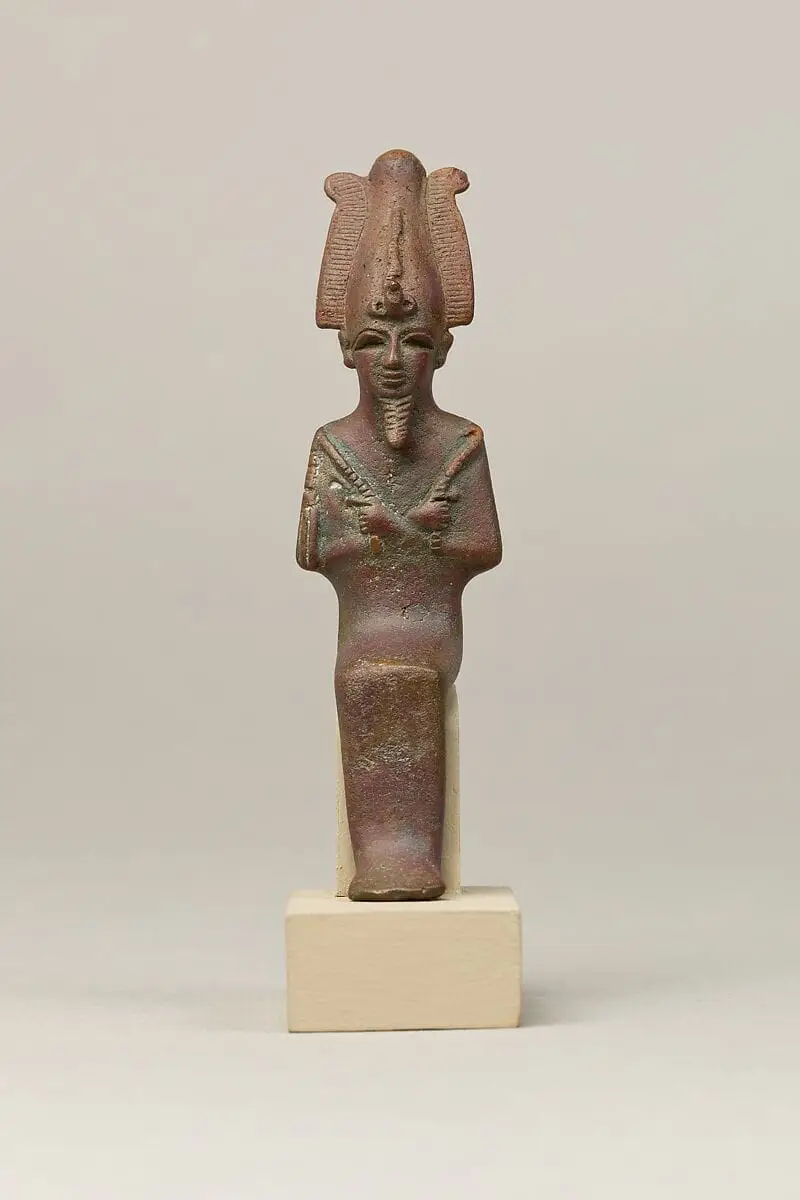
Representations of Osiris are immediately recognisable. He appears as a mummiform figure (his lower body wrapped tightly, emphasising his connection to death and burial) with green or black skin (representing vegetation and the fertile Nile mud, both associated with resurrection). He wears the Atef crown, a tall white crown flanked by ostrich feathers, and holds the royal crook and flail crossed over his chest. This distinctive iconography appears on everything from temple walls to tiny faience amulets.
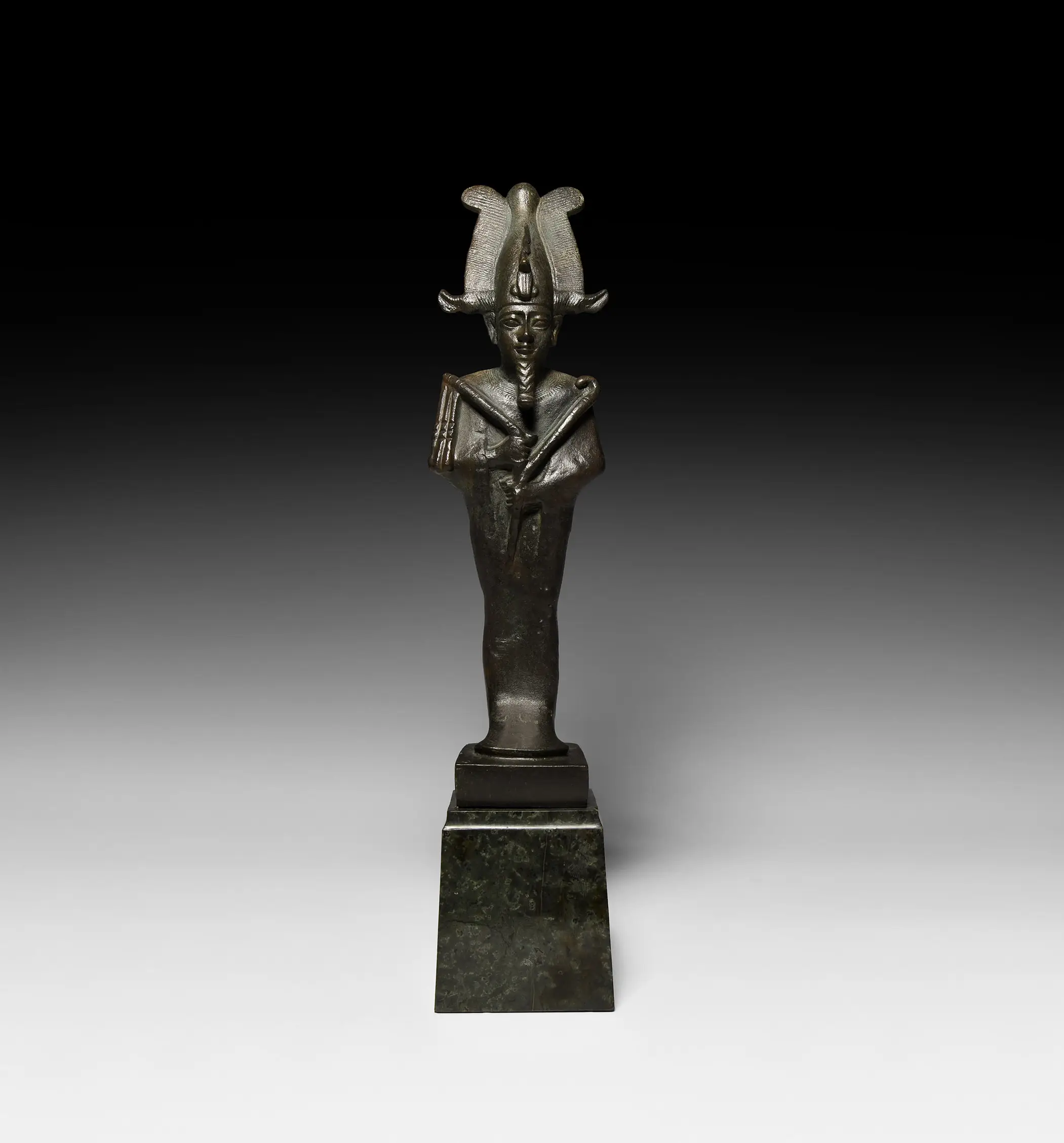
Bronze figures of Osiris were among the most common votive offerings in Late Period and Ptolemaic temples. When devotees wished to demonstrate their piety or seek the god's favour, they purchased bronze figures (often mass-produced but sometimes individually commissioned) and deposited them in temple precincts. Excavations at sites like Saqqara have recovered thousands of such bronzes, testifying to the god's enduring popularity. One of the nicest bronze Osiris figures we sold can be seen in the image above, it can be found in 1st of September 2020, lot 28 auction where it sold for £11,430. When we handle such objects, we hold tangible evidence of an individual's hope for eternal life, cast in metal and consecrated with prayers nearly three thousand years ago.
She of the Throne: Isis and the Power of Magic
No discussion of Osiris would be complete without equal attention to his sister-wife Isis, who by the Ptolemaic and Roman periods had become perhaps the most widely worshipped deity in the ancient Mediterranean world. Isis's trajectory from Egyptian goddess to universal deity represents one of the most remarkable religious developments of antiquity.
Isis's Egyptian name is written with the hieroglyphic sign for "throne," and some scholars believe she may have originated as a personification of the royal throne itself (though this remains debated). What is certain is that her roles expanded enormously over time. She was the devoted wife who searched the land for her murdered husband. She was the powerful magician who revived Osiris and protected their infant son Horus. She was the archetypal mother, depicted countless times nursing Horus on her lap. She was the mourner par excellence, whose grief for Osiris became the model for Egyptian funerary lamentation.
The imagery of Isis nursing Horus became one of the most frequently represented motifs in Egyptian art, particularly during the Late Period and Ptolemaic era. Hundreds of thousands of bronze and faience figures show the goddess seated, holding her child to her breast. This image clearly influenced later Christian iconography of the Virgin Mary and infant Jesus, and early Christian communities in Egypt seem to have made the transition from Isis worship to Christianity with relatively little difficulty. The mother goddess who had lost her divine husband and raised her divine son alone was a figure Christians could readily understand.
Isis's magical powers were central to her appeal. In Egyptian religious texts, she is described as being more clever than a million gods, possessed of knowledge that could command the obedience of the natural world. One famous myth tells how Isis learned the secret name of Re (the ultimate source of magical power) by creating a snake that bit the ageing sun god. Only she could cure the wound, and she extracted Re's secret name as payment for her healing. This myth positioned Isis as the goddess who knew the greatest secret in the universe, making her the patron of all who sought magical knowledge and power.
The cult of Isis spread beyond Egypt during the Ptolemaic period and became enormously popular throughout the Roman Empire. Temples of Isis were established in Athens, Rome, Pompeii, and throughout the Mediterranean world. The mysteries of Isis offered initiates a path to personal salvation, a direct relationship with a caring goddess who promised protection in this life and blessed eternity in the next. When Christianity eventually supplanted the traditional gods, Isis was among the last to go; her temple at Philae in southern Egypt continued to function until the sixth century AD, well after Egypt had officially become Christian.
The artifacts associated with Isis worship reflect her many roles. Bronze figures show her in various guises: as the nursing mother, as the mourning widow with outspread wings, as a regal goddess wearing the horned sun disk she borrowed from Hathor. Amulets depicting Isis were worn for protection and to invoke her magical assistance. Sistrum rattles, the distinctive musical instruments used in her cult, have survived in bronze and faience forms. Each such object represents not merely an aesthetic achievement but an act of devotion to a goddess whose worship shaped the spiritual lives of millions over more than three millennia.
The Jackal's Vigil: Anubis and the Care of the Dead
If Osiris ruled the dead, it was Anubis who prepared them for their journey to his kingdom. The jackal-headed god, one of the most distinctive figures in the Egyptian pantheon, presided over mummification and served as guide and protector of the deceased. We were lucky enough to sell a beautiful bronze figure of Anubis (21st February 2023, lot 30) which sold for £7,150, you can see it in the image below.
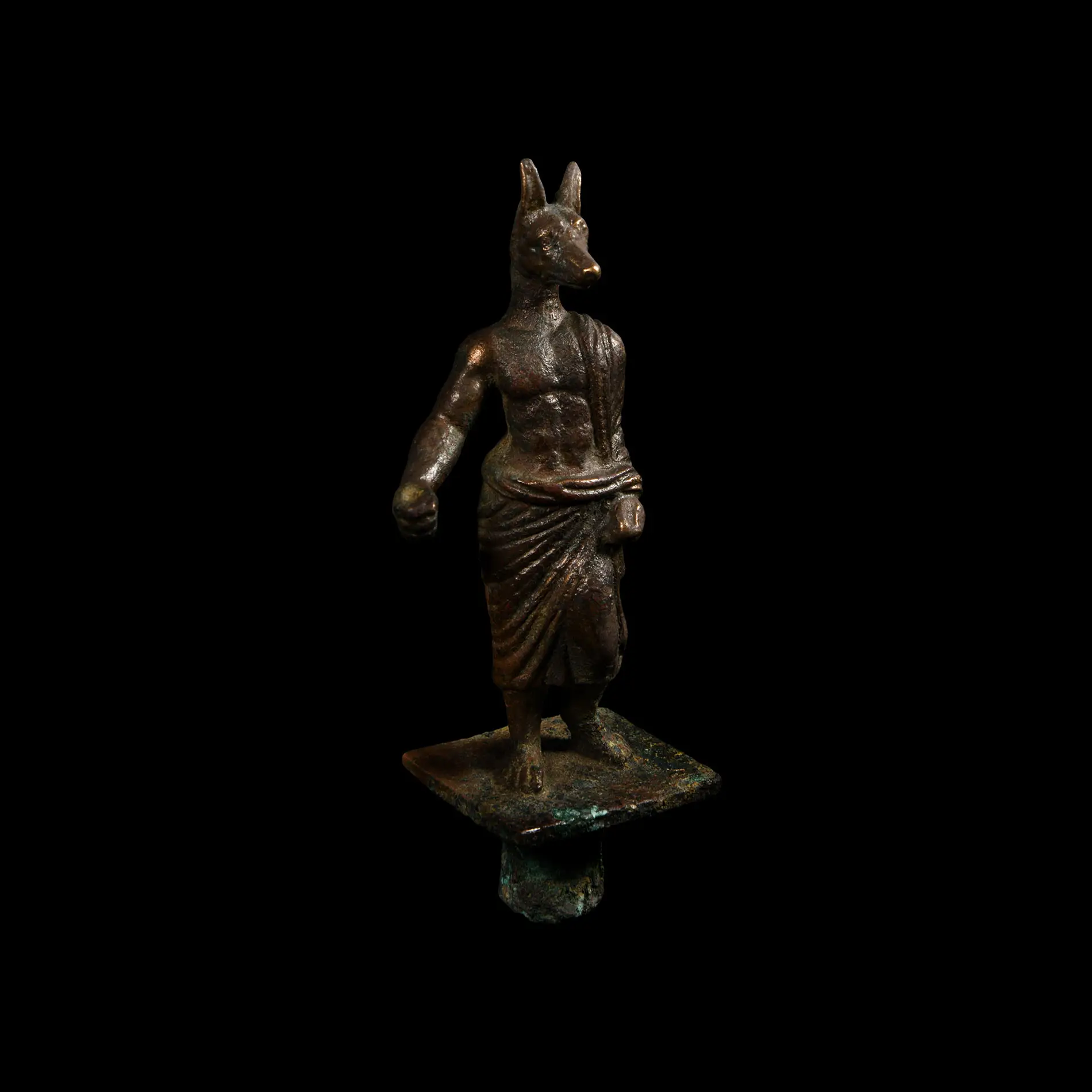
The association of the jackal with death and burial seems to derive from observation. Jackals were scavengers who frequented cemeteries located in the low desert beyond the cultivated fields, and the Egyptians may have reasoned that a god in jackal form could best protect the dead from such creatures. Anubis was called "He who is upon his mountain," referring to the cliffs overlooking the cemeteries of the Nile Valley, and "He who is in the place of embalming," acknowledging his central role in preparing the body for burial.
Egyptian mythology made Anubis responsible for embalming the body of Osiris himself, establishing the precedent for all subsequent mummification. The god is frequently depicted leaning over the mummy on its bier, performing the funerary rituals that would ensure the deceased's successful transition to the afterlife. In the famous Weighing of the Heart scene, depicted in countless copies of the Book of the Dead, Anubis supervises the weighing of the deceased's heart against the feather of Maat, ensuring that the scales are balanced and the judgment is fair.
The iconography of Anubis is remarkably consistent across Egyptian history. He appears either as a black canine (the precise species remains debated: possibly jackal, dog, wolf, or some combination) lying atop a shrine or sarcophagus, or as a man with the head of such an animal. The black colouring was symbolic rather than naturalistic, representing the discolouration of embalmed flesh and the black fertile soil of Egypt (both associated with regeneration). The famous Anubis shrine from the tomb of Tutankhamun, showing the god as a recumbent canine covered with gold leaf and adorned with a ceremonial tie, represents the type of image that was placed in elite tombs to invoke the god's protective presence.
Amulets of Anubis were placed with the deceased to ensure his protection on the journey through the underworld. Bronze figures of the god were offered at temples and shrines. The priests who performed mummification sometimes wore jackal-headed masks, ritually becoming Anubis as they prepared the body. When such objects survive, they carry with them the weight of Egyptian anxieties about death and their hopes for safe passage to eternal life.
The Ibis and the Baboon: Thoth, God of Wisdom
In the great hierarchy of Egyptian gods, Thoth occupied a unique position as the deity of wisdom, writing, and knowledge. While other gods commanded elements or protected the dead, Thoth was the divine intellectual, the scribe of the gods, the inventor of hieroglyphics, and the keeper of sacred records. His role in Egyptian religion was both practical and cosmic, for Thoth maintained the records upon which the universe itself depended.
Thoth's origins are obscure, but by the Old Kingdom he was firmly established as a lunar deity associated with the city of Hermopolis in Middle Egypt (the Greeks identified him with their own Hermes, hence the city's Greek name). His association with the moon derived partly from the ibis, one of his two principal animal forms, whose curved beak resembled the crescent moon. The moon's phases, with their mathematical regularity, connected Thoth to measurement, calculation, and the keeping of time. He was said to measure out the hours, to calculate the calendar, and to record the passage of years.
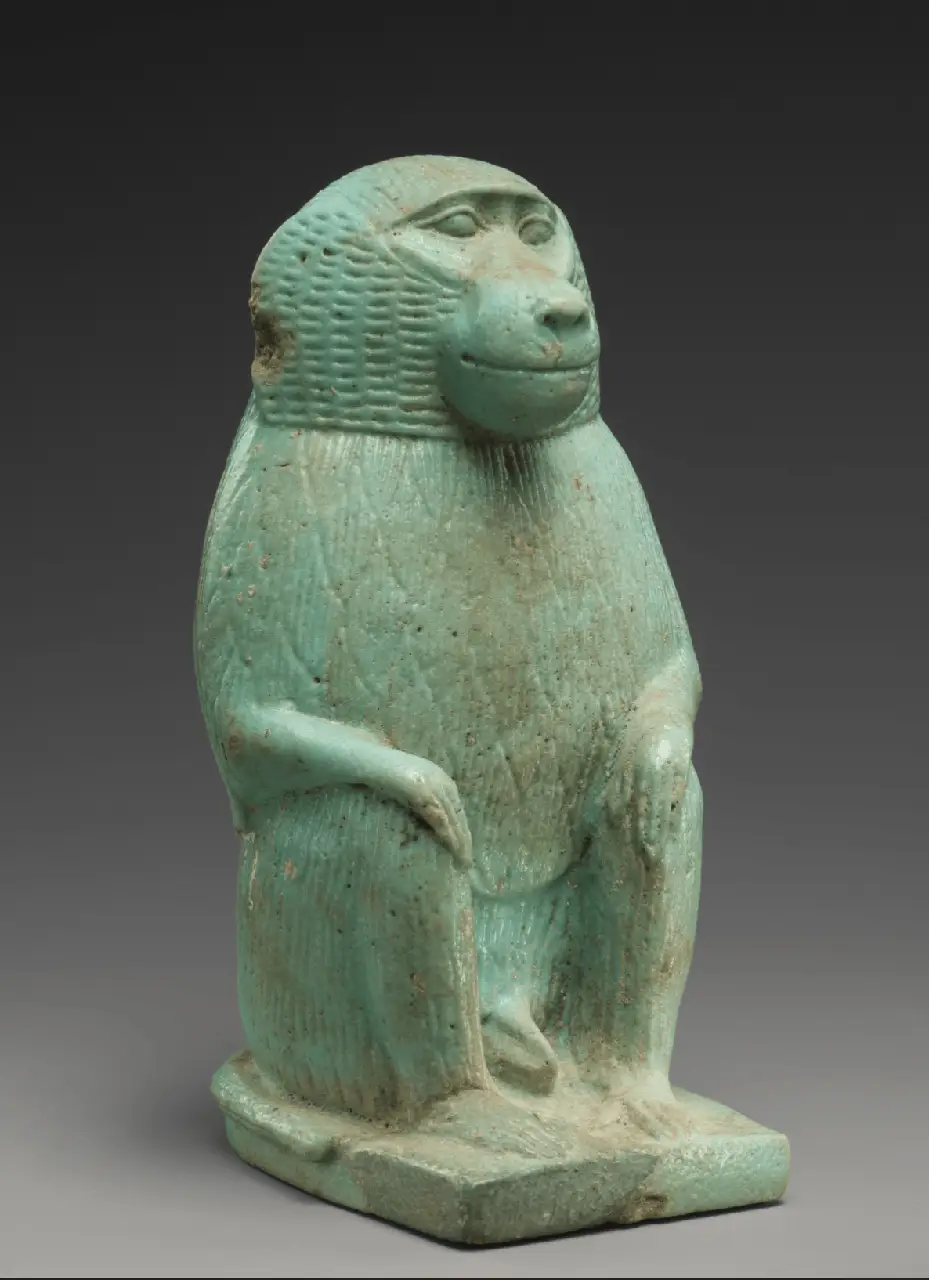
The baboon, Thoth's other sacred animal, added different associations. Baboons were observed to chatter at sunrise, leading Egyptians to interpret their behaviour as greeting or worshipping the sun god. This solar connection complemented Thoth's lunar nature, making him a mediator between the two great celestial bodies. In his baboon form, Thoth was often depicted seated, wearing a lunar disk and crescent, sometimes holding the wedjet eye or scribal equipment.
Thoth's role as divine scribe had profound implications. In Egyptian thought, the written word possessed creative power; to write something was in some sense to make it real. As the inventor of writing, Thoth was thus associated with the power of creation itself. He was present at the creation of the world, recording the divine decrees by which existence came into being. He composed the sacred texts that contained all knowledge, the repository of wisdom that Egyptian priests claimed to study and preserve.
In the judgment of the dead, Thoth performed the crucial function of recording the outcome. When the heart of the deceased was weighed against the feather of Maat, Thoth stood by the scales, ibis-headed and holding his scribal palette, noting the result. His record determined the eternal fate of the individual. This role made Thoth a figure of enormous importance to anyone concerned with the afterlife, which is to say, to virtually every Egyptian.
The cult of Thoth centred at Hermopolis, where the ibis was sacred and where vast ibis cemeteries have been excavated containing millions of mummified birds offered by devotees. Similar cemeteries for sacred baboons existed at other sites. The scale of these animal cemeteries staggers the imagination; at some sites, archaeologists have estimated that mummified ibises number in the millions. Each mummified bird represented an offering, a gesture of devotion to the god of wisdom.
Amulets of Thoth appear in both his sacred forms. Ibis-headed figures, often holding the scribal palette, invoked his association with knowledge and record-keeping. Seated baboons with lunar disks represented his astronomical connections. Scribes particularly venerated Thoth as the patron of their profession, and representations of the god were common in scribal contexts.
Figures of Thoth are rather rare, however in our 4th of March 2025 auction we were lucky enough to handle a 45cm+ tall Stele picturing Isis, Horus and Thoth (Lot 10, £16,900).
Ptah of the Beautiful Face: The Creator of Memphis
If Amun represented the hidden power of creation, the god Ptah represented creation as active craftsmanship. Worshipped primarily at Memphis, Egypt's administrative capital for much of its history, Ptah was the patron deity of artisans, craftsmen, and builders. He was the god who made things, and his theology attributed creation itself to divine craftsmanship.
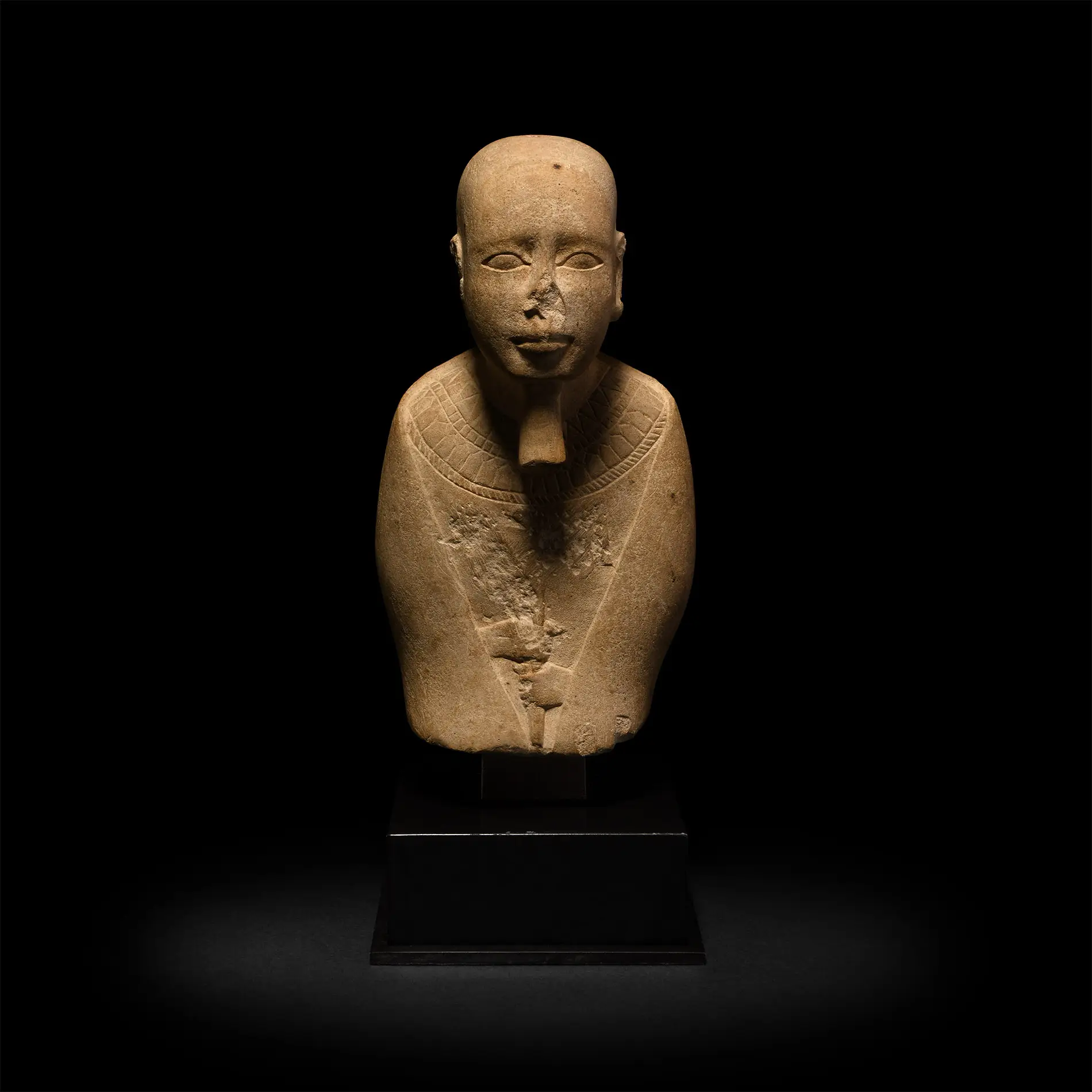
Ptah's iconography was distinctive and remained remarkably stable over thousands of years. He appeared as a mummiform man (his body wrapped tightly, like Osiris) standing on a plinth that represents the hieroglyphic sign for "truth" or "justice." He wears a tight-fitting cap rather than one of the elaborate crowns worn by other major deities, and he holds a composite sceptre combining the was (power), ankh (life), and djed (stability) symbols. His beard is straight rather than curved, distinguishing him from other male deities.
The theology of Ptah, preserved in a text known as the Memphite Theology, represents one of ancient Egypt's most sophisticated intellectual achievements. According to this account, Ptah created the world through thought and speech: he conceived the world in his heart (the Egyptians associated thought with the heart rather than the brain) and brought it into being through the power of his word. This concept of creation through divine utterance parallels and may have influenced the opening of the Gospel of John ("In the beginning was the Word..."), and scholars continue to debate the relationship between Egyptian and Biblical creation concepts.
The association of Ptah with craftsmanship made him particularly important to the workers and artisans who constituted a substantial portion of Egypt's population. At Deir el-Medina, the village of workers who built the royal tombs, evidence of Ptah worship is abundant. These craftsmen, who spent their lives creating the material forms through which religious ideas were expressed, naturally felt affinity with the divine craftsman who had created the world itself.
Ptah's consort was the lioness goddess Sekhmet, and together with their son Nefertem they formed the divine triad of Memphis. The relationship between the creator god and the goddess of destruction might seem paradoxical, but Egyptian thought embraced such complementary oppositions. Creation and destruction, making and unmaking, were aspects of the same cosmic process.
Votive figures of Ptah, typically showing him in his characteristic mummiform stance, were offered by devotees at temples and shrines. In our 21st of February 2023 auction we offered the 18cm tall Ptah figure pictured above in Lot 32, £13,000. The god's connection with craftsmanship gave special significance to well-made images; a finely crafted figure of Ptah honoured the god through the very quality of its execution.
The Sky Above: Nut and the Celestial Realm
While earth-bound deities attended to human affairs, the goddess Nut arched above them all, her body forming the vault of heaven. Nut was the sky itself, represented as a woman whose elongated body, decorated with stars, stretched from horizon to horizon. Her fingers and toes touched the earth at the four cardinal points, and the sun god Re travelled along her body during his daily journey.
The mythology of Nut centred on her relationship with Geb, the earth god. According to one account, Nut and Geb were locked in perpetual embrace until their father Shu, the god of air, separated them, lifting Nut above and allowing creation to unfold in the space between sky and earth. Representations of this separation appear throughout Egyptian art: Geb reclines below, often with vegetation springing from his body; Nut arches above, her body spangled with stars; and Shu stands between them, his arms raised to support the sky.
Nut's role as mother of the sun added another dimension to her mythology. Each evening, as the sun set in the west, Re entered the mouth of Nut and travelled through her body during the night hours. Each dawn, she gave birth to him anew from her body, renewing the cycle of days. This imagery made Nut a goddess of rebirth and regeneration, and the inner surfaces of coffin lids were frequently decorated with her image so that the deceased might share in her regenerative power.
The five "epagomenal" days added to the Egyptian calendar (raising the total from 360 to 365) were mythologically associated with Nut. According to one version, the sun god Re forbade Nut from giving birth on any day of the year. Thoth, through a gaming match with the moon, won additional light that he fashioned into five extra days falling outside the regular year. On these days, Nut gave birth to Osiris, Isis, Seth, Nephthys, and Horus the Elder, making her the mother of some of Egypt's most important deities.
Representations of Nut appear throughout Egyptian funerary art. On coffin lids, her outstretched figure embraced and protected the deceased. On the ceilings of tombs and temples, her star-spangled body represented the night sky beneath which rituals were performed. Astronomical ceilings depicting Nut alongside other celestial deities and constellations demonstrate the Egyptians' sophisticated observation of the heavens.
The Feather of Truth: Maat and Cosmic Order
Perhaps no Egyptian deity embodies a concept as fundamental as Maat, the goddess of truth, justice, and cosmic order. Maat personified the very principle by which the universe functioned. Without Maat, chaos would overwhelm creation. The maintenance of Maat was therefore the supreme religious obligation, binding gods and humans alike.
Maat's iconography was simple yet profoundly meaningful. She appeared as a woman wearing a single ostrich feather on her head, sometimes crouching with outspread wings. The feather itself became her symbol, appearing independently in countless contexts. In the judgment of the dead, the heart of the deceased was weighed against this feather; only a heart free of wrongdoing would balance the scales.
The concept of Maat predated its personification as a goddess. Egyptian texts speak of "doing Maat" and "living by Maat" in ways that suggest an ethical principle rather than a deity. To live according to Maat meant to act justly, to speak truthfully, to maintain proper relationships with family and community, and to fulfil one's obligations to both gods and humans. The ideal Egyptian was one whose life conformed to Maat in all respects.
The king held special responsibility for Maat. His fundamental duty was to maintain cosmic order by performing the rituals that sustained the gods and by administering justice that sustained human society. Scenes in temples throughout Egypt show the king presenting a small figure of Maat to the gods, symbolizing his fulfilment of this obligation. The gesture encapsulated the entire purpose of Egyptian kingship: the maintenance of the ordered universe.
Maat's importance extended beyond formal religion into everyday ethics. The wisdom literature of ancient Egypt repeatedly emphasises the importance of living according to Maat, of treating others justly, of speaking truthfully, of moderating one's desires and actions. These texts, often cast as advice from father to son, constitute one of the earliest bodies of ethical literature from any civilization.
Amulets and representations of Maat appear in various contexts. The feather symbol adorned royal regalia and temple walls. Small figures of the goddess were offered at shrines. The concept she embodied permeated Egyptian culture so thoroughly that to understand Maat is to understand a fundamental principle of Egyptian civilization itself.
The Crocodile God: Sobek and the Powers of Water
The Nile crocodile, one of the most dangerous animals in the Egyptian environment, inspired both fear and reverence. The god Sobek, depicted as a crocodile or as a man with a crocodile head, embodied the terrifying power of this creature while transforming it into a source of protection and blessing.
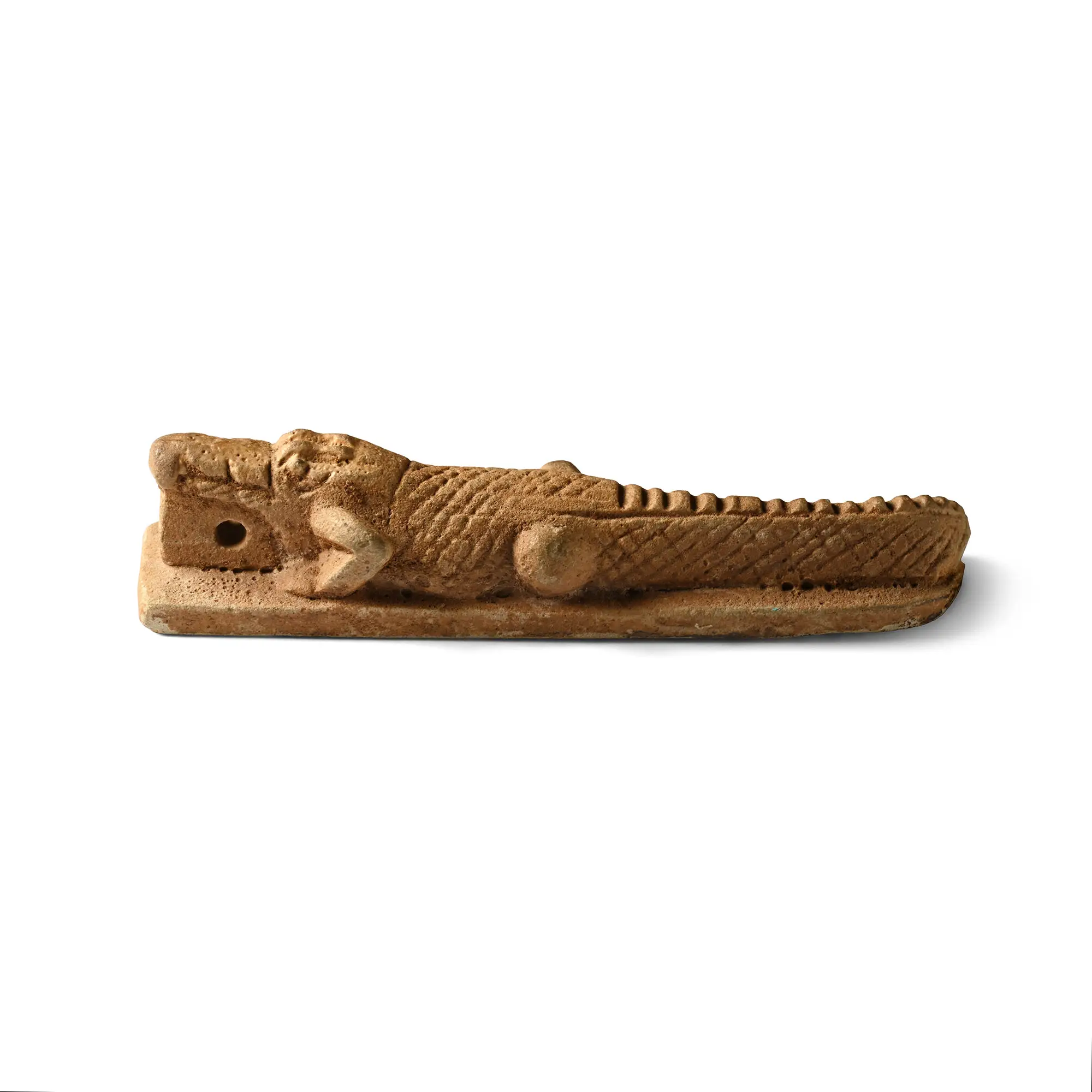
Sobek's mythology connected him to several important themes. As a water deity, he was associated with the Nile and its life-giving inundation. The texts describe the Nile as issuing from his sweat, connecting the god directly to the agricultural fertility that sustained Egyptian civilization. His aquatic nature also linked him to the primordial waters of Nun, giving him associations with creation itself.
The aggressive, predatory nature of the crocodile made Sobek a deity of power and military might. He was associated with the strength of the pharaoh and could serve as a protective deity of royal authority. Some texts describe him as emerging from the primordial waters as a fierce, violent force, embodying the dangerous power that underlay creation.
Sobek's cult flourished in areas where crocodiles were common, particularly in the Fayum region and at Kom Ombo in Upper Egypt. At these sites, actual crocodiles were kept in temple precincts, cared for by priests, and mummified upon death. The temple at Kom Ombo, uniquely dedicated to both Sobek and Horus, preserves mummified crocodiles that visitors can still see today. The excavation of crocodile cemeteries has yielded thousands of mummified animals, testifying to the scale of Sobek's cult.
The iconography of Sobek typically shows him wearing a headdress consisting of a sun disk, horns, and tall feathers (attributes borrowed from other major deities) atop his crocodile head. He might also wear the Atef crown of Osiris, reflecting his associations with that deity. Bronze and faience figures of Sobek, sometimes showing him enthroned or standing in full crocodile form atop a shrine, were offered at his temples such as the one pictured above, which we offered in our 3rd of June 2025 auction as *Lot 13, £2,600. These objects invoked the god's protective power while acknowledging the dangerous nature he embodied.
Four Sons of Horus: Guardians of the Viscera
The process of mummification required the removal of internal organs, which were preserved separately from the body in containers known as canopic jars. Four deities, collectively called the Sons of Horus, protected these organs and ensured their preservation for the afterlife. Their images became ubiquitous in Egyptian funerary practice.
The four sons of Horus were Imsety (human-headed, protecting the liver), Hapy (baboon-headed, protecting the lungs), Duamutef (jackal-headed, protecting the stomach), and Qebehsenuef (falcon-headed, protecting the intestines). Each deity was associated with one of the four cardinal directions and protected by one of four goddesses: Isis protected Imsety, Nephthys protected Hapy, Neith protected Duamutef, and Serket protected Qebehsenuef.
Canopic jars, with their distinctive deity-headed stoppers, are among the most recognisable Egyptian funerary objects. The earliest examples had simple human heads; the distinctive animal heads appeared during the Middle Kingdom and became standard thereafter. The jars were placed in a canopic chest near the sarcophagus, often with the four protecting goddesses depicted on its sides.
Beyond their appearance on canopic equipment, the four sons of Horus appear throughout Egyptian funerary art. Coffins and sarcophagi frequently depict them as small mummiform figures standing in a row. They appear in judgment scenes, in depictions of the deceased's journey through the underworld, and on the gilded shrines that enclosed royal sarcophagi. Their presence signified completeness and comprehensive protection.
The Falcon King: Horus and Divine Kingship
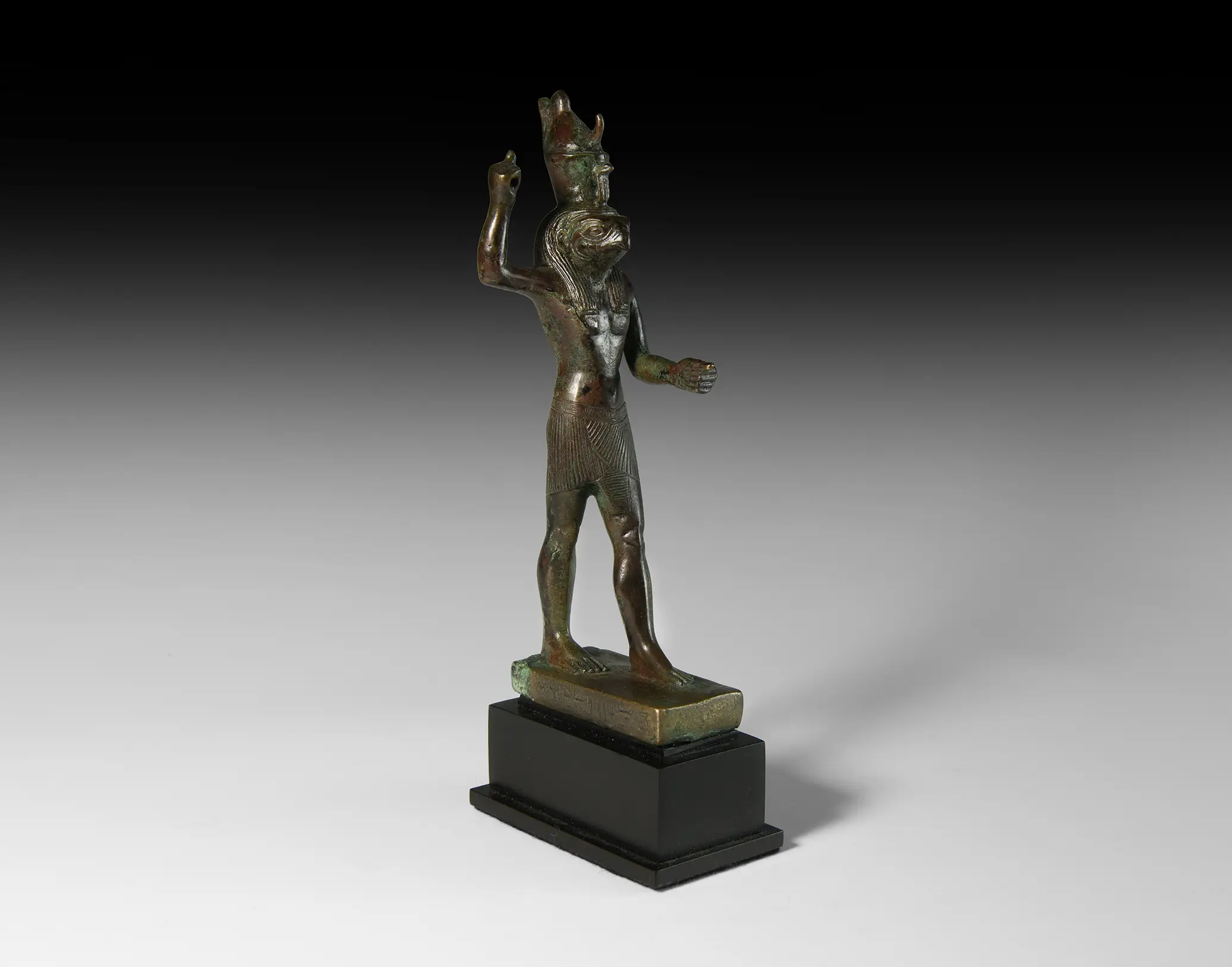
If one god could be said to embody Egyptian civilisation itself, that god would be Horus. The falcon deity, worshipped from the earliest Predynastic times, became so thoroughly identified with Egyptian kingship that the king himself was considered Horus incarnate. The royal titulary began with the Horus name, written within a serekh (a rectangular frame representing the royal palace) topped by the falcon, and this association persisted throughout Egyptian history.
Horus's mythology is complex, reflecting the merging of originally distinct falcon deities into a single, multifaceted god. The earliest Horus was a sky god, the falcon whose right eye was the sun and whose left eye was the moon. This cosmic Horus, called Horus the Elder or Haroeris, belonged to the primordial generation of gods and represented the heavens themselves. But over time, this ancient sky god merged with (or was paralleled by) Horus the son of Isis, the divine child who avenged his father Osiris and claimed the throne of Egypt.
The myth of Horus and Seth, preserved in various texts including the lengthy Chester Beatty Papyrus, recounts the struggle between these two gods for the kingship of Egypt. Seth, the murderer of Osiris, represented disorder, violence, and the red desert that bordered the fertile Nile Valley. Horus represented legitimate succession, order, and the green fertility of the cultivated land. Their conflict lasted eighty years and involved trials, battles, tricks, and interventions by other gods. Eventually, the divine tribunal awarded the kingship to Horus, establishing the pattern by which every Egyptian king became the living Horus, rightful heir to the throne of his father.
The image of Horus as a falcon, wings outstretched, became one of the most pervasive symbols of Egyptian art. The winged sun disk, showing a falcon-winged solar orb, adorned temple doorways and sacred spaces throughout Egypt. The falcon atop the serekh identified royal monuments and inscriptions. The Eyes of Horus (wedjat), representing the sun and moon restored after Seth's attack, became among the most common Egyptian amulets, worn for protection and healing.
Temples dedicated to Horus existed throughout Egypt. The most spectacular, and best-preserved, is the temple at Edfu in Upper Egypt, constructed during the Ptolemaic period. Here, the annual Festival of the Sacred Falcon selected an actual falcon to represent the god, crowning it as king of all Egypt in a ceremony that united the ancient sky god with his role as symbol of legitimate kingship.
Amulets and bronzes of Horus take many forms. The falcon, sometimes wearing the Double Crown of unified Egypt, appears in countless examples. The wedjat eye, perhaps the single most common Egyptian amulet form, invoked Horus's protective power. Figures of Horus as a child (Harpokrates to the Greeks), often depicted with his finger to his lips and the sidelock of youth, became enormously popular in the Late Period and Ptolemaic era. These objects connected their owners to the very essence of Egyptian civilisation, to the divine power that legitimised kings and maintained cosmic order.
Lady of Gold: Hathor, Goddess of Love and Joy
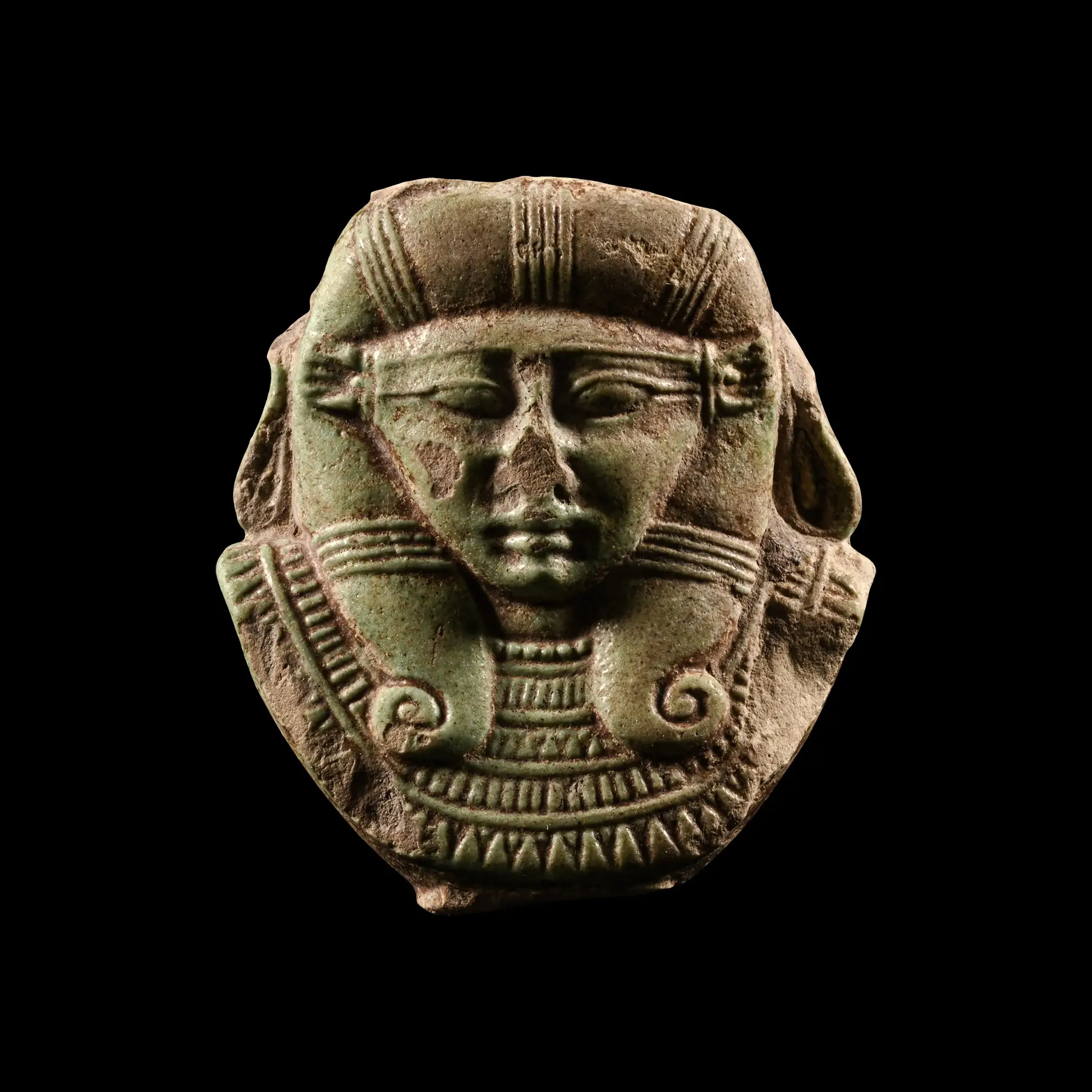
Among the great goddesses of Egypt, Hathor stood apart for her associations with joy, love, music, beauty, and pleasure. While other goddesses commanded fear or inspired awe, Hathor offered delight. Her worship was associated with feasting, dancing, drunkenness, and sexuality. Yet she was also a cosmic deity of profound importance, the Eye of Re, the divine cow who nourished kings, and a goddess of the dead who welcomed souls into the afterlife.
Hathor's name means "House of Horus," and she was associated with the sky god from the earliest times. She could appear as the mother of Horus, the wife of Horus, or as a distinct deity associated with him. Her primary cult centre was Dendera in Upper Egypt, where a magnificent temple (mostly dating to the Ptolemaic and Roman periods) still stands. But Hathor was worshipped throughout Egypt and beyond, and her influence extended to foreign lands, particularly the turquoise mines of Sinai where she was called "Lady of Turquoise."
Hathor's iconography centred on the cow, an animal associated with motherhood, nourishment, and nurturing. She could appear as a cow, as a woman with cow's ears, or as a woman wearing a distinctive headdress consisting of cow's horns embracing a sun disk. This last form became so characteristic that other goddesses (notably Isis) eventually adopted it. The columns of her temples often feature four-sided capitals carved with Hathor's face, creating the impression of the goddess gazing out in all four directions.
The musical instrument called the sistrum, a rattle with metal disks that jingled when shaken, was particularly associated with Hathor and her cult. Sistrum players accompanied religious ceremonies, and the sound of the instrument was believed to please the goddess and drive away evil. Bronze sistrums, sometimes crowned with Hathor's face or with cats (another of her sacred animals), have survived in considerable numbers and represent some of the most distinctive Egyptian ritual objects.
Hathor's association with joy and pleasure gave her an important role in temple festivals, which often involved considerable consumption of alcohol. The "Drunkenness of Hathor" festival, celebrated at Dendera and elsewhere, commemorated the myth in which the goddess, in her fierce aspect as the Eye of Re, was pacified with red-dyed beer that she mistook for blood. Getting drunk on this occasion was not merely permitted but religiously sanctioned, a way of participating in the mythological drama.
Yet Hathor was also a goddess of the dead. In the necropolis of western Thebes, she was particularly venerated, and depictions show her emerging from the western mountain as a cow, welcoming the deceased into the afterlife. This dual nature (goddess of joy in life, goddess of welcome in death) made her worship particularly comprehensive. Devotees could call upon Hathor in life and hope to meet her again in death.
Representations of Hathor appear throughout Egyptian art. Her face, with its characteristic cow's ears, adorned mirrors, cosmetic implements, and jewelry (appropriate for a goddess of beauty). Menat necklaces, heavy counterpoises worn by her priestesses, bore her image. Bronze sistrums and votive figures connected their users to the goddess of love and joy. When we handle such objects, we touch the Egyptian capacity for pleasure and celebration, the religious affirmation of joy as a divine gift.
Eye of the Sun: Sekhmet and the Dangerous Goddess
The Egyptian pantheon contained many goddesses characterised by their ferocity and power of destruction. Chief among these was Sekhmet, the lioness-headed goddess whose name means simply "the powerful one." Sekhmet embodied the burning heat of the sun in its most destructive aspect, bringing plague, pestilence, and warfare. Yet she was also, paradoxically, a goddess of healing, for the same power that could destroy could also protect and cure.
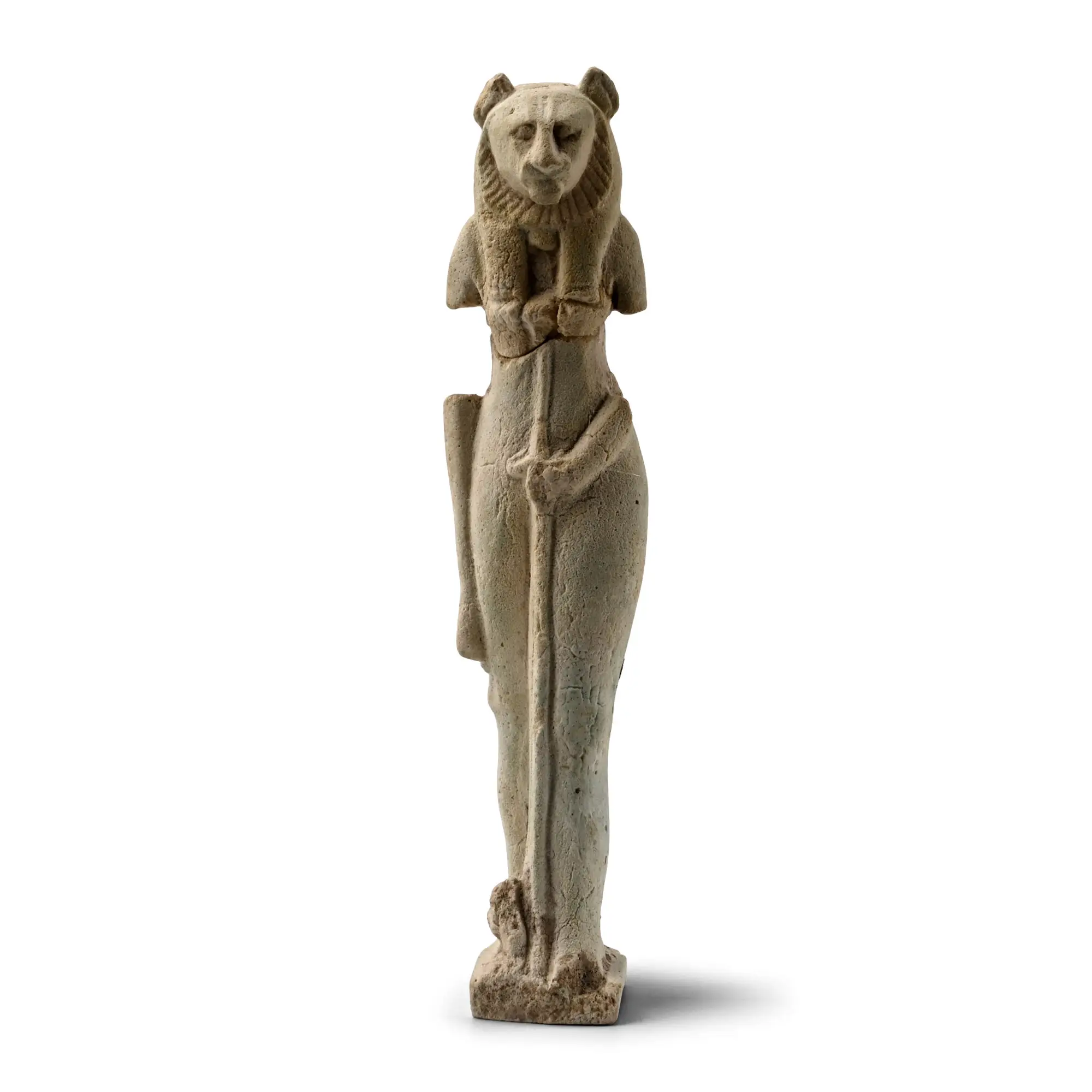
The mythology of Sekhmet centres on her role as the Eye of Re, the destructive force that the sun god unleashed upon rebellious humanity. According to the myth recorded in the New Kingdom "Book of the Heavenly Cow," the ageing Re became concerned that humans were plotting against him and sent his Eye (manifested as either Sekhmet or Hathor, the two being closely associated) to punish them. The goddess massacred humanity with such enthusiasm that Re himself became alarmed and had to trick her into stopping by dyeing beer the colour of blood; the goddess drank what she believed was the blood of her victims, became intoxicated, and forgot her rage.
This mythology made Sekhmet a figure of considerable ambivalence. She was necessary, the embodiment of legitimate divine vengeance, but also terrifying in her potential for indiscriminate destruction. The "messengers of Sekhmet" were identified with plague and epidemic disease. Yet her priests were physicians and healers, reasoning that the goddess who brought disease could also cure it. The ritual "appeasing of Sekhmet" was performed to ward off the dangers associated with the end of the year, a liminal time when the cosmic order was most vulnerable.
Amenhotep III commissioned hundreds of statues of Sekhmet, carved from black granite, for the temple of Mut at Karnak and his own mortuary temple at western Thebes. These impressive images, typically showing the goddess seated or standing with the sun disk atop her lioness head, were intended to propitiate the dangerous goddess throughout every day of the year. Many of these statues have survived and are scattered through museums and collections worldwide.
Smaller representations of Sekhmet were also common. Bronze figures of the lioness-headed goddess were offered at temples, and amulets depicting her were worn for protection against disease and misfortune. The fierce face of the goddess, when we encounter it on such objects, reminds us that the Egyptians did not view their deities as uniformly benevolent. The divine contained danger as well as blessing, destruction as well as creation.
Household Gods: Bes, Taweret, and Popular Religion
While the great state gods received elaborate worship in their monumental temples, the religious life of ordinary Egyptians centred largely on more modest deities associated with the concerns of daily life. Two figures particularly stand out: Bes, the grotesque dwarf god, and Taweret, the hippopotamus goddess, both primarily concerned with protecting women in childbirth and children from harm.
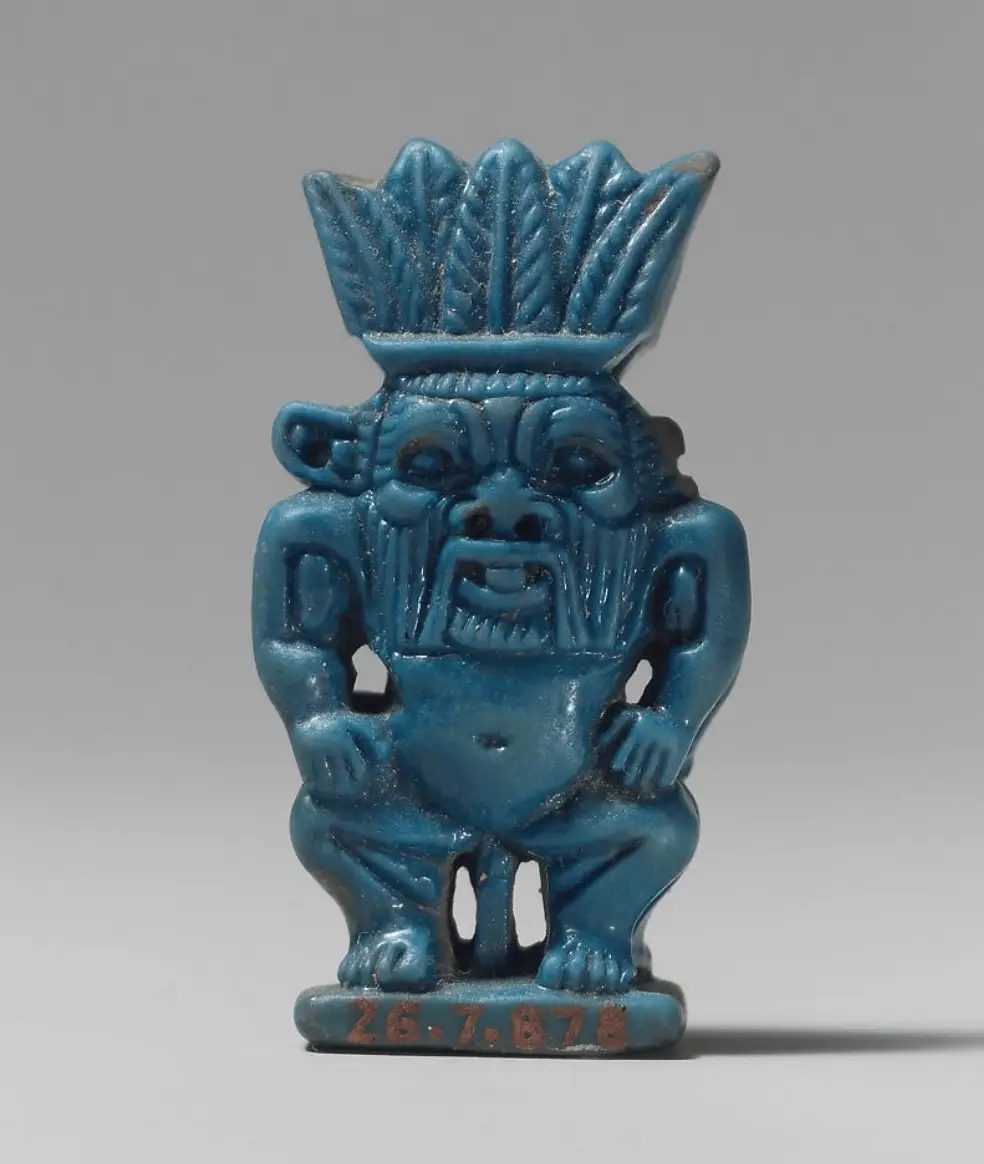
Bes is one of the most distinctive figures in the Egyptian pantheon: a bow-legged dwarf with leonine features, often shown with his tongue protruding, wearing a feathered crown and sometimes brandishing knives or musical instruments. His grotesque appearance was itself protective; he frightened away malevolent spirits through his very ugliness. Bes was associated with music, dancing, and sexuality, but his primary function was apotropaic. Images of Bes appear on headrests (protecting the sleeper during the vulnerable hours of night), on cosmetic items (associated with sexuality and fertility), and on birth bricks (used by women during labour).
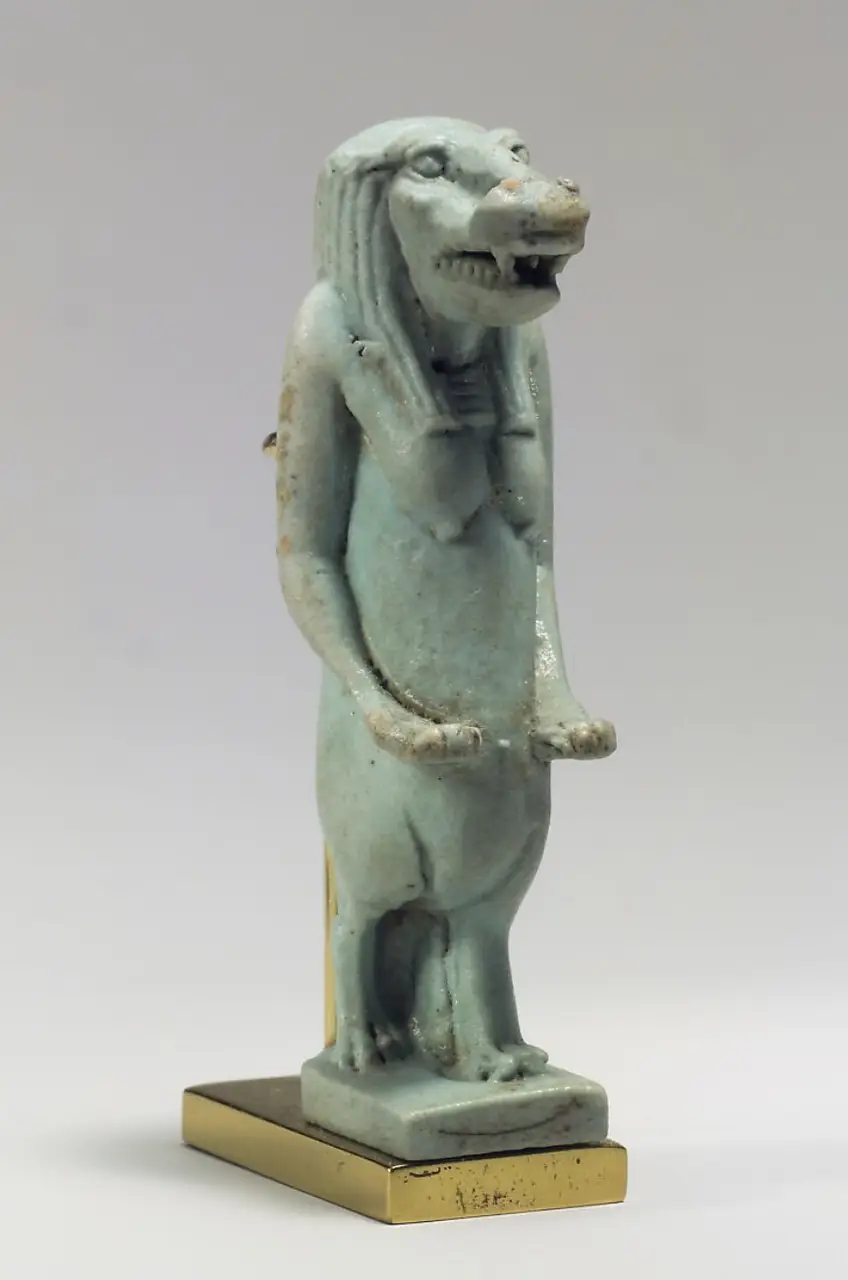
Taweret, whose name means "the great one," took the form of a pregnant hippopotamus standing upright, with the limbs of a lion and the tail of a crocodile. This composite form combined three of the most dangerous animals known to Egyptians (hippopotami kill more people in Africa than any other large animal) into a protective image. The fearsome appearance that made these animals dangerous to humans could be redirected against malevolent spirits threatening women and children.
These household deities appear more frequently in domestic contexts than in formal temple settings. The workers' village at Deir el-Medina, occupied by the craftsmen who built the royal tombs in the Valley of the Kings, has yielded extensive evidence of their worship: niches in house walls for small images, painted scenes, and countless amulets. The personal, intimate nature of this worship differed significantly from the formal rituals of the great temples. When a pregnant woman placed an amulet of Taweret around her neck, she was engaging in a direct personal relationship with the divine, seeking immediate practical assistance rather than participating in cosmic renewal.
Amulets of Bes and Taweret are among the most commonly encountered Egyptian antiquities. Their frequency testifies to their popularity; their survival testifies to the thousands upon thousands of Egyptians who sought their protection. When we hold such an amulet, we hold an object that was pressed against the skin of an anxious mother or placed beside a sleeping child nearly three thousand years ago.
The Living Scarab: Khepri and Solar Symbolism
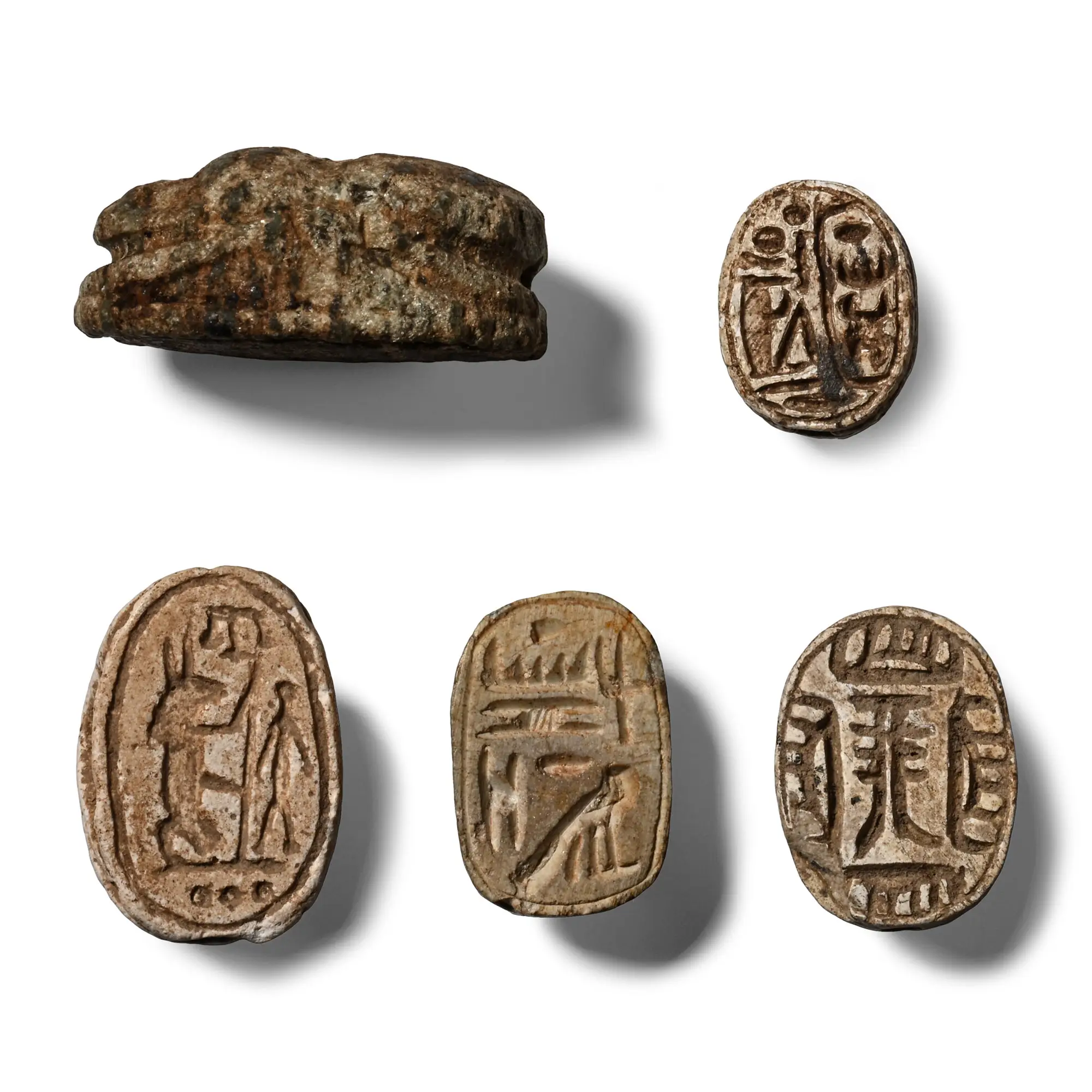
The scarab beetle holds a unique place in Egyptian religious symbolism. The Egyptians observed that scarab beetles rolled balls of dung across the ground, within which their larvae developed, and they saw in this behaviour a model of cosmic creation. The scarab pushing its ball of dung became an image of the sun god pushing the solar disk across the sky. The emergence of young beetles from the dung ball, apparently spontaneously generated, represented the self-creative power of the divine.
The god Khepri, whose name derives from the Egyptian verb "to become" or "to come into being," represented the morning sun, the newly risen solar disk at the beginning of its daily journey. He was typically depicted either as a scarab beetle or as a man with a scarab beetle in place of his head. Together with Re (the noon sun) and Atum (the setting sun), Khepri completed the trio of solar forms that traced the sun's daily course.
Scarab amulets became perhaps the most common category of Egyptian amulet, produced in the millions over the course of three millennia. Heart scarabs, larger carved beetles placed over the heart of the deceased, bear inscriptions (often Chapter 30 of the Book of the Dead) adjuring the heart not to testify against its owner during the judgment before Osiris. Commemorative scarabs, issued by pharaohs to mark important events, functioned as ancient press releases. Seal scarabs, with carved bases used to impress seals, served administrative functions while invoking the protective power of the beetle form.
The base of a scarab might be carved with royal names, divine images, hieroglyphic inscriptions, or decorative patterns. The variety is enormous, and collecting scarabs offers a particularly accessible entry point into Egyptian antiquities. The humble beetle, transformed by Egyptian imagination into a symbol of cosmic creation and solar renewal, produced artifacts that continue to fascinate collectors and scholars alike.
Hearing Prayers: Personal Piety in Ancient Egypt
The monumental temples of Egypt, with their armies of priests and elaborate rituals, might suggest a religion in which ordinary people had little direct contact with the divine. The evidence, however, tells a different story. Particularly from the New Kingdom onward, we find abundant evidence of personal piety, of individual Egyptians seeking direct relationships with their gods.
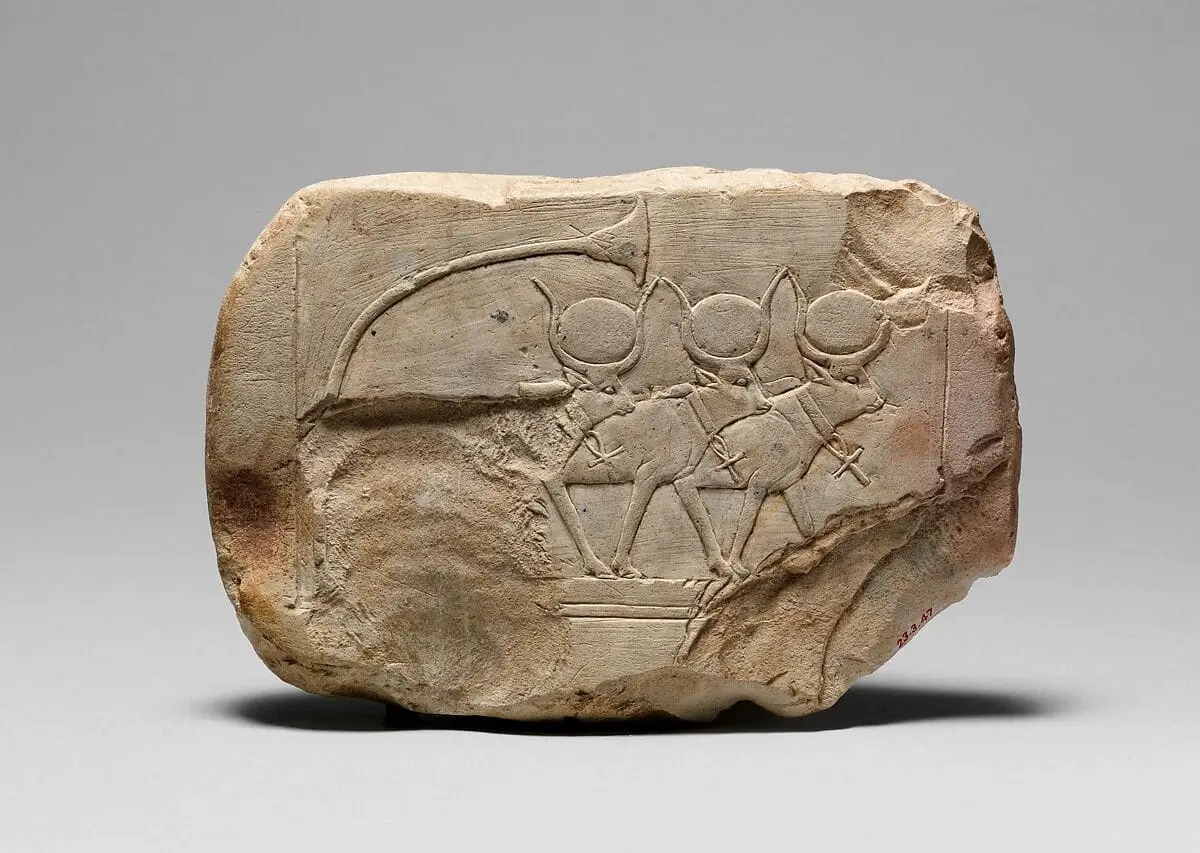
Votive stelae, stone slabs carved with images of gods and inscribed with prayers, were offered at temples and shrines by devotees seeking divine favour or expressing gratitude for blessings received. A distinctive category of these stelae depicts ears, sometimes many pairs of ears, invoking the god's attention: "hearing ear" stelae explicitly request that the deity listen to the worshipper's prayers. Similar chapels of the hearing ear were built into the outer walls of temples, allowing common people to pray to the god within without entering the sacred precincts reserved for priests.
The inscriptions on votive stelae provide extraordinarily personal glimpses into Egyptian religious experience. A man named Neferabu left a stela at Deir el-Medina confessing that he had sworn falsely by the god Ptah and subsequently lost his sight as divine punishment; he begs the god for forgiveness. Another devotee records his gratitude to Amun:
"You are Amun, the Lord of the silent, Who comes at the voice of the poor; When I call to you in my distress, You come to rescue me..."
This language of personal relationship, of a god who hears the poor and responds to distress, represents a dimension of Egyptian religion often overlooked in popular accounts that emphasise the monumental and the morbid.
Bronze figures of deities, deposited by the thousands at temple sites, represent another expression of personal piety. These objects, ranging from crude mass-produced forms to exquisitely detailed individual works, were purchased by devotees and offered to the gods as permanent tokens of devotion. The extraordinary numbers that have survived (thousands from single sites like the Sacred Animal Necropolis at Saqqara) testify to the popularity of this practice.
When such objects come to auction, we offer not merely ancient craftsmanship but evidence of ancient faith. These were devotional objects, created in hope and offered in prayer.
The God Who Would Be King: Akhenaten and Religious Revolution
No account of Egyptian religion would be complete without discussing the most radical departure from traditional practice: the religious revolution of Amenhotep IV, who changed his name to Akhenaten and attempted to establish the worship of a single deity, the Aten, as Egypt's sole religion.
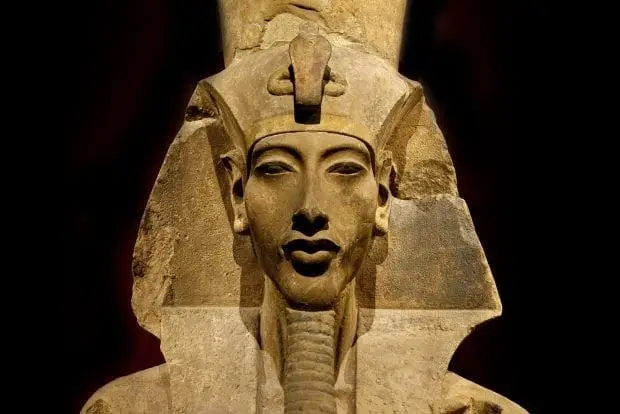
The Aten was originally simply the visible disk of the sun, one of many solar manifestations worshipped in Egyptian religion. Akhenaten's father, Amenhotep III, had already shown particular interest in solar theology, and the Aten appears in his inscriptions with increasing prominence. But it was Akhenaten who elevated the Aten to exclusive status, building a new capital city (Akhetaten, modern Amarna), closing the temples of other gods, and erasing the names of deities like Amun from monuments throughout Egypt.
The theology of Atenism, preserved in the Great Hymn to the Aten and other texts, presents a vision of deity that has often been compared to biblical monotheism. The Aten is the sole creator, who made the world and all living things, who causes the Nile to flow and the rain to fall, who cares equally for Egypt and foreign lands. There are no other gods in this theology, only the Aten and his son Akhenaten, who alone truly knew the god and served as the sole intermediary between humanity and the divine.
The revolution failed. Within a generation of Akhenaten's death, traditional religion had been restored. The temples of Amun reopened. The name of Akhenaten himself was erased from monuments and omitted from king lists. The city of Akhetaten was abandoned and eventually dismantled for building materials. Later Egyptians remembered Akhenaten, when they remembered him at all, as a criminal and heretic.
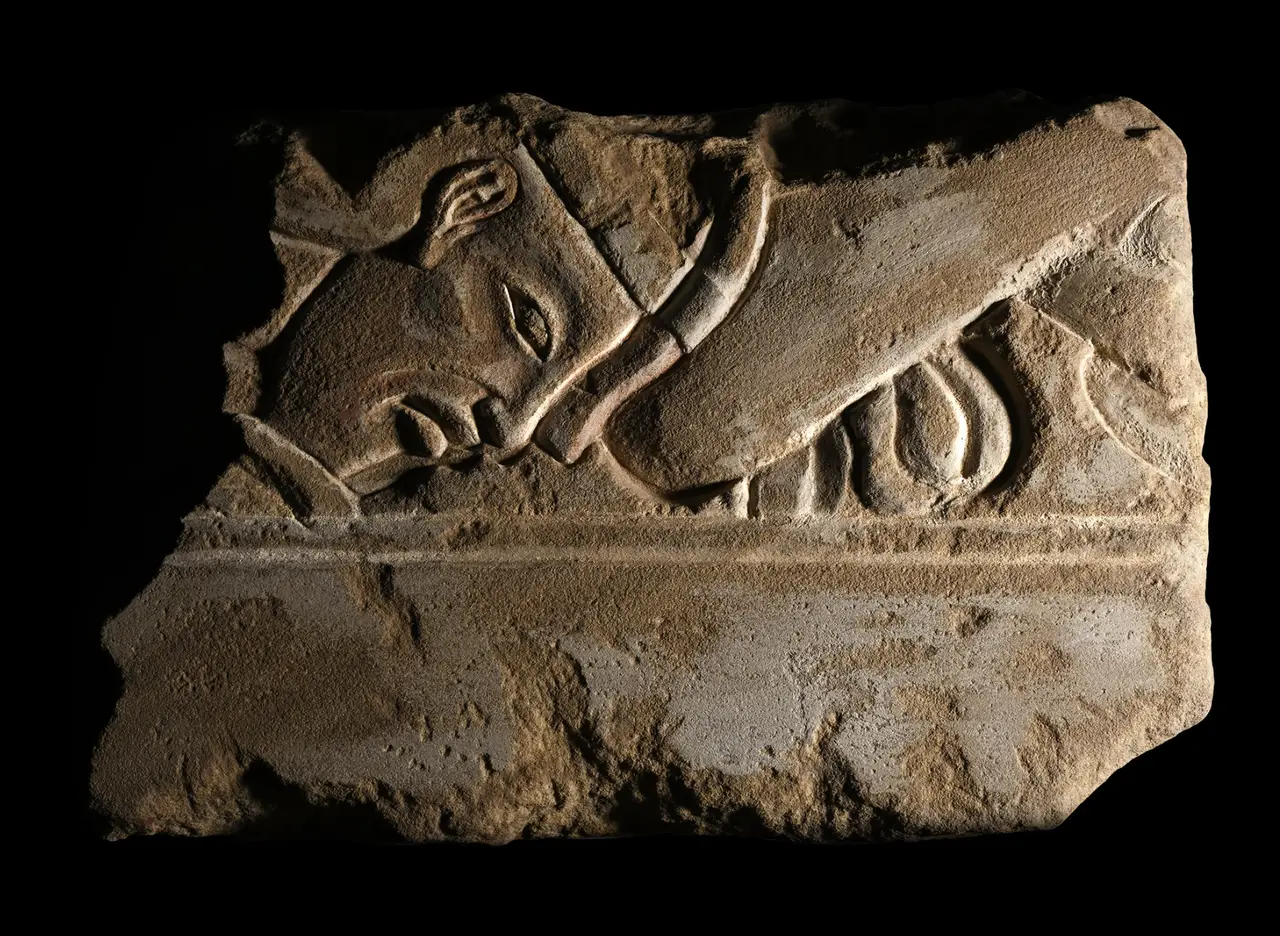
The artifacts of the Amarna Period possess a particular fascination. We recently sold a 33cm limestone relief of exceptional quality, pictured above, depicting captured enemies (Lot 36, 9th September 2025). The distinctive art style associated with Akhenaten's reign (elongated forms, naturalistic poses, scenes of royal family intimacy) is immediately recognisable. Objects bearing the Aten's image or Akhenaten's name survived the subsequent reaction against his memory, and they appear occasionally on the antiquities market. The period represents an extraordinary moment in ancient religious history, a failed experiment in monotheism that nevertheless influenced subsequent theological development in ways that remain debated.
The Lasting Legacy: Egyptian Gods Beyond Egypt
The worship of Egyptian gods did not end with the pharaohs. When Alexander the Great conquered Egypt in 332 BC, he and his successors adopted Egyptian religion rather than suppressing it. The Ptolemaic dynasty built magnificent temples in traditional Egyptian style, such as those at Edfu, Dendera, and Philae, that rank among the best-preserved examples of Egyptian temple architecture. Greek and Egyptian religious traditions merged in new ways, producing deities like Serapis (combining Osiris and the sacred Apis bull with Greek elements) who became popular throughout the Hellenistic world.
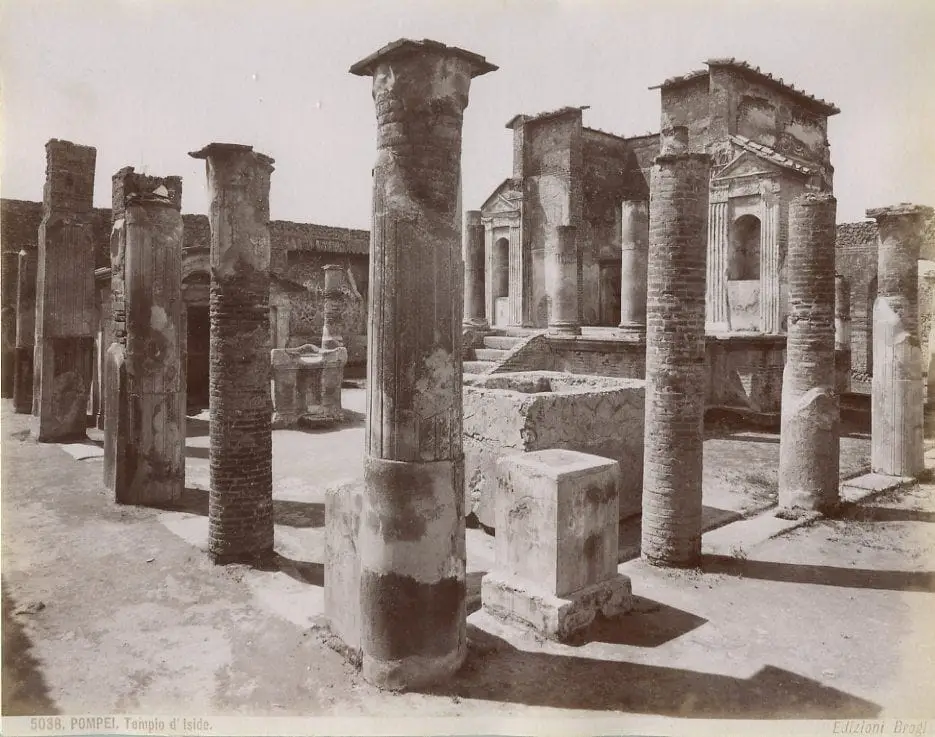
The worship of Isis spread far beyond Egypt during this period. Temples of Isis were established throughout the Mediterranean, from Athens to Rome to Britain. The mysteries of Isis offered initiates a path to salvation, a personal relationship with a caring goddess who promised blessing in this life and eternal life after death. The Classical writer Apuleius, in his "Golden Ass," provides a detailed account of initiation into her mysteries, describing transformative spiritual experience that rivals any mystical account from any tradition.
Egyptian religious influence persisted into the Christian era. The early Church in Egypt (the Coptic Church) developed in an environment saturated with Egyptian religious imagery. Scholars have noted resemblances between Isis and Horus and the Virgin Mary and infant Jesus, between Osirian resurrection and Christian resurrection, between Egyptian judgement scenes and Christian Last Judgement imagery. How much direct influence occurred remains debated, but the Egyptian gods certainly provided a conceptual framework within which Christianity could be understood and accepted.
Even today, the gods of Egypt retain their hold on the imagination. The symbols of Egyptian religion (the Eye of Horus, the ankh, the scarab beetle) appear throughout contemporary culture. The myths of Isis and Osiris continue to be retold. And throughout the Mediterranean, fishermen still paint eyes on the prows of their boats, an apotropaic custom begun in Egypt thousands of years ago.
Objects of Faith: Collecting Egyptian Religious Antiquities
The religious artifacts of ancient Egypt represent one of the most accessible and rewarding areas for collectors of antiquities. Unlike the monumental sculptures and painted coffins that properly belong in museums, the smaller objects of Egyptian religion (amulets, bronze figures, scarabs, ushabtis, faience vessels) regularly appear on the legitimate market with established provenance and reasonable prices.
What distinguishes collecting Egyptian religious objects is the intimate connection between the artifact and the person who used it. An amulet worn for protection, a bronze figure offered in devotion, a scarab placed over a loved one's heart: these objects participated directly in the religious lives of ancient individuals. They were made for use, for spiritual efficacy. When we acquire such an object, we become custodians of an ancient person's hope and faith.
The condition of Egyptian antiquities varies enormously, and collectors must develop an eye for distinguishing genuine wear from damage, original surfaces from later restoration. Provenance research has become increasingly important, and reputable dealers will provide documentation establishing how an object came to market. The pleasure of collecting lies not only in aesthetic appreciation but in the research that each acquisition inspires: What deity does this amulet represent? What was the purpose of this particular form? What does the inscription mean?
At TimeLine Auctions, we regularly offer Egyptian religious objects ranging from modest faience amulets to significant bronze figures and carved stone pieces. Each lot carries not merely an estimate of monetary value but information about historical context and significance. The gods of Egypt created one of humanity's richest religious traditions; the objects that embodied that tradition allow us to touch that ancient world directly.
The Weight of Eternity
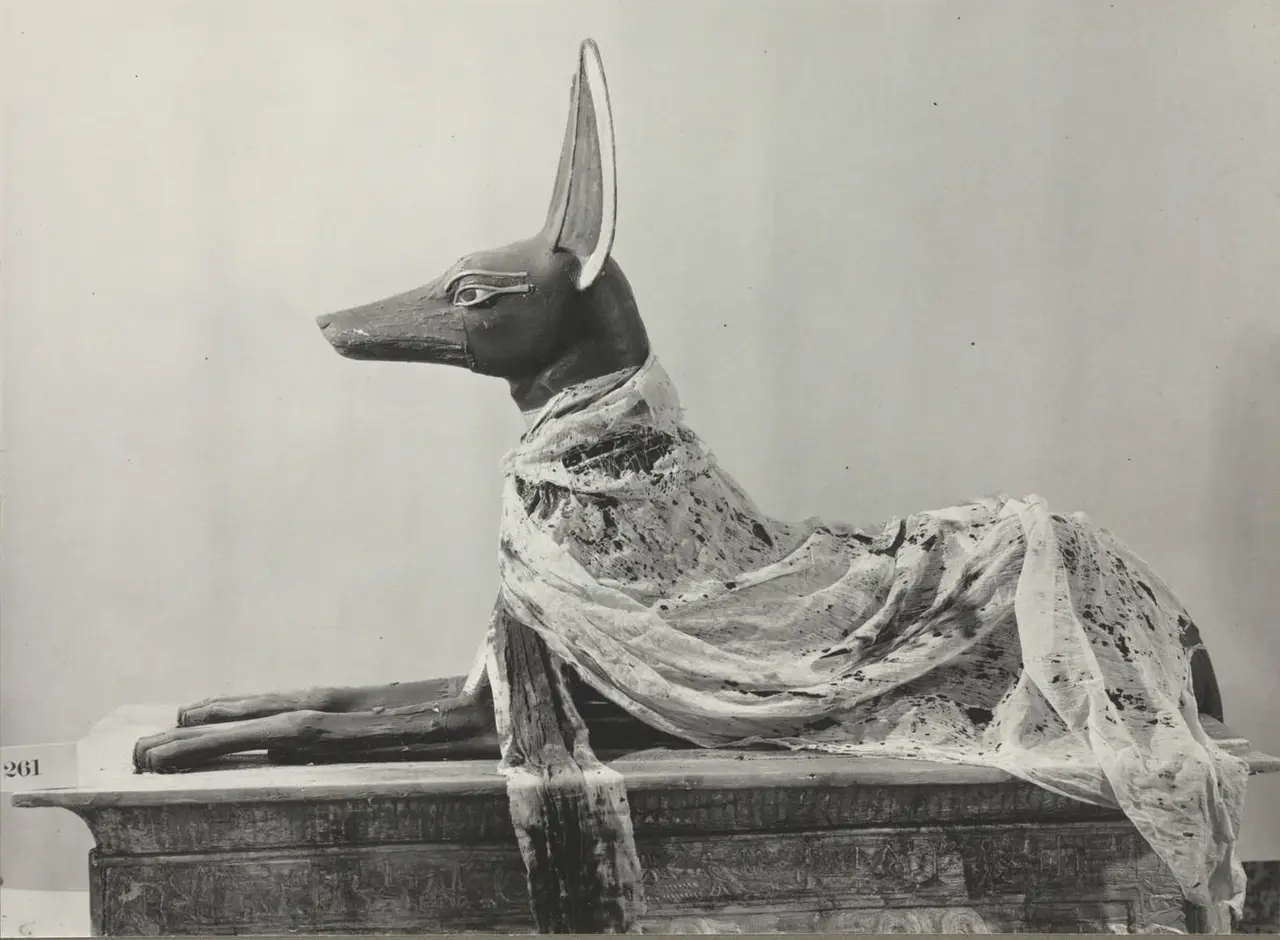
In the Egyptian Museum in Cairo, among the treasures from Tutankhamun's tomb, stands a wooden figure of Anubis, the jackal god, covered with gold leaf and adorned with a linen scarf. The statue was found mounted on a shrine-shaped chest that contained numerous small objects, amulets, and ritual equipment. For over three thousand years, this figure lay in darkness, standing vigil over the dead king, protecting him against the demons of the underworld. When Howard Carter removed the wall blocking the burial chamber in 1922, the god's watchful presence was the first thing he encountered.
That moment of encounter, repeated in countless less famous excavations, captures something essential about Egyptian religious objects. They were made to perform their protective, devotional, or funerary functions forever, in perpetual darkness, beyond human sight. Their discovery interrupts an intended eternity. When we look at an Egyptian amulet or bronze figure, we look at something never meant to be seen again after its original deposition.
This thought should perhaps inspire a certain humility in collectors and scholars alike. These objects carry weights beyond their physical mass. They embody the hopes, fears, and devotions of men and women who lived millennia ago, who believed with perfect sincerity that these small carved and cast forms held genuine spiritual power. Whether we share their beliefs is beside the point; what matters is that they believed, and that their belief created objects of extraordinary beauty, ingenuity, and endurance.
The gods of Egypt have been silent for centuries. The temples where they received daily offerings lie in ruins, visited now by tourists rather than worshippers. The priests who knew the rituals left no successors. The language of the hieroglyphs was forgotten for more than a millennium before Champollion decoded it. Yet the gods remain present in the objects they inspired. Every faience amulet, every bronze figure, every scarab carries within it the trace of that vanished world. When we hold such objects, we touch the distant past as directly as is humanly possible. The conversation between mortals and gods has ended, but the artifacts through which it was conducted survive, waiting to tell their stories to anyone willing to listen.
TimeLine Auctions, 23rd February 2026