Home > Stories by TimeLine Auctions
Stories by TimeLine Auctions
Are Antiquities a Good Investment?
The most expensive antiquity ever sold at auction stands slightly over eight centimetres tall. The Guennol Lioness was carved in Elam around 3000 BC from an ivory-white stone, probably magnesite, whose surface the scholar Edith Porada described in 1950 as "almost luminous": a lioness's head and shoulders on a body that stands like a person, paws clasped at the chest. The figure, Porada wrote, "seems to fill the entire field of mental vision." When it reached Sotheby's New York in December 2007 it carried an estimate of $14 million to $18 million. Five bidders took it to $57,161,000.
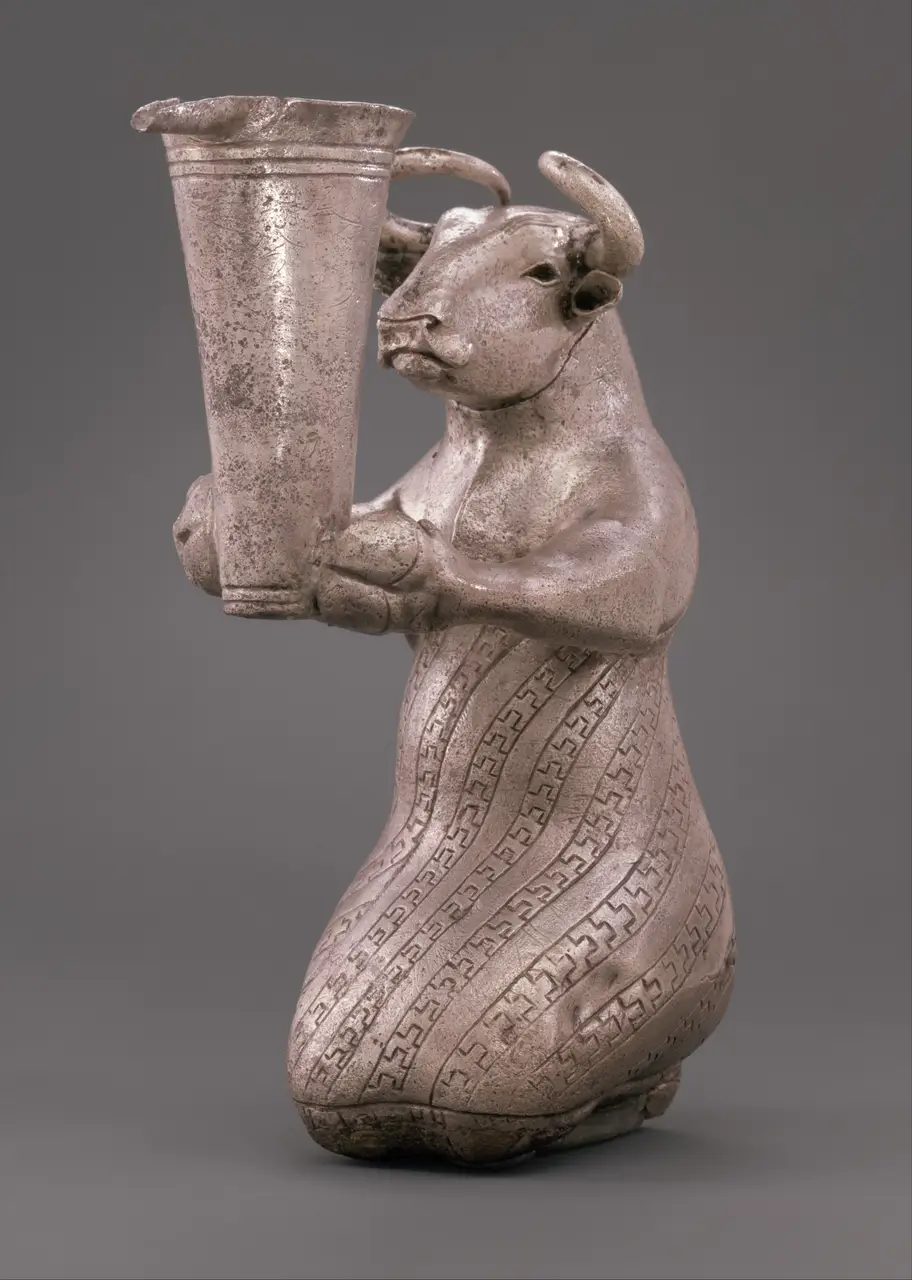 Animals in human postures are the signature of Proto-Elamite sculpture: a silver bull kneeling with a spouted vessel, southwestern Iran, about 3100-2900 BC. Edith Porada dated the Guennol figure by comparison with leonine figures in the same attitude on seals of this period. Metropolitan Museum of Art, CC0, via Wikimedia Commons.
Alastair Bradley Martin and his wife Edith had owned the lioness since 1948, and for nearly sixty years it sat on loan in the Brooklyn Museum. What they paid Joseph Brummer's estate for it was never published; what it made in 2007 is a matter of record.
A sale like that is a poor guide to the market, because it cannot be repeated: one object in millions reaches such a price, once in a generation, and no buyer can set out to acquire the next one. What matters to anyone placing real money is not the record but the ordinary case, how the antiquities a collector can actually buy and hold tend to behave over the years.
The short answer
Treat antiquities as an alternative asset: a place for money you have deliberately set aside from your main portfolio, never a substitute for it. An index fund will, over most periods, outgrow a shelf of Roman glass, and anyone who tells you otherwise is selling something. Nobody has ever managed to build a return index for antiquities themselves; the objects are too individual and sell again too rarely for the economists' methods to grip. The nearest honest baseline is the wider collectibles record, and there the numbers are consistent. Elroy Dimson and Christophe Spaenjers, compiling a century of prices for their study of collectibles as investments, put the long-run real return on art at 2.4 per cent a year, stamps at 2.8, fine wine at 4.1, against 5.2 per cent for world equities. Collectibles trail shares over the long run.
That settles the question's crude form. The interesting question is the one collectors actually face: how antiquities behave once some of your capital is going into things you can hold anyway. And there the class has a combination of properties that is hard to find anywhere else: real liquidity at every price level, a supply that law has permanently closed, and demand that owes nothing to any generation's memories. Bought carefully, at fair estimates, and held for years rather than months, good pieces have a long record of keeping and growing their value. Bought carelessly, they are expensive souvenirs, and the rest of this guide is what "carefully" means.
Ancient art or archaeology: two kinds of value
Every antiquities catalogue is two markets wearing one label. Part of what we sell is ancient art: sculpture, portrait heads, painted vases, jewellery, objects whose price is set by beauty and presence, by the fact that someone will build a room around them. The other part is academic: a forger's terracotta coin mould, a stamped amphora handle, a Luristan spearhead. These are priced on interest, on what they attest about workshop practice or trade or war, and their buyers tend to know exactly what they are looking at.
Ancient art competes for wall space with paintings and design; its buyers include people who have never thought of themselves as antiquities collectors at all. Academic pieces answer to a smaller, more knowledgeable pool, which keeps their prices steadier and lower, and their bargains more frequent. The appreciation stories in this market mostly come from the first kind; the forgiving prices mostly belong to the second. It pays to know which kind you are buying.
What actually appreciates
Watch enough sales and a pattern emerges that has nothing to do with period or culture. Within any category you care to name, Roman glass, Cypriot Bichrome jugs, Luristan bronzes, the standout examples appreciate and the middle of the field mostly keeps pace with inflation. The collector who spends £5,000 on the single best flask in a sale tends, ten years on, to have done better than the collector who spent the same money on five ordinary ones. We have written elsewhere about what makes an antiquity important, and the same qualities that make a piece important make it perform: rarity within its type, condition, documented history, and that harder-to-define property of being the example other collectors remember after the sale.
The Constable-Maxwell cage cup, a colourless openwork cup of around AD 300 and one of the few to survive complete, sold at Sotheby's in June 1979 for £520,000, then a world record for any glass. In July 2004 it sold again, at Bonhams, for £2,646,650, a record once more, having passed part of the interval in the British Rail Pension Fund's art collection. The same object, twenty-five years, five times the price. Ordinary Roman glass did nothing of the kind over those years; the standout did.
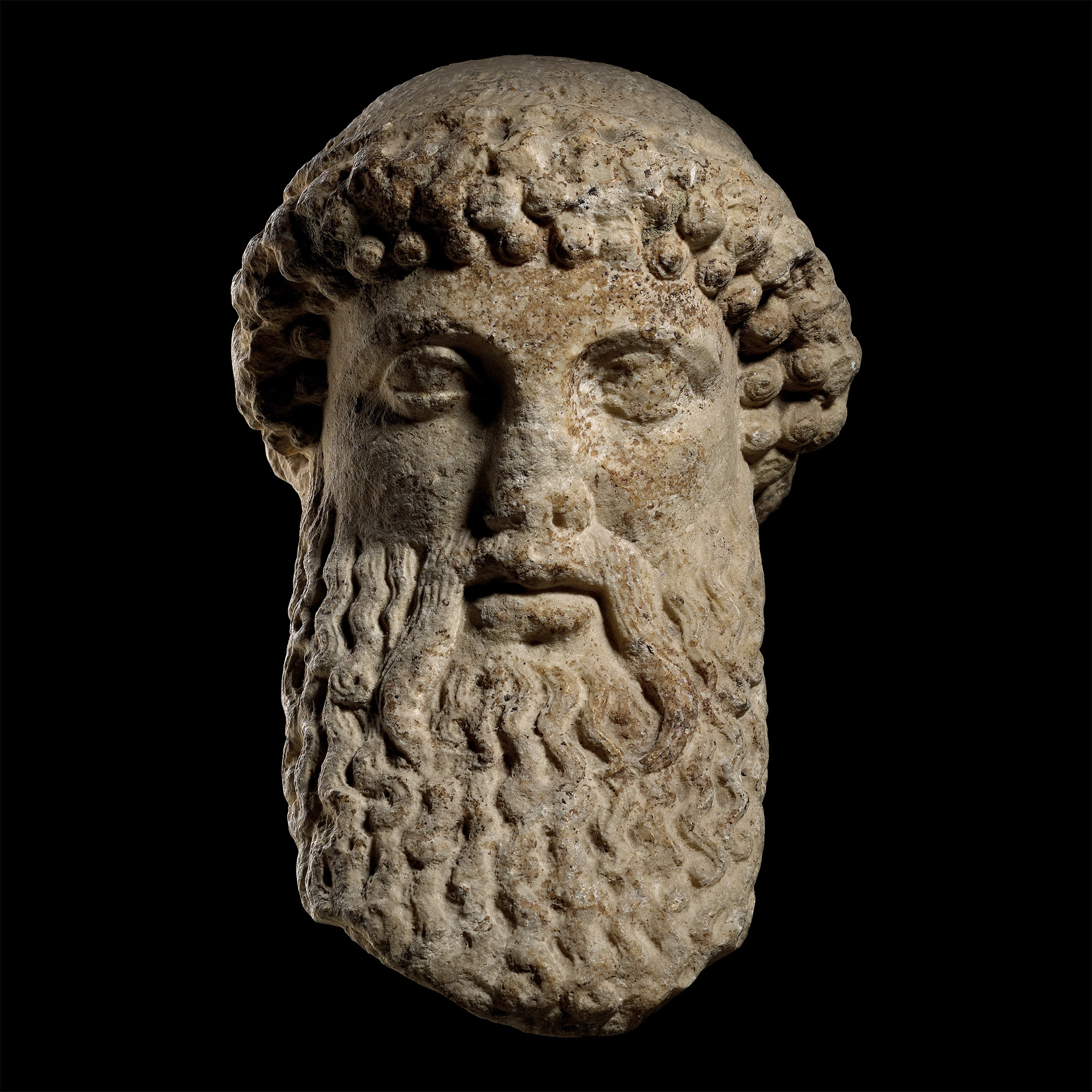
Two further patterns show up in our results. The first is that the human face and figure outsell almost everything else. Idols, portrait heads, gods in bronze and stone: buyers reach for objects that look back at them, and prices follow. Among the highest results in our own archive sits a Palaeolithic Venus idol at £114,300, a carved stone figure that outsold whole cases of fine but faceless material. Undecorated wares, however honest and ancient, appreciate more slowly. The second pattern is restoration. Pieces that have been left alone, or nearly alone, edge ahead of pieces that have been heavily rebuilt, and the gap widens as the market grows more knowledgeable. A visible old repair is part of an object's history; a modern reconstruction dressed as completeness is a discount waiting to be discovered.
How liquid are antiquities?
Liquidity, for anything you cannot sell at the press of a button, comes down to two questions: how long until your object finds a buyer, and how much do you give up for speed? For antiquities consigned to a specialist auction house the honest answers are months, and less than you might fear. We hold four major sales a year, so a consigned piece reaches the market within a quarter and settles shortly after the hammer. That is slow beside a share portfolio and quick beside almost everything else people collect: try selling a mid-range painting, or a house, in twelve weeks at a fair price.
The unusual feature of the antiquities market is where the liquidity sits. In most collectible fields the market thins as you descend; the trophies trade, the middle languishes. An antiquities sale clears in volume at every level. Our June catalogue sold lots at £52 and a Bronze Age hoard at £97,500, with hundreds of lots finding buyers at every level between: under £100, under £1,000, under £10,000. Our own record stands at £297,600, for a medieval devotional ring linked to Joan of Arc. A market that can absorb both ends of that range four times a year is a market you can enter, and leave, at whatever scale suits you. We have covered the selling side separately; the short version is that the same mechanism that sets your entry price is waiting to set your exit.
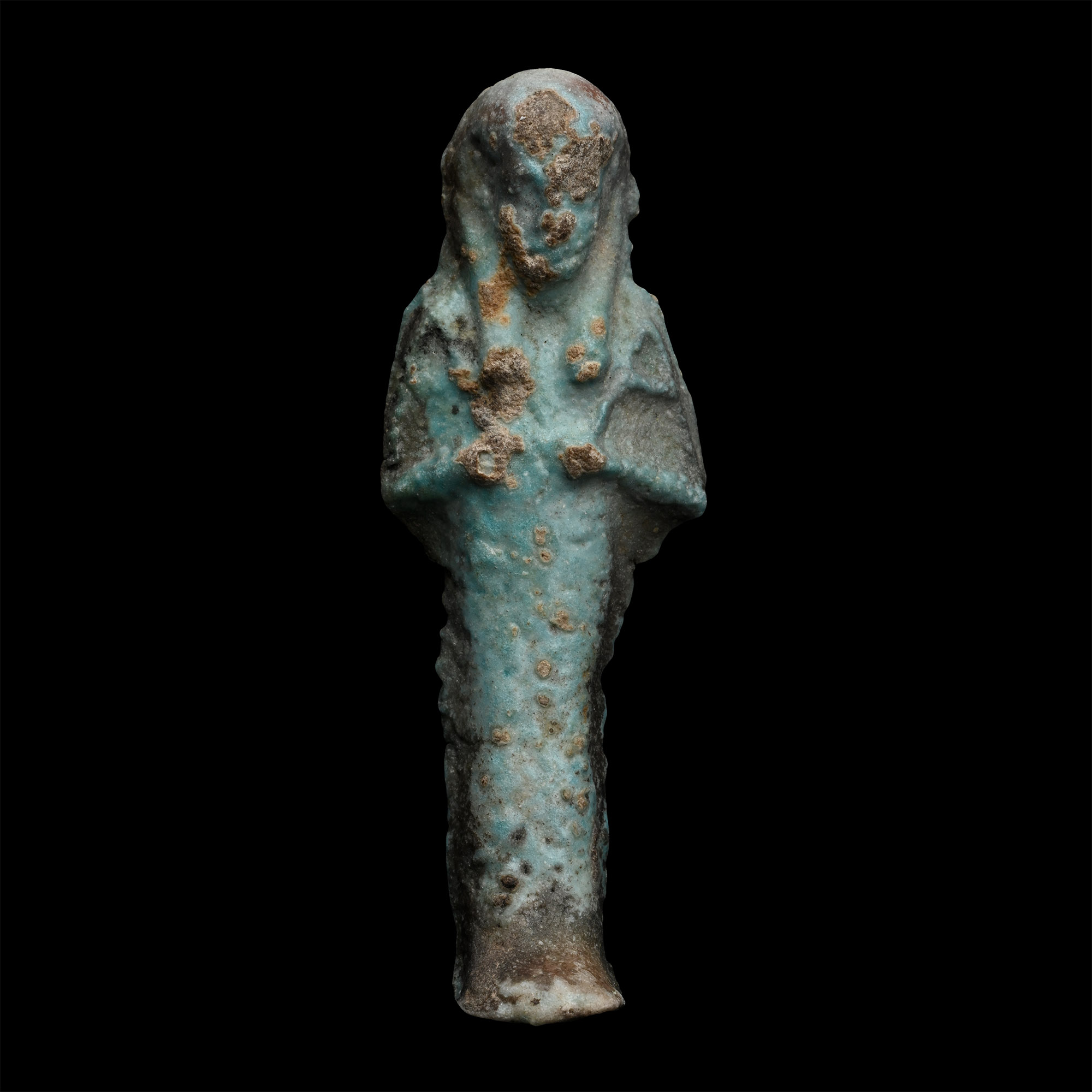
That shabti, made to labour in someone's afterlife under the Ptolemies, changed hands in June for £117. A genuine piece of ancient Egypt trades at the price of a decent dinner, and it will trade again just as easily. Liquidity at £117 is worth as much to a beginning collector as liquidity at six figures is to an estate.
One object or forty?
An investor with £20,000 to place faces the same choice in antiquities as anywhere else: concentrate or spread. One route buys a single piece of real consequence, a marble head, an important vase. The other buys forty objects across as many shelves.
Concentration buys volatility along with the quality. A single object carries a single attribution, a single condition report, and a single category's fashion on the one day you choose to sell. When it goes well it goes very well; the standout pieces are where the appreciation lives. But the outcome arrives as one number, and you have no way to average it.
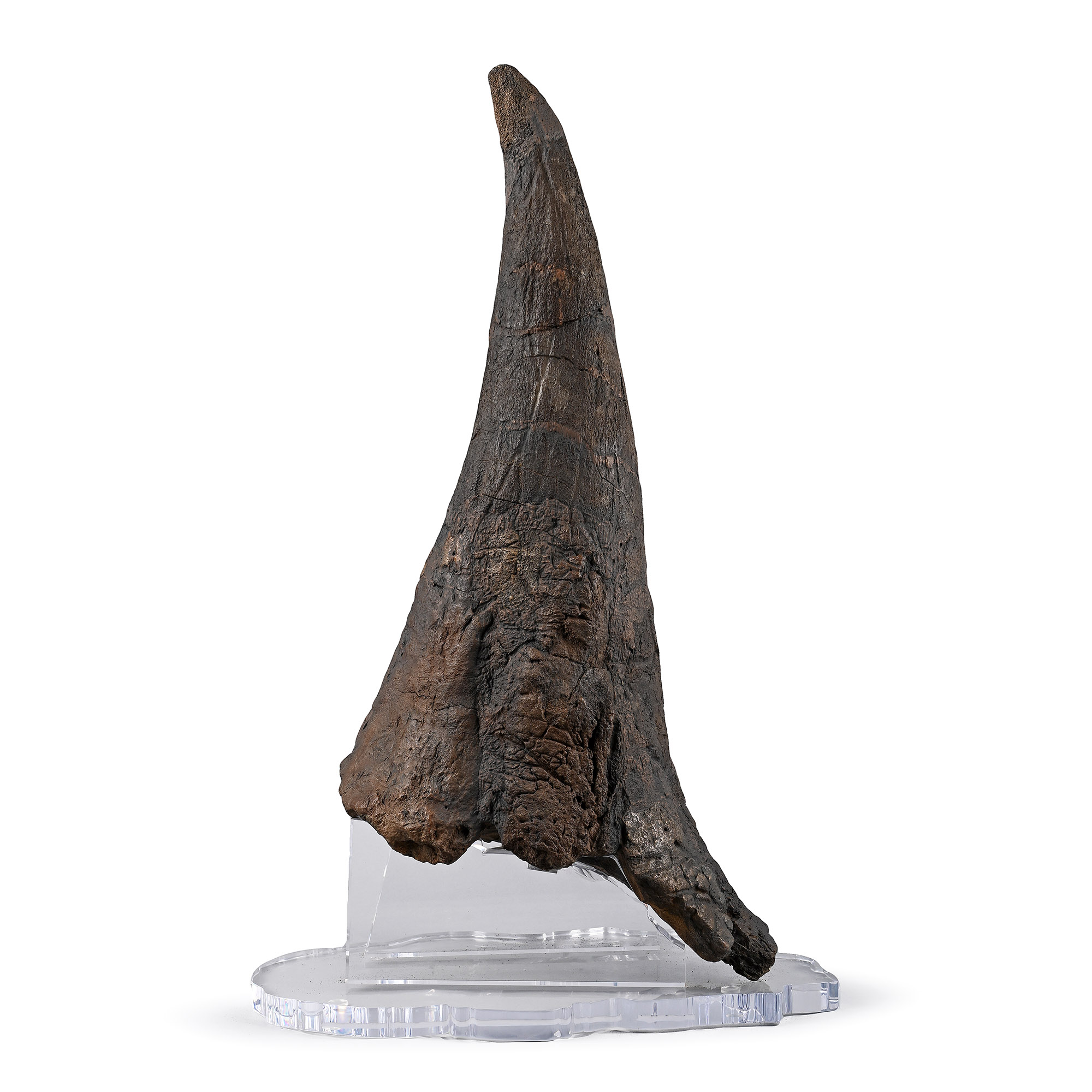
Spreading works the way it works everywhere. Forty objects across Roman glass, Egyptian faience, coins, ancient jewellery and early printed books behave like a portfolio: the disappointments are diluted by the surprises, and no single attribution can sink you. The spread can reach further than most people expect, because the salerooms that handle antiquities usually handle natural history too. A fossil obeys the same grammar as a bronze: rarity, condition, presence.
We have set out three worked approaches to a first £10,000 elsewhere; the shape of the answer is the same at £100,000. Concentrate only when you know a category well enough to recognise its standout, because the standout is the only thing worth concentrating on.
A supply that cannot grow
In 1895, Baedeker's guide to Egypt told tourists they could visit a sales room inside the Egyptian Museum and "purchase antiques, the authenticity of which is vouched for by the museum-authorities. A permit to export is given with each purchase." The state sold antiquities across a counter, permit included, and had kept a room for the purpose since 1888. That world closed piece by piece across the twentieth century: Greece had asserted national ownership of its antiquities as early as 1834, Egypt's official sale rooms closed in the mid-twentieth century, and country after country ended lawful export altogether, with the 1970 UNESCO Convention becoming the line the market itself now treats as decisive.
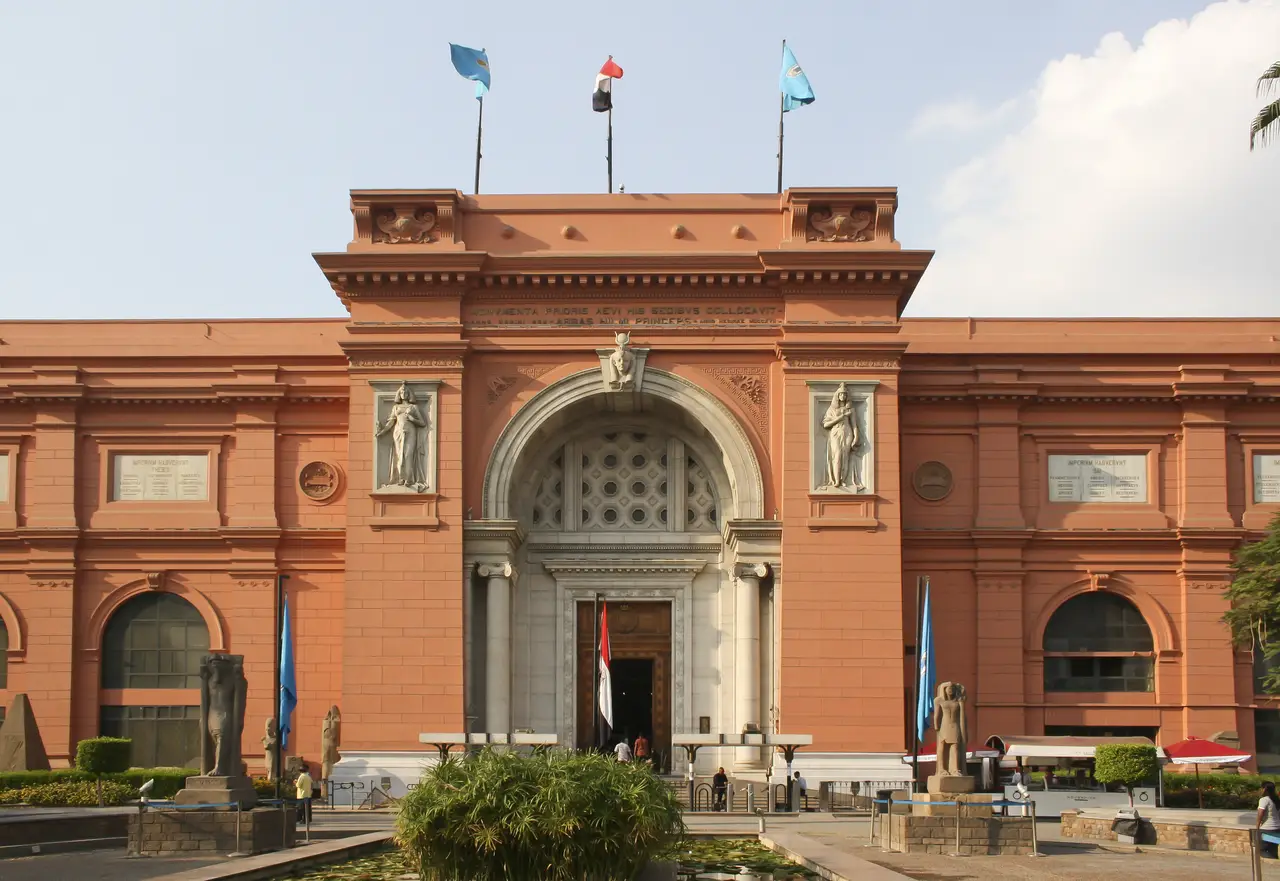 The Egyptian Museum in Cairo. When the collection moved to this building in 1902 the official sale room moved with it, selling antiquities across the counter, export permit included, into the mid-twentieth century. Photo: Diego Delso, CC BY-SA 3.0, via Wikimedia Commons.
The lawful supply of antiquities is fixed: what trades today is the material that left the source countries while the door stood open, a vast but finite pool held in old collections, dealer stocks and family estates, recirculating as each generation lets go. Compare the assets people usually reach for: contemporary art's supply grows every day the artists are working; watch brands mint new "limited" editions annually; even bullion answers to mine output. Antiquities are one of the very few asset classes where the question "what happens to prices if supply floods in?" has no version that can come true.
The nostalgia problem antiquities don't have
Fixed supply protects an asset from one side. Demand is the other, and demand is where most collectible fields carry a risk antiquities lack. Hagerty, the American classic-car insurer and price-guide publisher, records the age of every caller who asks for a quote, which gives it an unusually clear view of who actually wants which car. In a 2023 analysis, Hagerty's John Wiley reported that 88 per cent of quotes for the little MG sports cars of 1946 to 1955 came from people born before 1965. A good example costs around $20,000, so price was no barrier; the younger buyers simply were not there.
Wiley's conclusion was that the age curve of a car's admirers predicts "the potential future health of that vehicle's valuation," and the valuations have behaved accordingly. Hagerty's UK guide found nearly 80 per cent of classic values flat or falling in 2025, its index of British cars with an average build year of 1962 in decline while its 1980s-era indices grew. In five years, the average model year of a million-dollar car at auction moved from 1972 to 1984. The prewar dealer Mark Hyman puts it plainly: his longstanding buyers have become "net sellers rather than net buyers."
A collector car, in other words, is largely a memory with wheels, and when the generation holding the memory departs, the price goes with it. Furniture ran the same experiment with the same result: the Antique Collectors' Club price index for English furniture, compiled by John Andrews from 1968, peaked in 2002 and was retired in 2016 down roughly 45 per cent, sunk by what Andrews called "the fashionable disdain for Georgian-style mahogany."
No such cliff waits for the Ptolemaic shabti, because no memory is holding its price up in the first place. Nobody's grandfather drove one. Antiquities never depended on the generation that grew up with them, since none did; their appeal is of the kind even the car market treats as immune to ageing: rarity and history, the same pull that let a pedigree Mercedes racer of 1954 make $53 million in 2025 while ordinary prewar saloons struggled to find their next keeper. Every antiquity is pedigree and nothing else. Fashion still moves within the field, and we have watched categories strengthen and soften across our own sales, Roman glass being a recent gainer. What the field lacks is the mechanism for a collapse of the car-and-furniture kind: there is no generation whose departure takes the ancient world's audience with it.
What the optimistic case leaves out
Antiquities pay no income: no dividend, no rent, no coupon, only the eventual sale. Transactions cost real money in both directions, a buyer's premium coming in and a seller's commission going out, which is one more reason the holding period is properly measured in years. The objects need insuring, though a collection that fits in a cabinet costs little to keep; nothing here needs a garage or a climate-controlled cellar. Authenticity risk is real, and it is why the vetting, the condition report and the house's guarantee are worth paying for.
Provenance has its own value. Silvia Beltrametti and James Marrone, working through some twenty years of antiquities auction data, found the premium buyers pay for documented history rising steadily across the period. The invoice, the provenance file, the old collection label are part of the object; when you sell, they are part of the price.
Part of the return on any collectible is the pleasure of owning it, the dividend the object pays by standing in the room with you, and it is the one component of return that cannot go to zero. If the market disappoints you, you are still the person with a Roman head on the bookshelf. No index fund offers that floor.
The price you pay is the return you start with
William Baumol, in a 1986 study of three centuries of painting prices, found returns so scattered around their modest average that he subtitled the paper "Art Investment as Floating Crap Game": the mean was tame, the individual outcomes were anything but. That variability is the working reality of every collectible market: the average return is not what happens to you. What happens to you is decided, more than anywhere else, at the moment of purchase, because an overpayment is a loss you carry from the first minute and spend years working off. The collectors who treat antiquities successfully as an investment are rarely the boldest bidders; they are the ones who knew what the last three comparable pieces made and stopped bidding when the number stopped making sense.
Auction results, ours included, are published and searchable, which makes this one of the few collectible markets where you can check any price against the record before committing. We set our estimates to track value as closely as we can manage, because accurate estimates are what keep buyers coming back; and if you are weighing a lot and want to understand where its estimate sits against the market, ask us before the sale rather than after. That conversation is free, and it is the cheapest piece of investment protection this market offers.
The Guennol Lioness was five thousand years old when the Martins acquired it in 1948 and five thousand years old when the hammer fell in 2007. The decades in between changed nothing about the object; they only changed what people would give for it. Every piece in this market is running the same experiment at its own scale, the £117 shabti included. Buy well, and the waiting costs you nothing: patience is a quality these objects have already demonstrated.
TimeLine Auctions, 4th August 2026