Home > Stories by TimeLine Auctions
Stories by TimeLine Auctions
Bitten, Broken, and Looked After: Prehistoric Evidence of Community Care
A young man buried in eastern Bulgaria roughly 6,000 years ago carries an unusual set of injuries: puncture wounds on his skull that match, almost exactly, the teeth of a lion. More striking still, the wounds had healed. He survived the attack.
The skeleton, excavated from Grave #59 at the Kozareva mound necropolis near Kableshkovo in Bulgaria's Burgas province, presents what researchers from the Bulgarian Academy of Sciences believe is direct osteological evidence of a prehistoric lion encounter. Their analysis, published this month in the Journal of Archaeological Science: Reports, reconstructs a violent confrontation between a juvenile male and one of Southeastern Europe's apex predators during the Late Copper Age.
What the Bones Reveal
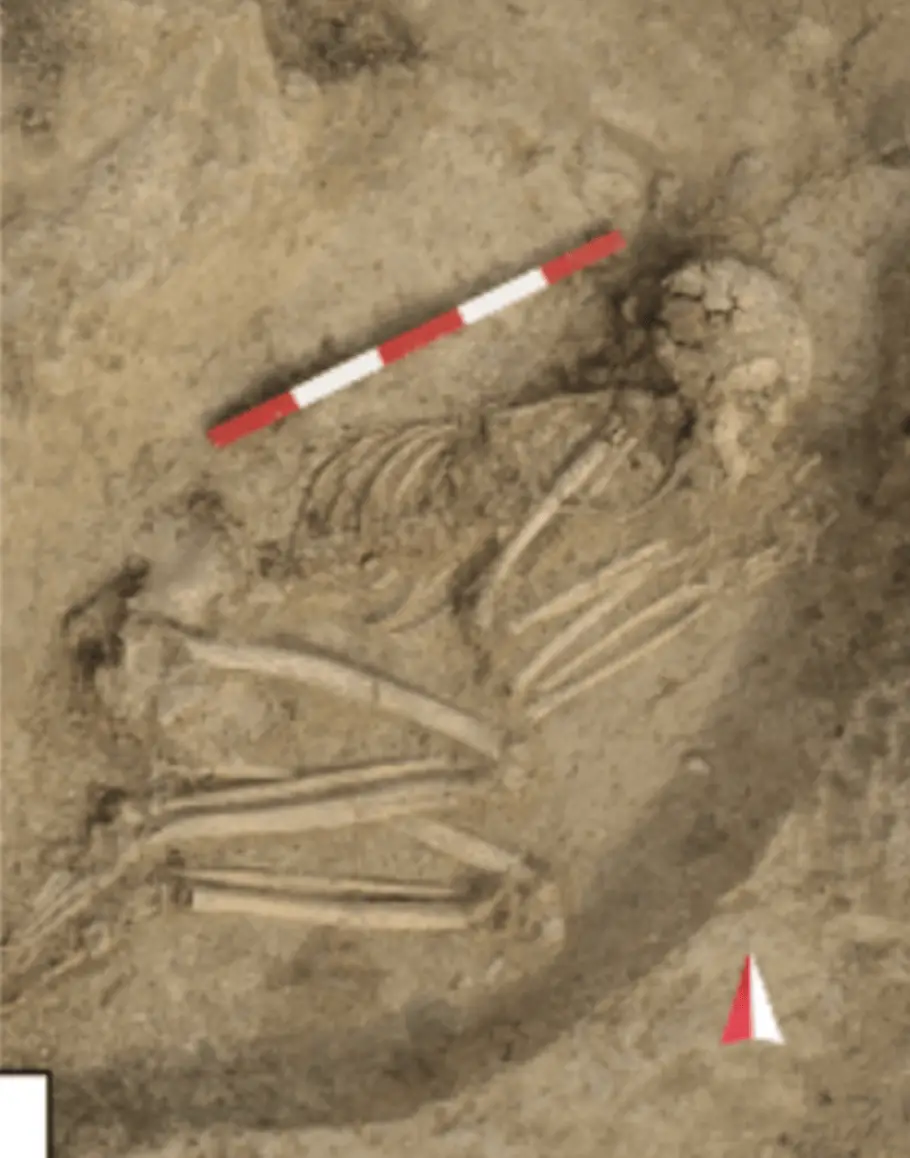
The individual was male, between 18 and 25 years old at death, and tall for his time—standing roughly 175 to 177 centimetres. His skull shows three distinct lesions near the top of the head. Two are shallow pit marks that damaged the outer bone layer but did not penetrate fully. The third is far more serious: an oval perforation on the left parietal bone, measuring 22 by 19.5 millimetres, that breached the cranial cavity entirely.
"The form suggests it was inflicted by a pointed object with an oval cross-section," the authors write, "consistent with either the canine tooth of a large predator or a pointed weapon."
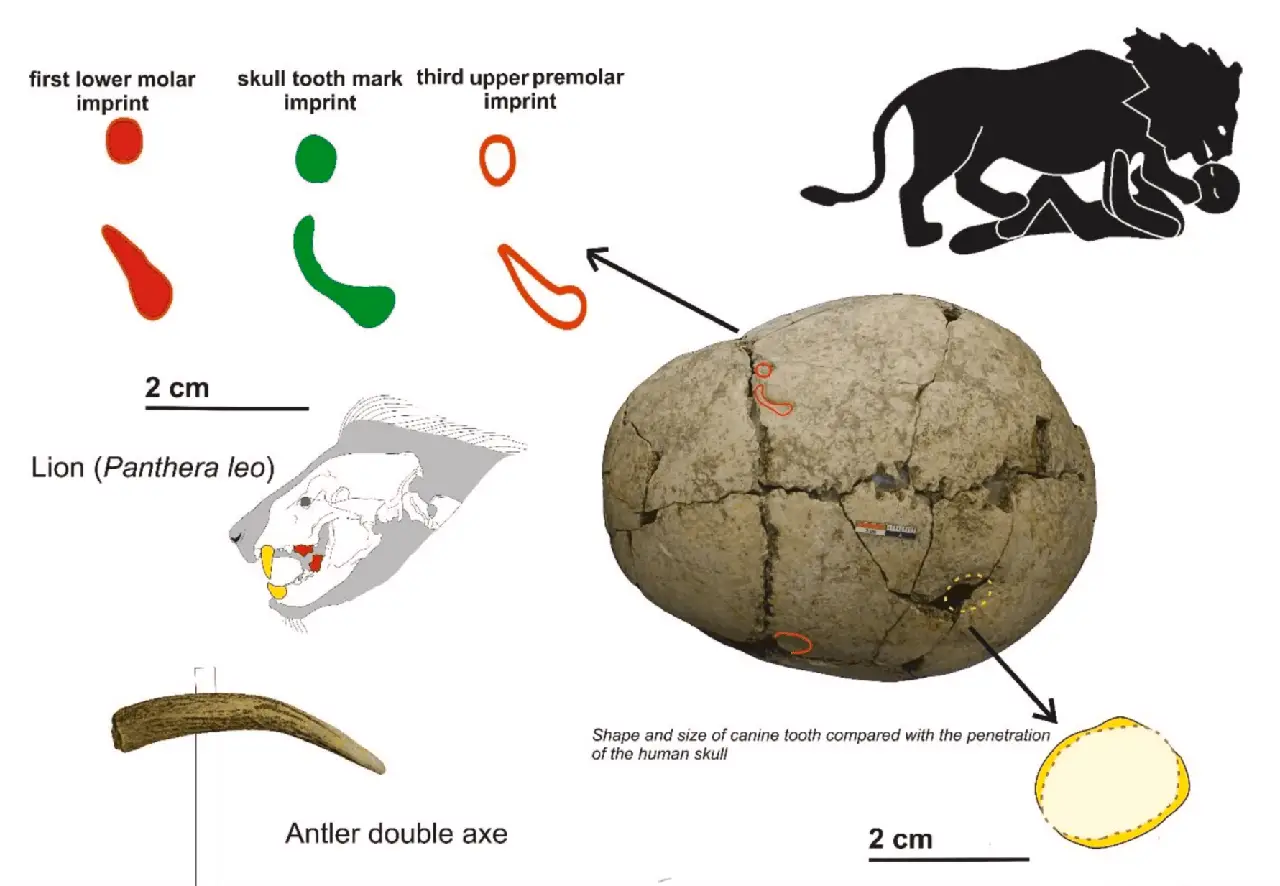
According to lead author Nadezhda Karastoyanova of the National Museum of Natural History in Sofia, the research team ruled out weapons. A review of Eneolithic tools and armaments from the period found only one type capable of producing such a wound: the double-pointed antler axe. But the shape and angle of the injury did not match. The irregular morphology of the marks, particularly one pit near the coronal suture, pointed instead toward a carnivore.
Matching Teeth to Trauma
To test the hypothesis, researchers created silicone moulds of the skull's wounds and compared them to dental impressions from modern lion and bear specimens in the museum's collection, including a male lion that died at the Sofia Zoo in 1955. The fit was persuasive. One pit mark aligned almost perfectly with the profile of a lion's upper third premolar (the carnassial tooth used for shearing flesh), matching in both shape and size. A digital elevation model of the wound confirmed the correspondence.
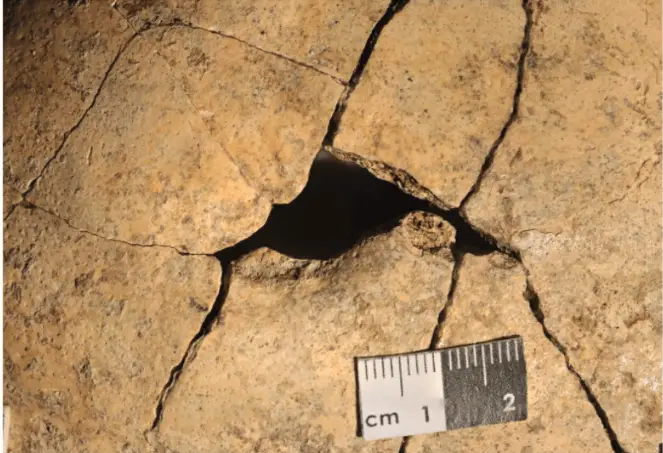
The estimated penetration depth of approximately 10 millimetres fell within the range documented in studies of lion bite damage. The width between pit marks (17.7 mm) matched the spacing of a lion's dentition.
Victoria Russeva of the Institute of Experimental Morphology, Pathology and Anthropology, a co-author on the study, notes that the location and pattern of wounds align with forensic observations of feline attack behaviour. Lions typically strike from behind or above, targeting the head, neck, and nape. Bite marks on the frontal and parietal regions of the skull, combined with additional trauma to the limbs, suggest the victim may have been knocked to the ground and bitten multiple times.
Lions in the Balkans
To modern readers, the idea of lions roaming Bulgaria may seem improbable. But during a warm climatic phase in the Eneolithic period, Panthera leo expanded its range significantly across the Balkans. Lion remains have been discovered at Neolithic and Copper Age sites throughout Eastern Europe, including Durankulak, Sozopol, Golyamo Delchevo, and Slatino in Bulgaria, as well as locations in Hungary, Romania, Ukraine, and Greece.
"Many of the examined specimens from the Balkans and Central Europe suggest that lions were used not only for their fur but also as a food source," the authors observe, citing cut marks on lion bones from contemporary settlements along the Black Sea coast.
Whether the young man from Grave #59 was hunting a lion or simply encountered one by chance remains unknown. The team speculates he may have been a youth undertaking one of his first serious hunting expeditions—a rite of passage documented in later Balkan cultures. What is certain is that he walked away from the encounter alive.
The Evidence of Care
All the documented injuries show callus bone formation, the telltale sign of healing. The wounds were inflicted months or years before death. The bone splinter driven into the inner surface of his skull during the attack remained fused there for the rest of his life, never removed by any surgical intervention (though the site shows evidence of a well-survived trepanation from a later period in the same population).
The researchers frame this survival within what bioarchaeologists call the "archaeology of care." A young man with such injuries would have required prolonged support: tending of wounds, assistance with mobility, and provision of food during recovery. His left arm and both legs show additional trauma consistent with muscle and tendon damage; he likely had difficulty walking for the rest of his life.
"Significant social resources should have been given to the healing of the badly injured youth," the authors write, "and later to sustain the disabled fellow for a distant period after the accident."
His burial, however, complicates the picture. Grave #59 contained no grave goods and was situated among burials of sub-adults, typically a section reserved for those of lower social status. Yet the pit was unusually deep, a feature more commonly associated with high-status interments. The team suggests his disfigurement and possible neurological impairment may have marked him as "extraordinary and dangerous" in death, warranting deeper deposition as a form of protection for the living.
From the Ground to the Collection
Cases like this are exceptionally rare. Direct osteological evidence of human-predator conflict in prehistory is limited to a handful of examples worldwide, including tooth marks on Neanderthal remains from Spain's Cova Negra cave and a recently published case of a Jōmon-period shark attack in Japan.
For collectors, such individual skeletons remain, of course, beyond the market. But the material culture of Copper Age Bulgaria—and the Black Sea region more broadly—is not. We regularly handle stone and copper tools, ceramic vessels, and personal ornaments from this period, objects that would have been familiar to the communities of the Kozareva mound. Eneolithic settlements in the region produced distinctive painted pottery, polished stone axes, and copper implements that occasionally come to auction.
Browse our current catalogue for Neolithic and Copper Age antiquities from Southeastern Europe, or contact our specialists for guidance on building a collection in this area.
TimeLine Auctions, 5th March 2026