Home > Stories by TimeLine Auctions
Stories by TimeLine Auctions
Bronze Disease: The Disease That Isn't a Disease
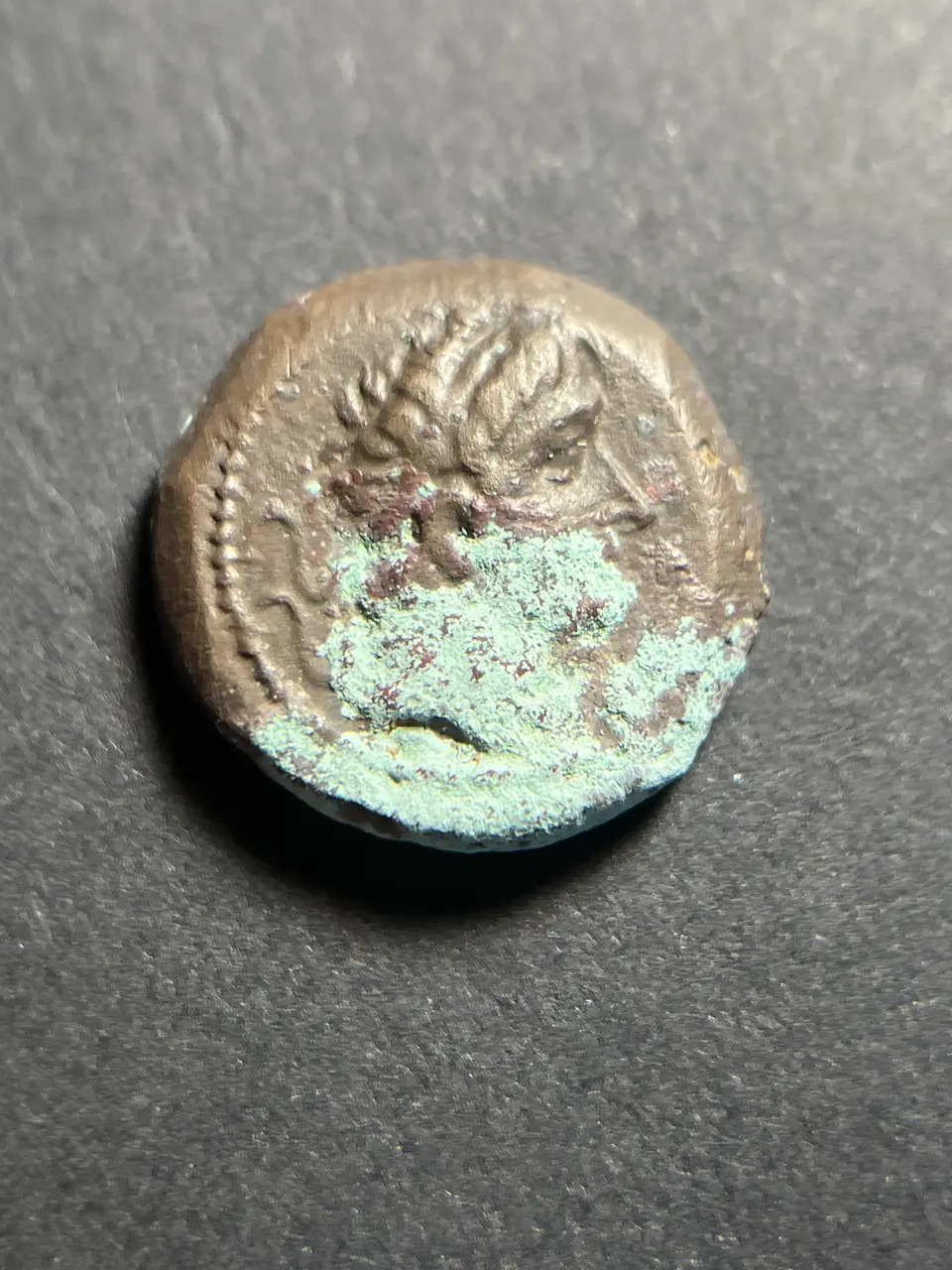
A powdery green eruption appears on the surface of your ancient bronze. Then another. Flakes begin to fall from the object, dusting the display case beneath. Left unchecked, this corrosion can reduce a seemingly solid artefact to a crumbling heap of mineral powder. Collectors and curators have feared this phenomenon for over a century, calling it "bronze disease" despite its having nothing whatsoever to do with bacteria or infection.
What Bronze Disease Actually Is
The term originates from nineteenth-century speculation. In 1893, researchers Mond and Cuboni attributed the corrosion to a common fungus, Cladosporium aeris, which they isolated from affected pits. Sterilisation at 120°C became one of the earliest recommended treatments. The true chemical culprit, however, was identified by Friedrich Rathgen during the same period: chloride salts, not microorganisms, were destroying the bronzes. As David A. Scott explains in his comprehensive text Copper and Bronze in Art: Corrosion, Colorants, Conservation (Getty Conservation Institute, 2002), the condition is a progressive deterioration caused by the presence of cuprous chloride (the mineral nantokite) in close proximity to whatever metallic surface remains.
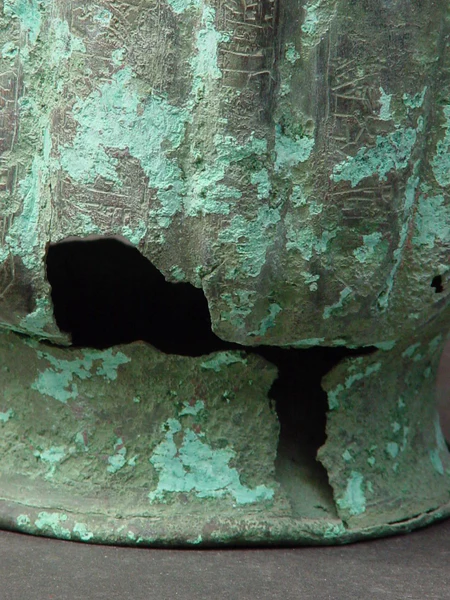
Cuprous chloride often lies dormant within the corrosion layers, invisible beneath attractive green patinas. The danger begins when this unstable compound encounters moisture and oxygen. It expands as it converts to one of the copper trihydroxychlorides (atacamite, paratacamite, or botallackite), creating physical stress that cracks and fragments the metal from within.
The French chemist Marcellin Berthelot recognised the cyclical nature of the process as early as the 1890s. His insight remains essentially correct: the reaction regenerates its own reactants, allowing the corrosion to continue indefinitely under the right conditions. Each cycle produces more chloride ions, which attack more copper, which produces more corrosion products. The object slowly consumes itself.
Recognising the Signs
We examine every bronze in our catalogue for telltale indicators of active corrosion. Bronze disease manifests characteristically: light green, powdery excrescences or eruptions appear within or upon the surface, often emerging from small pits. Loose material falls from the object onto surrounding surfaces. In severe cases, acidic green or dark green liquid may ooze from the bronze and stain nearby materials. The powder itself is typically one of the copper trihydroxychlorides, most commonly atacamite or paratacamite.
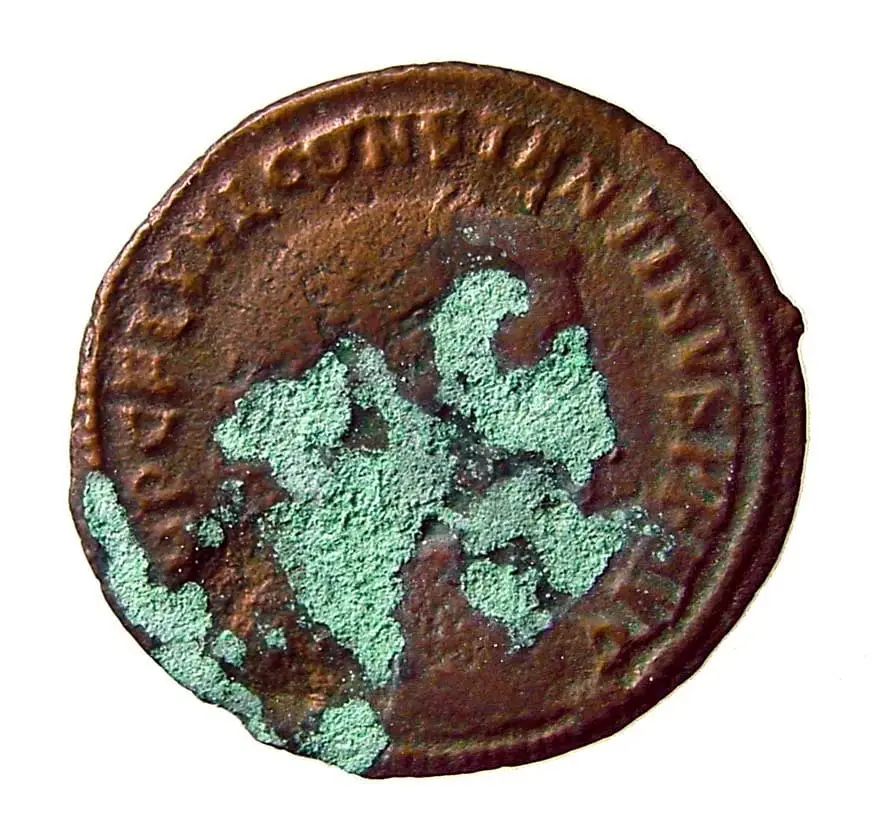
The mere presence of chloride-containing corrosion products within a patina does not automatically indicate active bronze disease. Many bronzes carry localised or superficial chloride corrosion that has stabilised and poses no ongoing threat. True bronze disease involves accumulations of cuprous chloride within the bronze itself or beneath the surface patina, where it can continue to react whenever humidity rises. This distinction matters enormously when assessing an object's long-term stability.
The Chemistry Behind the Corrosion
Understanding the underlying chemistry helps collectors make informed decisions about storage and care. When cuprous chloride reacts with moisture and oxygen, the following spontaneous reaction occurs:
4CuCl + O₂ + 4H₂O → 2Cu₂(OH)₃Cl + 2H⁺ + 2Cl⁻
The hydrogen and chloride ions released by this reaction then attack fresh copper, regenerating cuprous chloride and perpetuating the cycle. This explains why objects can appear stable for decades before suddenly erupting with fresh corrosion following a change in storage conditions.
Research by Pollard, Thomas, and Williams during the 1990s mapped the stability fields of the various copper chloride minerals, demonstrating that even minor variations in pH, chloride concentration, and temperature can determine which specific trihydroxychloride forms. Botallackite, the least stable phase, typically appears first but quickly recrystallises to atacamite or paratacamite under most conditions. Finding botallackite on an object suggests either very recent corrosion or an environment that dried out before recrystallisation could occur.
Conservation Approaches
The conservation of bronzes with active disease has evolved considerably since Rathgen's pioneering work. Several approaches are now standard practice, each with specific advantages and limitations.
Benzotriazole (BTA) Treatment
Introduced to conservation practice by Madsen in 1967, benzotriazole remains the most widely used corrosion inhibitor for ancient bronzes. The compound forms a polymeric complex with copper that acts as a protective barrier, primarily by retarding the cathodic reduction of oxygen. Standard treatment involves immersing the object in a 3% (w/v) benzotriazole solution in ethanol, often under vacuum, for up to twenty-four hours. The treated surface is then rinsed, dried, and typically given a protective coating of Paraloid B72 or Incralac lacquer.
Recent research suggests that pre-treatment regimes can improve outcomes. Rinsing with buffering agents to remove soluble chlorides and neutralise acidity before BTA application appears beneficial. Relatively short immersion times and fresh solutions also produce better results.
Localised Treatments
Not every bronze requires full immersion. For objects with isolated corrosion pits, conservators have several options:
-
Silver oxide paste: A traditional method where silver oxide mixed with ethanol is rubbed into excavated pits. The resulting silver chloride acts as a physical plug. This technique works reasonably well on many objects, though Sharma, Shankar Lal, and Nair reported failures with severely corroded bronzes.
-
Zinc dust treatment: Developed as an alternative to silver oxide, this approach uses zinc dust moistened with aqueous ethanol applied to cleaned pits. The zinc reacts to form basic zinc hydroxide chlorides that create an effective seal. The treatment requires more labour (the pits must be moistened repeatedly over several days) but produces robust results.
Sesquicarbonate Immersion
Long-term immersion in sodium sesquicarbonate solution (5% w/v) can convert cuprous chloride to more stable cuprite while washing chloride ions from the corrosion crust. Scott's recommendation dates to 1921. Extended treatment periods (sometimes exceeding a year) are necessary for heavily corroded objects. The method can cause mineralogical changes to the patina and may precipitate secondary malachite on the surface, so careful monitoring is essential.
Preventing Bronze Disease in Your Collection
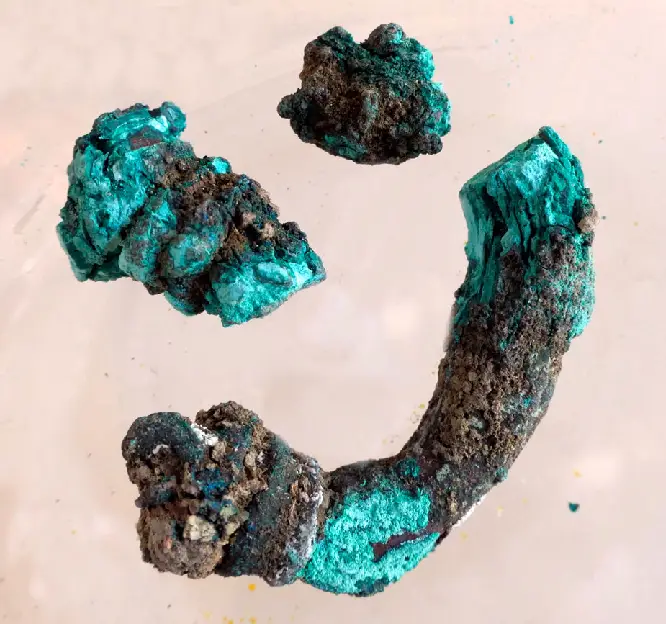
Environmental control remains the most effective preventive measure. Research by Scott and O'Hanlon (1987) and by Tennent and Antonio (1981) demonstrated that cuprous chloride tends to transform to one of the copper trihydroxychlorides at relative humidity levels above 45%. The implications for collectors are clear:
-
Maintain relative humidity below 40%: This provides a safety margin below the 45% threshold. Silica gel desiccants in display cases offer a practical solution for individual objects. Digital hygrometers allow you to monitor conditions without opening cases.
-
Ensure good air circulation: Stagnant air pockets can trap moisture against surfaces. However, avoid placing bronzes near heating or cooling vents where condensation may occur.
-
Inspect regularly: Quarterly examinations allow you to catch new eruptions early. Look for fresh powder, colour changes, or the distinctive pale green tint of active chloride corrosion.
-
Isolate affected objects: If you notice active corrosion, separate the object from others immediately. The acidic products can affect nearby materials.
What To Do If You Discover Active Corrosion
First: do not panic, and do not attempt amateur chemistry. Gently brush away loose powder (wearing gloves and working over a clean surface), then place the object in as dry an environment as you can achieve. A sealed container with fresh silica gel will arrest the reaction temporarily.
Second: seek professional assessment. Conservation decisions should be based on thorough examination of the corrosion structure, the condition of remaining metal, and the object's significance. Some bronzes that appear extensively corroded retain sound metal cores; others that look intact may have almost no metal remaining beneath their patinas.
We encourage all potential buyers to request condition reports for any bronze in the current TimeLine Auctions catalogue. These reports detail surface condition, known treatments, and any areas of concern. For significant pieces, we commission specialist conservation assessments that include analysis of corrosion products.
A Resource for Collectors
For those wishing to understand bronze corrosion at a deeper level, we recommend David A. Scott's Copper and Bronze in Art: Corrosion, Colorants, Conservation (Getty Conservation Institute, 2002). The volume represents the most comprehensive single-source reference on the chemistry, mineralogy, and conservation of copper alloys. Scott covers not only bronze disease but the full spectrum of corrosion phenomena, from the formation of beneficial patinas to the alteration of copper-based pigments.
The PDF of this book is available free of charge from the Getty Conservation Institute, and we will be distributing copies to interested collectors. Please enquire with our team if you would like to receive this valuable resource.
The bronzes that have survived from antiquity did so against considerable odds. Understanding the chemistry that threatens them empowers us to make informed decisions about preservation. Due diligence begins with knowledge, extends through careful environmental control, and culminates in appropriate professional conservation when necessary. The effort is worthwhile. These objects connected their original owners to the divine, commemorated the dead, and served the practical needs of daily life across millennia. With proper care, they will continue to do so for generations to come.
TimeLine Auctions applies rigorous examination protocols to every lot in our catalogues. We examine surface corrosion, assess patina stability, and document any areas of active or historical deterioration. Condition reports are available upon request for all items.
TimeLine Auctions, 2nd March 2026