Home > Stories by TimeLine Auctions
Stories by TimeLine Auctions
Building a Collection on a Budget: Undervalued Categories Right Now
A Practical Guide for New Collectors
Buying your first ancient artefact can feel like stepping into a room where everyone else already knows the rules. You've browsed the catalogues, admired the bronzes, perhaps even watched the final hammer prices climb beyond what you'd budgeted for a modest start. It's easy to assume that meaningful collecting requires deep pockets or years of expertise. It doesn't. What it requires is knowing where to look, and right now, some of the most historically rich and visually striking categories remain surprisingly affordable.
At TimeLine, we speak with new collectors every week who face the same dilemma. They've set a budget, they've browsed the catalogues, and they've realised that in the categories everyone talks about (Attic pottery, marble sculpture, Roman bronzes), their budget restricts them to fragments, shards, and damaged pieces. A marble hand missing its fingers. A ceramic fragment showing part of a figure. These aren't bad objects, and fragment collecting is a perfectly legitimate approach with its own rewards. But it does raise a question worth considering carefully: is it better to own a broken piece of something famous, or a fine, complete example of something less fashionable?
We'd argue there's real value in the second path. A complete Roman glass vessel, intact after two thousand years, with its original form and decoration fully visible, offers a different kind of connection to the ancient world than a marble toe. You can understand how it was used, appreciate the craftsman's skill from start to finish, and display it as a coherent object rather than a tantalising hint of something larger. The same budget that buys you a fragment in one category can buy you a showcase piece in another.
This guide is for collectors who want to explore that possibility. We're going to walk you through three categories that we believe are undervalued at the moment, explain why they deserve your attention, and show you how, with the same money you might spend on damaged pieces elsewhere, you can build a collection of complete, high-quality objects with genuine historical weight.
Why "Undervalued" Doesn't Mean "Lesser"
Before we get into specifics, let's address a common misconception. When we describe a category as undervalued, we're not suggesting that these objects are somehow inferior to the headline lots that dominate auction coverage. We're saying that market attention hasn't caught up with their historical significance or aesthetic appeal. Sometimes this happens because a particular material or period falls out of fashion; sometimes it's simply that collectors gravitate toward what they already know. Marble sculpture and Greek Attic pottery have name recognition, and that recognition drives demand.
But here's the thing: the best time to collect in any category is before everyone else arrives. We've seen it happen repeatedly over the decades. A category that seemed niche or overlooked gradually attracts scholarly interest, museum acquisitions follow, and suddenly the pieces that were available for a few hundred pounds are selling for multiples of that. We're not promising that the categories we discuss here will follow that trajectory (no one can predict markets with certainty), but we are saying that the historical value is already there. The prices simply haven't reflected it yet.
Category One: Ancient Roman Glass
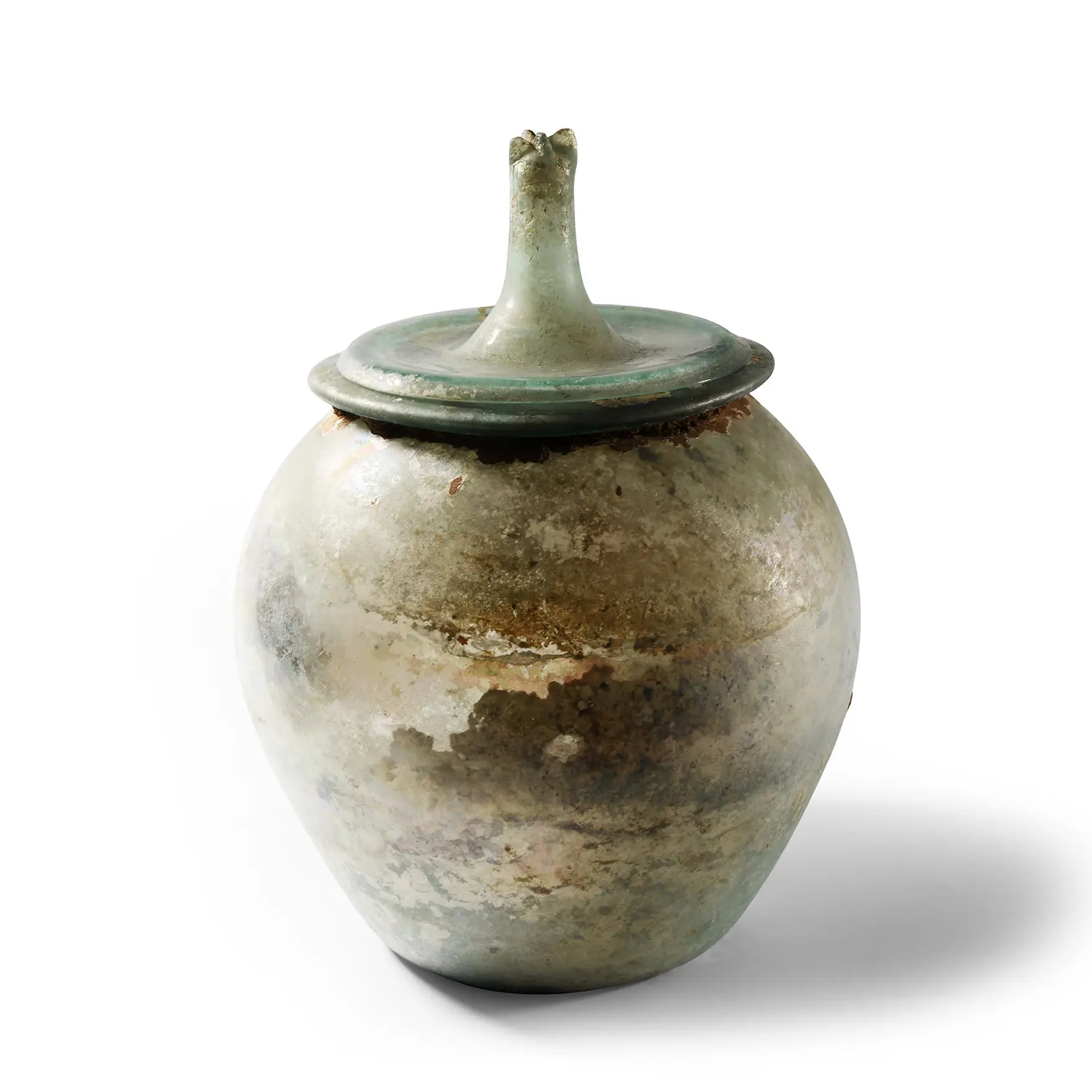
Roman glass is, in our view, one of the most underappreciated areas of ancient collecting. Walk into any major museum's Roman galleries and you'll find cases filled with iridescent vessels, unguentaria, and decorative pieces that stopped visitors in their tracks two thousand years ago and still do today. Yet at auction, Roman glass routinely sells for a fraction of what comparable bronzes or marbles command.
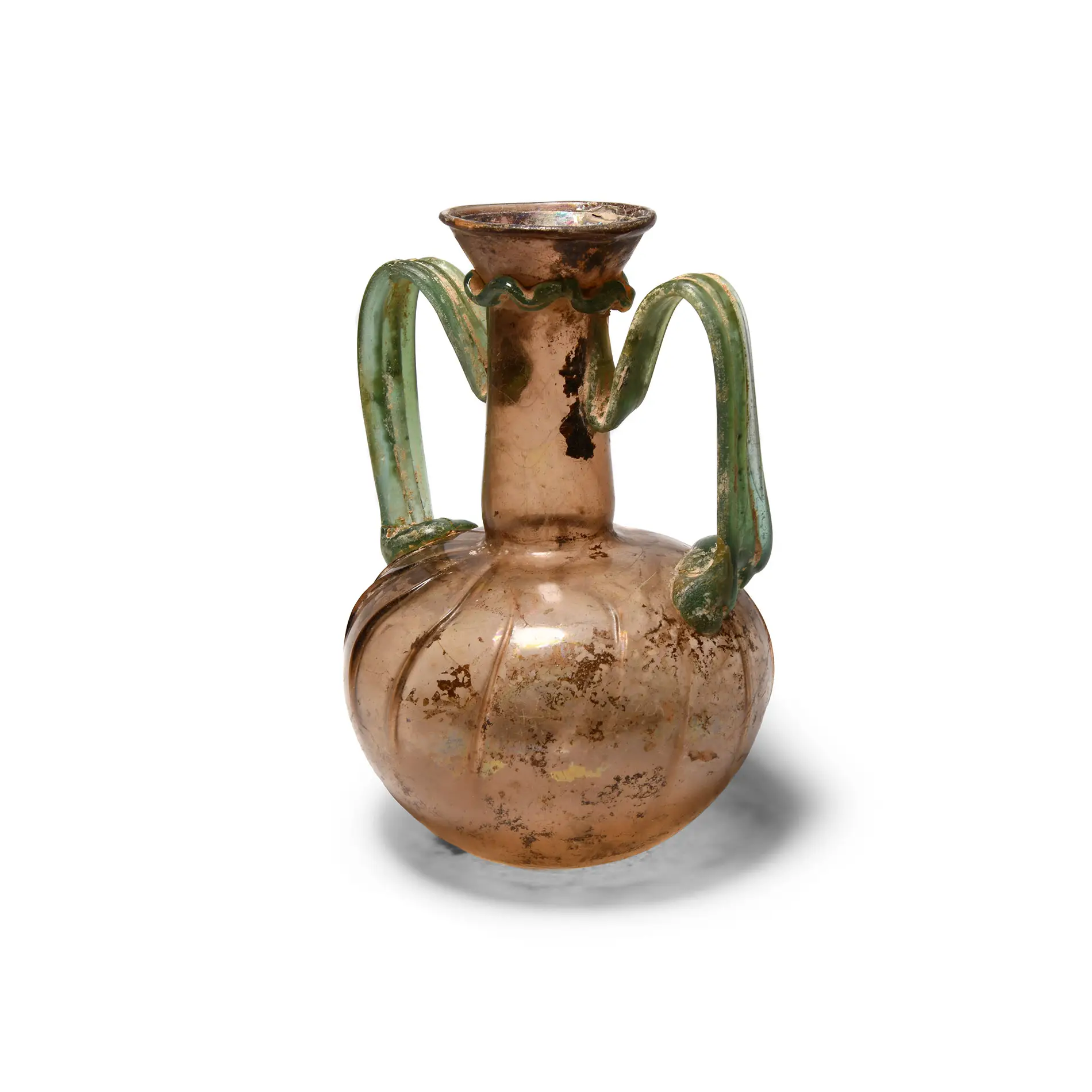
Roman glassworkers were astonishingly skilled. They developed techniques (mould-blowing, trailing, millefiori) that wouldn't be matched in Europe for over a thousand years after the empire's collapse. A Roman glass vessel isn't just old; it represents a technological high point, a moment when craftsmanship and commerce intersected to produce objects of genuine beauty for everyday use.
What should you look for? Condition matters, of course, but don't be put off by the characteristic iridescence that develops on ancient glass over centuries of burial. That silvery, rainbow-sheened surface is a feature, not a flaw, and many collectors prize it highly. Look for pieces with interesting shapes (amphoriskoi, unguentaria, handled jugs), vibrant original colours where visible, and decorative techniques like ribbing, faceting, or applied trails. Provenance documentation is essential, as with any ancient object, but you'll find that many glass pieces come with solid collection histories precisely because they've been collected enthusiastically since the 19th century.
Category Two: Greek Apulian Pottery
If you've spent any time looking at Greek ceramics, you've almost certainly encountered Attic pottery (the red-figure and black-figure wares produced in Athens and its surroundings). Attic work dominates museum collections, academic literature, and, consequently, the auction market. It's beautiful, historically significant, and commands prices to match. But Athens wasn't the only centre of ceramic production in the ancient Greek world, and if you're building a collection on a budget, we'd encourage you to look south.
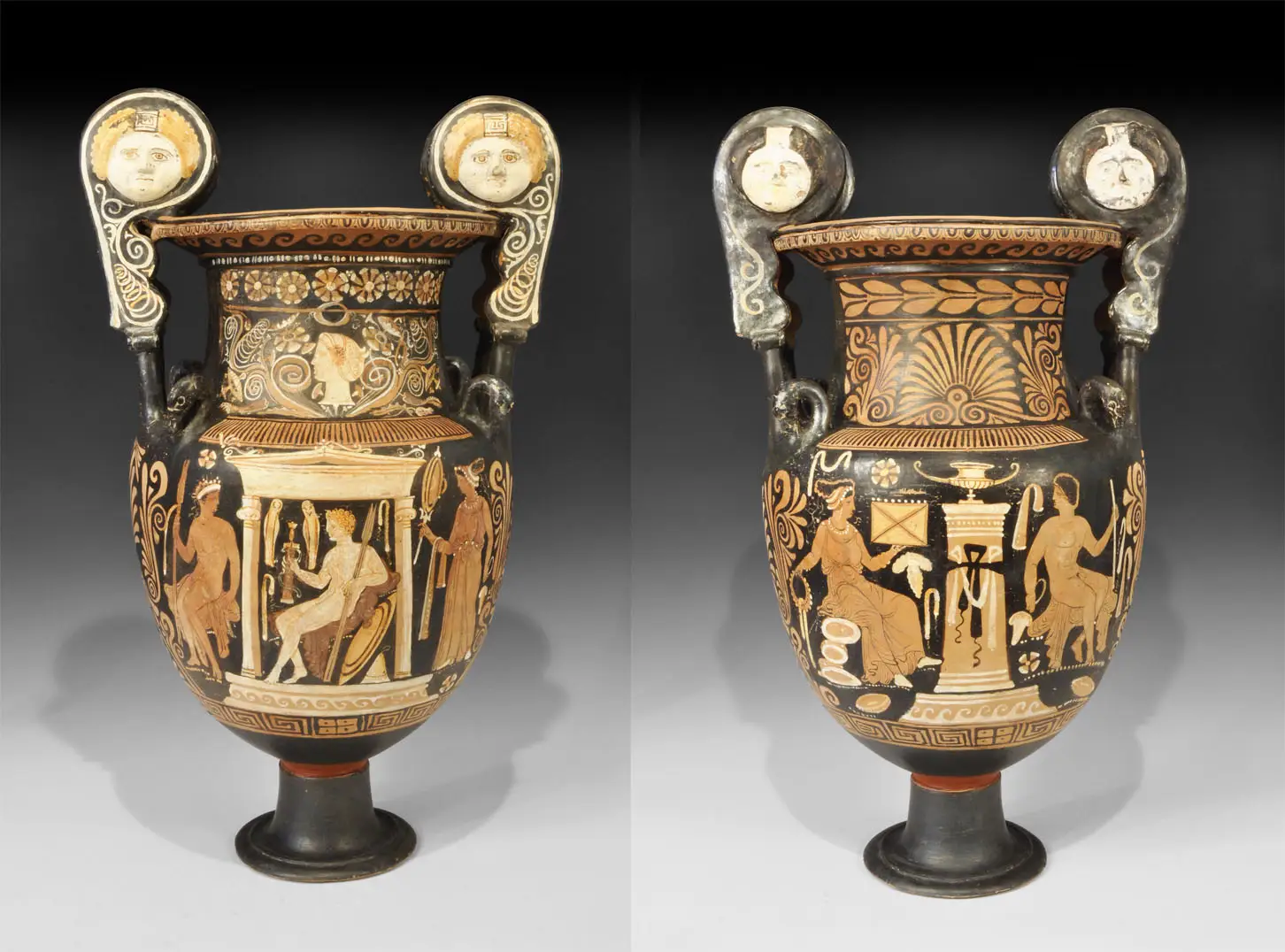
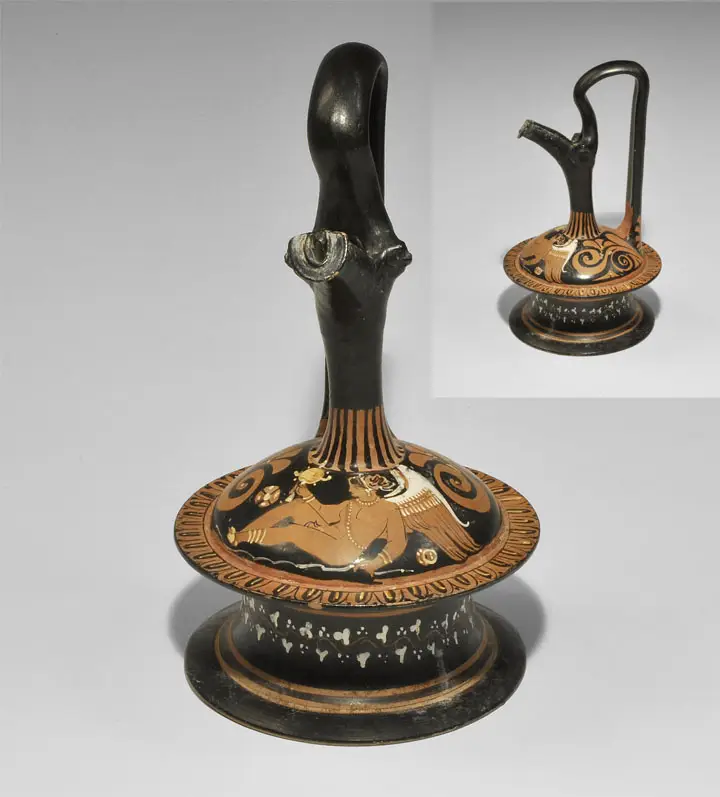
Apulian pottery refers to the red-figure wares produced in Magna Graecia, specifically the region of Apulia in southern Italy, from roughly the late 5th century B.C. through the 4th century B.C. These workshops developed their own distinct style, often characterised by elaborate compositions, theatrical subjects, and a particular fondness for ornate decorative borders. The craftsmanship is exceptional. The historical context (Greek colonists establishing vibrant artistic traditions far from the mainland) is fascinating. And yet, because Apulian work doesn't carry the "Attic" label, it remains significantly more accessible.
We should be clear: we're not suggesting that Apulian pottery is somehow second-rate. Scholars have studied these workshops extensively, and pieces by identifiable painters (yes, art historians can often attribute Apulian vases to specific hands or workshops) are museum-worthy. What we're suggesting is that the market hasn't fully priced in that quality. For a collector willing to learn the difference between the Plain Style and the Ornate Style, between a pelike and a krater, there are genuine opportunities.
What should you look for? Condition is paramount with ceramics; chips, cracks, and restorations all affect value and should be clearly disclosed in any reputable auction listing. Beyond that, look for pieces with clear, well-preserved figural decoration. The scenes depicted on Apulian pottery (mythological narratives, theatrical performances, daily life) are part of what makes them so appealing. A piece with legible figures and an interesting composition will always hold more interest than one where the decoration has worn away. Size matters too, though not always in the direction you'd expect. Larger pieces command attention, but smaller, well-preserved examples can be more affordable and easier to display.
Category Three: Neolithic Art
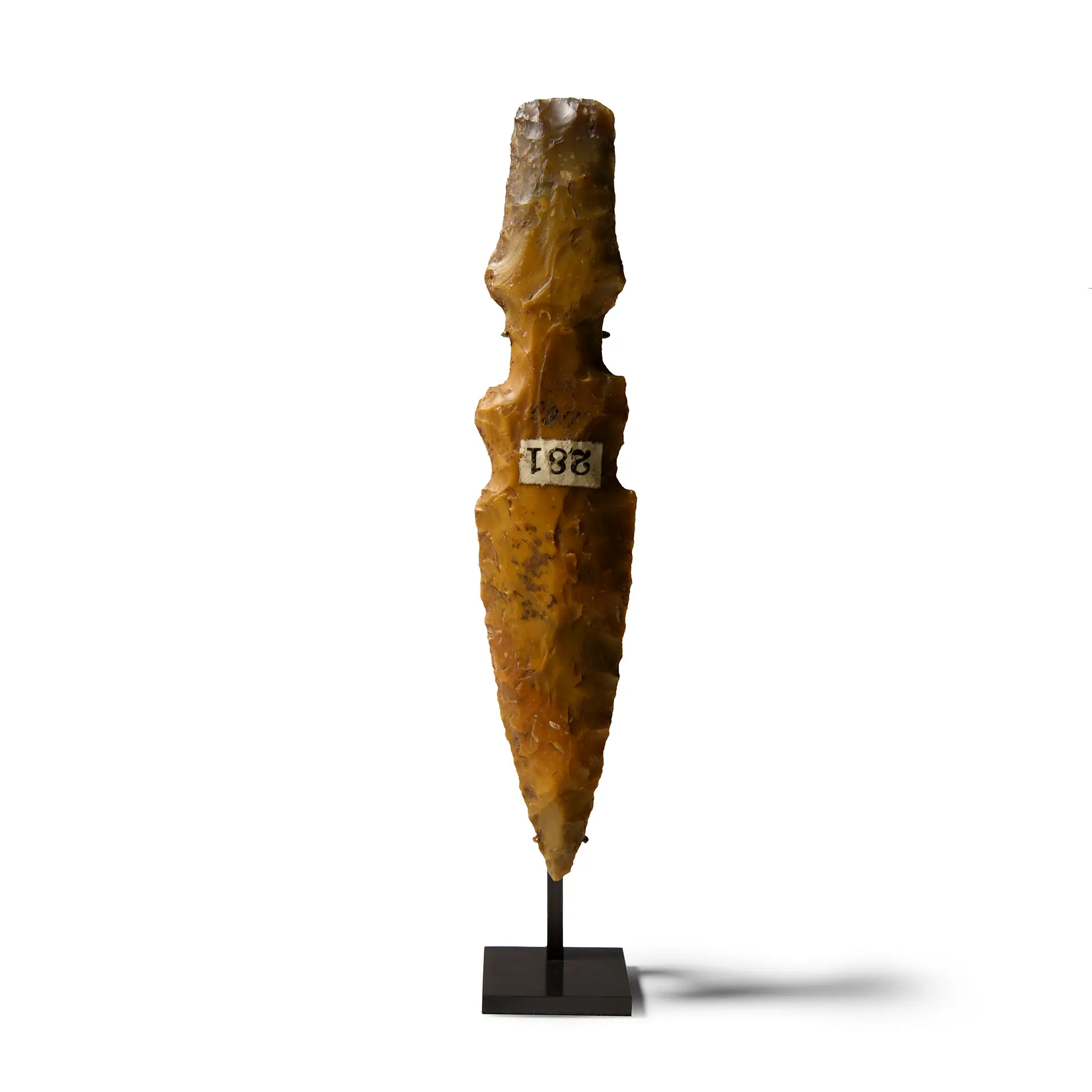
Now we're going back. Way back. Neolithic art, particularly the flint tools, handaxes, and worked stone implements that survive from the late Stone Age, represents some of the earliest evidence we have of human creativity and problem-solving. These aren't crude objects; a finely knapped handaxe is the product of skill, planning, and aesthetic sensibility. The people who made them understood their materials intimately and worked them with a precision that still impresses archaeologists today.
So why are they affordable? Partly because "Neolithic" doesn't carry the romantic associations that "Roman" or "Greek" do for most collectors. There are no names attached, no historical narratives in the conventional sense. You can't point to a Neolithic axehead and say "this belonged to so-and-so" or "this was made in the workshop of such-and-such." For some collectors, that anonymity is a barrier. For others, ourselves included, it's part of the appeal. These objects connect us to human experience at its most fundamental: the need to hunt, to prepare food, to shape the world with our hands.
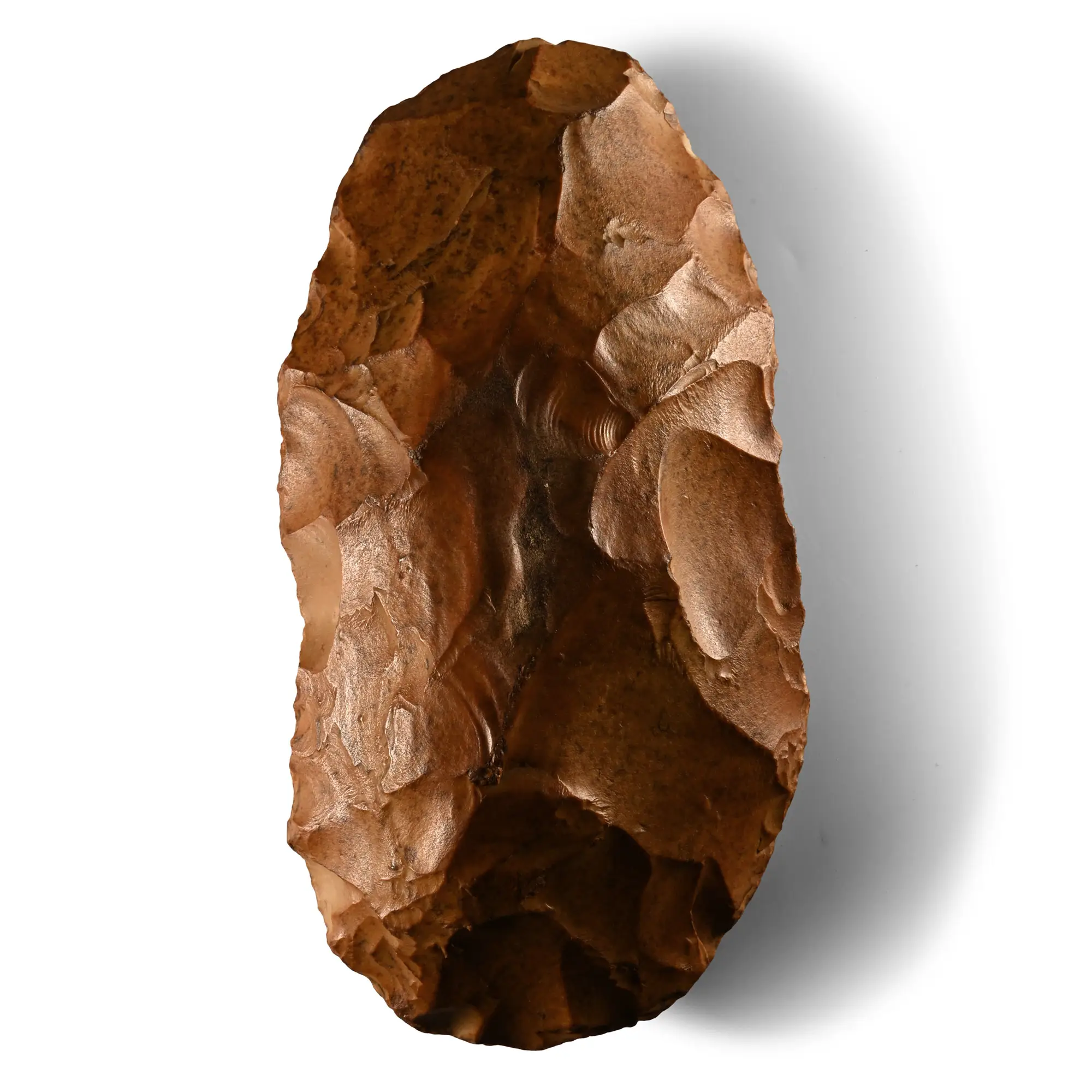
There's also simple abundance. Neolithic tools were produced across vast stretches of time and geography. Many have survived, and while the finest examples command significant prices, competent pieces with good provenance are available at entry-level budgets. We regularly see new collectors start here precisely because the financial risk is low and the learning curve is manageable. You can handle these objects (carefully, and ideally with clean, dry hands), study them, compare them, and begin to develop the kind of connoisseurship that will serve you well regardless of where your collecting interests eventually lead.
What should you look for? Craftsmanship varies enormously. The most desirable pieces show fine, controlled flaking, symmetrical forms, and evidence of deliberate shaping rather than accidental breakage. Material matters too; different types of flint and stone produce different colours and textures, and some collectors develop preferences for particular sources. Provenance is, as always, essential. Many Neolithic tools on the market today come from old collections assembled in the 19th and early 20th centuries, when surface finds were common and documentation practices varied.
Where to look: Our December 2025 auction included 126 lots in what we categorise as "Stone Age Art." Prices ranged from a few pounds to a few thousand, reflecting the enormous variety within the category. You can browse the full range at timelineauctions.com/search/?category=25. Even if you're not ready to bid, spending time with these listings will help you understand what's available and what factors affect value.
Practical Advice: Before You Bid
We've given you three categories to explore. Now let's talk process. Auction buying can seem opaque if you've never done it before, but it's really quite straightforward once you understand the mechanics.
Three Things to Check Before Placing a Bid
-
Read the condition report carefully. Every lot description should include information about the object's state: restorations, repairs, chips, cracks, losses. If something isn't clear, ask. Auction houses (TimeLine included) are happy to provide additional photographs or clarification. Never bid on an object whose condition you don't fully understand.
-
Verify provenance. A legitimate ancient artefact should come with documentation of its ownership history, ideally demonstrating that it left its country of origin before modern cultural property laws came into effect or was legally exported thereafter. This isn't just about legal compliance (though that matters enormously); it's about certainty. You want to know that what you're buying is genuine and that you can own it without concern.
-
Set a budget and stick to it. Decide before the auction what you're willing to pay, including the buyer's premium (the percentage added to the hammer price that constitutes the auction house's fee). Write that number down. When bidding gets competitive, it's easy to convince yourself that "just one more bid" won't matter. It will. Discipline is the difference between building a collection thoughtfully and overextending yourself on a single piece.
Frequently Asked Questions
Q: I've never bid at auction before. Can I just watch without participating?
A: Absolutely. In fact, we encourage it. Registering for an auction (which you can do on our website) gives you access to the full catalogue, allows you to follow lots you're interested in, and lets you watch the bidding in real time. You'll learn an enormous amount simply by observing which lots attract competition, where hammer prices land relative to estimates, and how the rhythm of an auction unfolds. When you're ready to participate, you'll feel far more confident. We also highly recommend viewing past auction results on our website to get a sense of pricing trends.
Q: What's the difference between a low estimate and a high estimate?
A: The estimate range is the auction house's educated guess at where the hammer price will fall, based on comparable sales, condition, rarity, and current market interest. It's a guide, not a guarantee. Pieces sometimes sell below estimate, and they sometimes sail past the high estimate if multiple bidders are determined. Use the estimate as a starting point for your own research, not as a ceiling or floor.
Q: How do I know if something is genuine?
A: This is the right question to ask, and the honest answer is: you rely on expertise until you develop your own. Reputable auction houses vet their consignments, and at TimeLine, our specialists examine every piece before it's offered. Provenance documentation provides an additional layer of assurance. As you handle more objects and read more widely, you'll start to develop an instinct for what looks right. But in the early stages, buy from sources you trust and don't hesitate to ask questions.
Q: What about storage and display? I live in a small flat.
A: Ancient objects are often surprisingly compact. A Roman glass vessel might stand four inches tall; a Neolithic handaxe fits in your palm. You don't need a dedicated gallery to collect meaningfully. What you do need is a stable environment: avoid direct sunlight (which can fade pigments and stress materials), extreme temperature fluctuations, and excessive humidity. A bookshelf, a display cabinet, even a well-chosen spot on a mantelpiece can work beautifully. For objects you're not displaying, archival-quality storage boxes and acid-free tissue provide protection without requiring much space.
Where to Go From Here
If you've read this far, you're already ahead of most new collectors. You understand that budget constraints don't preclude serious collecting, that undervalued categories offer genuine opportunities, and that the auction process is navigable with a bit of preparation. The next step is simple: start looking.
Browse the current TimeLine catalogue. Spend time with the listings in Roman glass, Greek pottery, and Stone Age art. Note what catches your eye, what the estimates suggest about market values, and which lots have provenance that meets your standards. You don't need to bid on anything yet. Looking is learning, and the more you look, the more confident you'll become.
When you're ready to take the next step, consider registering for an upcoming auction. You'll receive notifications as new lots are added, and you'll be positioned to participate if something appears that fits your interests and budget. There's no obligation, no pressure. We're here to answer questions, provide additional information on specific pieces, and support you as you build a collection that reflects your own curiosity about the ancient world.
The objects are waiting. They've been waiting for centuries, in some cases millennia. They don't require you to spend a fortune. They require you to pay attention. We think you're ready.
TimeLine Auctions, 3rd March 2026