Home > Stories by TimeLine Auctions
Stories by TimeLine Auctions
Clean Without Soap: Personal Hygiene in the Ancient World
On the shelf of almost any antiquities dealer, and in the glass cases of most museums with a classical collection, there is a row of small bottles. Some are clay, some are coloured glass trailed with zigzags, some are blown glass gone milky and iridescent in the ground. The labels hedge: unguentarium, perfume bottle, balsamarium, sometimes tear-bottle. They are cheap by the standards of the case, easy to walk past on the way to the gold and the marble. They are also the most honest objects in the room, because they are the everyday equipment of how people actually kept clean, and keeping clean, for most of antiquity, had nothing to do with soap.
Across the ancient Mediterranean and Near East, nobody washed with soap. True soap, fat boiled with a caustic alkali into the slippery stuff we mean by the word, was not the body cleanser anywhere. People got clean another way. They rubbed their skin with oil and scraped it off; they scoured with mineral salts and absorbent clay; they laundered in stale urine; and they covered the result in scent. The little bottles held the oil and the scent. They survive in their thousands because the gesture that cleaned the living, an anointing with perfumed oil, was also performed on the dead, and a bottle went into the grave with them.
Almost everything a modern visitor assumes about that world is a little wrong. The bottles did not catch anyone's tears. Soap was not discovered when sacrificial fat washed down a mountain. And the Roman plumbing that looks so advanced, the aqueducts and the heated floors and the multi-seat latrines, did not make the people who used it healthier. The corrections are better than the myths, and they all run back to the same row of bottles.
How you got clean without soap
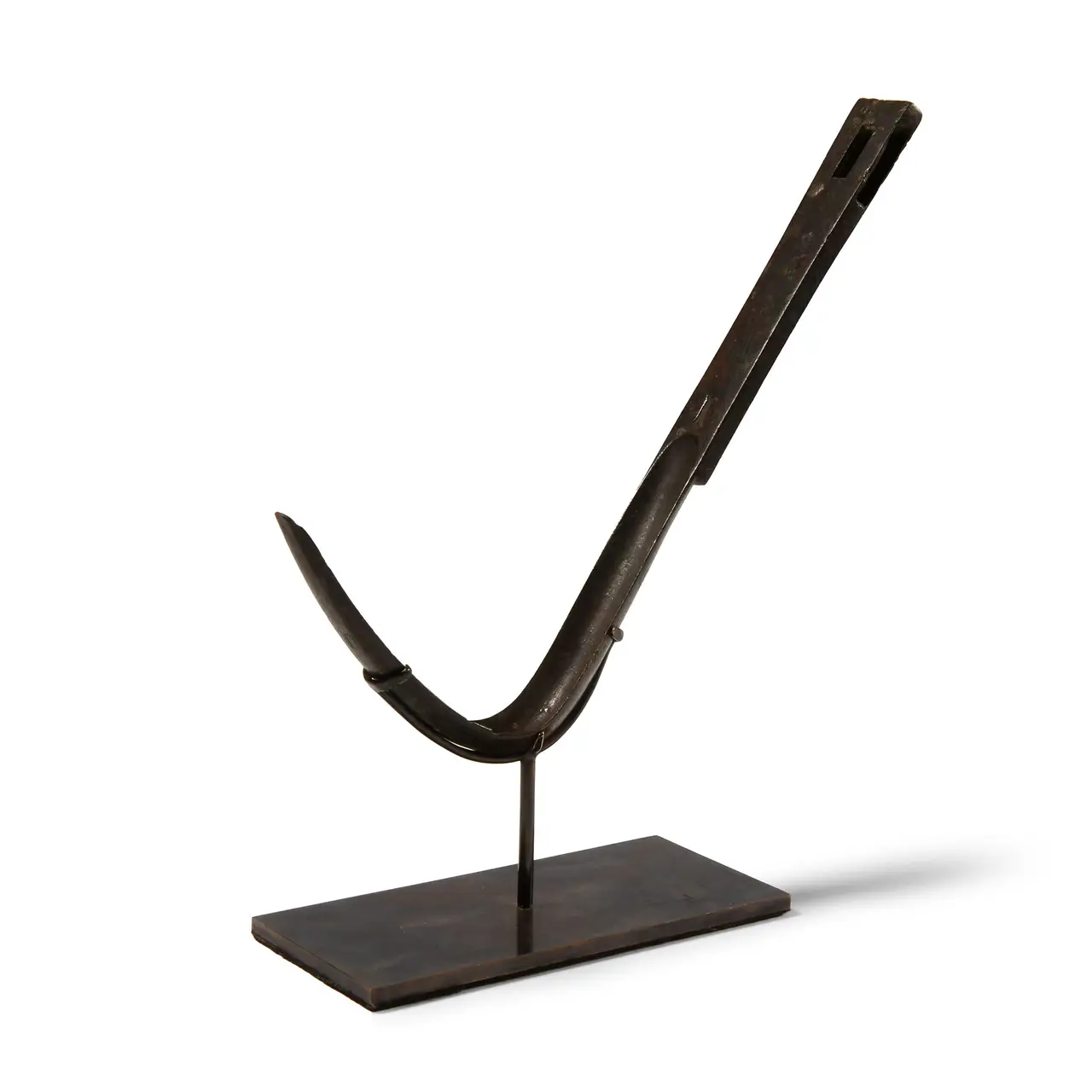
Start with the body, because that is where the surprise is sharpest. A Greek or Roman who wanted to get clean did not lather. He rubbed olive oil over his skin, let it work into the sweat and dust, and scraped the whole greasy film away with a curved bronze blade called a strigil. A sponge finished the job. In a Roman bath a slave often did the scraping, drawing the hooked blade down the back and along the arms. The oiled body, scraped and rinsed, was the clean body, and the oil flask and the strigil together are as good a portrait of an ancient bather as anything we have.
For the work oil could not do there were minerals. Egypt cleaned with natron, the natural soda dug from the dry lake-beds of the Wadi Natrun, which cut grease well enough to serve, as the British Museum's dictionary of ancient Egypt puts it, "those purposes for which soap or toothpaste would now be used": laundry, mouthwash, tooth-powder, and the drying-out of corpses. Mesopotamia used soda and potash leached from the ash of saltwort and burnt wood, which Martin Levey, who worked through the cuneiform evidence, called the most common washing substances in the Babylonian household, for clothes and skin alike. Greece and Rome scoured cloth with fuller's earth, a fine clay that pulls grease out of wool, and with stale urine, whose ammonia loosens grease and lightly bleaches. Sand, ash and pumice did the abrasive jobs, on pots and on skin. A few plants helped: soapwort, whose soaked roots froth in water, turns up in a wool-washing recipe in the Stockholm Papyrus around 300 CE, though there is, honestly, no firm evidence anyone brewed plant-washes for the body before that late date.
None of this was soap, and the distinction is chemical rather than pedantic. Soap is what you get when a fat is reacted with a caustic alkali, sodium or potassium hydroxide; the molecule that results has a grease-grabbing end and a water-loving end, which is why it both lifts dirt and rinses cleanly away. The ancient cleansers were milder carbonate alkalis, soda and potash as they come from ash or evaporite, never causticised with quicklime into true lye. They cut grease by a cruder route, and they did the daily work, but the reaction that makes a bar of soap was not, as far as the evidence runs, carried out on purpose anywhere in the ancient Near East or Mediterranean.
Soap as a substance did exist, at the edges, and its first appearance is a good cure for any tidy origin story. The earliest mention of it, in Pliny's Natural History, is not about washing at all. Sapo, he writes, is a Gaulish invention for reddening the hair, a paste of tallow and beech ash, "used more by the men than the women" of Germany. Elsewhere soap surfaces as medicine, as a treatment for cloth, even as an additive in the wall-paint of Pompeii, where analysis has found it steadying alkali-sensitive pigments. What it was not, anywhere a source describes, was the thing you washed your body with. The detailed soap recipe often passed off as Galen's is medieval, written into a handbook long after him. As for the legend that soap was found at Mount Sapo, where fat and ash from sacrifices ran down into a stream and women noticed their laundry came cleaner, there is no such mountain; the campfire version of the discovery, scour off grease with ash, notice the slippery runoff, save it, is offered in the technical literature as a hypothesis with, in its own words, no empirical evidence behind it.
Push further back, into the Neolithic, and even the indirect traces thin to almost nothing. What survives from the first farming villages is cosmetic, not hygienic: lumps of red and yellow ochre, stone palettes for grinding it, and, at Chalcolithic Pyrgos on Cyprus, a whole workshop for processing pigments and scented substances. People painted and perfumed themselves long before any text. Of soap, or even of routine body-washing, there is no Neolithic sign at all, and the origin stories should be read in that light.
Washing for the gods
A Sumerian incantation, copied onto a tablet found in the Hittite capital at Boghazköy, sets out the order of operations plainly: "With water I bathed myself. With soda I cleansed myself. With soda from a shiny basin I purified myself. With pure oil from the basin I beautified myself." Water, then soda, then oil. The toolkit of the previous section, written down before 1200 BCE, with no soap in it and no Sumerian or Akkadian word that we can reliably translate as soap.
This matters because Mesopotamia is where the internet will tell you soap was invented. The tablets do hold recipes that look soap-like, and they are real, but read them and they concern cloth and medicine. An account from Tello, the ancient Girsu, around 2200 BCE, sets a litre of oil against five and a half litres of potash to degrease wool, the alkali in wild excess because it was raw plant ash. The oldest known medical text, a tablet from Nippur of roughly the same date, prescribes washing the sore spot, rubbing it with oil, and covering it with burnt plant ash: in effect a medicated soap, made on the skin and not in a pot. What the tablets never give is a recipe for a bar to wash with. Levey's conclusion has stood: the earliest soaps were made for medicine and for cleaning wool, not for general washing.
Cleanliness in Mesopotamia was bound up with the gods as much as with comfort. One did not approach them with filthy hands and bad breath, so hand- and mouth-washing came before prayer. Kings went through an elaborate purification called the bīt rimki, the "house of bathing," passing room by room with washings and incantations. The plain vocabulary kept the same logic: the Akkadian for the water you rinsed your hands in was musātu, and the bīt musāti, the "house of rinse-water," was the ordinary word for a lavatory, a place thought to be haunted by a demon named Šulak whom the almanacs warn against on certain days. Most people, most of the time, washed only the face, hands and feet; a full-body wash was for festivals, and the proper finish was always oil.
That oil was often scented, and the scenting of it was already an industry. At Mari on the Euphrates, in the eighteenth century BCE, a perfumer named Nûr-ili received filtered sesame oil by the accounting tablet and returned it infused with myrtle, cypress, galbanum and storax. Cedar of Lebanon was the most prized of the aromatics. The glass bottles were a thousand years off, but the thing they would one day hold was already being made to order and signed for.
In Egypt the same instinct, clean before you face what is holy, hardened into rule. Herodotus, visiting in the fifth century BCE, reported that the priests "shave their whole bodies every other day," so that they would "be free of lice and other uncleanliness"; they bathed in cold water twice a day and twice a night and wore freshly laundered linen. The very title of a priest, wab, meant "the pure." The everyday cleanser was natron, and body oil was so basic a commodity that at the workmen's village of Deir el-Medina it was handed out as part of the pay in kind. To go unanointed signalled poverty or mourning, not thrift.
The persistent claim that Egyptians made soap comes from later observers finding a soapy substance on mummies and in old jars. The chemistry is real, but the inference ran backwards: natron and the body's own fat react over centuries in the tomb to produce something soap-like after death, not a cleanser made before it. The same caution covers a residue from a wig-maker's workshop at Deir el-Bahari, once written up as "hard soda soap." The Egyptians had every ingredient for soap and, as far as anyone can show, never set out to make it.
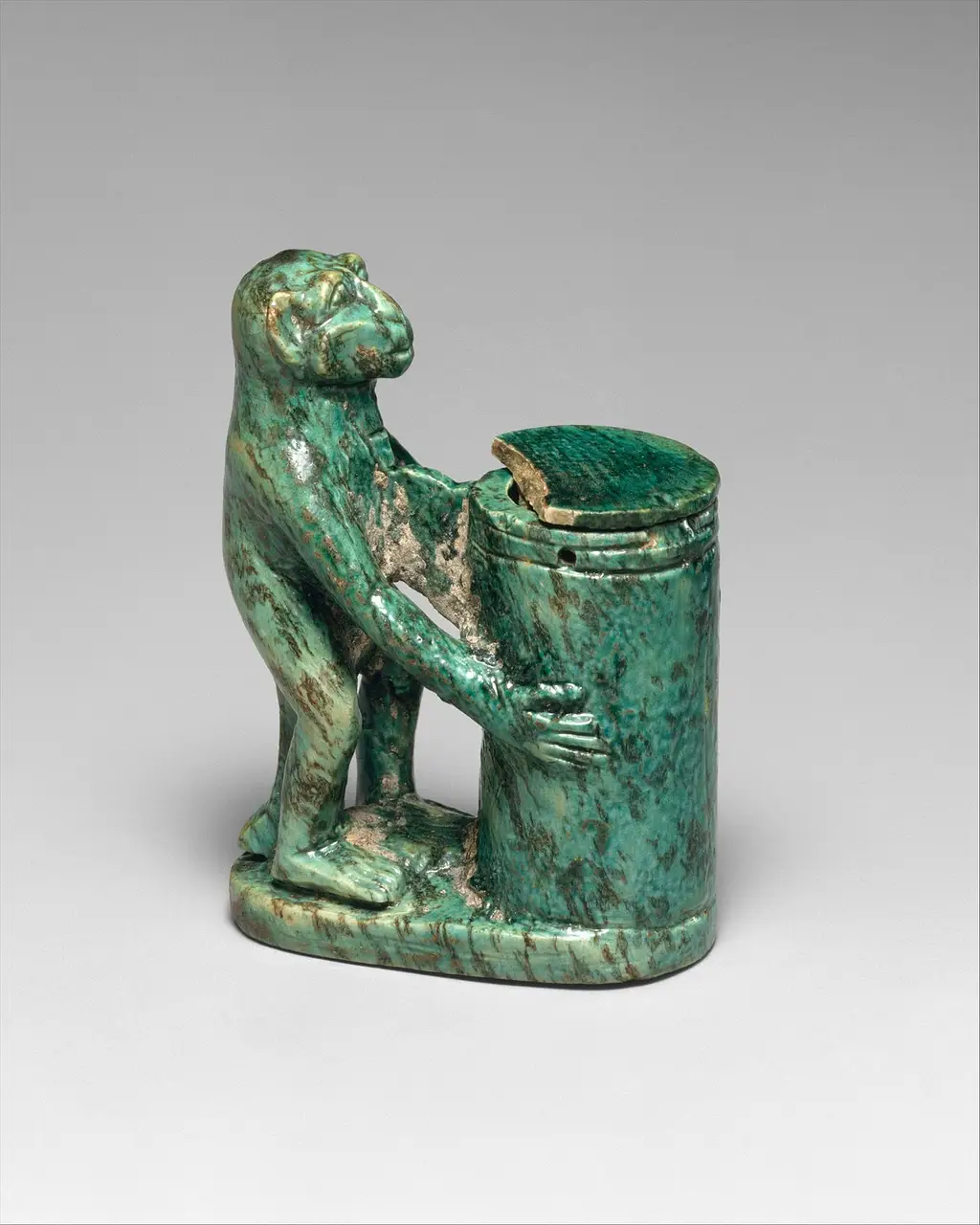 An Egyptian kohl tube in the form of a monkey holding a vessel, New Kingdom, glazed steatite. Kohl, the dark eye-paint, was kept in small tubes like this one. The Metropolitan Museum of Art, New York; CC0, via Wikimedia Commons.
What they could do, with great control, was chemistry of another kind. The black eye-paint in Egyptian kohl tubes is mostly galena, lead sulphide ground fine; but when Philippe Walter and colleagues analysed powders still sitting in their original Louvre containers in 1999, they found two lead chlorides, laurionite and phosgenite, that do not occur in any usable quantity in nature. Someone had synthesised them, mixing lead oxide with salt and natron in water and skimming off the product over days, exactly the process Pliny and Dioscorides describe. The small tube of eye-paint, easy to file under vanity, holds some of the oldest deliberate wet chemistry we can put a name to.
The bath that had no drain
The largest known bath of the Bronze Age sits in the citadel of Mohenjo-daro, in the Indus valley of what is now Pakistan, and it is a genuine feat of building. John Marshall's excavation report describes a sunken brick tank about thirty-nine feet by twenty-three and eight feet deep, made watertight with gypsum mortar and an inch-thick course of bitumen behind the bricks, fed from its own well and emptied through a corbelled drain. What it was for, Marshall was honest enough not to claim. The Great Bath was certainly for bathing, he wrote, "but whether entirely for pleasure or by way of religious ceremony it is at present impossible to say." The priests, the water-cult and the ancestry of Hindu ritual bathing came later, from his successors. The tank itself does not say.
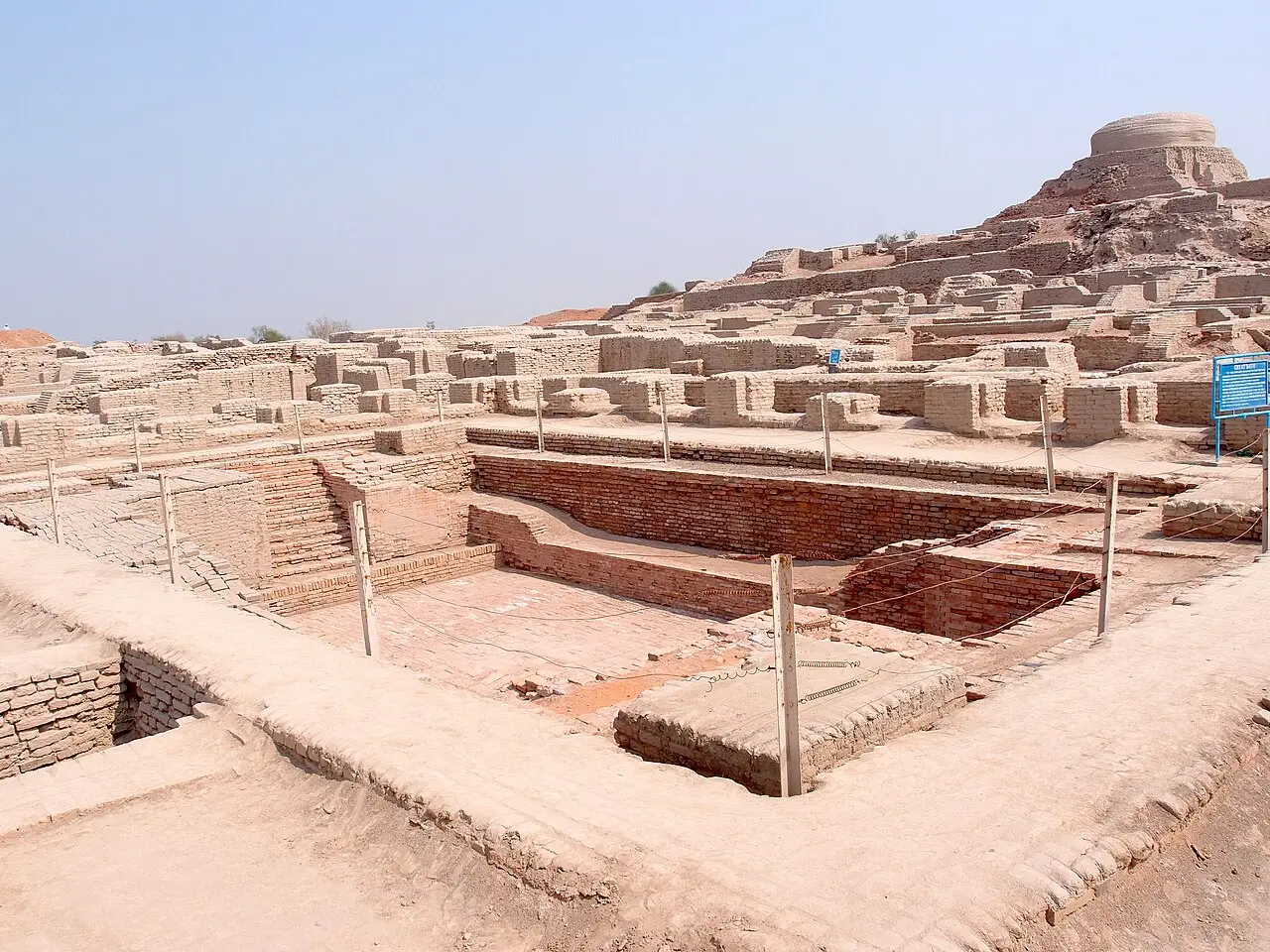 The Great Bath at Mohenjo-daro in the Indus valley, a sunken brick tank sealed with bitumen, the ruined stupa mound rising behind. Photo: Saqib Qayyum, CC BY-SA 3.0, via Wikimedia Commons.
On Crete, Arthur Evans dug a small bathroom beside the so-called Queen's apartments at Knossos, with a clay tub filled and bailed by hand, and a latrine whose drain he advertised as the oldest flushing toilet in the world. The drain is real. The flushing is mostly Evans: the celebrated mechanism comes from a reconstruction published in 1993, and his own biographer reads the whole scene as a Victorian gentleman finding his own bathroom in the Bronze Age.
The best-preserved Mycenaean bathroom, in the Palace of Nestor at Pylos, makes the point that even a palace bath was hand-work. A painted terracotta tub still stands in its plaster surround, two waist-high storage jars beside it with the dipping-cups left inside them. The tub had no drain. We know this not only from the find but from the Linear B word for such a tub, which translates as "unpierced"; you filled it by hand and emptied it the same way. The bathing scenes in the Odyssey, where a king's daughter washes and oils Telemachus until he steps out "like a god," are a memory of this world dressed for poetry, not a description of the plumbing.
Pylos also kept the accounts of the industry those bottles depended on. Among its tablets is the work of the a-re-pa-zo-o, the "unguent-boiler," issued coriander, cyperus, wine and honey, with wool to strain the finished oil, all to make scent on what the excavators call an industrial scale. One allocation of perfumed oil goes to the bath attendants, which ties the whole apparatus back to the act of getting clean: you bathed, then you were oiled with something a palace workshop had boiled to a recipe. That oil travelled the Mediterranean in squat, false-necked pots called stirrup jars, which turn up in tombs from the Levant to Italy, the earliest ancestors of the museum shelf. Cynthia Shelmerdine, who reconstructed the Pylos industry, put the link plainly: "In a world without soap, fragrant oil had hygienic as well as cosmetic value."
Oil on, scraped off: Greece and Rome
The Greeks made the oil-and-scrape system into a public habit and very nearly a moral position. Bathing belonged to the gymnasion, where men exercised naked, oiled themselves from a small round flask called an aryballos, and scraped down with the bronze strigil before a last pass with the sponge. The pose of a man scraping his own forearm was fixed in bronze by Lysippos around 320 BCE; the statue, the Apoxyomenos or "Scraper," survives in a Roman marble copy in the Vatican. Flask, strigil and sponge, hung together on a ring, are as good a likeness of a Greek athlete as his muscles.
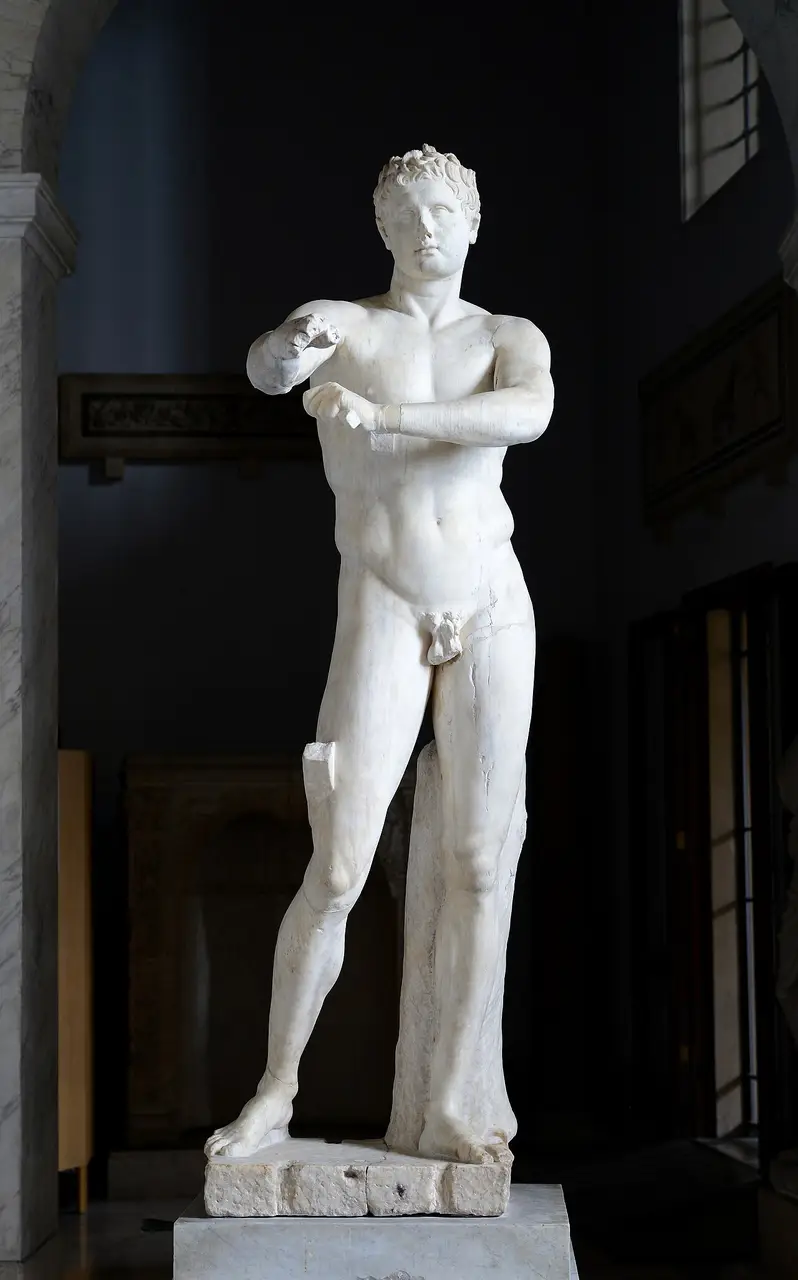 The Apoxyomenos, or "Scraper," a Roman marble copy after a bronze by Lysippos of about 320 BC, working the oil and dust from his arm. Vatican Museums. Photo: Alvesgaspar, CC BY-SA 4.0, via Wikimedia Commons.
The stuff scraped off the body had a market. The mix of oil, sweat and dust came away as a grey paste the Greeks called gloios, and gloios was sold as a drug. Pliny recommends the scrapings from the gymnasium for inflammations and sore joints, and an inscription from Beroia records the city leasing out the right to collect and sell it, like any other public concession. A bath could turn a profit on its own dirt.
The strigil was so personal a tool that it regularly went into a man's grave with him, which is one reason so many survive. Perfume was treated with more suspicion. Scented oil was foreign, costly and faintly disreputable on a man; Xenophon has Socrates say the smell of olive oil in the gymnasium is sweeter than any perfume, and a tradition reported by Athenaeus even has Solon banning the sellers of it, though the ban may be a later invention, since Athenian perfume production seems only to have grown afterward. When the chemist William Biers ran Corinthian perfume flasks through a mass spectrometer, the residue was not the famous local iris scent at all, but a resinous, cedar-smelling oil, perhaps as much insect-repellent as luxury.
Rome inherited the whole system and scaled it up. The imperial baths ran the bather through a sequence of rooms, the warm tepidarium, the hot caldarium over its hollow heated floor, the cold plunge of the frigidarium, and the entry fee was a single small coin. Inside, the method had not changed since the gymnasion. There was no soap in the Roman baths. Bathers rubbed olive oil over the body and scraped it off with a strigil, a slave often doing the work. The scraped gloios was flung onto the floors and walls, which tells you how to picture the place: sociable, steamy, and not especially clean.
What Rome changed was the bottle. Sometime in the later first century BCE, glassmakers on the Levantine coast learned to blow glass on a pipe, and within a couple of generations a glass flask was as cheap as a clay pot. The small perfume and oil bottle, which had been thrown on a wheel or built up around a clay core, became a blown-glass throwaway turned out by the thousand. This is the moment the museum cases fill. Nearly every plain little Roman glass bottle in a collection today is a child of that change, the disposable packaging of an empire that oiled and scented itself daily.
The other Roman contribution was fiscal. The laundries, the fullonicae, cleaned cloth by treading it in tubs of stale urine, whose ammonia cut the grease, and the emperor Vespasian taxed the collection of it. When his son Titus complained that the money was filthy, Vespasian held a coin from the first payment under the young man's nose and asked whether it smelled. It did not, and pecunia non olet, "money does not smell," entered the language.
What the little bottles really held
The shelf of bottles is a single lineage roughly fifteen hundred years long, one function in many shapes. The earliest are the Bronze Age stirrup jars and the Cypriot juglets called bilbils, whose inverted-poppy shape set off a long argument over whether they shipped perfume or opium; the residue evidence now points mostly to scented oil, with one disputed trace of an opium alkaloid. Then come the Corinthian aryballoi, the round flasks with a wide disc mouth that pooled the oil for a controlled drip, exported wherever Corinth sent its perfume. The slender alabastron took its name from the Egyptian calcite, alabaster, it was first cut from. The Athenians made a tall oil flask, the lekythos, specially for funerals, painted on a white ground with scenes at the tomb; some were built with a false inner chamber, so that a small measure of costly oil could fill what looked like a full vessel, the graveside gesture mattering more than the volume. Glassworkers copied all these shapes by hand around a core before anyone could blow glass, in opaque blues and yellows trailed with zigzags. After blowing arrived, the older versions gave way to plain glass unguentaria by the million, and those in turn to the stamped terracotta bottles of the early Christian centuries.
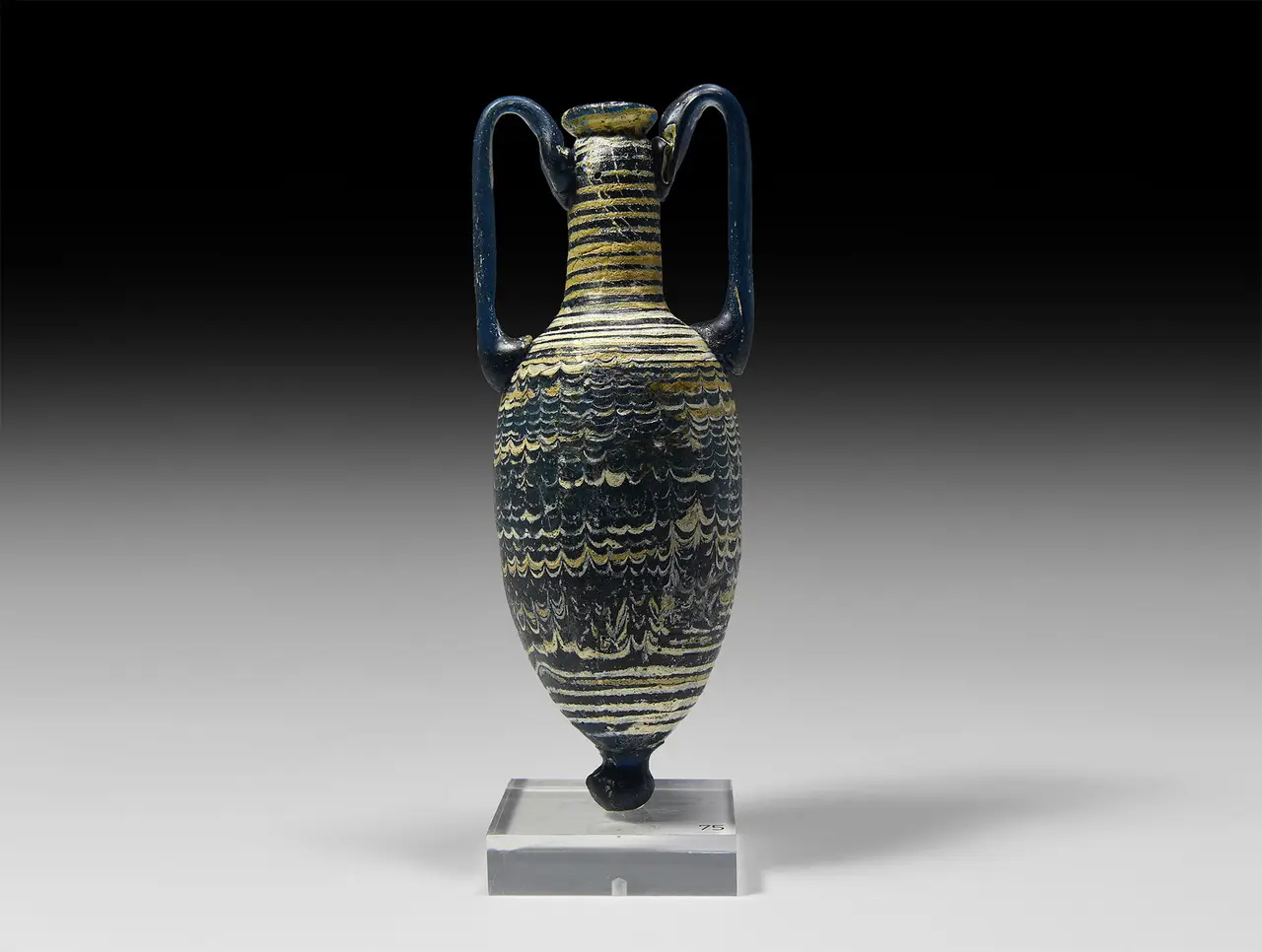
A word about the word. "Unguentarium" is a modern label; no surviving ancient text clearly names these vessels, so archaeologists borrowed a term, and museums still shuffle between unguentarium, balsamarium, perfume bottle and ointment jar for the same object. One older label is simply wrong. The small bottles were long called lacrimatoria, tear-bottles, on the Victorian fancy that mourners caught their weeping in them and set them in the grave. They did nothing of the kind. The reading is, in the words of the standard study, dismissed as highly unlikely by most scholars. The bottles held oil, scent, resin, cosmetic and medicine, the same things they held in life.
They are common in graves because the dead were treated like honoured guests: washed, anointed with perfumed oil, sent off with the flask that did it, and sometimes with many flasks. They are not in every grave. At Stobi, of three hundred and thirteen burials only twenty-nine held unguentaria, yet a single grave might hold fifteen or twenty, as if laid in by the boxful. A good number were never meant to work at all: some are porous enough to leak, some are solid clay with no cavity, dummies made for the grave and nothing else. Where the contents do survive, they are specific and varied. A detailed study of forty late Roman bottles from Hierapolis in Anatolia found two formulations, an animal-fat balm and a vegetable-oil ointment, carrying frankincense and myrrh, storax, conifer resin and beeswax; the chemists who ran the analysis were careful to add that the bottles were not, as church tradition liked to imagine, containers for holy water. A Roman example from Britain held resinated wine and frankincense; one from Knossos, a pink cosmetic powder of red ochre.
Buried by the boxful, they survive by the thousand, which is why a Roman scent-bottle or a Corinthian oil-flask remains one of the few genuinely ancient things that come to auction often and affordably, the disposable hardware of a vanished routine.
Why the plumbing did not make them healthy
It is tempting to read all of this, the baths and the drains and the daily oil, as ancient people inching toward modern cleanliness. That is the last thing to correct, because they were not getting healthier. When Piers Mitchell and others began counting parasite eggs in ancient soil, latrines and graves, the plumbing made no difference to the result. Roundworm and whipworm stayed common across the Greek and Roman world; at the multi-seat latrine of the Varius Baths at Ephesus, with seats for thirty-seven, whipworm eggs turned up in every single sample, a sign that the city manured its fields with human waste and that hands did not get very clean. The Roman bath, where the sick and the healthy soaked in the same water and the scraped gloios hit the walls, did not lower the worm count, and the spread of Roman rule may even have carried the parasites further. The aqueducts were superb engineering that did little for the health of the people who drank from them. This is the direction the evidence now points, on a dataset still growing, not a closed case.
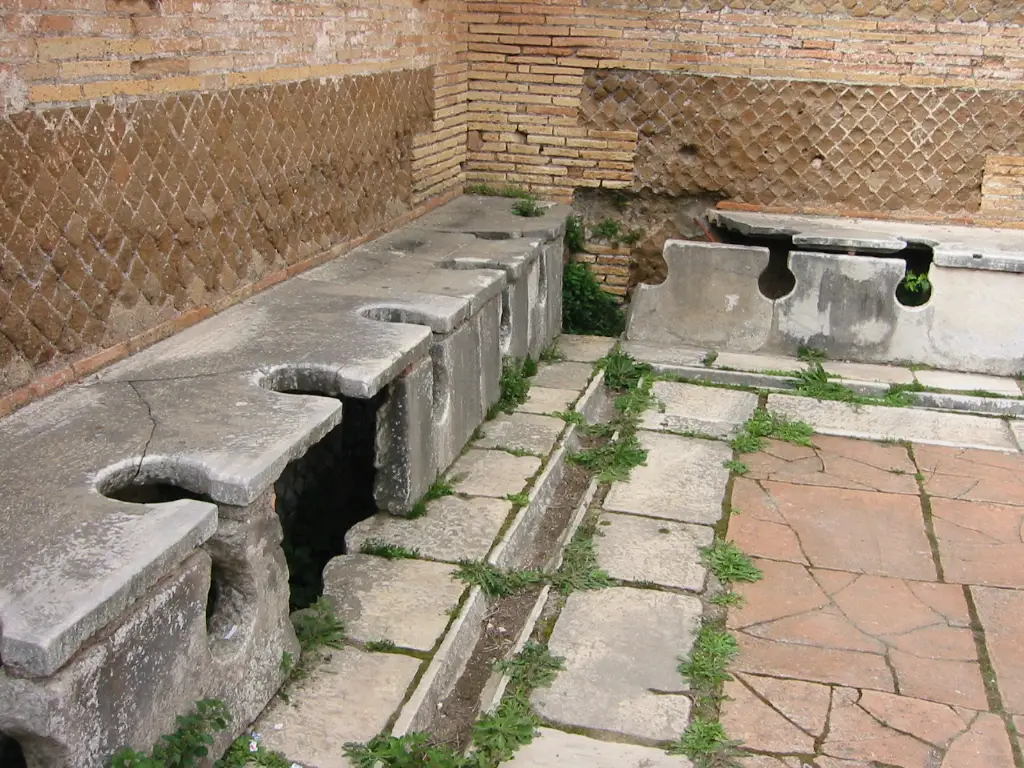 A public latrine at Ostia Antica, the keyhole seats set above a drain with a water channel running along the floor in front. Public domain, via Wikimedia Commons.
The lice tell the same story from the other side. They are found in the hair of Egyptian mummies up and down the social scale, on princesses and queens and on at least one pharaoh, and this is not the mark of squalor it looks like. Head lice need to reach the scalp; they prefer a clean, well-tended head, and a scalp slick with oil actually puts them off. The obsessive shaving of the Egyptian priesthood, every other day, all over, was a sensible response to an enemy that likes clean hair, not a recoil from filth.
The oldest evidence of that fight is also one of the oldest sentences anyone can read. A small ivory comb from Lachish, in Canaan, dated by the archaic forms of its letters to around the seventeenth century BCE, carries seventeen tiny signs in the early Canaanite alphabet, seven words that rank among the first sentences known in any alphabetic script. The team that published it in 2022, Daniel Vainstub and colleagues, read it, and the decipherment is not yet accepted by everyone, as a wish scratched onto the tool itself: "May this tusk root out the lice of the hair and the beard." Under the microscope, caught on the second tooth, they found the hardened chitin shell of a young head louse, barely half a millimetre across.
TimeLine Auctions, 17th July 2026