Home > Stories by TimeLine Auctions
Stories by TimeLine Auctions
Dealer or Auction House? Where to Buy and Sell Antiquities
Offer a Roman bronze to a fair and established dealer and the figure that comes back will usually sit between 30 and 50 per cent of what the dealer expects to sell it for. There is nothing underhand in this: the dealer pays rent and insurance whether anything sells or not, and may hold that bronze for two years before the right buyer walks in, so the gap between buying and selling price is what keeps the business alive. A dealer with no reputation to protect may offer a good deal less.
If you are selling, then, an auction house will usually return more: about two-thirds of the final price once commissions are taken, against a third to a half of retail from a dealer. If you are buying, a dealer gives you a fixed price and time to think, while an auction gives you the chance to pay what the market thinks the object is worth on the day. Which weighs more depends on the object and on your timetable.
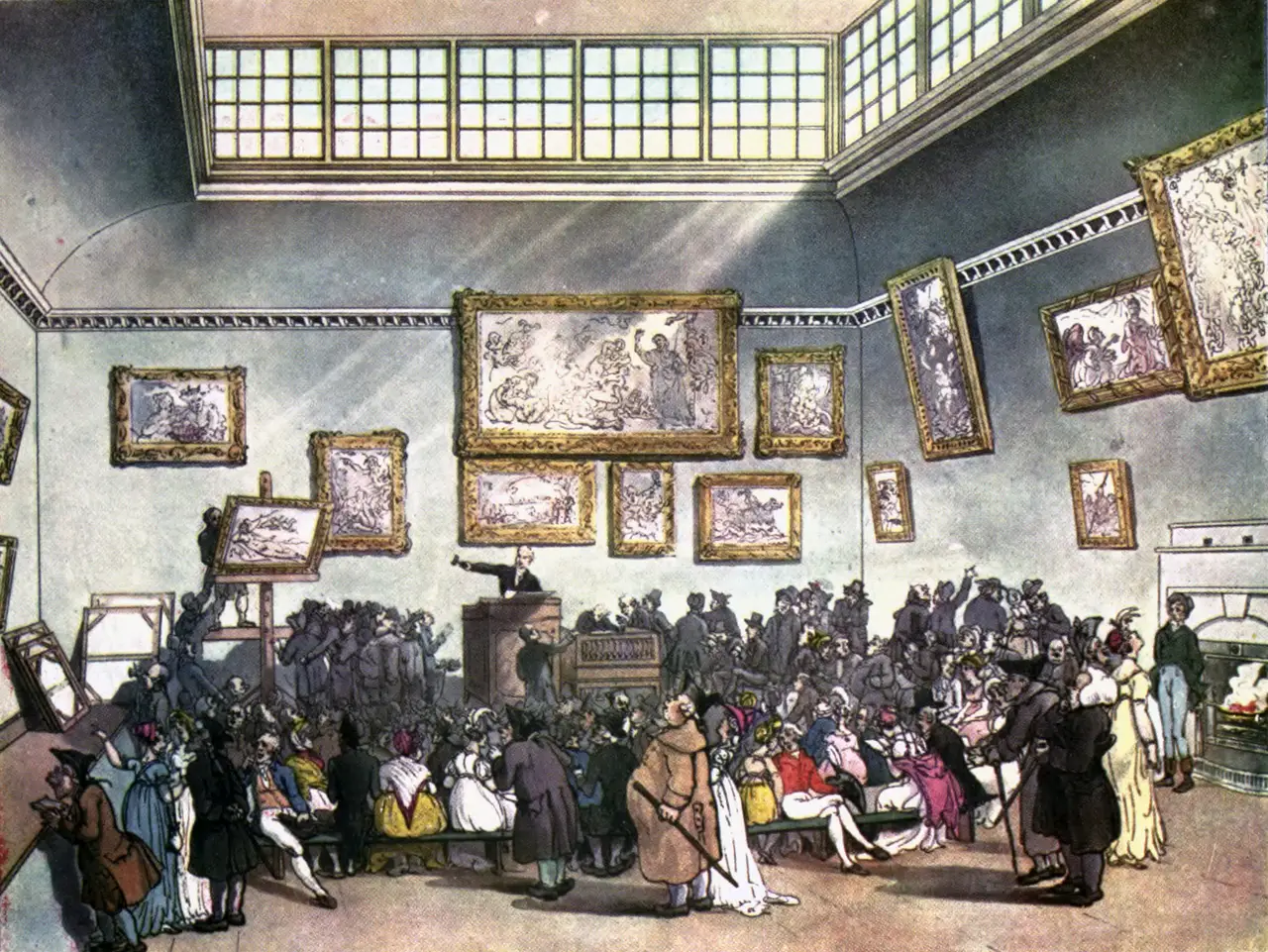 Christie's auction room in 1808, in the hand-coloured aquatint from Rowlandson and Pugin's Microcosm of London. The auctioneer takes bids from the rostrum; the crowd around him supplies the price. Public domain, via Wikimedia Commons.
What a dealer does well
A dealer is still often the right place to start: walk in with an object and you will have an opinion within minutes, an offer within days, and payment as soon as you accept. There is no waiting for a sale date and no risk of an unsold lot. For some sellers, settling an estate or raising money by a fixed date, that certainty is worth more than the margin they give up, and the offer itself tells you something either way, since whatever a fair dealer quotes, the retail value is at least double.
Dealers rarely sell on your behalf: most buy outright or decline, and consignment arrangements are the exception. Buying from a dealer puts you on the other side of that margin: you pay the full retail price, and in exchange you can handle the object before you buy it and come back next month if you hesitate. Good dealers teach their customers, and for a new collector that education can justify the markup. What no dealer can give you is an outside check on whether the price is right.
Why the auction price is the real price
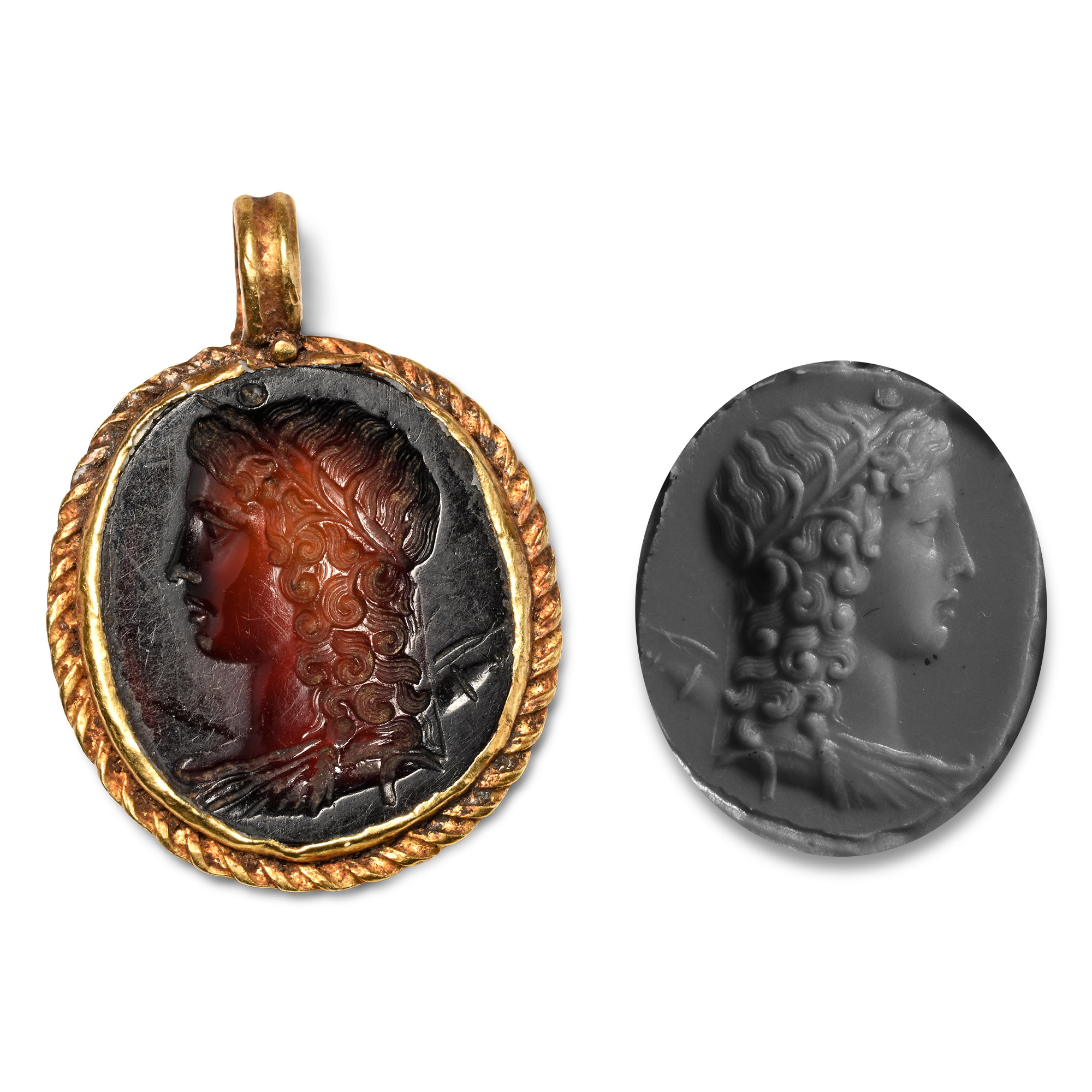
Antiquities are hard to price: no two survive in the same condition, a documented provenance can multiply a value, and taste moves. An auction settles the question in the most direct way available, since the hammer falls one bid above the point where the second-keenest bidder stopped, and the estimate, which was never more than an informed opinion, is corrected in public. That is why the trade itself watches saleroom results to learn what things are currently worth, and why economists call the mechanism price discovery. The correction can be a large one: at our sale of 3 March 2026 a Graeco-Roman sard gemstone of the god Apollo, set in a later gold mount, went in with a pre-sale estimate of £1,200, and the hammer fell at £10,000, £13,000 once the buyer's premium was added.
Consign that same Roman bronze instead and the incentives run in your favour, because an auction house is paid a percentage of the result: its interest and yours point the same way, and the stronger the price, the better both parties do. There is no equivalent of the dealer's low opening offer, because the house never owns your object and gains nothing by valuing it cheaply. At TimeLine the selling commission on a single item of modest value is 18 per cent of the hammer price including VAT, with lower rates for high-value pieces, significant collections and regular consignors, so a consignor on the standard rate keeps about 63 per cent of everything the buyer pays, and payment usually follows within thirty days of the sale. The trade-offs are the calendar, since sales run to their own dates rather than yours (ours are quarterly, each spread over five or six days), and the possibility that a lot finds no buyer on the day and must be reoffered.
The same mechanism protects the buyer, who pays one increment more than anyone else in the world was prepared to, which is as close to a true market price as this field offers. Set your limit before the sale starts and include the buyer's premium when you set it, at TimeLine 30 per cent of the hammer price including VAT; the under-bidder who pushed you there is also your reassurance, since the price you paid is one that somebody else nearly matched.
Generalist or specialist auction house?
No one auction house suits every object, though: a generalist house, the kind that clears whole estates, will take the furniture, the silver and the box of oddments in a single van, and for an executor emptying a varied house that is exactly the service required. The antiquities in such a sale tend to receive a line or two of description from a cataloguer whose last lot was a sideboard, and they reach whoever happened to register that week.
The case for a specialist house rests on the audience it has spent years assembling: the cataloguer describing your Greek lekythos has handled hundreds and can name the type and cite the parallels, and the bidders the sale reaches are the people who already collect Greek pottery, because they are the people the house has been selling it to all along. At TimeLine we sell antiquities and ancient art, coins, natural history and rare books, and little else: a narrow way to run an auction house, and the reason the bidders for those things already know where to look.
How to choose an auction house
Whichever route you take, read a house's recent catalogues before you commit an object or a bid, since descriptions that cite parallels and admit faults tell you how your own object will be treated. Ask how authenticity is checked and what guarantee backs it. Ask what the seller's commission covers, photography and insurance included or not. And ask for recent results in your category: a house that sells material like yours every quarter has the buyers for it.
If you do not yet know which route your object deserves, an appraisal settles it: TimeLine values material for insurance, probate and fair-market purposes, and significant consignments are assessed personally by our chief operating officer, Aaron Hammond (ah@timelineauctions.com), who travels Britain and Europe through the year to meet vendors and see their collections. The conversation costs nothing to open. However you sell, take more than one opinion before the object leaves your hands: the first figure quoted across a counter is an opinion, while the price at which the hammer falls is a fact.
TimeLine Auctions, 27th August 2026