Home > Stories by TimeLine Auctions
Stories by TimeLine Auctions
Every Collection Ends: How to Leave Your Antiquities to a Museum, Your Family, or the Next Collector
In April 1944 Sir William Burrell, a Glasgow shipowner, signed the memorandum that gave his collection to his city: six thousand objects, with £450,000 to build them a gallery. He attached conditions. The building was to stand at least sixteen miles from the Glasgow Royal Exchange, clear of the coal smoke he feared for his tapestries, and nothing was ever to be lent abroad, a clause later traced, in the parliamentary debate that undid it, to a wartime fear that objects sent overseas in 1944 might not come back.
Glasgow accepted, and time went to work on the conditions. No gallery existed for nearly forty years; when one finally opened, in October 1983, it stood in Pollok Country Park, comfortably inside the city Burrell had ordered it to avoid. In January 2014 the Scottish Parliament, a body that had not existed when Burrell wrote his terms, passed an Act dealing with the other condition: the Burrell Collection (Lending and Borrowing) (Scotland) Act provides that the lending ban and the will's supporting clauses "cease to have effect." The collection toured the world while its building was refurbished. Burrell had chosen the institution, paid for the gallery, written his terms into a memorandum and repeated them in his will, and none of it held; his strictest clause lasted seventy years.
 The Burrell Collection's purpose-built gallery in Pollok Country Park, Glasgow, home to the six thousand objects Sir William Burrell gave the city in 1944. Photo: Finlay McWalter, CC BY-SA 3.0, via Wikimedia Commons.
Burrell's story is the extreme case of a problem every collector owns a smaller version of. A collection outlives its collector; that is half the point of it. Its ending, museum, family or market, will be written by someone, and the collectors who fare best are the ones who write it themselves, while they are alive to hold the pen. This guide is about the three endings available: what museums genuinely accept and refuse, how the two British tax schemes reward giving, what your heirs will need from you besides the objects, and why the saleroom, the ending most collectors treat as defeat, is the one that comes closest to permanence.
The three endings, and the habit they share
A private collection of antiquities has three realistic destinations. It can go to a museum, by gift in your lifetime or bequest at your death. It can go to your family. Or it can return to the market, usually through an auction house, passing to other collectors one lot at a time. There are hybrids, chief among them the long-term loan, and the rare fourth road of founding your own museum, which takes a shipping fortune. But the three endings cover nearly every collection that has ever existed, including the famous ones: the British Museum, the Louvre and the Metropolitan are, to a startling degree, assemblies of private collections that took the first ending, and the trade that supplies today's collectors is largely the recirculated material of collections that took the third.
All three endings are decided earlier than people think, and by the same things: the state of your paperwork and how early you start the conversations. A museum gift takes years of lead time and a documented history for every piece. A family inheritance goes well in proportion to the records that travel with it. A sale realises the most when invoices, old labels and dates accompany the lots. Three endings, one preparation. If you take a single instruction from this article, take this one: write down, today, where each object in your collection came from, while you are still the person who knows.
Donating to a museum: rarer than collectors think
The precedents could not be grander: Parliament paid £8,400 in 1772 for Sir William Hamilton's first vase collection, and, as R. M. Cook put it in Greek Painted Pottery, the British Museum thereby became the first public gallery anywhere to exhibit Greek pots. A century later Augustus Wollaston Franks, the curator who bought more than twenty thousand objects for the Museum and fronted £5,000 of his own money when the Treasury hesitated over the Royal Gold Cup, bequeathed his private collection in 1897: 3,300 finger rings, 153 drinking vessels, 1,500 netsuke, the Oxus Treasure. David Wilson, himself a later director of the Museum, judged that "in many respects Franks was the second founder of the British Museum." And George Salting, who lived in rented rooms above the Thatched House Club and, as his biographers enjoyed recording, would pay sixpence for his tea on the same day he spent £5,000 on a picture, died in 1909 leaving 192 paintings to the National Gallery, which still describes the bequest as the largest single gift it has ever received, a selection of prints and drawings to the British Museum, and 2,657 objects to the Victoria and Albert.
Those stories built the daydream most serious collectors have privately entertained: the case with your name on it, the collection kept whole behind glass. The arithmetic of the present is soberer. In the year to March 2025, the two national schemes for moving objects from private hands into public ones handled thirty-two cases between them, worth £59.7 million, across every museum, gallery, library and archive in the United Kingdom. Thirty-two. Museums now acquire against written collections development policies; every accession commits them to storing, conserving, insuring and cataloguing the object for as long as the institution stands, and the guidance for the government's own gift scheme states that "there should be no presumption that an object will be accepted automatically," even when the object clears the scheme's bar of pre-eminence. A museum accepts a gift when the gift advances the museum's own plan, and at no other time.
So the collector who wants this ending has to work for it, and the work is mostly matchmaking done early. National museums are full; the likelier homes are regional and university museums, where fit counts for more than fame. A collection of Romano-British brooches means more to the museum of the county they were found in than it ever will to Bloomsbury. Approach the curator years before anything is signed, ask whether they would want the collection, and listen to the answer, because it will usually be a version of "parts of it, if the documentation holds up." An accredited museum will ask for the documented history of each piece before it can consider acquiring it, which is one more reason the file you keep now decides which endings exist later. And if you can, give while you live, as the Duc de Luynes did when he handed the Cabinet des Médailles an itemised donation of 6,893 coins and 373 gems in 1862: a living donor can answer questions, help with the cataloguing, and see the case installed.
For study material the university museum deserves more attention than collectors give it. In 1956 a Newcastle lecturer named Brian Shefton was handed a £25 grant by his vice-chancellor and bought three Greek pots with it. He kept buying for the next forty-six years, assembling nearly a thousand Greek and Etruscan objects chosen for what they could teach, and the university renamed the museum after him in 1994; his cases stand today in the Shefton Gallery of the Great North Museum: Hancock. A teaching collection prizes exactly what the art market discounts, the honest sherd, the ordinary lamp, the type-series, so a collector of modest, scholarly material has a natural home in a university department that a national museum will never be.
The road between is the long-term loan: you keep title, the museum shows the objects. The Severis and Zintilis collections of Cypriot antiquities stand on public display in Nicosia and Athens on precisely these terms, and the arrangement's flexibility cuts both ways. The Guennol Lioness, a three-inch Proto-Elamite figure, went on loan from the Martin family to the Brooklyn Museum in 1948 and stayed for nearly sixty years; in December 2007 the family sent it to Sotheby's, where it made $57.2 million. The public had six decades of it, and the family never stopped owning it. A loan gives a collection public life without asking anyone to promise forever, and it leaves every option open, including that one.
Acceptance in Lieu and the Cultural Gifts Scheme: how giving pays
Britain runs two schemes that convert giving into tax relief, both administered by the Acceptance in Lieu Panel at Arts Council England, both confined to objects the Panel judges "pre-eminent."
Acceptance in Lieu is the older, with roots in Lloyd George's Finance Act of 1910, and it operates at death: an estate facing inheritance tax may offer objects instead of money. The incentive is the douceur, a sweetener of 25 per cent of the tax the object would have carried, and the arithmetic is easiest in round numbers. An object agreed at £100,000, in an estate paying 40 per cent, carries £40,000 of tax. Sold at auction it leaves the estate £60,000 before selling costs; offered in lieu it settles £70,000 of the estate's bill. The object passes to a public collection, the offer can express a wish about which museum receives it, and the collector's name goes with it.
The Cultural Gifts Scheme, created by the Finance Act 2012, is the version for the living. Donate a pre-eminent object and you receive a tax reduction equal to 30 per cent of its agreed value, set against income tax or capital gains tax and spreadable over up to five tax years; companies get 20 per cent against corporation tax. It exists so that the Salting pattern, giving only at death, is no longer the only affordable one. A collector can now watch the gift arrive.
"Pre-eminent" is a high bar, the Panel agrees the valuation and refuses freely, and those thirty-two cases a year describe the entire country's traffic through both schemes combined. The schemes also reduce tax rather than replace advice: anyone weighing a collection against an inheritance-tax bill should be talking to an accountant, and to a museum, long before talking to either scheme. American readers have separate machinery, built on income-tax deductions at fair market value, and the working principle is identical: give early, document everything.
Conditions: what a gift may ask, and for how long
Baron Ferdinand de Rothschild's will, proved in 1898, gave the British Museum the contents of the New Smoking Room at Waddesdon Manor, almost three hundred goldsmiths' pieces and curiosities, on condition that they be kept in a room "separate and apart from the other contents of the Museum" and remain so "for ever thereafter." The Museum has honoured it for a century and a quarter: the Waddesdon Bequest fills its own gallery today, Room 2a, refitted in 2015 with Rothschild money, for decades the only collection in the building displayed on such terms.
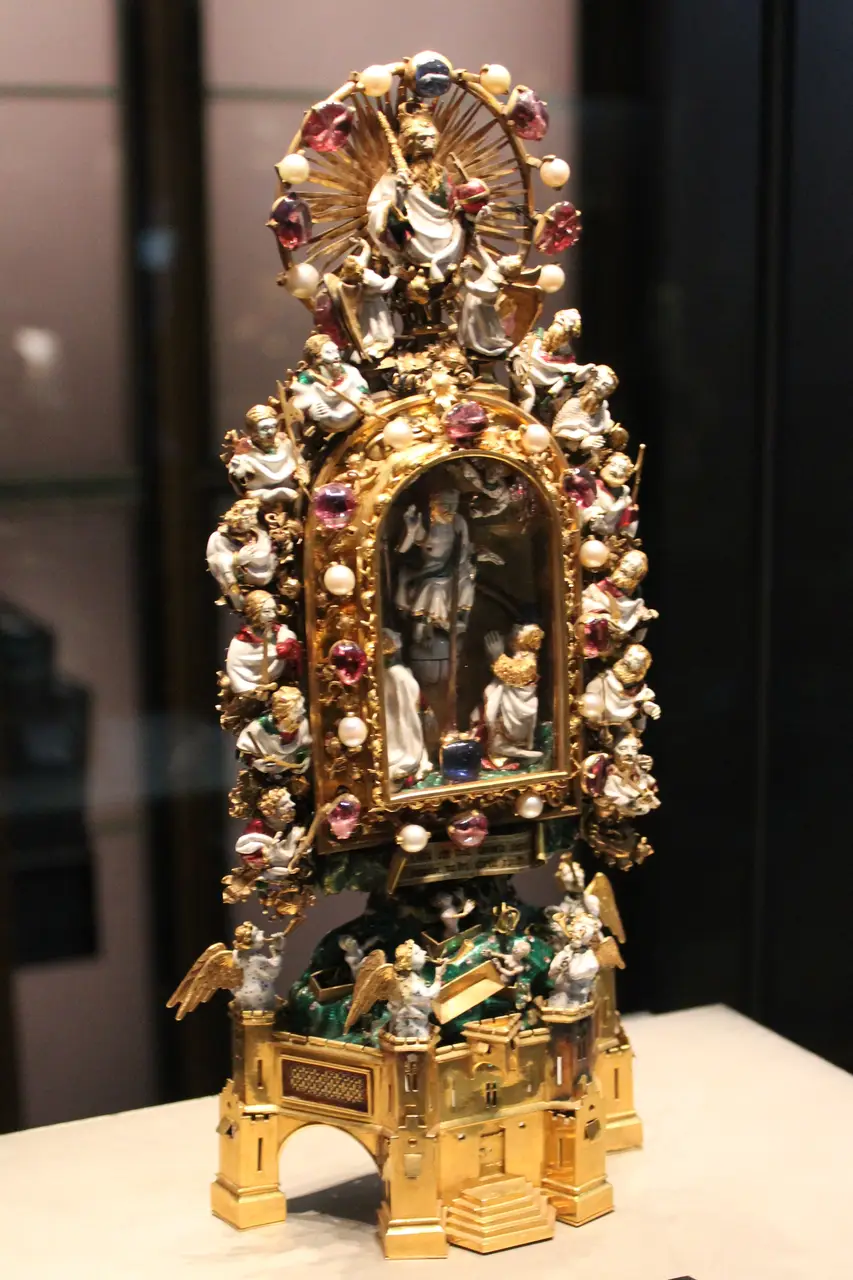 The Holy Thorn Reliquary, made in Paris around 1400 for Jean, duc de Berry, one of the nearly three hundred pieces of Baron Ferdinand de Rothschild's Waddesdon Bequest. Photo: Jonathan Cardy, CC BY-SA 3.0, via Wikimedia Commons.
Two other wills went the other way. Salting asked the V&A to keep his objects "all together according to the various specialities of my exhibits," and the museum's 1911 guide shows them displayed as a unit filling six rooms; walk the V&A today and Salting's porcelain and bronzes stand in galleries all over the building. Burrell's lending ban took an Act of Parliament to shift, but shift it did. Museums keep faith where they can; conditions age at the speed of institutional need, and institutions outlive most promises. Even accession has exceptions: the Metropolitan, having bought Luigi Palma di Cesnola's vast Cypriot collection by public subscription in the 1870s, sold thousands of its "duplicates" between 1896 and 1928, to Stanford University, to the Ringling Museum, and across a museum counter to private buyers, ordinary housekeeping by the standards of the day.
The conditions that endure are the light ones. A name over a gallery, a credit line in the catalogue: these ask nothing of the future, so the future keeps them. When scholars of Cycladic sculpture needed a name for the anonymous carver of a marble figure in the Metropolitan Museum, they took it from the credit line, "Gift of Christos G. Bastis, 1968," and an artist dead four and a half thousand years is known in the literature as the Bastis Master. No clause in any will has done better than that.
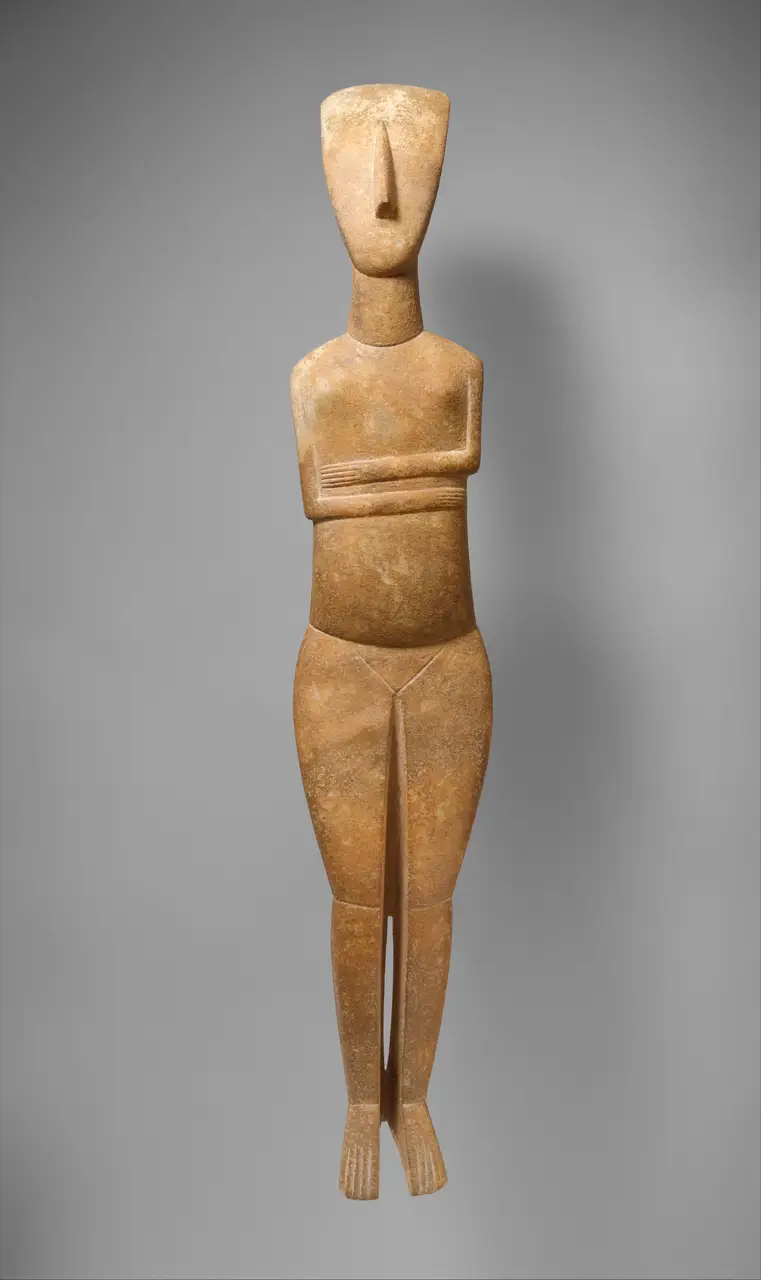 A marble folded-arm figure of the Early Cycladic II period, around 2600 to 2400 BC, attributed to the Bastis Master. The Metropolitan Museum of Art (CC0), via Wikimedia Commons.
Leaving it to the family: what your heirs will actually need
Franks called collecting "a hereditary disease, and I fear incurable," but the heredity is unreliable. Some children catch it; many do not; and a collection left to heirs who neither collect nor know what they are holding is a burden dressed as a bequest. We meet the other end of this regularly: a bereaved family, boxes of objects, and no papers, because the one person who knew every piece's story told nobody. What an heir needs comes down to four things, and none of them is another object.
An inventory, first: one line per piece, what it is, where and when you bought it, from whom, for what. Second, the papers behind that inventory, invoices, old collection labels, catalogue pages, photographs, kept together and kept simply; a shoebox maintained beats a database abandoned. Our own catalogues show the compound interest this habit pays. One line we have printed reads "from the private collection of a London gentleman, from his grandfather's collection formed before the early 1970s": the grandfather wrote nothing for publication, yet he left trail enough for his collecting to be dated to the decade, and that date is now what lets his grandson's consignments be researched, catalogued and sold two generations on. The quiet phrase "thence by descent" that recurs in provenance lines is the sound of a family that kept the papers.
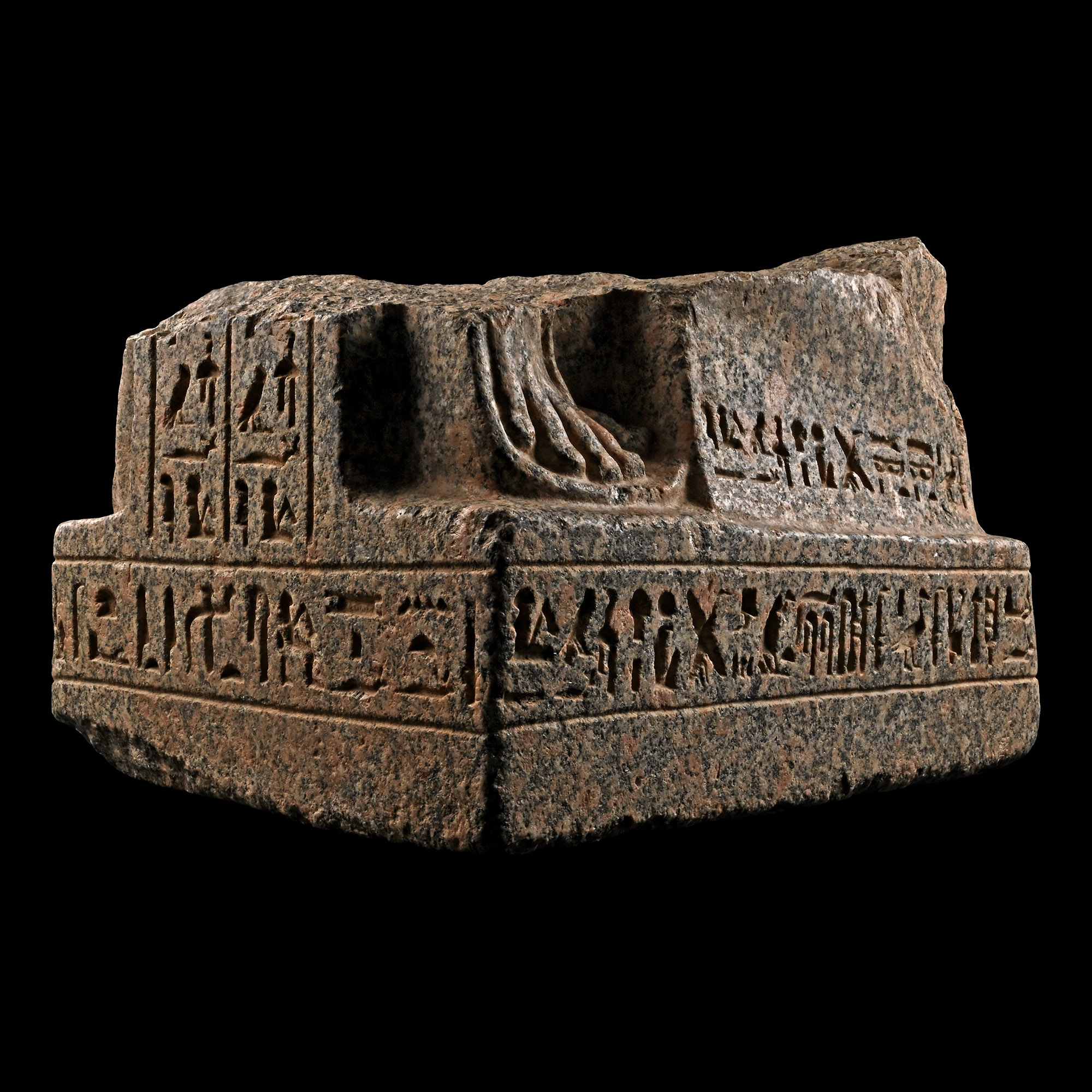
Third, numbers that are roughly current. Values move; a valuation refreshed every few years, ours are free and carry no obligation, spares your executors both underinsurance and shock in either direction, and gives HMRC something professional to work from when probate comes. Chattels count toward inheritance tax like everything else, at 40 per cent above the threshold, and an estate that has to guess is an estate that overpays or argues.
Fourth, and most often forgotten, permission. A letter that says which pieces carry family meaning, what the rest would realistically bring, and that selling is allowed, even intended, turns an inheritance from a test of loyalty into a gift. Ask your children what they actually want; the answer is sometimes a surprise in both directions, and any answer is more useful than the silence most collectors leave behind instead.
Selling at auction: how a collector becomes a provenance
The third ending is the one most collections get and the one nobody plans, and it deserves a better reputation, because dispersal and disappearance are different things.
Consider what actually happened to Christos Bastis, the Greek-born New Yorker who ran the Sea Fare restaurants and spent fifty years collecting antiquities with the proceeds. In the winter of 1987 the Metropolitan Museum exhibited 166 of his pieces while he could walk the galleries himself; the catalogue his friends among the curators wrote for the show, Dietrich von Bothmer at their head, is still cited in the scholarship. When he died in 1999, Sotheby's sold the collection that December under his name, $9.2 million against a high estimate of $6.5 million, with a Roman marble head of Aphrodite at $662,500 leading. The collection is dispersed; the collection is also, through exhibition catalogue and sale catalogue, permanently on record, consultable in a way many intact accumulations are not. And his name is still working: it hangs on the Cycladic master, and it travels in every "ex Bastis" provenance line in every subsequent catalogue.
Dispersal also feeds the museums it seems to bypass. When Captain Spencer-Churchill's collection was sold at Christie's in 1965, the Ashmolean took forty-seven vases from it; when the Kofler-Truniger glass came up in 1985, pieces went to the Metropolitan, to Boston, to the Getty. A collection offered whole arrives at a museum as a commitment to be weighed; the same collection at auction lets ten institutions each take the piece they need, and collectors take the rest, at every price level. The pool that supplied your collecting life refills for the next generation's. Somebody's first antiquity will come out of your cabinet, at a price that lets a beginner in, and they will not know your name unless the catalogue tells them.
The catalogue usually does, since auction custom preserves the source: an object sold from a named collection carries that name onward, sale after sale, for as long as records are kept. In our September catalogue there is a Roman gold solidus of Valentinian I in an ancient pendant mount whose provenance line reads "from the private collection of the late Alison Barker (1951-2021)."
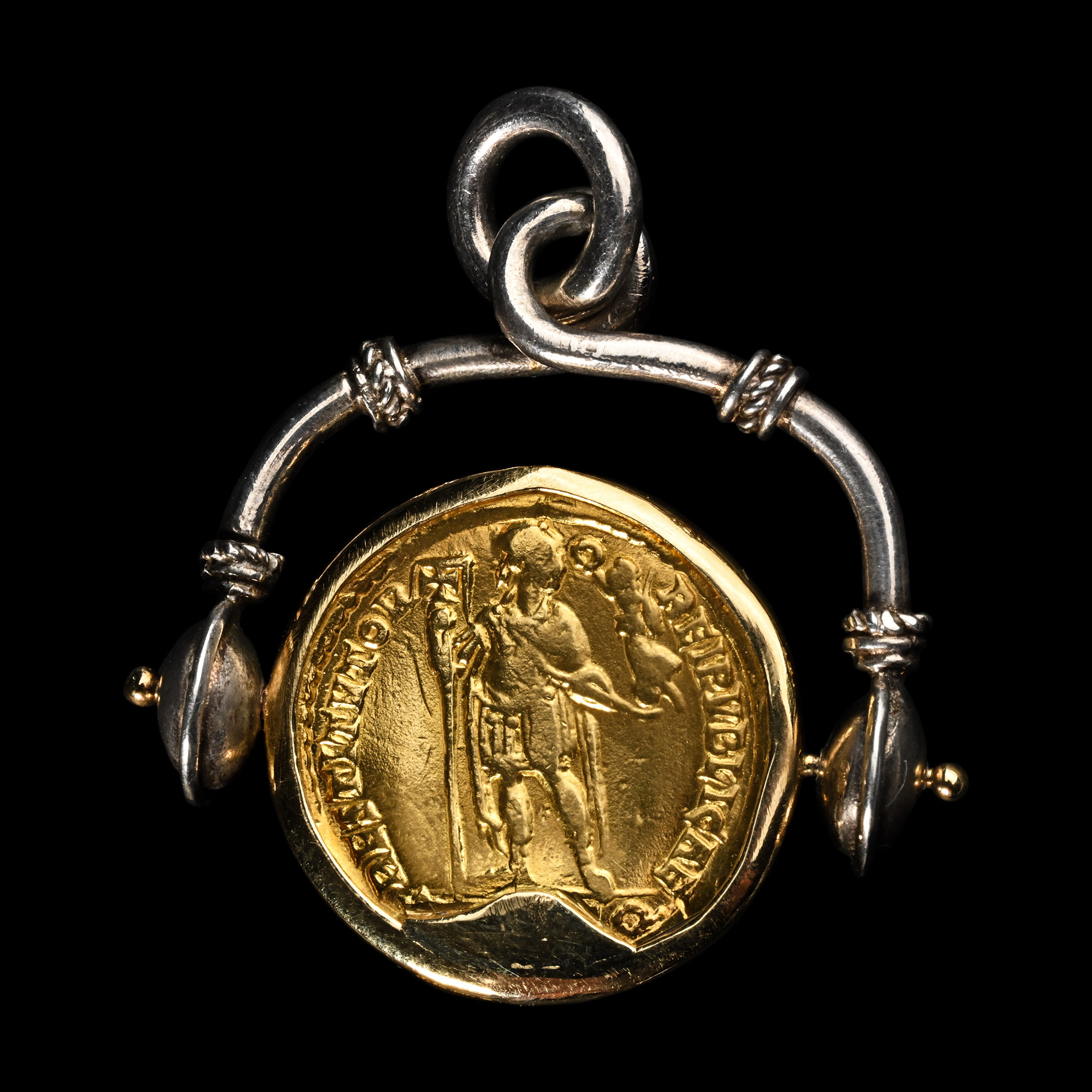
Whoever wins the pendant acquires the sentence along with the gold, and will pass both on. For collectors who prefer silence the trade keeps an old convention too: "the property of a gentleman" has covered discreet consignors for generations, and initials do the same work. Either way the market pays for the identical habit the museums insist on. Silvia Beltrametti and James Marrone, working through some twenty years of antiquities auction data, found the premium buyers pay for documented history rising steadily across the period. The file you keep is equity.
The practical shape of this ending is undramatic. A specialist house sells a consigned collection within months, ours across four sales a year, and handles the cataloguing, photography and vetting; the estimates conversation is the honest mirror most collections never get in their owner's lifetime. If you are weighing these endings for a collection of your own, have that conversation early, with us or with whichever house you trust, while the person who knows the collection best is still in the room to annotate it.
What to do this year, whichever ending you intend
None of the three endings needs deciding today, and the best-prepared collectors keep more than one open for decades. All of them need the same things begun now.
- Inventory. One line per object: what, when acquired, from whom, for how much. An afternoon's work for most collections, and the single highest-value document you will ever attach to yours.
- Papers. Every invoice, old label, catalogue card and photograph, in one place your executors could find without you.
- Stories. The dealer's remark, the collection a piece came out of, why you bought it. Catalogue entries and museum labels are built from exactly these scraps, and they die with you unless written down.
- Numbers. A refreshed valuation every few years; any specialist house worth consigning to will give you one.
- Conversations. With a curator, years early, if a museum is the hope. With your family, asked rather than assumed. With an auctioneer, for the honest number that makes the other two conversations real.
In September the solidus pendant will cross the block, and the line beneath it will keep doing quiet work for as long as the coin is collected, dating it, vouching for it, keeping a name attached. Conditions lapse, galleries are rehung, and Burrell's strictest clause lasted seventy years before one Act of Parliament undid it, while a provenance line only ever gets longer.
TimeLine Auctions, 10th August 2026