Home > Stories by TimeLine Auctions
Stories by TimeLine Auctions
Fighting for a Bargain: Buying Unsold Lots After the Auction
The auctioneer works through a lot, gets no bid to the reserve, and moves on. In the trade the lot has been bought in: it did not sell, and it goes back to the book unsold. Most people following the catalogue stop paying attention there, which is the mistake, because the object has not gone anywhere. It stays with the auction house, still available in the after-sale, usually at or near its reserve, and a considered offer below the failed estimate will often take it home.
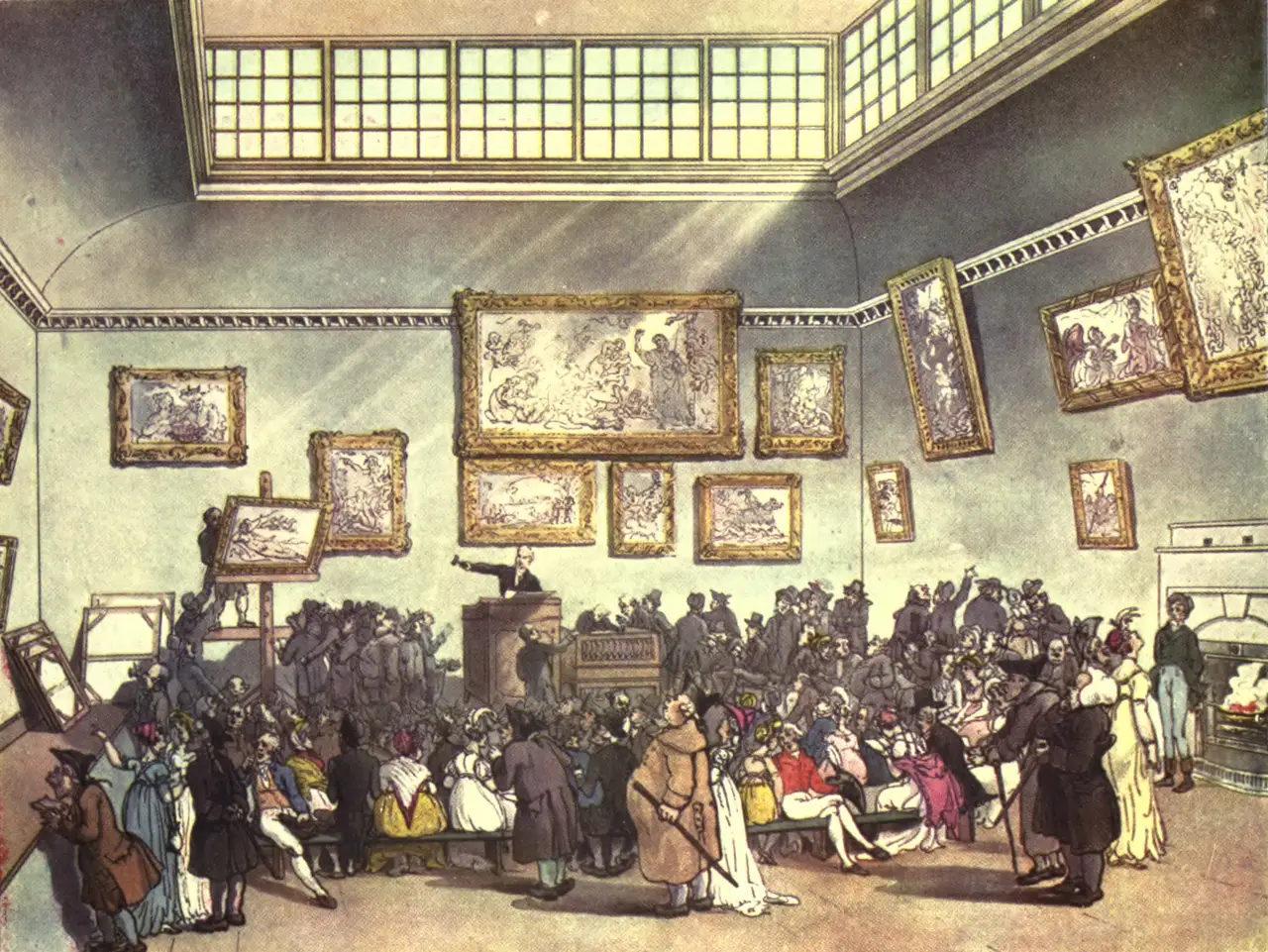 The auction room at Christie's in London, an aquatint after Thomas Rowlandson and Augustus Pugin published in Ackermann's Microcosm of London, 1808. Public domain, via Wikimedia Commons.
Why a failed lot is priced to move
The reserve is the confidential floor below which the consignor has agreed not to sell. At almost every house it may not be set above the low estimate, and is often set under it, so a lot with an estimate of £1,000 to £1,500 that fails tells you something the catalogue did not: the bidding never reached a figure sitting at or below £1,000. The printed estimate was a ceiling the room declined to test rather than a floor you have to clear.
What makes the offer work is the consignor's position once the sale is over. An unsold lot is not free to them: at TimeLine the consignor pays a fee where a reserve was set and the lot fails, 6 per cent, and is then left choosing between paying to re-offer next quarter, with no promise the second sale does better, and taking the object home. A firm offer near the reserve, in hand now, is often the outcome they prefer. The house will carry a serious enquiry to them, and the answer comes back yes more often than a first-time bidder would guess.
The asking price is only an indication
Ask about an unsold lot and the house will quote a price, usually the reserve or the low estimate. That number is the opening of a conversation. It is what the consignor wanted on the day and did not get, and how far it moves depends on the piece and the seller.
The buyer's premium normally still applies to an after-sale purchase, 30 per cent of the agreed figure at TimeLine, so what you name is not what you pay; settle the total you are prepared to part with, then work back to the offer that reaches it once the premium is on. The figure also has to be serious, because consignors know what their objects are worth: a derisory offer closes the door, and the fair offer pitched below the failed estimate is the one that succeeds. Move reasonably quickly as well, since other collectors follow the same unsold lots and the good ones do not wait.
The advantage in buying several
A collector who comes back after the sale for one unsold lot is a convenience; one who wants five is a buyer the house and its consignors have reason to keep, and that shifts what counts as a reasonable offer. A house looking at a run of lots it must otherwise carry into the next quarter would frequently prefer to clear them to one committed buyer, and a package offer gives everyone the reason to say yes.
For the flipper or the investor the case is stronger. Each unsold lot taken below its failed estimate enters your holding under the last public opinion of what it was worth, which is the figure you will resell against, so the margin is set at the door rather than hoped for later. Assemble several that way in an afternoon of correspondence and you hold a position bought at a discount to a market that has just shown you, in public, where its ceiling sat that day.
Where to point your attention
The lots worth chasing are rarely the ones that failed because something is wrong with them. Estimates get set too high, a fine small object disappears into a six-day catalogue, a category has a flat week: honest pieces go unsold for reasons that have nothing to do with the object in front of you.
Follow the sales in a category you know, online if you cannot be in the room, and note what does not sell beside what does. TimeLine's past results are searchable, which lets you price any lot against what its comparables actually made before you name a number. After the hammer, write to the house about the pieces you wanted, quote a total you can defend from those results, and let the premium finish the sum. The enquiry costs nothing to open, and on a good week it ends with the object you were bidding on arriving for less than you were prepared to bid.
TimeLine Auctions, 28th August 2026