Home > Stories by TimeLine Auctions
Stories by TimeLine Auctions
First Greek Artefact Found in Berlin: Lost Collectors Item or Archeological Discovery?
A bronze coin minted at Ilion, the Hellenistic city on the site of ancient Troy, has been recovered from a ploughed field in the Berlin district of Spandau. It is the first artefact of Greek antiquity recorded inside the Berlin city area, according to the Landesdenkmalamt Berlin, the state heritage office.
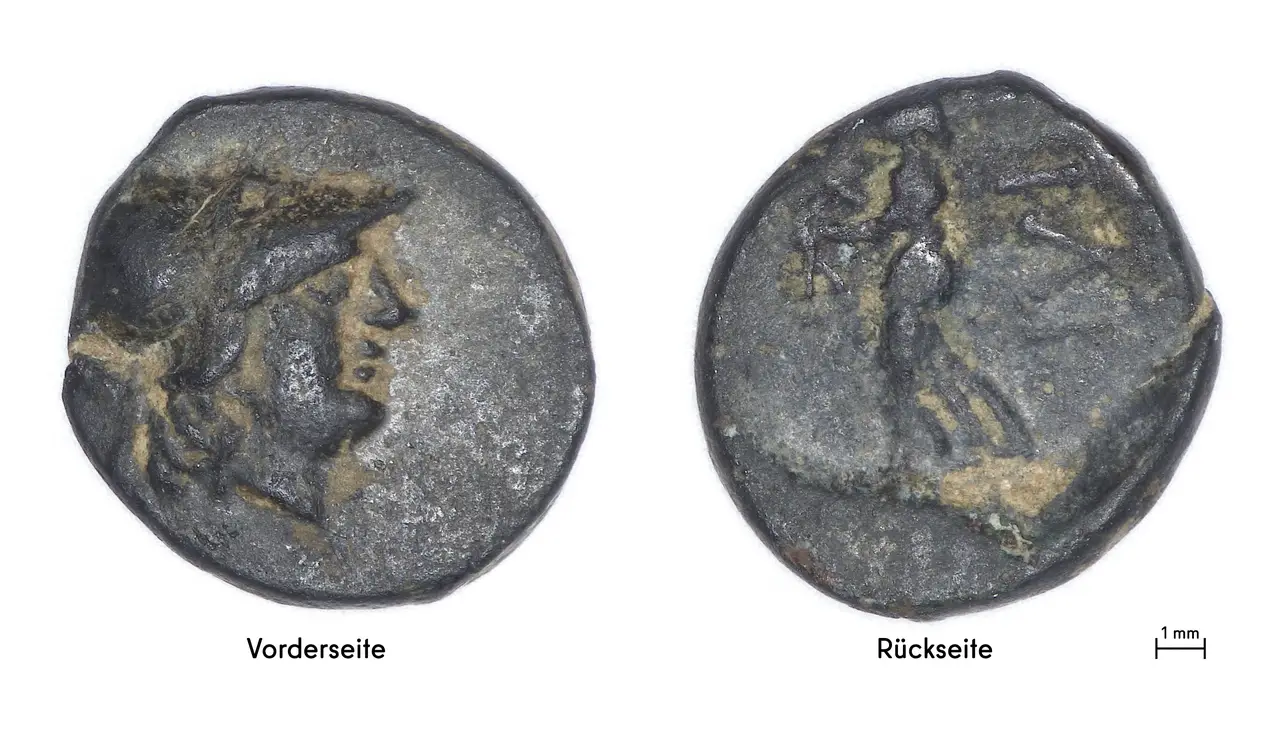
The coin, about 12 millimetres across and weighing around seven grams, dates to between 281 and 261 BCE. It was picked up by a 13-year-old schoolboy walking across agricultural land and identified by specialists at the Museum für Vor- und Frühgeschichte of the Staatliche Museen zu Berlin.
What the coin shows
The obverse carries the head of Athena in a Corinthian helmet. The reverse depicts Athena Ilias, the patron goddess of Ilion, wearing a kalathos headdress and holding a spear in her raised right hand and a spindle in her left. The iconography is standard for the Hellenistic mint at Ilion.
Ilion, in what is now northwestern Türkiye, was a Greek city built within the remains of earlier settlement layers at Troy. Archaeologists classify this phase as Troy VIII, separated by centuries from the Bronze Age citadel associated with the Homeric epics. In the period this coin was struck, its temple of Athena Ilias drew worshippers from across the Greek world, and small bronze issues of this type circulated locally in the surrounding Troad.
From stray find to archaeological context
When the coin first surfaced, it was not clear whether it came from an ancient context or was a modern loss, a collector's piece dropped in the field. Follow-up fieldwork changed that. Specialists examining the findspot recovered pottery fragments, cremated bone and a bronze double-button, indicating a burial ground in use during the Bronze Age and early Iron Age. Later material, including Roman-period finds and a Slavic knife-sheath fitting, showed the area had been used across multiple periods.
Roman objects turn up occasionally in the Berlin region. Greek material, until now, did not. In the heritage office's account, that absence is what makes the Spandau coin a scientific rarity rather than a headline-scale discovery.
How it got there
How a bronze coin struck at Ilion ended up in the sandy soil of Brandenburg is not resolved. The Landesdenkmalamt notes that trade between the Mediterranean and the Baltic is documented in antiquity, with amber (known to the Greeks as elektron) moving south from the North Sea and Baltic coasts. The voyage of the Greek navigator Pytheas of Massalia, around 330 BCE, is often cited in connection with those networks.
Because the coin is bronze rather than silver or gold, its material value was low. Combined with its recovery on what appears to be a prehistoric burial ground, the heritage office suggests it more plausibly served a symbolic function than an economic one. Whether it arrived in antiquity or substantially later is an open question; the office does not claim the coin was deposited at the time of its minting.
On display
The coin went on display on 15 April at PETRI Berlin, the city's archaeological showcase at Petriplatz, in the "Current Finds" case on the first floor. Enquiries are being handled by Nicole Hildebrandt at the Landesdenkmalamt Berlin.
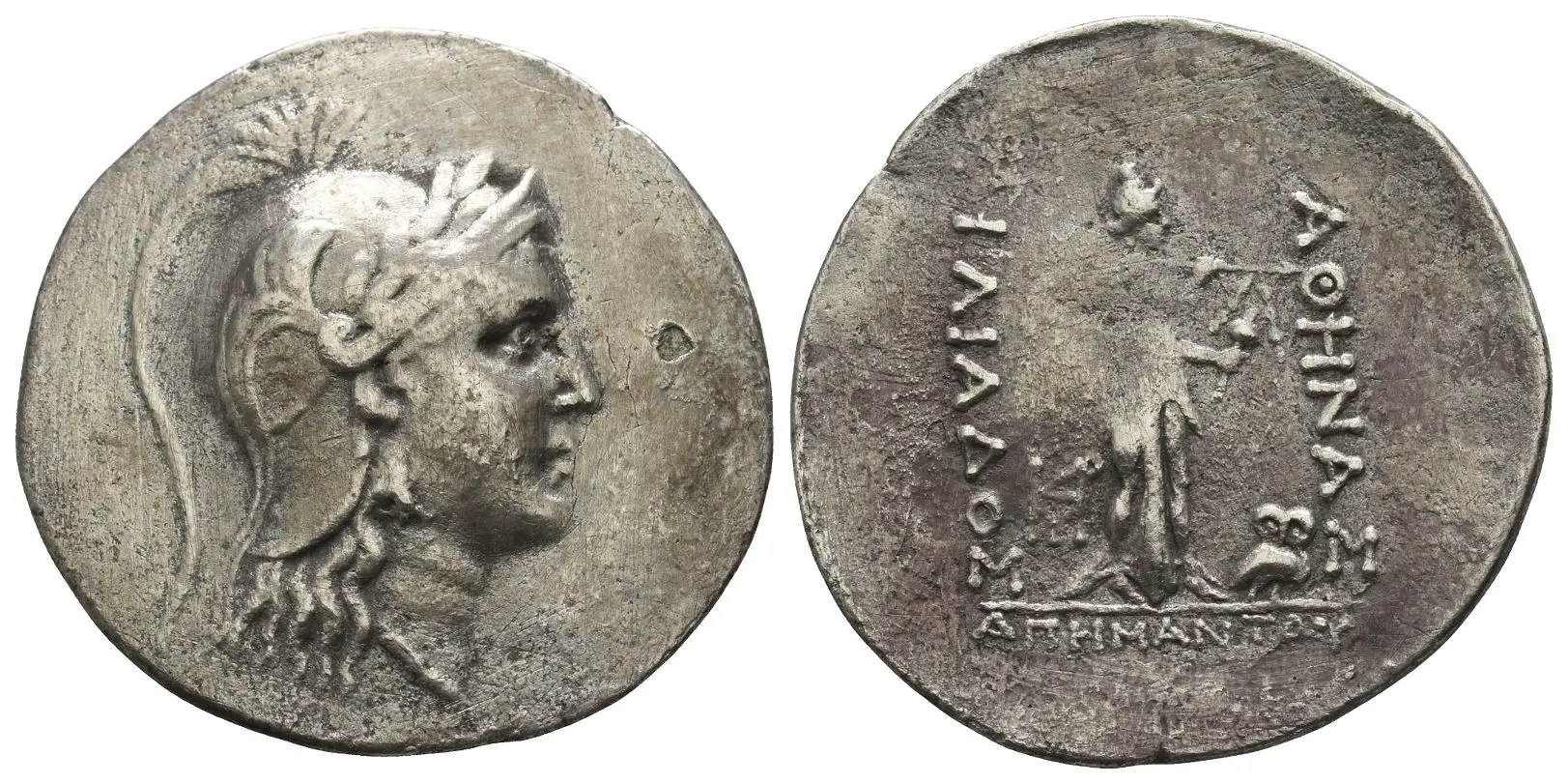
Small Hellenistic bronzes of this type, Ilion issues showing Athena, appear in specialist coin sales from time to time, ours included, though almost always without archaeological context. Stray finds recovered, recorded and tied to a site are the exception.
TimeLine Auctions, 23rd May 2026