Home > Stories by TimeLine Auctions
Stories by TimeLine Auctions
How a circus strongman opened Egypt to the world
On a summer evening in 1803, the audience at Sadler's Wells Theatre fell silent as a giant stepped onto the stage. Giovanni Battista Belzoni stood nearly six feet seven inches tall, wrapped in the costume of a Samson, his frame engineered by years of physical labour. He hoisted an iron frame onto his shoulders. Eleven men climbed onto it. He walked.
For a decade, this was Belzoni's life: the provincial fairs of England, the cramped theatres of Scotland and Ireland, the annual spectacle of Bartholomew Fair where crowds paid pennies to watch him bend iron bars and carry pyramids of bodies. He billed himself as the "Patagonian Sampson." His wife Sarah, an Englishwoman who had married him in 1803, performed alongside him, a conjurer's assistant in a world of smoke and mirrors.
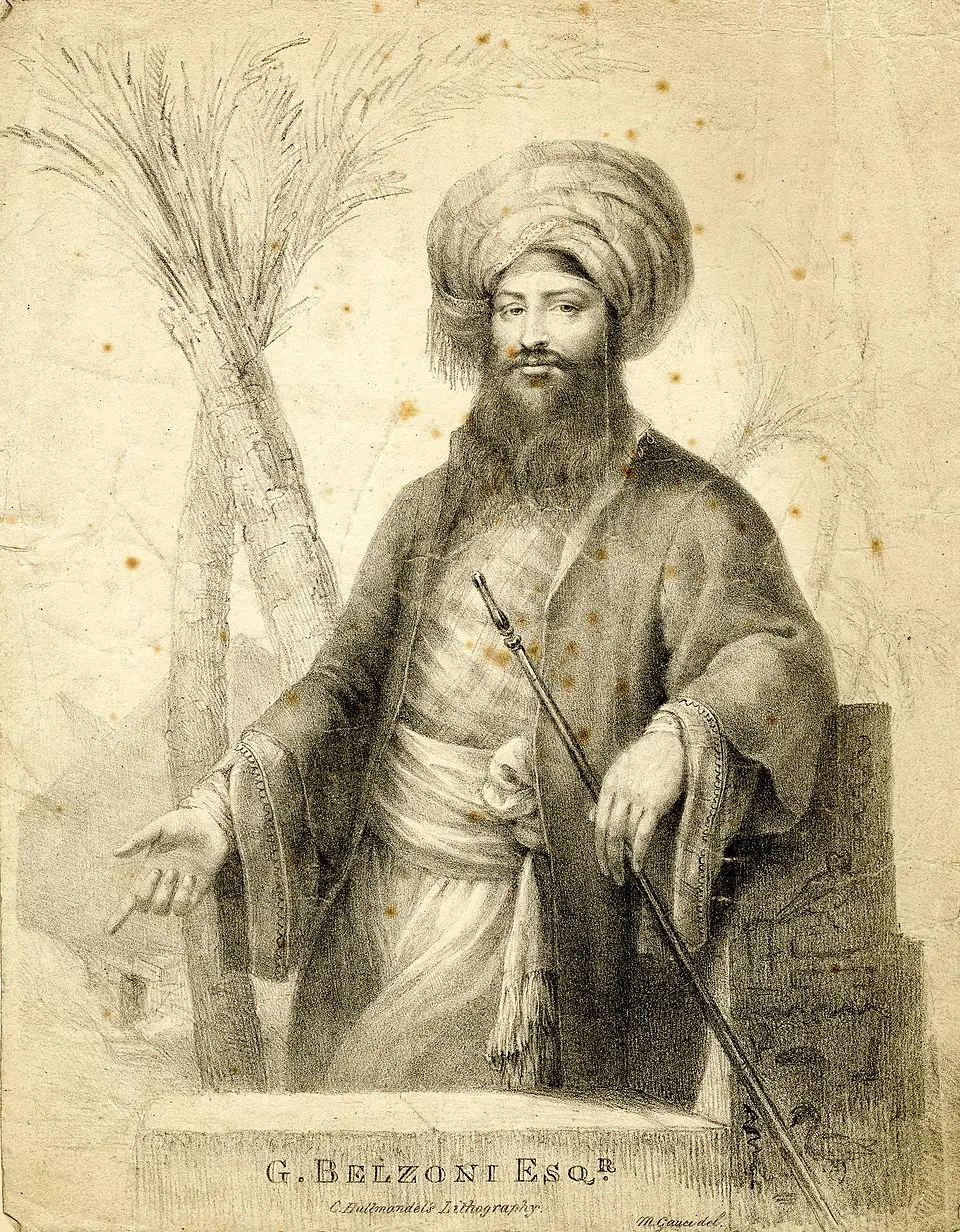
Nothing about this man suggested he would, within fifteen years, become one of the most consequential figures in the history of Egyptology.
The Hydraulic Engineer
The French invasion of Egypt in 1798 had awakened Europe to the pharaohs. Napoleon brought scholars alongside soldiers; they returned with the Rosetta Stone and volumes of sketches. By the time Belzoni arrived in Cairo in 1815, Egypt had become a destination for adventurers, collectors, and the simply curious.
Belzoni came for none of these reasons. He came to sell a waterwheel.
His years in theatre had taught him stagecraft and hydraulics (the great spectacles of the Georgian stage required elaborate machinery), and he had designed an irrigation wheel that he believed could revolutionize Egyptian agriculture. Muhammad Ali, the Ottoman viceroy who was busily modernizing the country, seemed a natural buyer. But the demonstration failed. The ox-powered wheel performed adequately; it was politics and local resentment of European innovation that killed the project. Belzoni found himself stranded in Cairo with no income and no prospects.
It was here that he met two men who would redirect his life entirely: the Swiss explorer Johann Ludwig Burckhardt, and Henry Salt, the newly arrived British Consul-General.
Moving Mountains
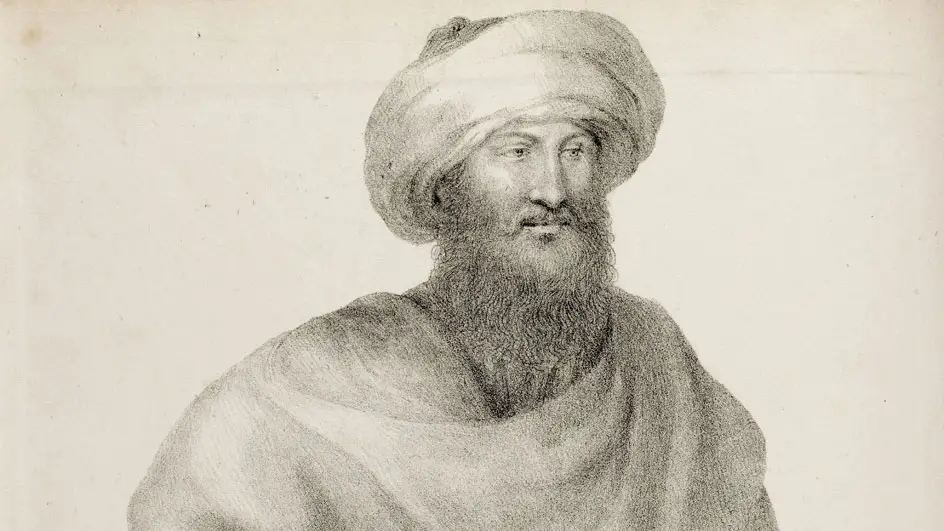
Burckhardt had travelled further into Africa and Arabia than almost any European of his generation. He had converted to Islam to gain access to Mecca; he had discovered the ruins of Petra and, in 1813, the sand-buried temple at Abu Simbel, its four colossal statues of Ramses II visible only from the chest upward. He was also dying of dysentery, though he did not yet know it.
Before his death in October 1817, Burckhardt accomplished one final act of historical significance: he convinced Henry Salt that the giant Italian showman might be useful.
Salt had a problem. In the ruins of ancient Thebes lay the upper portion of a granite colossus, a seven-ton head and torso that the French had attempted to remove and failed. The British Museum wanted it. Salt needed someone to move it.
Belzoni had no archaeological training. He had never excavated anything. What he did have was an intuitive understanding of leverage, mass, and the management of reluctant workmen, skills honed through years of moving stage machinery and coordinating theatrical crews. He also had absolutely nothing to lose.
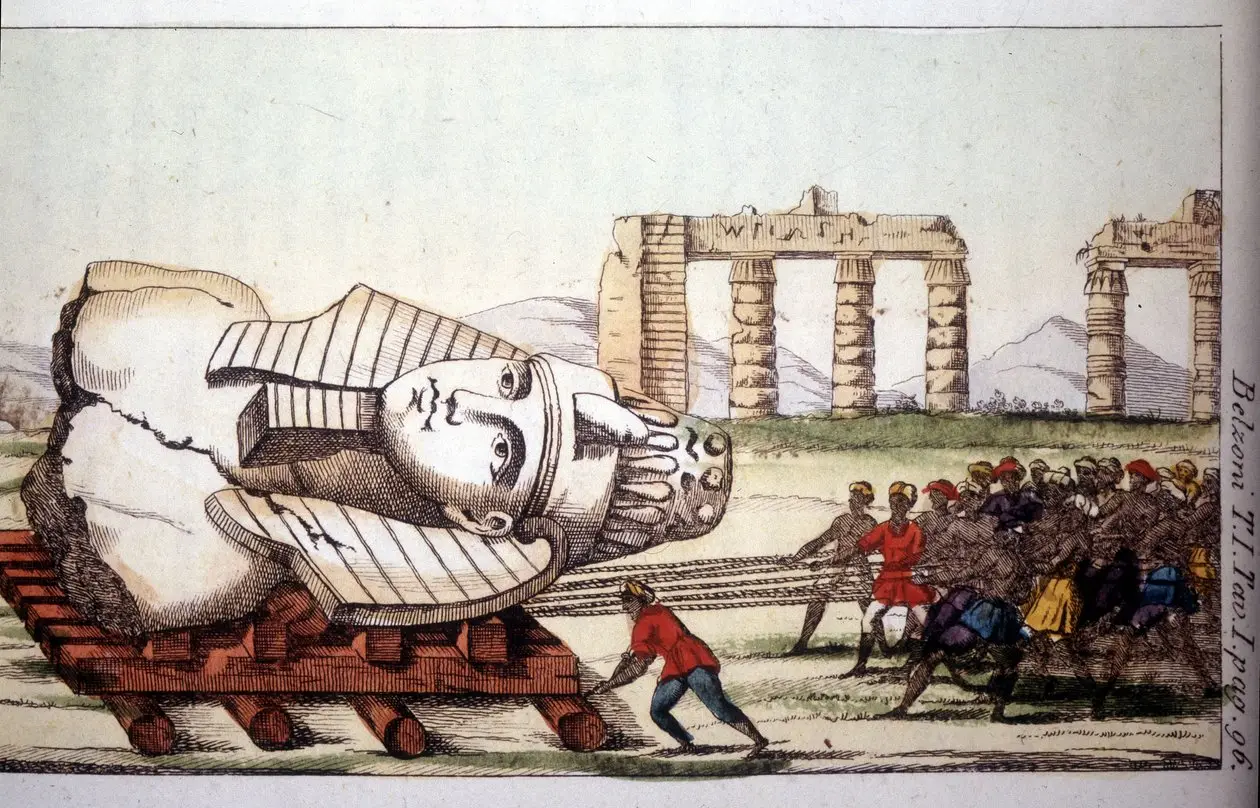
In July 1816, Belzoni arrived at Thebes. Within seventeen days, using only wooden levers, palm-log rollers, ropes, and the labour of eighty men, he had moved the Young Memnon (as the head was then called) from its resting place to the banks of the Nile. The granite head now sits in the British Museum, Room 4, still bearing the hole that Belzoni's workmen drilled to attach the lifting tackle.
Salt paid him £100 for six months of work. It was a fraction of what the consul would eventually make selling antiquities. Belzoni, who had expected partnership and recognition, received the wages of a foreman. The resentment would fester for years.
Into the Sand
What happened next was unexpected, even to Belzoni himself. He discovered that he loved the work.
Not the money, though he needed it. Not the competition with French agents (though he pursued it with vigour). What gripped him was the physical and intellectual challenge of reading a landscape that had been buried for millennia. Where the locals saw only sand and rubble, Belzoni saw patterns: the slight depression in the ground that might indicate a buried entrance, the alignment of stones that suggested deliberate placement.
In August 1817, he returned to Abu Simbel. The temple that Burckhardt had glimpsed was buried to its shoulders in sand. No European had ever entered it. For three weeks, Belzoni directed workmen in the brutal Nubian heat, removing tons of sand only to watch it slide back overnight. On August 1st, they broke through to a doorway. Beyond it lay the greatest rock-cut temple in Egypt: a hall of eight Osiride pillars, walls covered in painted reliefs depicting Ramses II's victories, and at its heart, four seated gods staring into the darkness.
He was the first person to see these chambers in perhaps a thousand years.
Weeks later, in the Valley of the Kings, he achieved something even more remarkable. The valley had been picked over by generations of treasure hunters; the great tombs of the Pharaohs were assumed to have been found and robbed long ago. Belzoni disagreed. He studied the terrain, noted the patterns of debris, and began to dig.
On October 16, 1817, he discovered the tomb of Seti I.
The Most Beautiful Tomb in Egypt
The tomb of Seti I remains, to this day, one of the finest royal burials ever found. Unlike the stripped and damaged tombs of most Pharaohs, Seti's burial chambers retained their original painted decoration: walls covered from floor to ceiling with scenes from the Book of Gates and the Amduat, rendered in pigments that had remained vivid for over three thousand years. The craftsmanship was extraordinary, the preservation remarkable.
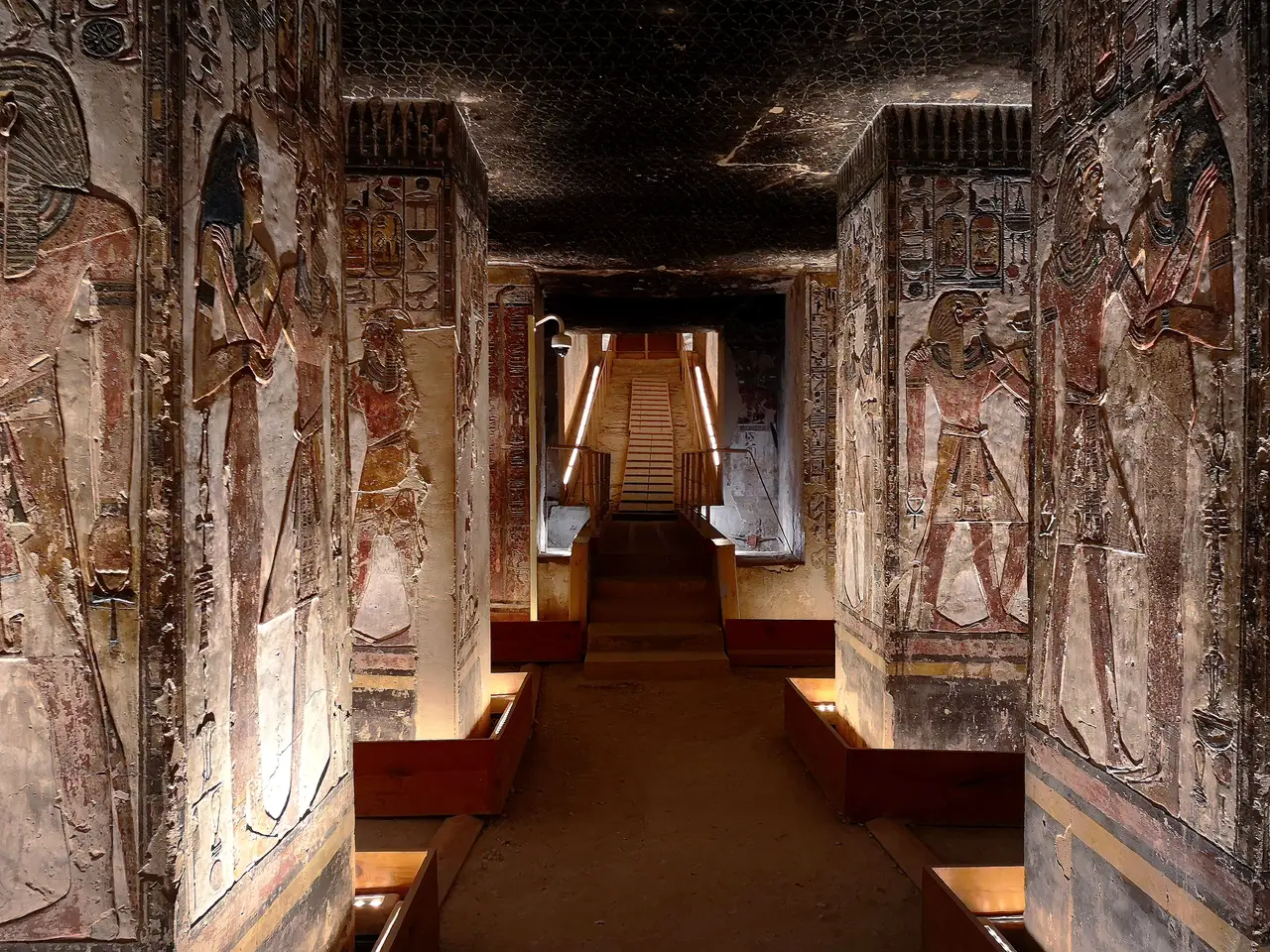
At the heart of the tomb, Belzoni found the sarcophagus: a single piece of translucent alabaster, over nine feet long, carved so thin that a candle placed inside it glowed through the stone. Hieroglyphic texts covered every surface. When he placed his hand on it, he was touching an object that had been sealed in darkness since the Twentieth Dynasty.
He also found that the tomb had been robbed in antiquity. The mummy of Seti I was gone, as were most of the grave goods. But what remained was enough to make his reputation. The alabaster sarcophagus alone would eventually sell for £2,000 (Salt had offered it first to the British Museum, who declined; the architect Sir John Soane bought it for his private collection, where it remains today).
In the following months, Belzoni opened the Second Pyramid at Giza (finding its entrance where others had failed), excavated the temple of Edfu, retrieved a massive fallen obelisk from Philae, and cleared enormous caches of sculpture from Karnak, including numerous statues of the lion-headed goddess Sekhmet.
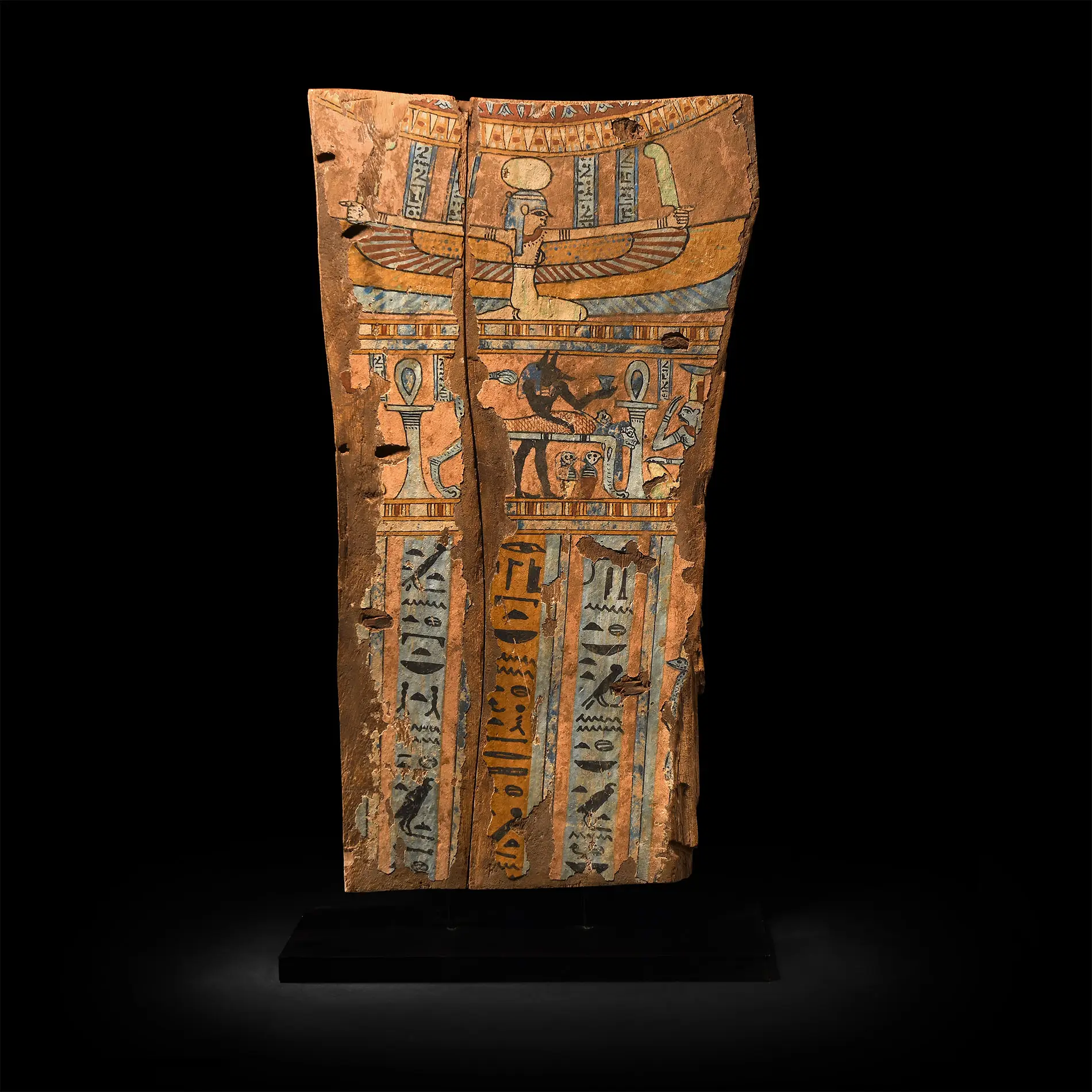
His methods were not what we would now call archaeological. He broke through walls. He emptied mummy pits by walking over sarcophagi, the dried linen of ancient burials crumbling beneath his feet. He hacked painted plaster from walls to bring back to England. By modern standards, he destroyed as much as he preserved.
But modern standards did not exist. There was no discipline called archaeology. Hieroglyphics would not be deciphered until Champollion's breakthrough in 1822, five years after Belzoni entered Abu Simbel. No one understood Egyptian chronology, the succession of dynasties, or even, really, what they were looking at. Belzoni was operating in a world where antiquities were objects of curiosity, trade goods to be shipped to collectors in London, Paris, and Rome.
He was, in short, doing exactly what everyone else was doing. He was simply better at it.
Rivals in the Sand
The competition for Egyptian antiquities in the 1810s was intense and occasionally violent.
Belzoni's chief rival was Bernardino Drovetti, the French Consul-General and a former colonel in Napoleon's army. Drovetti employed a network of agents who scoured Egypt for saleable objects, and he was not above using local authorities to obstruct British competitors. The hostility was mutual. At Philae, Drovetti's men defaced the obelisk that Belzoni was attempting to remove, chiseling out sections of inscription. At Thebes, they hired away his workmen. At Karnak, they disputed his right to excavate at all.
This was not gentlemanly disagreement. It was commercial warfare conducted through intimidation, bribery, and the occasional threat of violence. When Belzoni's servant was attacked by Drovetti's agents, Belzoni armed himself and confronted them directly. He was a big man, and he knew how to look dangerous.
The antiquities that both sides were fighting over now form the core collections of major European museums. Drovetti's finds went primarily to Turin and the Louvre. Salt's (and by extension, Belzoni's) went to the British Museum. The competition that seemed so petty and vicious at the time was, in retrospect, the mechanism by which these objects were preserved and studied.
The Exhibition
Belzoni returned to England in 1819 and staged one final spectacle.
In the Egyptian Hall on Piccadilly, he constructed a full-scale replica of two chambers from the tomb of Seti I, complete with reproductions of the painted walls and ceilings. He displayed the alabaster sarcophagus, the lion-headed statues, the mummified remains he had collected. He sold a popular account of his travels, complete with dramatic illustrations.
The exhibition was a sensation. Thousands of Londoners paid to walk through Belzoni's recreation of the tomb, to touch (carefully) the objects he had retrieved, to hear him lecture on his discoveries. It was, in many ways, the first modern museum exhibition: immersive, theatrical, designed to transport visitors to another world.
He never returned to Egypt. In 1823, attempting to reach the fabled city of Timbuktu, he contracted dysentery in Benin and died. He was forty-five years old.
What Remains
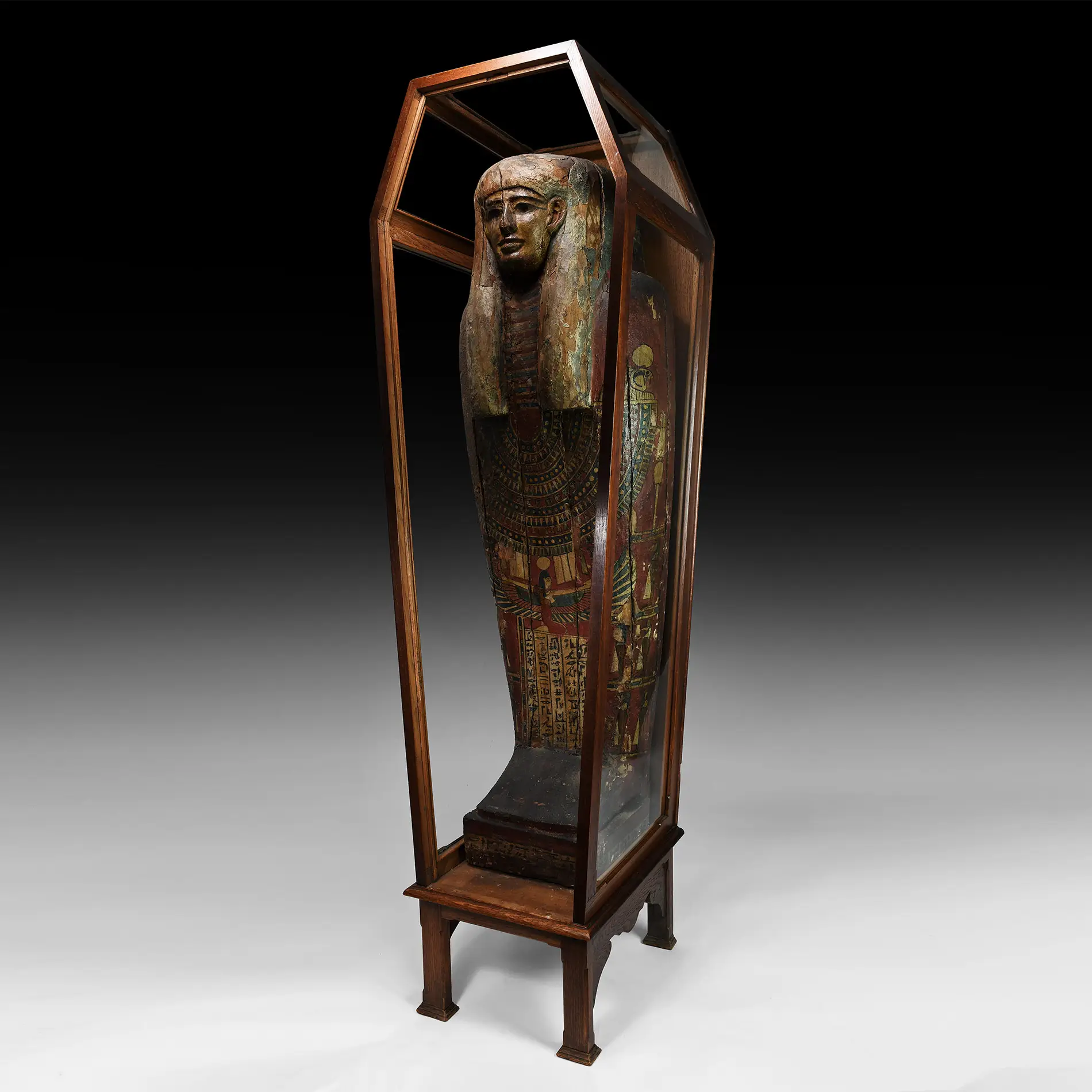
Belzoni's legacy is complicated. He was not a scholar; he left no system of recording, no theoretical framework, no trained successors. His methods were destructive. His relationship with Henry Salt ended in acrimony and litigation over who owned what.
But he opened Abu Simbel. He found the tomb of Seti I. He proved that systematic (if rough) excavation could reveal what casual looting had missed. And he demonstrated, through his own improbable career, that the past was accessible to anyone with sufficient determination.
The objects he retrieved are scattered across the world's museums. The Young Memnon still anchors the Egyptian galleries of the British Museum. The Sekhmet statues from Karnak are divided between London and other collections. The Soane Museum still displays the alabaster sarcophagus, lit from within exactly as Belzoni first illuminated it two centuries ago.
But not everything went to institutions.
Many of the smaller objects from the great age of Egyptian exploration found their way into private collections, passed down through families, sold and resold through the same networks of dealers and auction houses that Belzoni and Salt relied upon. Egyptian scarabs, shabtis, and amulets acquired in the 19th and early 20th centuries continue to surface in probate sales and estate clearances, each one carrying its own chain of ownership back toward those first great excavations.
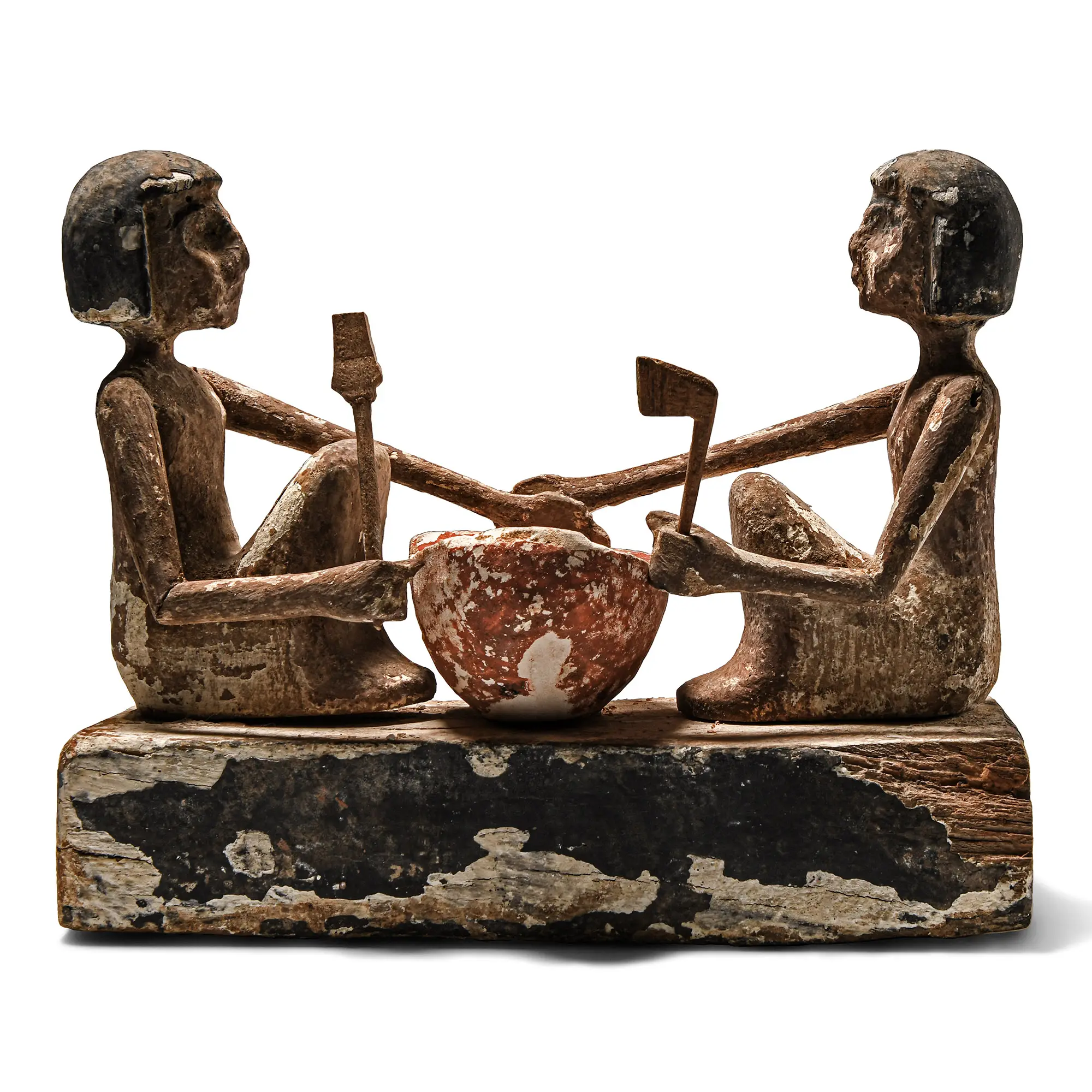
When we handle Egyptian antiquities in the cataloguing room, we are touching the same material that Belzoni touched: the blue faience of a shabti, the carved stone of an amulet, the glazed surface of a scarab. The difference is one of scale, not of kind. He moved colossi; we preserve the smaller survivals. Both acts are forms of stewardship.
The circus strongman who arrived in Egypt to sell a waterwheel left behind a transformed understanding of what the ancient world had built and how we might recover it. The objects from that era of exploration, whether in museums or private hands, are the physical evidence of that transformation.
They are still available. They are still waiting to be held.
TimeLine Auctions, 27th February 2026