Home > Stories by TimeLine Auctions
Stories by TimeLine Auctions
How Antiquities Left Cyprus: The Mechanics of the Trade and Its Marketplace
A seven-foot limestone statue once left Larnaca wrapped in a sheet, carried down to the boats by sailors who had been told they were handling a dead or drunken man. It belonged to Robert Hamilton Lang, manager of the Imperial Ottoman Bank at Larnaca and sometime British vice-consul. He had bought it near Pyla and sold it to the captain of an Austrian frigate, and the sheet was how it got past the customs guard on the Scala, the port quarter on the Larnaca shore. Another time, Lang's dragoman talked the customs watchman into stepping away while porters loaded the crates.
By Lang's own account, this was the difficult part of the business. Finding the antiquities was not. The island had been turning up its dead for centuries, and by the 1860s a Cypriot who struck a chamber-tomb behind his plough knew what the terracottas and the painted pots inside were worth, and where to sell them. The difficulty came at the water's edge: how to move a crate of antiquities off an Ottoman island and onto a steamer for Marseille, London or Alexandria. The men who were best at it were the European consuls who lived at Larnaca, and what they had that an ordinary dealer did not was the protection of a foreign flag.
A trade older than the museums
None of them thought of it as smuggling, whatever the customs house thought. The commerce was old, and in its own eyes respectable. A British account of the island's chamber-tombs set it down as an ordinary branch of the rural economy: the Cypriots, it said, "were trained into considering this a branch of industry, and antiquities from the graves were, and are even now, exported like sacks of potatoes or carob beans." The comparison was exact. Carob was a bulk Cypriot crop shipped to Egypt on the same Levant vessels that called at the Scala, and the antiquities went out on the same ships by the same routes. The trade, the writer added, could be "traced back to Venetian times." It could: Étienne de Lusignan's Chorograffia of 1572 already describes villagers opening underground chambers full of "molte anticaglie et cose preciose," one of them lately yielding an almost-intact "king."
By the eighteenth century the mechanism was complete, and it never really changed: a chance find by a villager, a sale to a resident European, a route onward to a metropolitan patron through consular and ambassadorial hands. Richard Pococke, touring in 1738, hired his mules at Larnaca "under the protection of the janissaries provided by the consul." Giovanni Mariti, chancellor of the English consulate from about 1762, became the channel for the first documented Cypriot antiquities to reach Italy, sending coins to the Accademia Etrusca at Cortona. When Edward Daniel Clarke passed through in 1801 he met the English consul, "Signor Peristiani, a Venetian," who had dug up "above thirty idols," all of them sent to the British ambassador at Constantinople and presented to a travelling Englishman named Cripps. Clarke noted, in passing, that "at Nicotia, the goldsmiths part with such antiquities for a few paras."
By mid-century the island had been picked clean of anything visible. A French consular report of 1859 put it flatly: "There is no collection of antiquities in Cyprus. Everything has been sold to the English, the French and the German travelers, as soon as they were discovered." The report was premature. The heaviest removals were still to come.
Why everything went through Larnaca
Larnaca made the trade possible, and it made it efficient. The town sat about a kilometre inland on the ruins of ancient Kition; on the shore stood the Scala, the quay quarter where the consular houses, the customs house, the warehouses and the bazaar all crowded together. Two things turned it into the clearing-house for the eastern Mediterranean antiquities market.
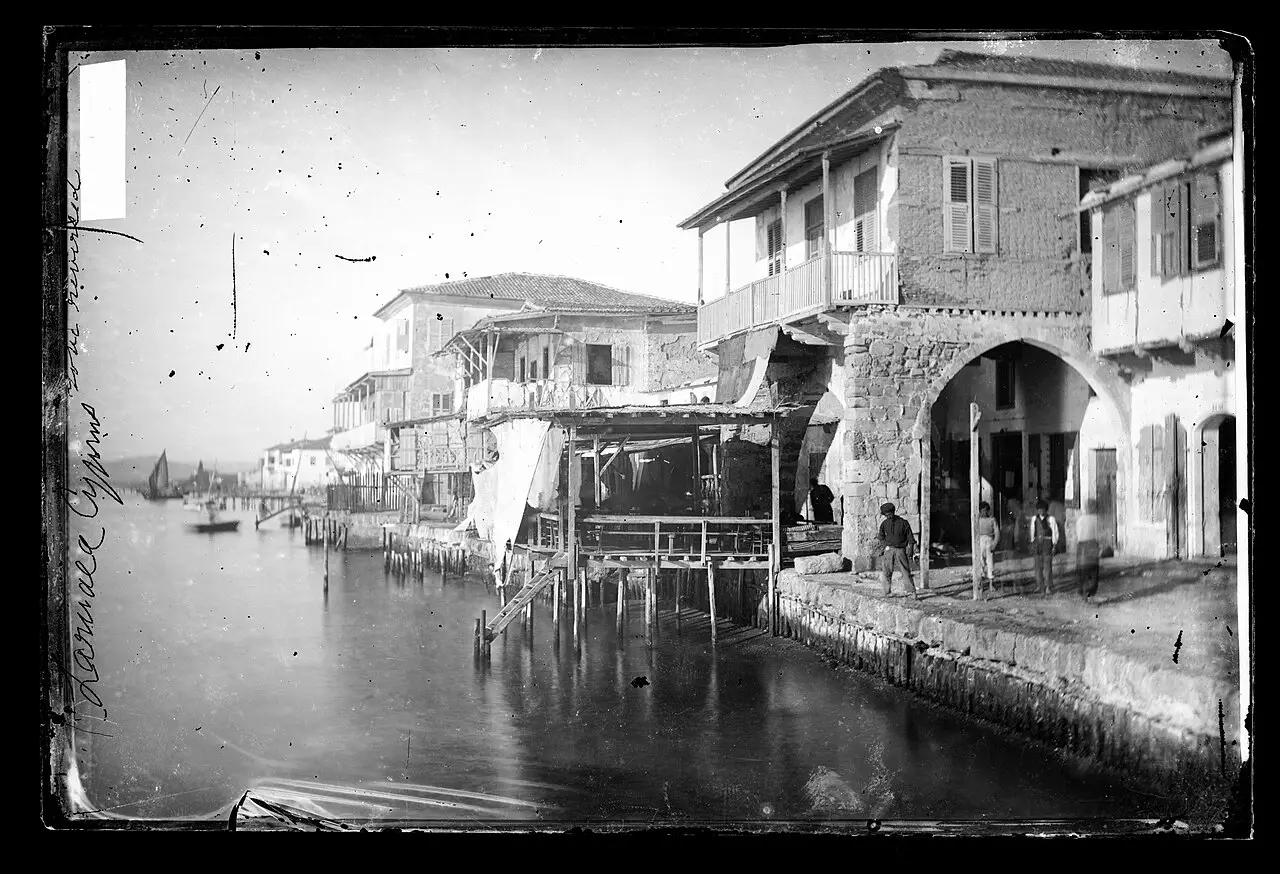 The Scala, the shore quarter of Larnaca, photographed by John Thomson in 1878, the year Britain took over the island. The consular houses, warehouses and customs house lined this shore, and the crates of antiquities left from here. Photo: John Thomson, 1878. Wellcome Collection, CC BY 4.0.
The first was the consular colony, which was absurdly large for so small a place. J. Macdonald Kinneir, visiting in 1814, called Larnaca "the second town in Cyprus, the emporium of its commerce and the residence of innumerable consuls from the different European powers, who parade the streets with as much self-importance as if they were ambassadors." By the British takeover in 1878 there were consuls of Austria, America, Belgium, Denmark, Spain, France, Britain, Greece, Holland, Italy, Prussia, Russia and Sweden in residence, and many of them were themselves in the market for antiquities, whether to feed the museums at home or for the revenue.
The second was the harbour. As steam traffic grew and the Suez Canal opened in 1869, the Scala became an almost unavoidable port of call for everything moving between Europe and the East, which made it a natural place to buy, sell and ship. The market dealt mostly in the small and portable: terracotta figurines, painted vases, limestone statuettes, coins, engraved gems, glass, gold ornaments. Terracottas were the standard souvenir precisely because their size made them easy to carry home undamaged, and travellers had been buying them by the handful since the start of the century. Luigi Palma di Cesnola, the American consul, kept a private house-museum in Larnaca, its contents sorted by material and advertised to passing travellers through a printed catalogue circulated from Beirut.
The consul was the dealer
The man who held the foreign flag at Larnaca was often the same man emptying the tombs, and for a long half-century no law found anything wrong with the arrangement.
Cesnola is the extreme case. He reached Larnaca as United States consul on Christmas Day 1865 and was digging within months; the consulate, in his hands, functioned as a digging licence. His own catalogue, published in 1877 as Cyprus: Its Ancient Cities, Tombs, and Temples, claims a total of 60,932 tombs opened, a figure almost certainly inflated and one that quietly folds in everything he bought along with everything he dug. Independent scholarship has since settled on something nearer fifteen thousand at his main site of Dali alone. The scale is the point. He paid villagers to clear tombs and sanctuaries by the hundred with no record of what lay where, and a single sweep at Golgoi in 1870 produced well over five hundred pieces of sculpture.
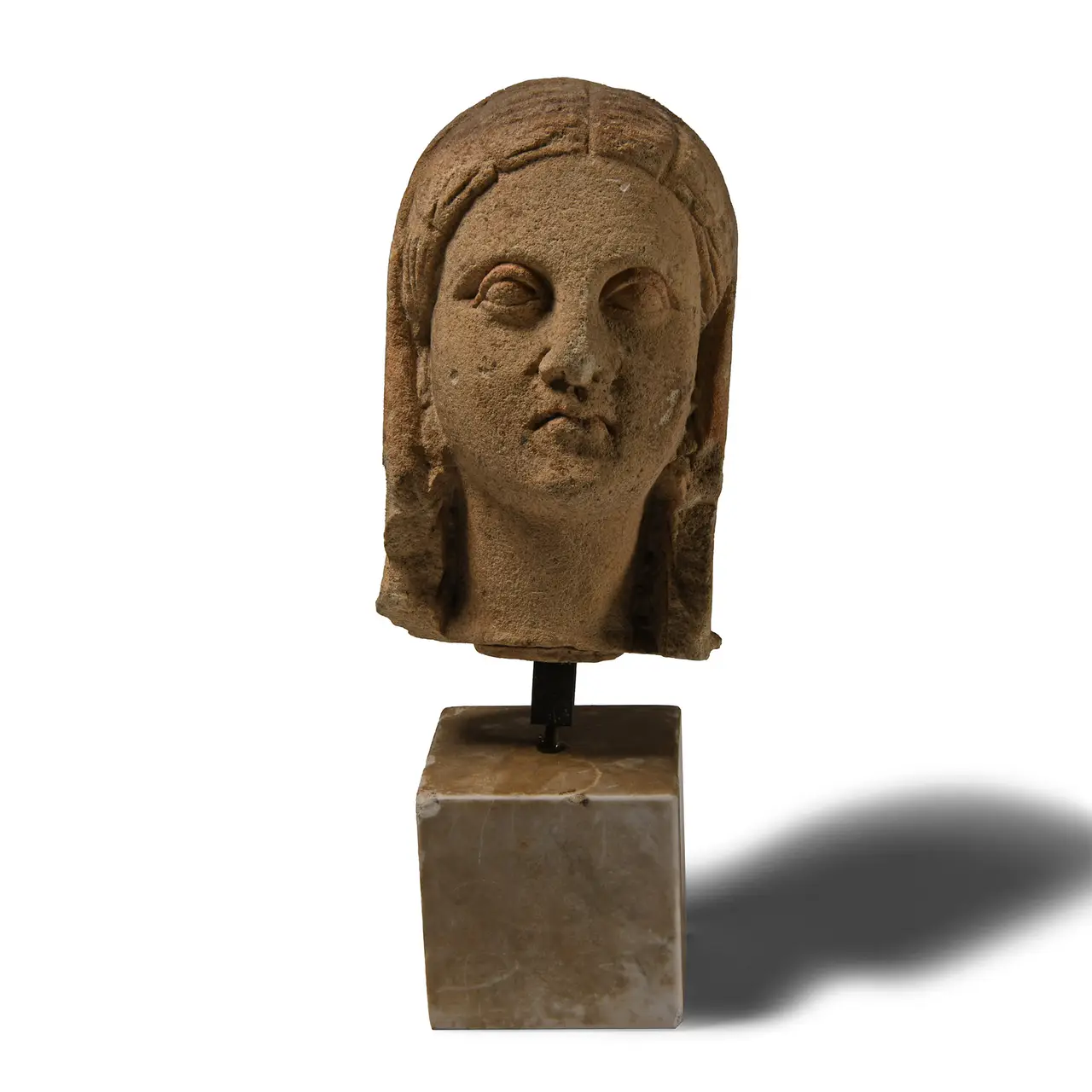
Lang worked the same ground with more care. From the Imperial Ottoman Bank he ran gangs of diggers around Dali and Alambra at two piastres a day ("our houses became like earthenware shops," he wrote), and when a colossal bearded statue surfaced in a field at Dali in 1868 he dug the sanctuary of Apollo for two months and recovered, by his count, not less than a thousand pieces of limestone sculpture. The French consuls ran their own network. Tiburce Colonna-Ceccaldi dug at Dali and around the Salt Lake and pioneered the photograph-and-offer method of selling a collection that Cesnola would later use; a French scholarly mission under Melchior de Vogüé arranged, in 1865, the removal of the great stone vase from the acropolis of Amathus, a single block of limestone some ten feet across with four handles each carved as a bull, to the Louvre, where it still stands. The last of the great operators, the Prussian journalist Max Ohnefalsch-Richter, arrived in 1878 with no consulate at all and made his living entirely from the trade: excavating, buying from tomb-robbers, brokering the results to the museums of Germany.
Getting the crates out
Everything to this point was the easy half. The hard half was the customs house, and the history of how Cypriot antiquities actually left the island is largely the history of how the customs house was beaten.
Under Ottoman rule, exporting antiquities legally required a firman, an imperial permit, and a well-drafted firman did more than license a dig: it exempted the finds from customs altogether, which is to say it authorised export. (This was the same instrument by which Lord Elgin had removed the Parthenon marbles.) Cesnola obtained his through the United States legation at Constantinople, where the minister, George Boker, secured the permit and "helped him export his finds," taking gold trinkets from the collection in thanks. Lang bothered with no firman at all, and exported by subterfuge for eleven years.
The best-documented escape is Cesnola's, and it turns on a single word. In 1871 a telegram came from the Porte forbidding the export of his antiquities. Reading it closely, Cesnola saw that the order named the American consul. He also held the Russian consulship, then vacant, and sent his agent to the custom-house to confirm that the ban said nothing about the Russian consul. The officials agreed. He had "the order in my hand" within fifteen minutes, set every porter in Larnaca to work, and five hours later the cases were on a schooner bound for Alexandria, to be transhipped for London. The governor-general, by Cesnola's telling, remarked that he would have made a fine career in oriental diplomacy.
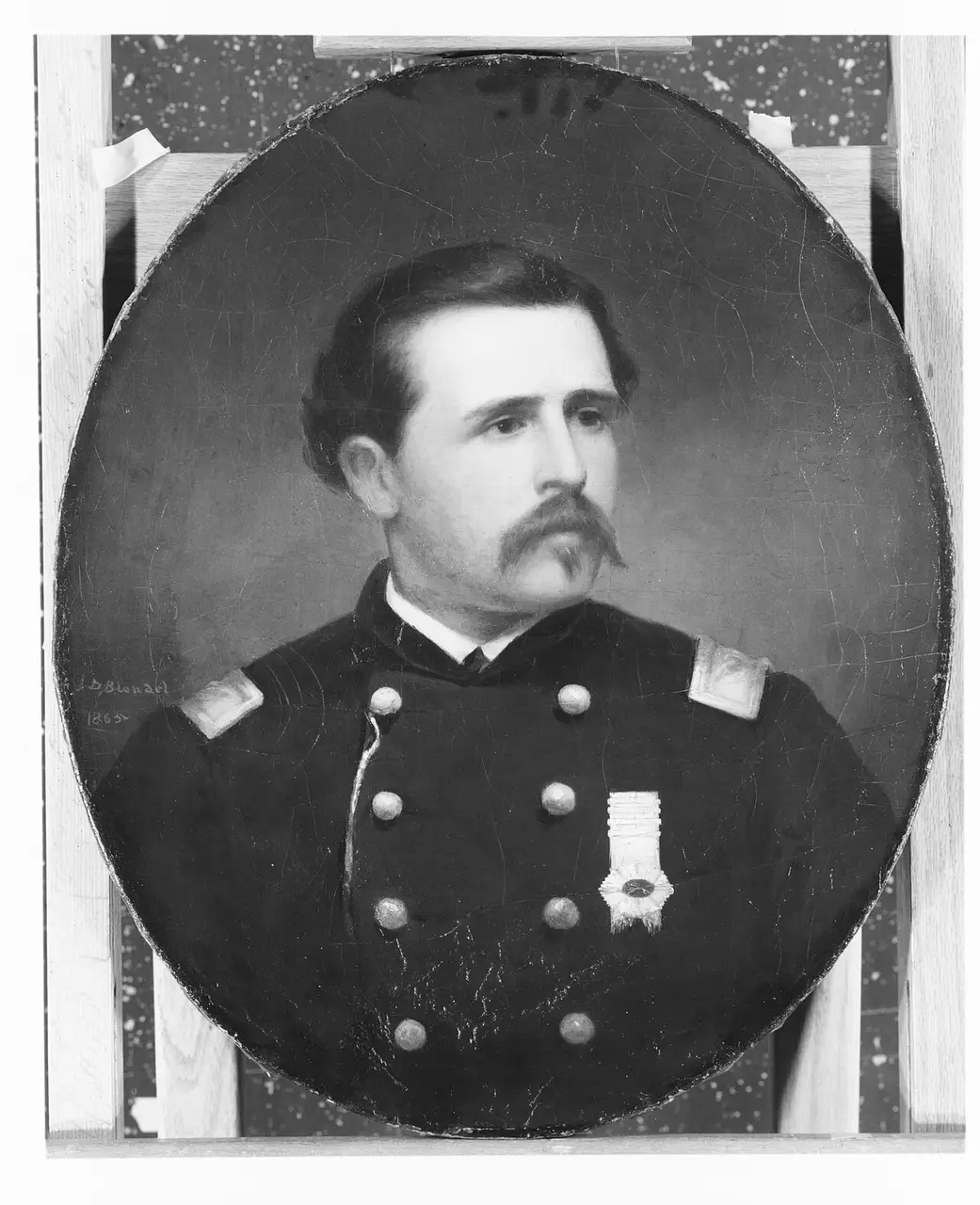 Luigi Palma di Cesnola in 1865, the year he reached Larnaca as United States consul, in the Union Army uniform he had worn through the American Civil War. He went on to become the first director of the Metropolitan Museum of Art, which had bought his Cypriot collection. Jacob D. Blondel, 1865. The Metropolitan Museum of Art, CC0.
The customs house did not always lose. A chest of reliefs from Ernest Renan and de Vogüé's 1862 expedition sat in the Tuzla customs house for three years because the rules required exported antiquities to travel with their legal owner or a sultan's decree. And the privilege that moved the crates could be cruder than a clever reading of a telegram: the same French records describe consuls invoking consular immunity to shield citizens caught smuggling, one of them drawing a weapon to face down the Ottoman customs officers. This is the concrete thing behind the image of antiquities leaving "like sacks of potatoes." Diplomatic privilege was the lubricant that moved the crates past the guard and onto the steamers, and it long outlasted the era that perfected it: as late as the 1980s the Director of Antiquities was still complaining of the abuse of diplomatic privilege by the many people who held that status on the island.
Where it all went
At the receiving end were the buyers, and the buyers were institutions: the new national museums of Europe and America, bidding against one another for whole collections. The largest single quantum went to New York. Cesnola removed something on the order of 35,000 objects from Cyprus (another five thousand had gone down with a ship off the Syrian coast in 1871, before any buyer saw them), and in December 1872 the trustees of the Metropolitan Museum approved the first batch, more than 30,000 items packed in 275 crates, for around sixty thousand dollars; the collection reached New York in February 1873. A second collection followed in 1876 for $45,640, bought over a British Museum offer of ten thousand pounds that the Treasury declined to fund. Cesnola then sailed into the directorship of the museum that had bought his collection, becoming the Metropolitan's first director in 1879 and holding the post until his death in 1904.
The competition was real, and the prices show it. Berlin paid 25,000 francs for a single inscribed stone from Kition, and as early as 1845 it had outbid the British Museum for the Assyrian stele of Sargon II found at Larnaca, fifty pounds against twenty. The British Museum built its Cypriot holdings by gift and by purchase from "excavators" like Lang and Sandwith, the latter selling it a lot of fifty-three antiquities for twenty pounds in 1869. Vienna took its single largest accession, 176 objects, from Ohnefalsch-Richter between 1884 and 1895.
Ohnefalsch-Richter had become, by the 1880s, an export pipeline in himself. A study of German collecting counts four separate channels by which his material reached Germany: the share of his own licensed digs, the finds of others he brokered, the pieces he handled for dealers and auctions, and the museum-financed excavations in which the sponsoring museum took a third. Berlin alone received well over two thousand Cypriot objects from him within a few years. The appetite reached down to the cheapest end of the market: at the Berlin Industrial Exposition of 1896 he offered thousands of small decorative pieces to a crowd of more than two million, and no record survives of where any of them went.
Below even that was the floor of the trade: the town goldsmiths of Larnaca and Nicosia, who sat "with a crucible before them, a touchstone, and a handful of very ordinary tools" and melted ancient gold and silver for the metal. Most of the island's ancient silver vanished this way, along with uncountable coins; the "few paras" Clarke had noted in 1801 were still the rate for whatever a goldsmith judged not worth the crucible.
The market had a top, too, and it passed. Luigi Cesnola had sold 35,573 objects to the Metropolitan for $121,866.95. His younger brother Alessandro, working Salamis and Paphos for a London backer, shipped some 14,000 objects to England in the late 1870s; when they were finally dispersed through four Sotheby's sales between 1883 and 1892, the whole lot fetched about £1,570, most of it going cheaply to the collector Pitt Rivers. The same kind of material that had set national museums bidding a decade earlier now cleared at auction for almost nothing.
The law a step behind
The law was always a step behind the crate. Ottoman regulation arrived in 1869, banning the export of finds (coins excepted) and declaring that antiquities found on private land belonged to the landowner. That second clause mattered to Cesnola at once: told that his own permit obliged him to send half his finds to the new Imperial Museum at Constantinople, he hurried to buy the land he was digging, since no law could make a landowner surrender what came out of his own ground. A fuller regulation followed in 1874. It made every undiscovered antiquity state property and split excavated finds three ways among government, landowner and finder, and yet it kept a liberal export clause, letting the excavator ship out whatever the state did not buy for itself.
That export clause is the hinge of the British period. When Britain took over the administration of Cyprus in 1878, it left the 1874 Ottoman law in force, and it kept the law's generous export terms even after the Ottomans themselves repealed them. In 1884 Constantinople banned all export of antiquities; when the Ottoman government asked that the ban be applied in Cyprus, the High Commissioner, Sendall, answered that the 1884 law, having been passed after the British occupation, did not apply to the island. As Nicholas Stanley-Price has shown from the colonial files, the beneficiaries were exactly the British Museum and the other foreign excavators, who went on shipping out two-thirds of their finds under the older, looser rule.
By then the digging had been institutionalised. The Cyprus Exploration Fund, founded in London in 1887, worked the sanctuary of Aphrodite at Palaepaphos with some 230 labourers; the British Museum ran its own excavations through the 1890s on a private bequest, dividing the finds by the 1874 formula, a third to the Cyprus Museum and the rest to London. The London share was then divided again. In 1895 the Trustees voted to hand "duplicates" from Amathus, already well represented in Bloomsbury, to a long line of British institutions: the Ashmolean, the Fitzwilliam, and the museums of Leeds, Birmingham, Manchester, Nottingham and others. The work itself was frank treasure-hunting; intact amphorae from Amathus were given to the village women for their own use, and the Greek-Cypriot press watched the rest go. Reporting the removals in 1894, the newspaper Neon Ethnos told its readers that "the wonderful finds have already left for London," the best treasures of the island "swallowed by the greedy stomach of the British Museum."
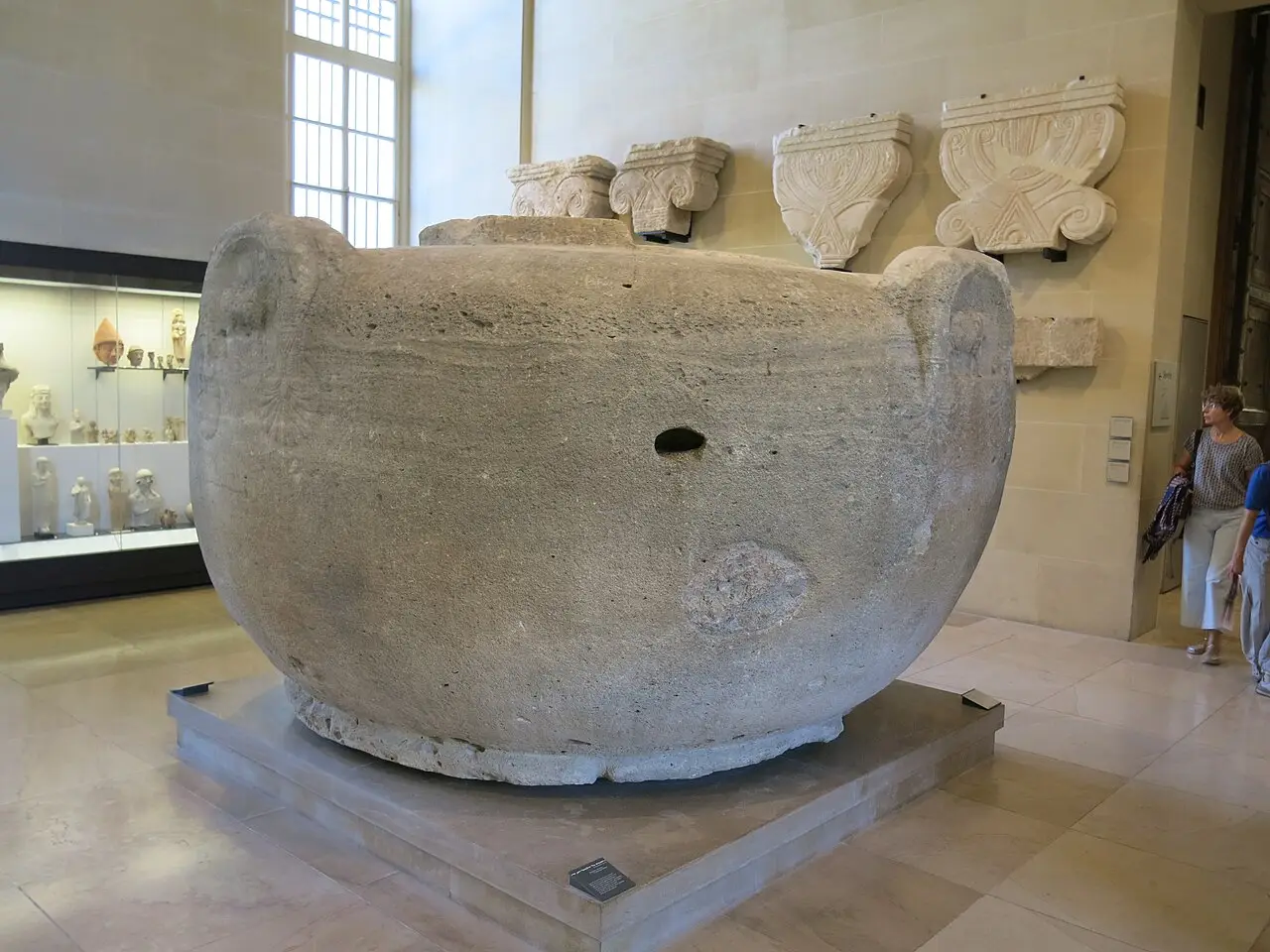 The colossal stone vase from the sanctuary of Aphrodite at Amathus, carried off to the Louvre by a French warship in 1865. Its broken twin remains on the acropolis. Photo: Tangopaso, public domain, via Wikimedia Commons.
Closing the era took thirty years. The first true British antiquities law, in 1905, required a permit to dig and the High Commissioner's written permission to export, though it was administered by a committee of the same antiquarians who profited from the trade, and the licensed share for excavators survived in one form or another. The decisive break came with the Antiquities Law of 1935, which created a Department of Antiquities, stopped the splitting of excavated groups, and ended the self-dealing. The excavator's share shrank and then, in 1964, disappeared: every find now vested in the Cyprus Museum.
The dealer with a licence
The trade did not end when the consuls went home; it changed shape. The flag that had once moved a crate past the customs guard gave way to a piece of paper, an export licence signed by the Director of Antiquities, with a small lead Cyprus Museum tag fixed to each object cleared to leave. The 1905 law required the High Commissioner's written permission to export an antiquity; the 1935 law made it the Director's licence, and let a dealer register with the Department as a Licensed Dealer in Antiquities and sell across a counter. The arrangement inverted the old one. Where the consul had beaten the customs house, the licensed dealer now walked his goods through it.
The shops were ordinary. In Nicosia, Petros Kolokasides was one of the registered dealers; a Bichrome bowl that later reached the market still carried its Cyprus Museum lead export tag and an old typed card recording that the English botanist Oleg Polunin had bought it from him in the 1950s, a history the Department of Antiquities was able to confirm against its own files. In Famagusta the largest dealer was a pharmacist. George Basil Palma ran the Phoenix Pharmacy in Varosha and kept antiquities in the locked cupboards behind his dispensing counter, jewellery in a cabinet by his desk, amphorae on display among the Lefkara lace. When the 1935 law obliged private holders to declare what they owned, Palma's was the largest collection in the district, and the departmental files, studied by Robert Merrillees, show him registered as a Licensed Dealer and sending consignments in for export licence all through 1937, the parcels usually carried down to the Museum by one of his children. The Museum kept a right of first refusal: exceptional pieces were held back and either bought for the national collection or returned for sale on the island, and the rest were licensed out. Palma's buyers were a cross-section of the late-colonial island: a wing commander in Kyrenia, customers in England, a Cambridge zoology professor, and the composer Granville Bantock, who took home a Roman terracotta figurine of a man with a lyre.
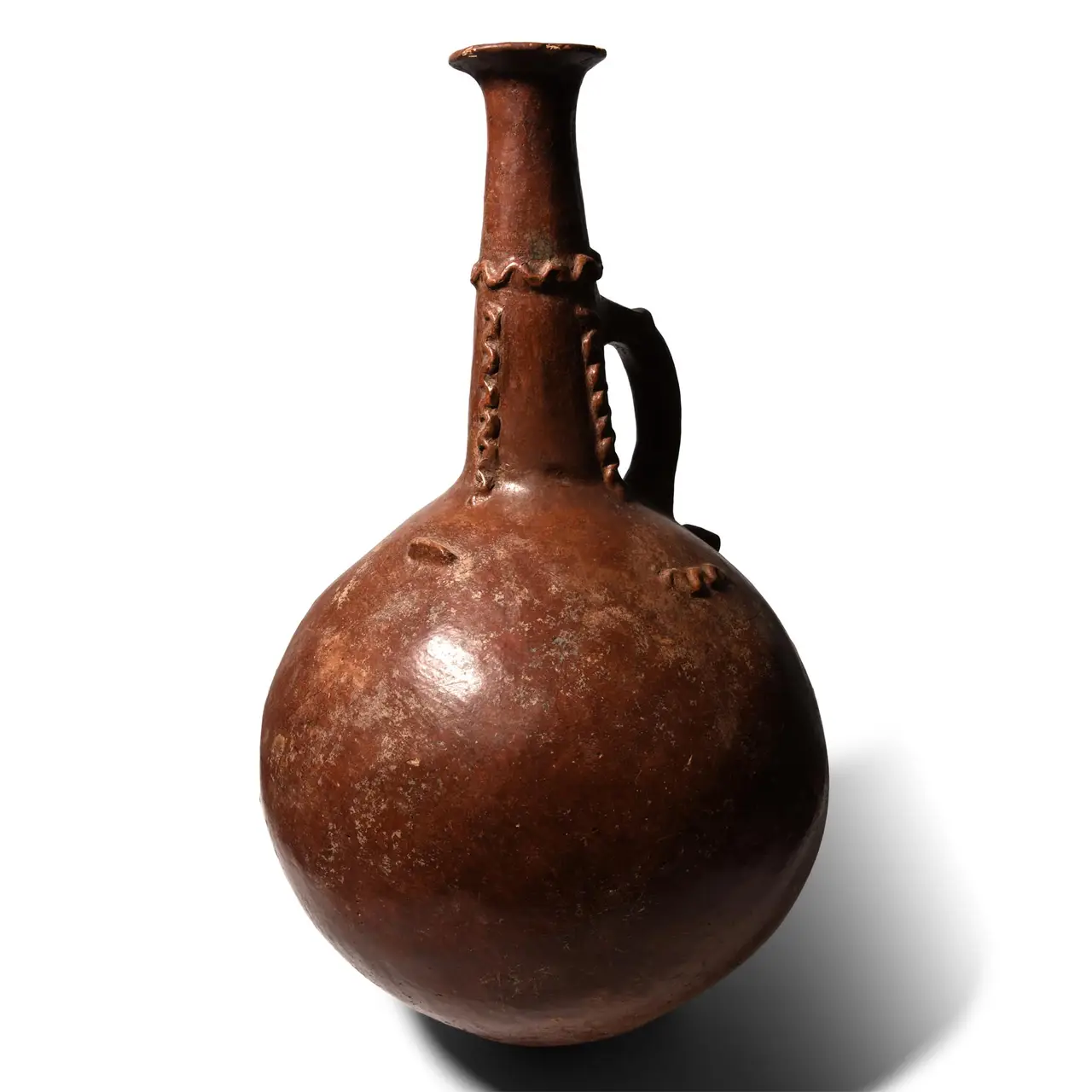
The buyers kept coming as the century turned over. British servicemen and administrators carried pieces home; United Nations soldiers bought them after 1964, one Austrian army doctor with the peacekeeping force taking a hundred and thirteen antiquities out; American diplomats did the same, one of them leaving with forty-two under a single permit in 1972. The paperwork was sequential and the numbers climbed: the export registers ran into the thousands, and a licence issued in January 1978 carries the number 7,070. One permit could clear scores of objects at once, and the Department ran a sales register of its own surplus besides, selling duplicate antiquities at nominal prices to universities and museums abroad. Vassos Karageorghis, who directed the Department from 1963 to 1989, signed the licences through the busiest of those years; by one account of the period he "allowed thousands of antiquities to leave the island, sometimes as diplomatic gifts, sometimes for private collectors." The internal market and the export licence both ran on until 1996, when they stopped, and after that there was, in practice, no legal commercial market in Cypriot antiquities at all.
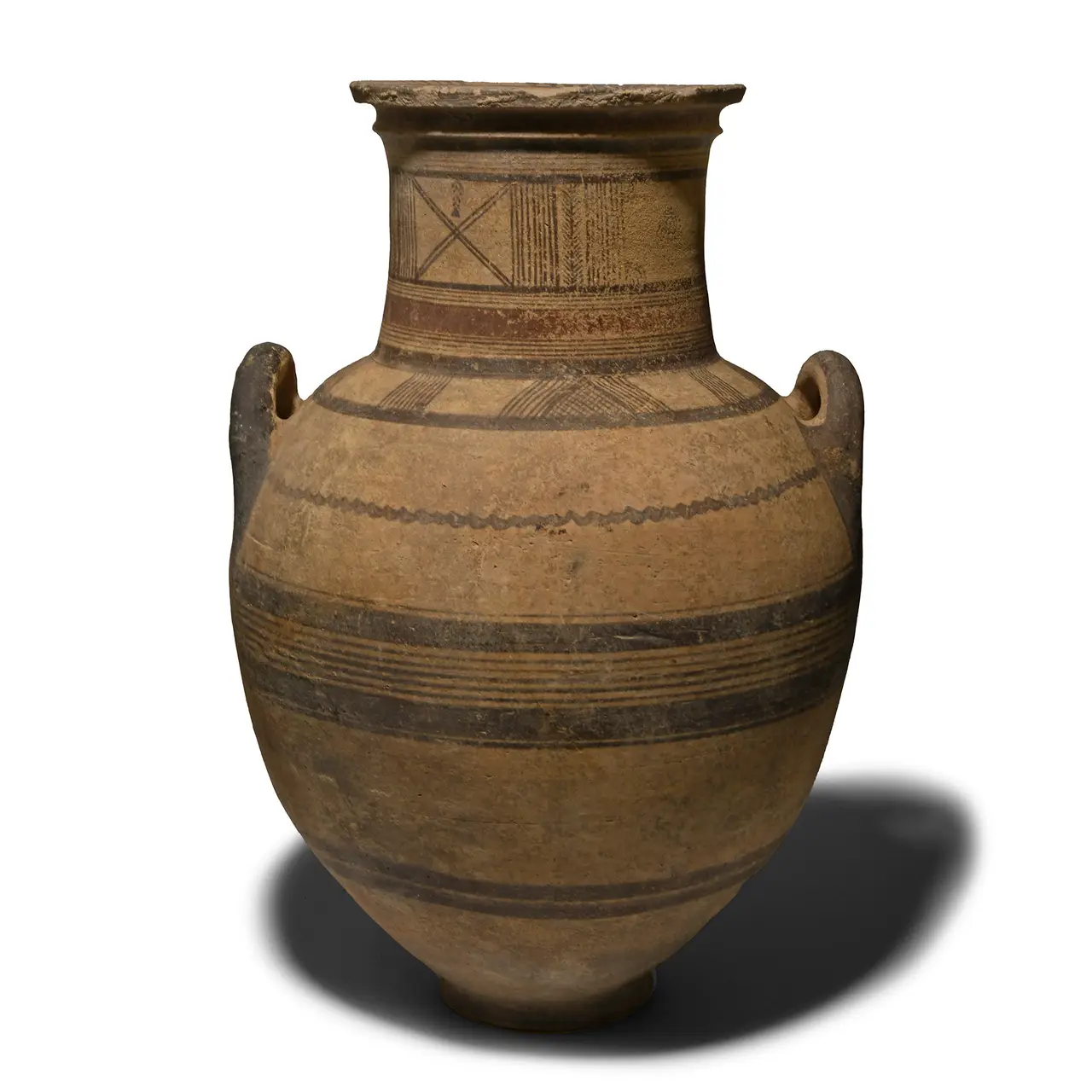
The reversal runs exactly backwards through the machinery described here. The flag that once carried a crate past the customs guard is now a thing the collector has to reconstruct on paper. To own a Cypriot antiquity lawfully today is, in practice, to be able to show that it left the island during the very decades this trade was running, before the 1970 UNESCO threshold that governs the market; the Department of Antiquities watches the salerooms and eBay daily and goes to court when a piece surfaces without that history. So the Cypriot terracottas and limestone heads and painted pots that once went out of Larnaca by the crate now reach the market valued partly for the old labels attached to them: a lot number from one of the Lawrence-Cesnola sales, a deaccession from an English provincial museum, an entry in a collection formed before 1970. The paper the consuls once forged or dodged their way around has become the most valuable thing a Cypriot object can carry.
TimeLine Auctions, 3rd July 2026