Home > Stories by TimeLine Auctions
Stories by TimeLine Auctions
How Thermoluminescence Testing Catches Fakes Before You Buy
You have found a Greek terracotta figure in a catalogue. The style looks right, the surface wear is convincing, the estimate fits your budget. How do you know it was fired two thousand years ago and not last year in a workshop? Thermoluminescence testing, usually shortened to TL, answers that one question directly: it measures how long ago an object of fired clay was last heated. It is also only one layer of authentication, and it works best when you understand the layers around it.
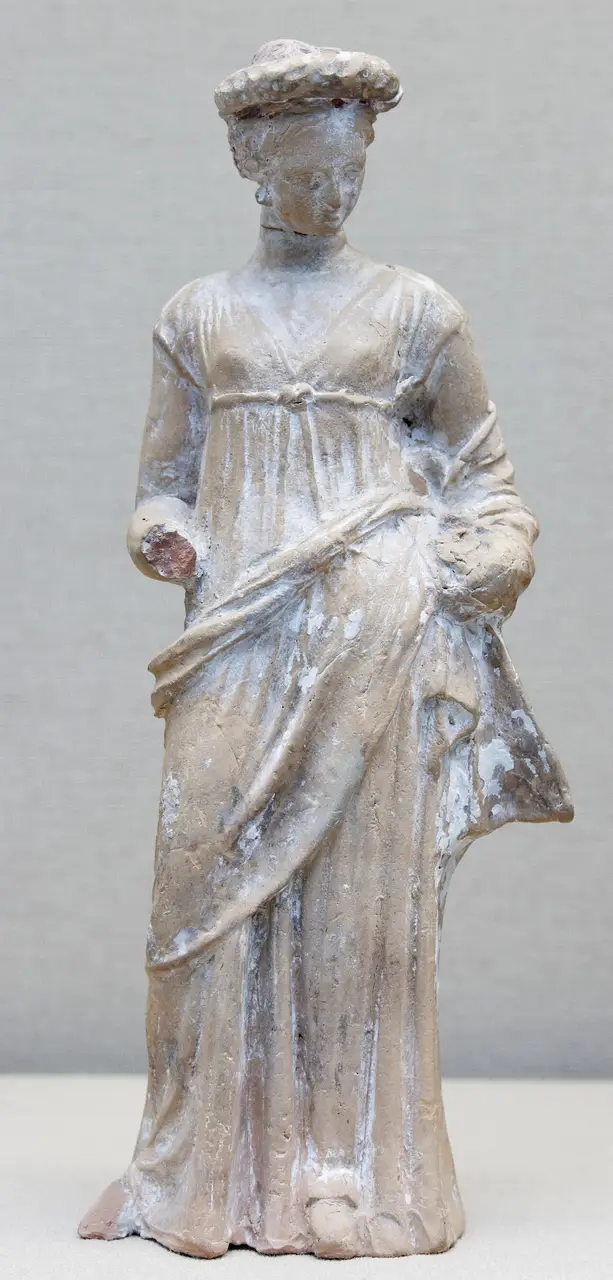 A Hellenistic terracotta figurine of a draped woman, of the type made at Tanagra in Boeotia, about 325 to 200 BC. Figures of this kind are a common subject for thermoluminescence testing. British Museum. Photo: Marie-Lan Nguyen, CC BY 2.5, via Wikimedia Commons.
The Layers of Authentication
Identifying fakes takes a multilayered approach. Specialists who have handled thousands of genuine and forged objects over decades can usually reach a confident assessment by eye: the way light falls across a genuinely weathered surface, the particular granularity of aged clay, the crispness or softness of moulded detail. Beyond looking, experienced handlers rely on touch, sound, and weight. A terracotta figure that rings wrong when tapped, or feels too light or too heavy for its size, raises questions no amount of convincing surface treatment can quiet.
Then come the contextual checks. Does the design correspond to known types from the stated period and region? Is the iconography consistent? Does the provenance hold up? These non-invasive assessments catch the great majority of forgeries before any laboratory work is considered.
TL testing is the layer TimeLine adds where it makes the most sense, or where any doubt remains after expert assessment. We commission it routinely on terracotta lots, sometimes as a random sample across a sale, sometimes targeted at a single piece whose style seems unusual for its stated origin or whose surface does not quite match what we would expect. It is a powerful confirmation, but it works best as part of this wider process rather than on its own.
How It Actually Works
Every piece of fired clay carries trace amounts of radioactive elements, mainly uranium, thorium, and potassium, alongside common minerals such as quartz and feldspar. The radiation steadily frees electrons, and the quartz and feldspar trap a small fraction of them at flaws in their crystal structure. The longer the clay sits in the ground, the more trapped electrons accumulate. When a laboratory heats a sample to around 500°C, those electrons escape and release their stored energy as a faint glow of light.
The intensity of that glow is proportional to how much radiation the object has absorbed since the clay was last fired, which for an ancient object is the date it was made. Measuring the light, together with the radiation dose rate in the object's material and its burial soil, lets the laboratory calculate an approximate date of last firing. A genuine Roman terracotta fired 1,800 years ago has built up a measurable store of trapped energy. A forgery fired last year produces almost no glow at all, because the clock was reset when the faker put it in a kiln.
That is the strength of TL testing. It ignores style and surface, both of which can be imitated, and measures a physical process that takes centuries to accumulate and cannot be convincingly faked.
What TL Testing Can and Can't Tell You
New collectors sometimes miss this distinction. TL testing answers one question very well: is the object genuinely ancient, or is it modern? What it does not give you is precise period dating. A TL result will not tell you whether a Greek terracotta belongs to an early Attic workshop or a later Hellenistic one, or whether a Roman lamp dates from the 1st century AD or the 3rd. The result comes as a broad range, something like "consistent with firing between 1,600 and 2,200 years ago," wide enough to separate a genuine antiquity from a forgery but far too wide to fix a century or an artistic phase.
That finer dating, the kind that places an object within a particular culture, workshop tradition, or stylistic period, is the work of expert style analysis. A trained eye assesses the modelling, the proportions, the iconographic conventions, and the fabric of the clay to situate a piece in its proper context. TL testing and stylistic analysis answer different questions, and between them they cover the scientific and the art-historical sides of authentication.
What Can Be Tested?
TL testing works on any object made of fired clay, which takes in a wide range of collectible antiquities.
Bronze sculpture is a less obvious candidate, and a useful one. Many ancient bronzes, particularly those cast by the lost-wax method, keep a clay casting core inside the finished metal. Where that core is accessible, through an existing opening or a small drilled hole, it can be TL tested like any terracotta. That gives a scientific firing date for a class of object that would otherwise rest entirely on stylistic and metallurgical analysis.
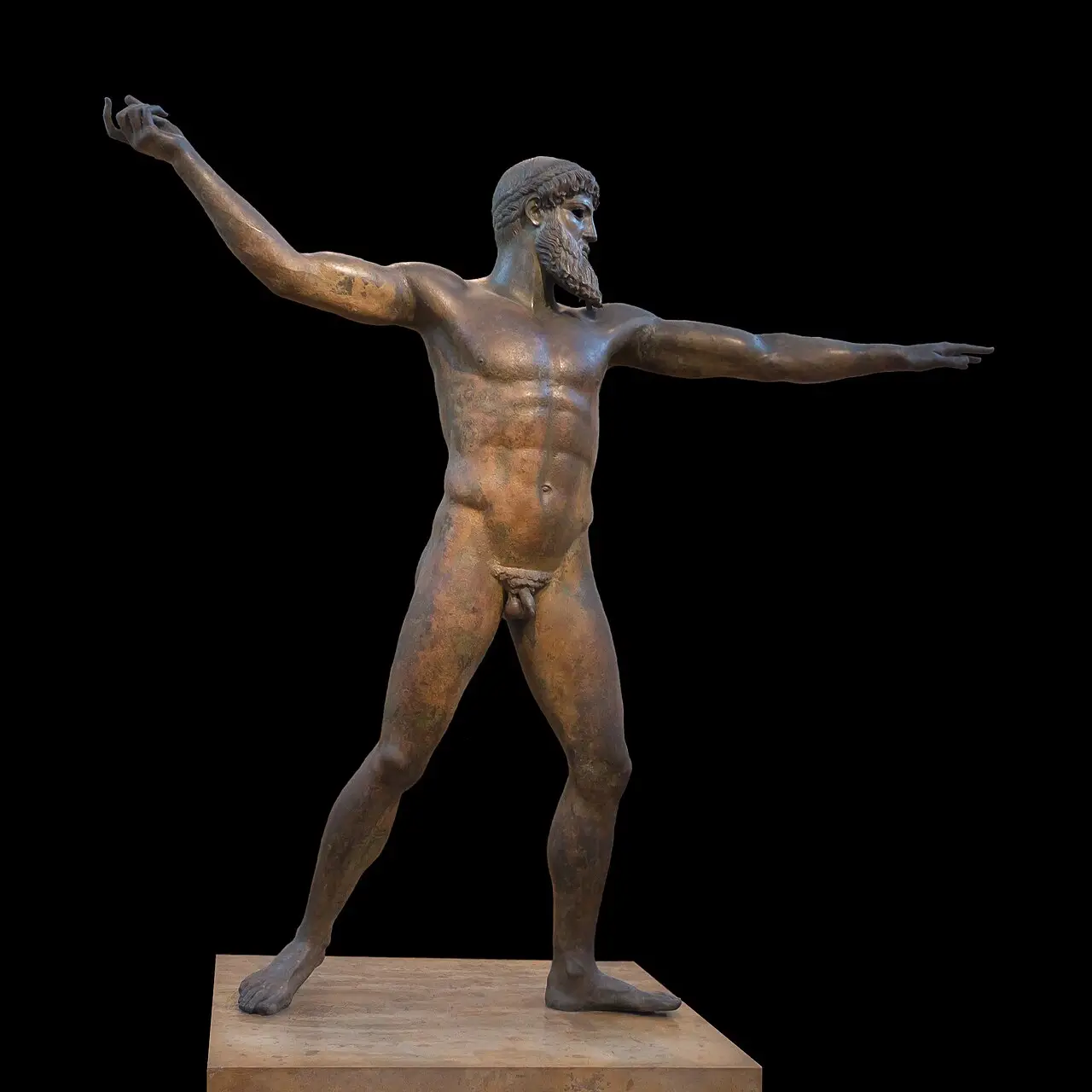 The bronze Zeus or Poseidon recovered from the sea off Cape Artemision, about 460 BC, cast by the lost-wax method. Bronzes made this way can retain clay core material that is itself datable. National Archaeological Museum, Athens. Photo: Jebulon, CC0, via Wikimedia Commons.
Reading a TL Certificate
When a lot carries TL documentation, a few things separate a thorough report from a superficial one.
- The laboratory. Reputable TL testing comes from a small number of specialist labs. If you do not recognise the issuing lab, ask.
- The dose rate information. A proper certificate shows how the annual radiation dose was estimated and does not stop at a bare date. That marks thorough work over a quick screening.
- A clear link to the object. The tested sample should be tied to the piece in question, ideally with a photograph of where it was taken. Sellers have been known to pair a genuine certificate from one object with a different, fake piece.
TL testing also has its limits. It needs a physical sample, usually around 100 milligrams of powder drilled from an inconspicuous spot, leaving a hole about the width of a pencil lead. The test destroys that pinch of powder, though the damage to the object is minimal and normally invisible once filled. Objects exposed to strong heat since their original firing, a terracotta that survived a house fire centuries later, say, can give a misleading result, because the heat partly resets the TL clock. Competent laboratories account for this in their reports.
How TimeLine Uses TL Testing
When a lot has been TL tested, we note it in the catalogue description and make the certificate available to prospective buyers. That certificate, issued by the testing laboratory, is a document to keep with the object permanently; it adds to both provenance and resale value.
The testing itself we leave to the independent laboratories whose results the trade trusts: Oxford Authentication in Oxfordshire, QED Laboratoire in Marseille, and the Ralf Kotalla laboratory in Germany are among the small group whose certificates appear in our catalogues. Where our specialists have reached a confident attribution by eye, the laboratory confirms what the trained hand already suspected. Where a piece sits at the edge of certainty, we send it for testing before it reaches the rostrum. The buyer ends up holding the same thing in both cases: a firing date that owes nothing to anyone's opinion.
Documentation of this kind matters most, and appears most often, on the higher-value lots. A few recent sales show the pattern.
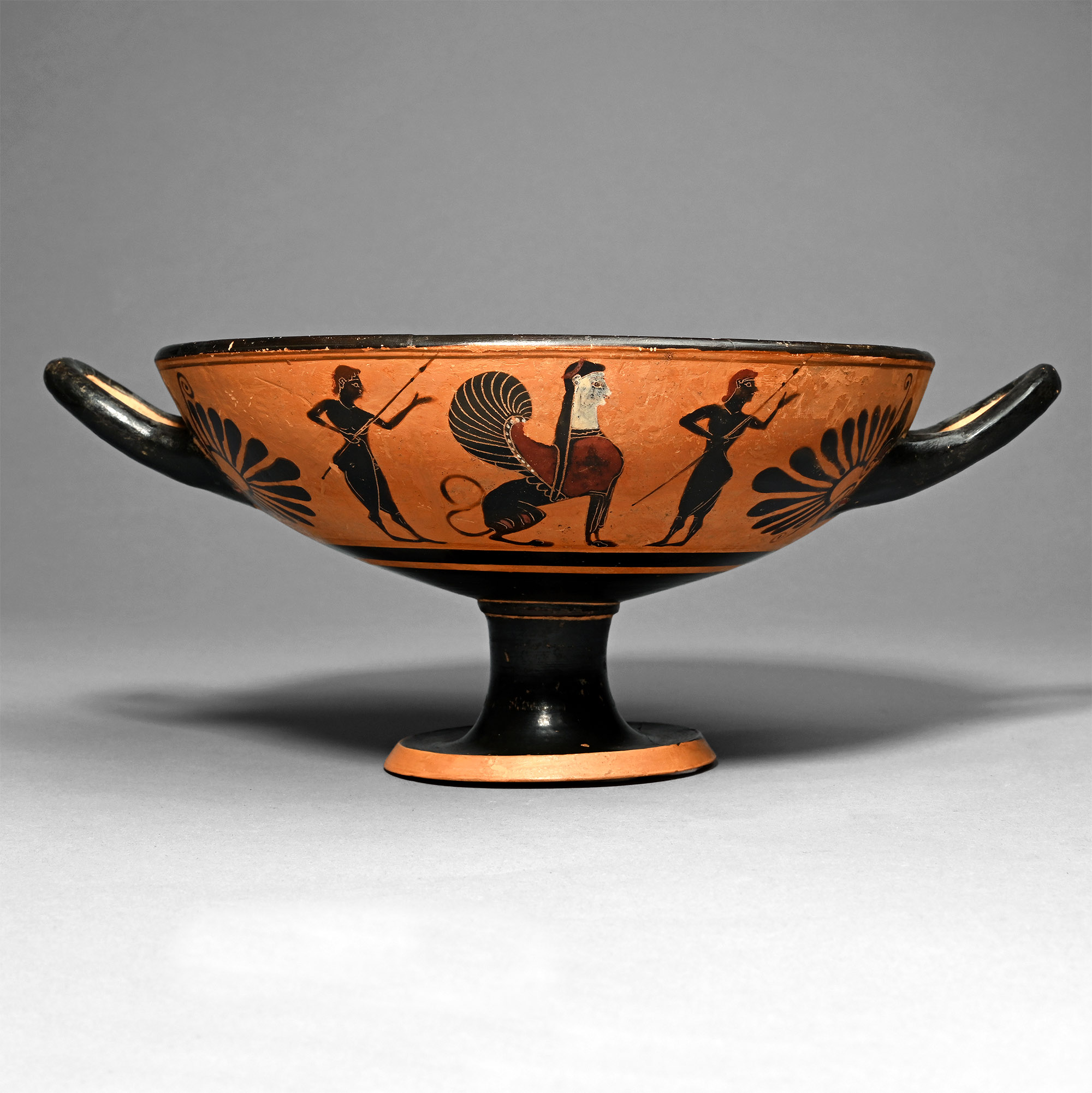
An Attic black-figure kylix of around 530 BC, two nude youths flanking a crouching sphinx around the bowl, sold in June 2026 for £7,800. Its thermoluminescence report came from the Kotalla laboratory and had been on file since 2010, the kind of certificate that follows an object from one owner to the next.
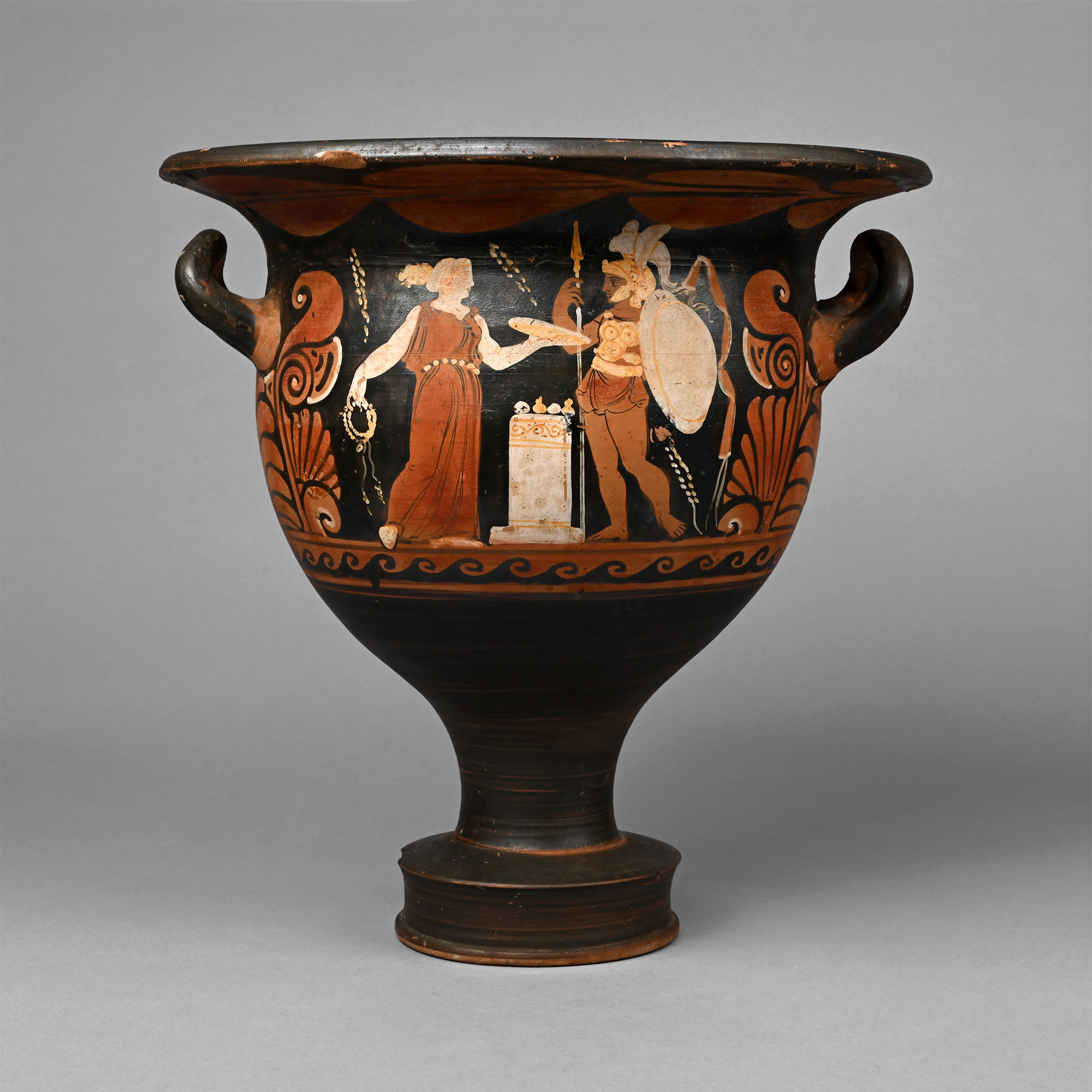
A red-figure bell krater in the same sale shows how the two halves of authentication divide the work. Stylistic analysis attributed its funerary scene to the hand known as the CA Painter, working in Campania around 350 to 300 BC, an argument about style. The thermoluminescence report from QED Laboratoire answered the separate question of age. The painter is a matter for the eye; the firing date is a matter for the lab.
An Apulian red-figure patera of the 4th century BC, its tondo painted with a chimera advancing along an egg-and-dart line, carried both an academic report from Dr Raffaele D'Amato and a thermoluminescence certificate from Oxford Authentication when it sold for £5,720.
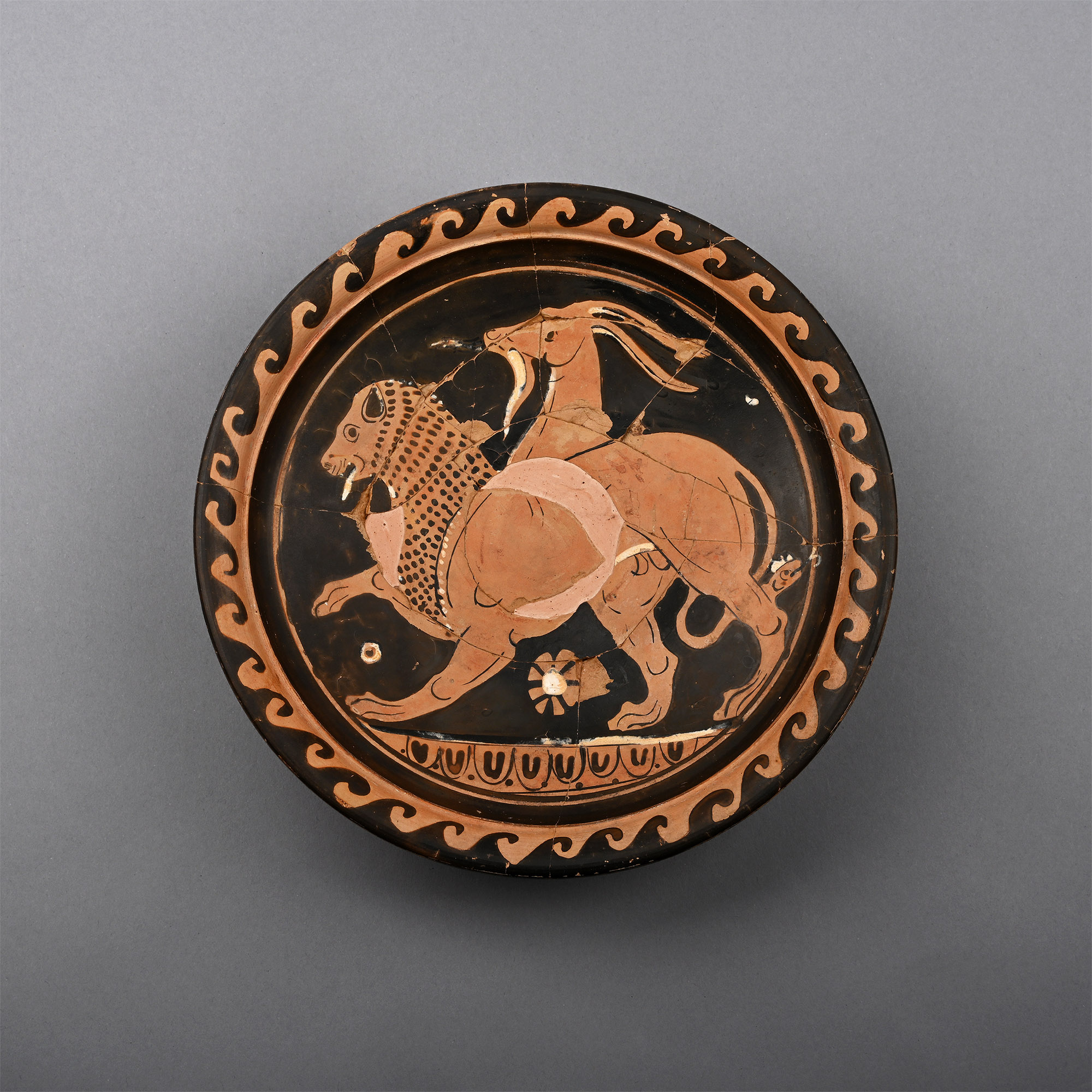
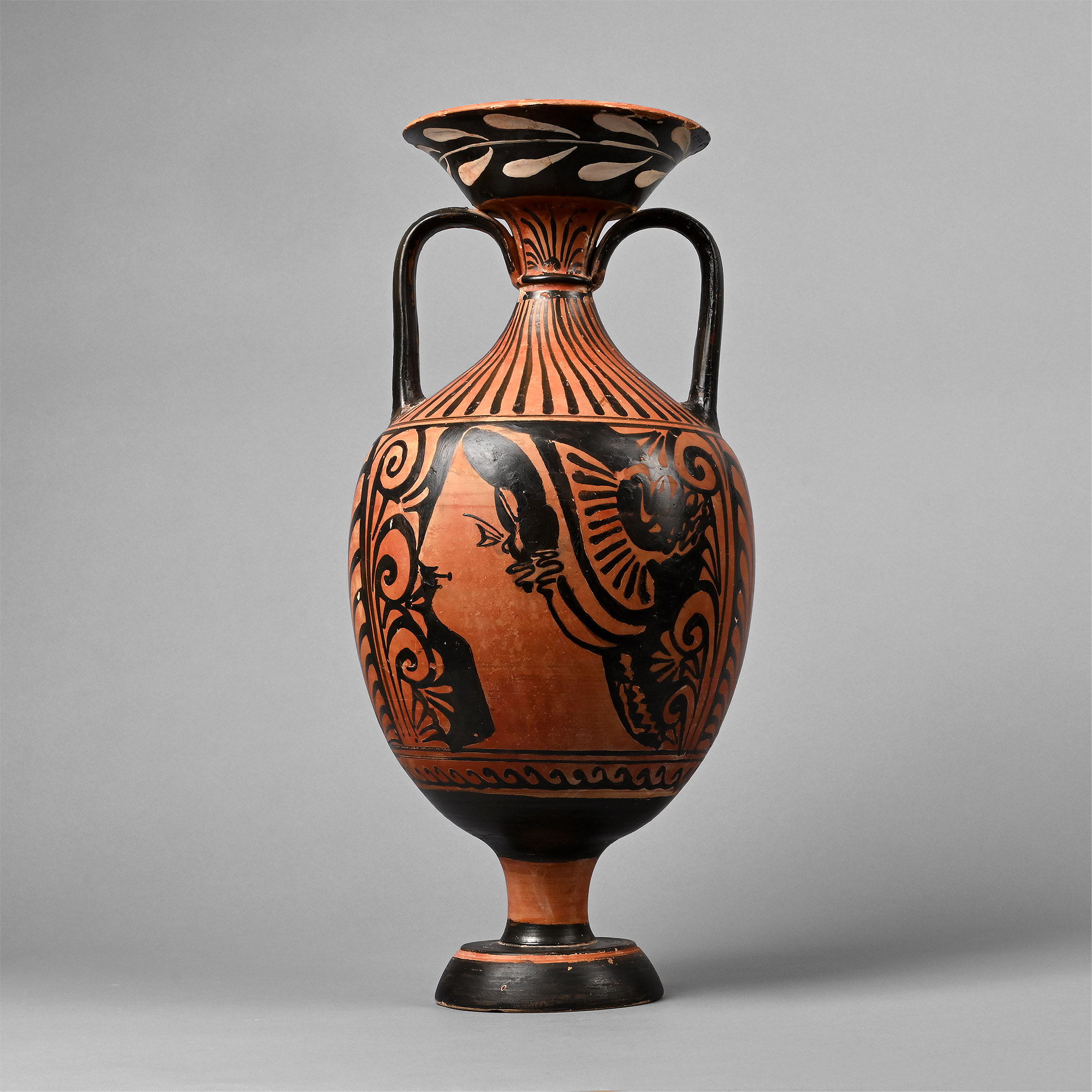
Two large Apulian vases from the same English estate, sold that March, each came with an Oxford Authentication certificate confirming ancient firing: an amphora with the profile bust of a fashionable woman, at £3,900, and a companion painted with a Dionysian scene, at £3,640. Each certificate passed to the buyer with the vase, part of what the money bought.
Start Looking
The best way to develop an eye for terracottas, and to see how authentication works in practice, is to look at as many as you can. TimeLine's past catalogues are online, with the TL reports noted lot by lot. Read them with the questions above in hand: which lab issued the certificate, whether it explains its dose rate, and whether the sample is tied to the object you are looking at. By the time you are ready to bid, those questions will be second nature.
TimeLine Auctions, 24th August 2026