Home > Stories by TimeLine Auctions
Stories by TimeLine Auctions
How to Sell Ancient Egyptian Antiquities (and Where to Get the Right Price)
A bronze figure of the child-god Horus, hand raised to his lips, comes up for sale this year with its wooden base intact and a printed label still glued underneath: "Blanchard's Egyptian Museum, Cairo, Egypt," the blanks filled in by hand, and above the signature the words "Guaranteed Genuine." Ralph Blanchard sold antiquities from a shop in the garden of Cairo's Shepheard's Hotel from 1910, in the decades when Egypt's trade was legal and licensed. A hundred years on, that brown scrap of card carries much of what makes the bronze easy to sell, and part of what it is worth.
The same holds for almost any Egyptian object you might own. You are selling the thing and its history together, and with Egyptian material the history carries an unusual share of the price. So the first move, before you approach anyone, is to keep the paper: the old label, the auction invoice from the 1970s, the note in a relative's hand recording where a scarab came from. People throw those away and keep the object. It is the wrong way round.
 Shepheard's Hotel, Cairo, on a postcard of 1915. R.H. Blanchard's Egyptian Museum stood in the hotel garden, one of the licensed dealers who supplied collectors before Egypt ended its own trade in 1983. Public domain, via Wikimedia Commons.
Where to sell: the short answer
You can sell to an established dealer, who buys outright and quickly at a price that leaves room for their own margin, so you trade a slice of the value for certainty and speed. Or you can consign to a specialist auction house, which sells the piece on your behalf to the collectors it has spent years gathering, usually returns more, and asks you to wait for a sale date. For most people holding a genuine Egyptian antiquity, a specialist antiquities sale returns the most for the least effort, because the buyers who want Egyptian bronzes and scarabs are already the house's regulars.
Whichever way you lean, begin with a valuation. Established auction houses give one at no charge, and until a specialist has actually handled the object, any figure in your head is a guess. A ten-minute opinion also answers the question no amount of online searching can: whether the piece is what you believe it to be.
What makes an Egyptian piece easy to sell
Provenance is ownership history, and for Egyptian antiquities it does two jobs at once. It reassures a buyer the object is genuine, since a documented chain back through named collections is very hard to fake, and it settles the object's footing in a market where everything legitimately on sale left Egypt long ago. The first two questions a serious buyer asks are how far back the record runs and how far it sits from Egypt itself. A dry line reading "English private collection, acquired 1968" is worth more to your sale than the most colourful family story with no date attached.
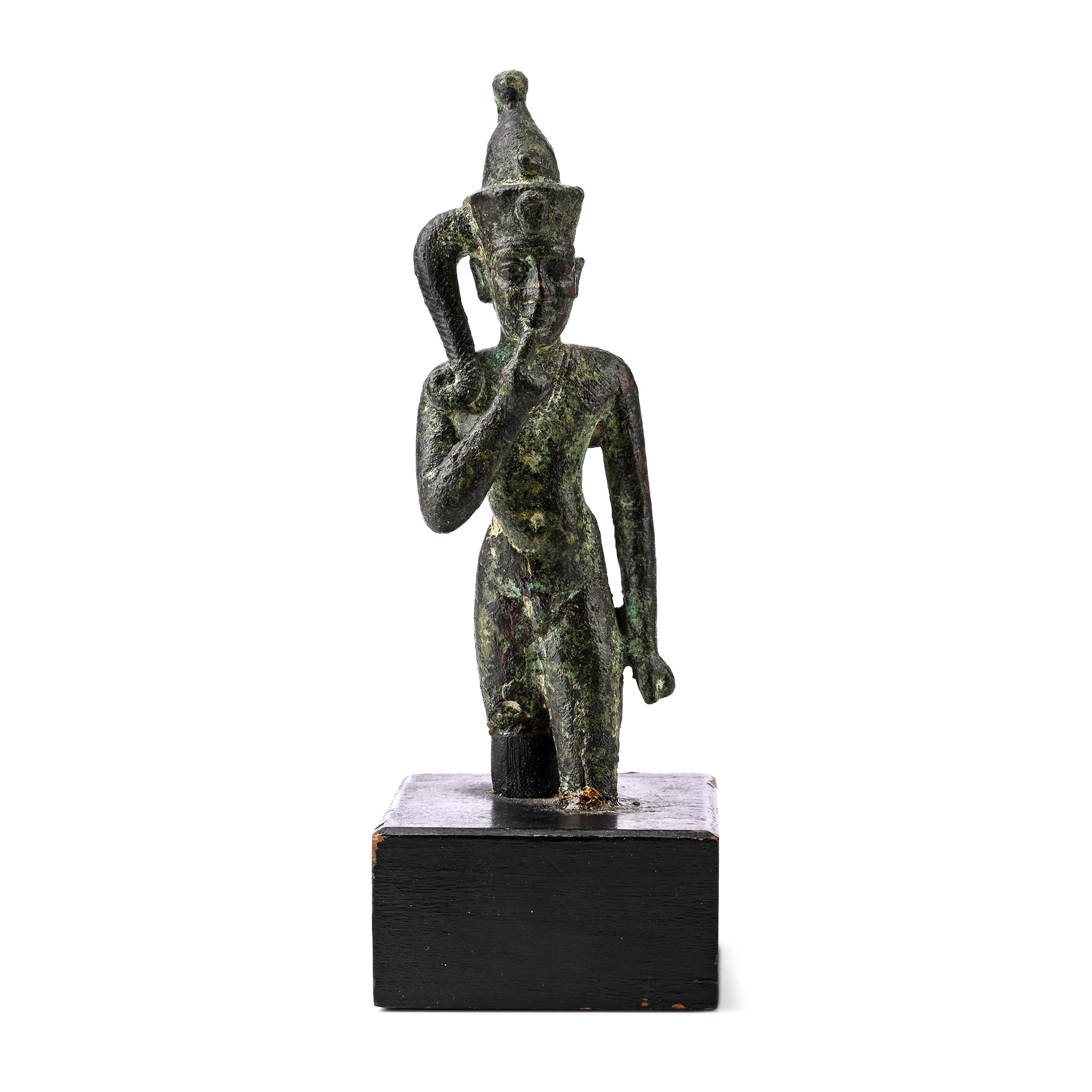
So gather everything before you pick up the phone. Old auction receipts and dealers' invoices, however faded; printed labels and inventory numbers stuck to bases or inked on undersides; letters, insurance schedules, a grandparent's travel diary that mentions buying a scarab in Luxor in 1935. Even a photograph of the object on a mantelpiece forty years ago places it in a collection and a decade. None of it needs to be complete. A specialist can often build the rest from one firm anchor, a legible label or an old sale number, but only on what you have kept.
How much is an ancient Egyptian antiquity worth?
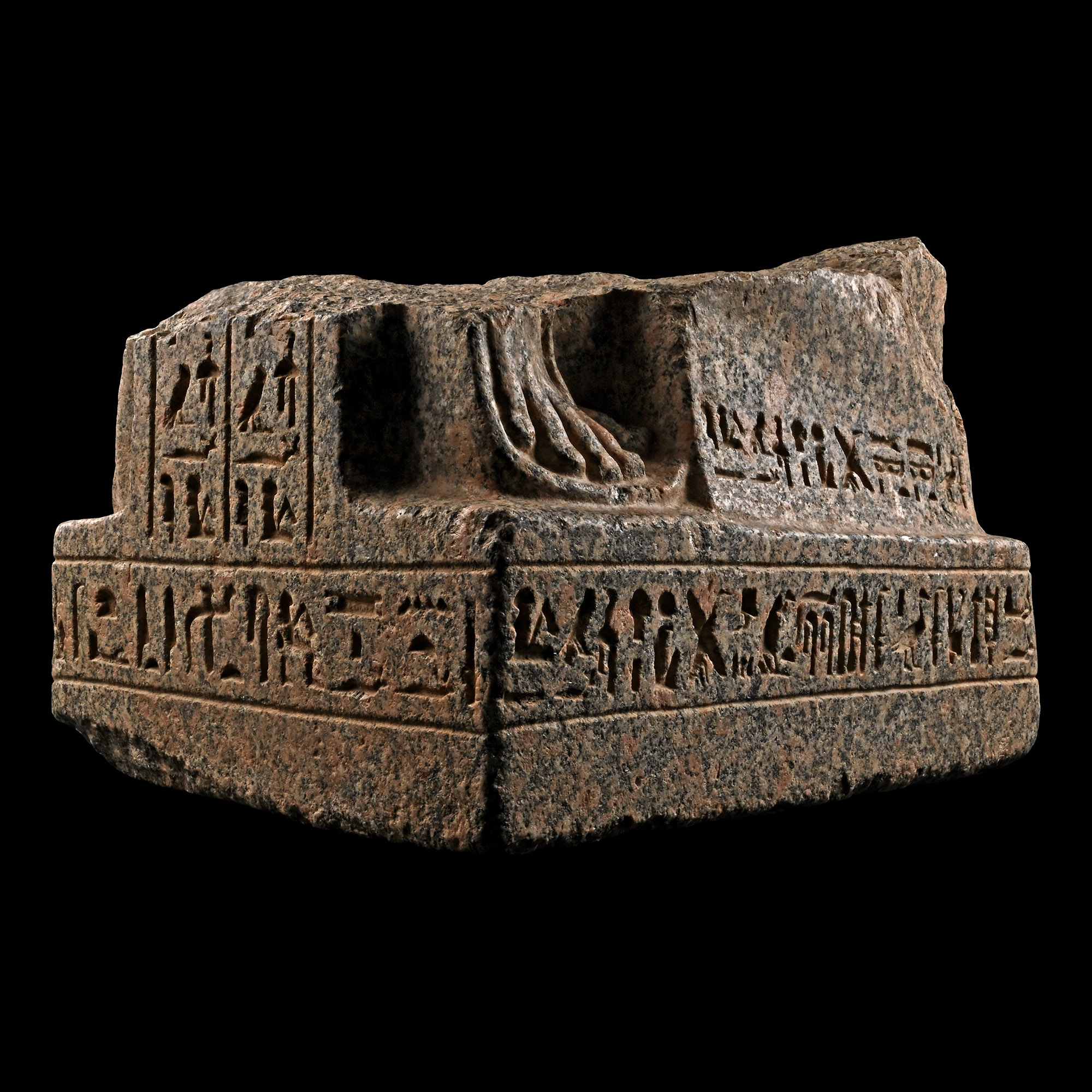
The range is wide, and it turns on three things: what the object is, how well it has survived, and how much of its history you can show. Egypt produced some categories in enormous numbers for three thousand years, so genuine amulets, scarabs and shabtis are among the most affordable antiquities on the market, often a few hundred pounds. Sculpture, inscribed stone and anything carrying a named ancient owner climb from there. In one TimeLine sale the Egyptian section ran from a faience pectoral estimated at £200 to a granite statue base of a son of Ramesses II at £40,000 to £60,000, with most lots between the two.
At auction the sums are easy to check in advance. The house takes a commission from the sale, at TimeLine 18 per cent including VAT on a single item of modest value, with lower rates for high-value pieces, whole collections and regular sellers, so on the standard rate you keep 82 per cent of the hammer price, and payment usually follows within about thirty days. You can set a reserve, a floor below which the lot will not be sold, though a piece that then finds no buyer can be entered again in a later sale, and where a reserve was set the unsold lot carries a fee of 6 per cent of that reserve. Set against all this, the sales run to their own calendar rather than to yours; TimeLine holds four a year. A dealer pays sooner and keeps more of the difference, the price of carrying stock that may sit for years.
Is it legal to sell Egyptian antiquities?
For the great majority of Egyptian objects in private hands across Britain, Europe and North America, yes. Egypt closed its own antiquities trade in 1983, so what circulates legitimately today are pieces that left before then, in the long era of licensed dealers, museum sale rooms and divided excavation finds. If you do not know your object's history, that is entirely normal and no cause for alarm; establishing it is exactly what a specialist does. Where a piece's past is genuinely unclear, the sensible course is to ask someone who handles Egyptian material every week rather than guess, and a reputable house will tell you plainly where you stand before anything is offered for sale.
Where to start
That conversation costs nothing to open, and it is worth opening early. TimeLine values Egyptian antiquities for sale, insurance and probate, and significant pieces are seen personally by our chief operating officer, Aaron Hammond (ah@timelineauctions.com), who travels Britain and Europe through the year to meet sellers and look at what they have. A few clear photographs and whatever paperwork came with the object are enough to begin: from those you can have a real opinion on what it is, what it might make, and how best to sell it, before you commit to anything.
Which returns us to the label under the Horus bronze. The owner who kept it did the most useful thing anyone with Egyptian antiquities can do, long before any sale was in view: they held on to a small, dull piece of card that turned an old bronze into a documented one. Find yours before you decide where to sell.
TimeLine Auctions, 18th August 2026