Home > Stories by TimeLine Auctions
Stories by TimeLine Auctions
Is It Legal to Own Antiquities in the UK and Europe?
A Roman bronze of Constantine, the sort that sells for the price of a good dinner, is legal for you to own. So is a Greek black-glaze cup, an Egyptian shabti, a medieval seal matrix. New collectors almost always ask the same thing first, usually in a slightly nervous email: is owning ancient objects allowed at all? In the United Kingdom and across nearly all of Europe, it is.
You need no licence, no permit, and no registration to keep an antiquity on a shelf in Britain. The law leaves ownership itself alone; what it polices is how the object reached you. Get that right and the piece is yours, plainly and for good.
The short version
Three things decide whether an antiquity is safe to buy and keep, and none of them is a licence.
First, it must not be stolen. Handling stolen goods is a crime whatever the object, a Roman ring no less than a car stereo. Second, it must not have been dug up or stripped from a protected site or monument in breach of the law, what the statutes call a "tainted" object. Third, moving it across a national border can require an export licence from the country it leaves, which is a separate matter from owning it once it is here.
The thread through all three is provenance, the documented history of where a piece has been and how it changed hands. A piece with a clear paper trail is one you can own without a second thought, and the rest of this guide is really about that paper trail, country by country.
What the UK regulates, and what it doesn't
Britain is one of the more relaxed places in the world to be a collector, which is part of why London is a centre of the trade. There is no ownership register for antiquities and no permit to hold them.
The law that bites is the Dealing in Cultural Objects (Offences) Act 2003. It makes it an offence to dishonestly deal in a "tainted" cultural object, knowing or believing it to be tainted, with up to seven years in prison. Tainted means removed from a building, monument, or archaeological site, or excavated, illegally, after the Act came into force at the end of 2003. The rule reaches objects taken abroad as well as in Britain, so a piece removed illegally from a foreign site after 2003 is caught here too. The older Theft Act 1968 covers the obvious case of handling anything stolen.
Neither bites on a documented antiquity that has been in circulation for decades; both are aimed at fresh, illegal removal, which is exactly what a good provenance rules out.
The Treasure Act 1996 is the one people confuse with ownership, and it applies to finders, not buyers. Dig up gold or silver more than 300 years old, or a group of coins, and you must report it to the local coroner within fourteen days, or commit an offence by staying quiet. Buy a catalogued coin from a saleroom and you are not a finder, so the duty never arises.
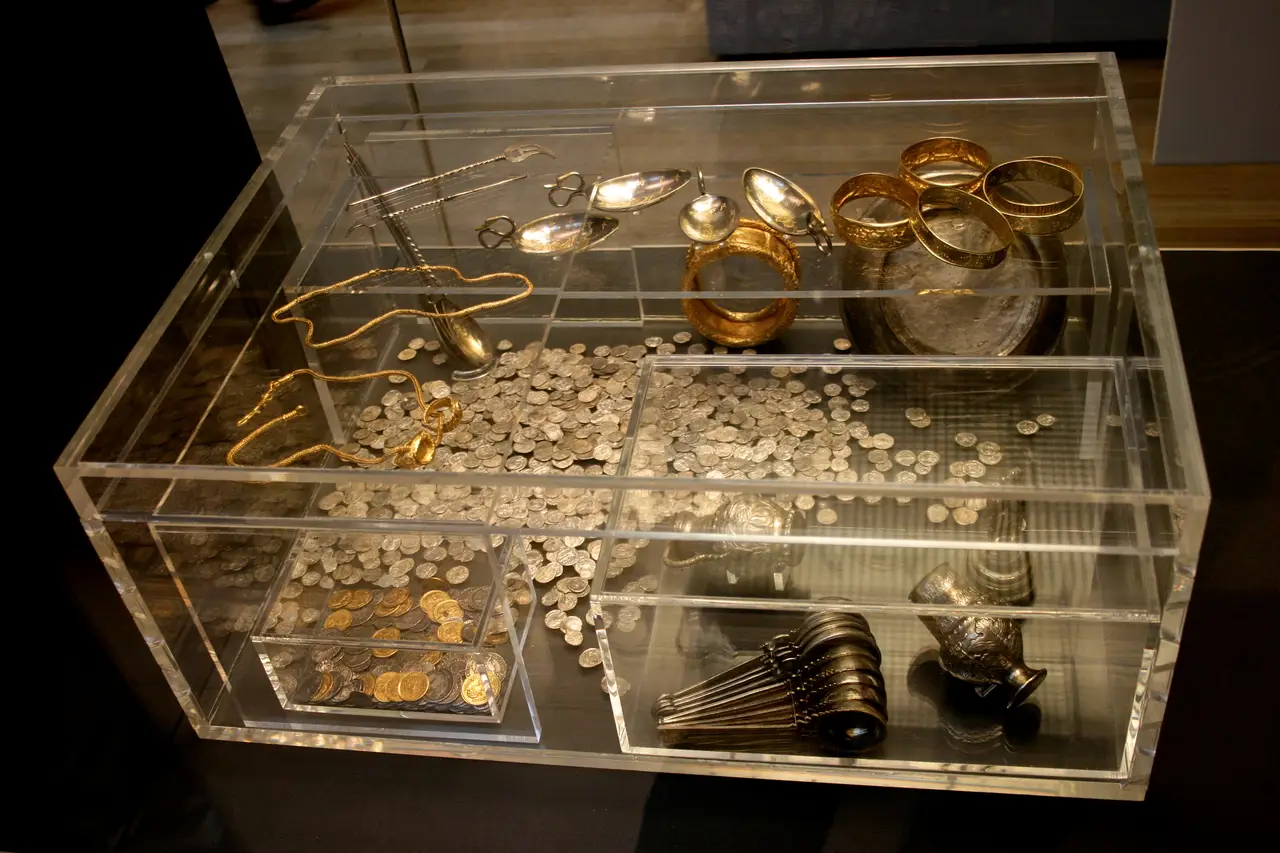 The Hoxne Hoard, late Roman gold and silver buried in Suffolk in the early fifth century AD and found in 1992, now in the British Museum. Photo: Mike Peel, CC BY-SA 4.0, via Wikimedia Commons.
Export is the last piece. Taking a qualifying object out of the UK needs an export licence, set by age and value, though standard-type coins worth under £65,000 are exempt. That licence governs the object's departure, not your right to own it here.
How the rules change across Europe
Cross the Channel and the legal furniture changes, though the answer for a collector rarely does. Britain works in a common-law tradition; most of continental Europe runs on state patrimony, the principle that antiquities found in the national soil belong to the state by law. Italy has held that line since a statute of 1909, now folded into its 2004 heritage code; Spain since the Historical Heritage Law of 1985; and the idea recurs, with local variations, across the south.
State ownership sounds alarming and is routinely misread. It bites on what comes out of the ground, not on what already sits in a collection. It does not make it illegal to own an Italian bronze or a Spanish terracotta; it means the object needs a history showing it was in lawful private hands, or was legally exported, before those rules could reach it. A documented antiquity is as ownable in Rome or Madrid as in London. Italy is the strict case, because there the burden falls on the holder to prove good title, in practice reaching back before 1909, so Italian-found material with only a thin recent history is best left on the shelf.
Greece is the one country with a formality aimed at the owner rather than the digger. Private collecting is legal and expressly provided for, but you apply to the Ministry of Culture for a possession licence, and an heir who inherits a collection has six months to do the same. The state keeps an overriding interest and controls whether a piece can later be sold. That permit, under Law 3028/2002, is the closest thing in Europe to the licence new buyers picture needing everywhere, and it exists in this one place.
Elsewhere the mood is nearer Britain's, and sometimes more relaxed still. In Germany owning antiquities has always been lawful; the Cultural Property Protection Act of 2016 tightened the paperwork for importing and exporting them and left ownership alone. France protects a good-faith buyer's title by long civil-law tradition and controls only the export of the pieces it designates national treasures. Switzerland is the most collector-friendly of the group: its law leans toward the honest purchaser, who, if ever asked to give a piece back, is generally entitled to be repaid what they paid for it. The Netherlands and Austria likewise let you own freely, the controls falling on unreported new finds and on the export of listed objects. In none of them is it illegal to keep a legitimately acquired antiquity.
What actually makes a piece safe to own
Since none of these systems asks you to license or register a documented piece, the collector's real protection is the same everywhere: buy from a seller who can show where the object has been, and keep the paperwork. A provenance can be a chain of named former owners, an old collection label, a decades-old auction catalogue entry, or an export licence from the source country. The longer and better documented the history, the less any of the excavation rules can touch it: those rules catch objects dug up illegally and recently, which a long recorded history rules out.
This is where an established auction house or dealer earns its keep. A reputable saleroom checks title before it sells, records the provenance in its catalogue, and warrants good title to the buyer. That catalogue entry, kept with the object, is worth more than any certificate, and it is the thing to ask for before you bid rather than after.
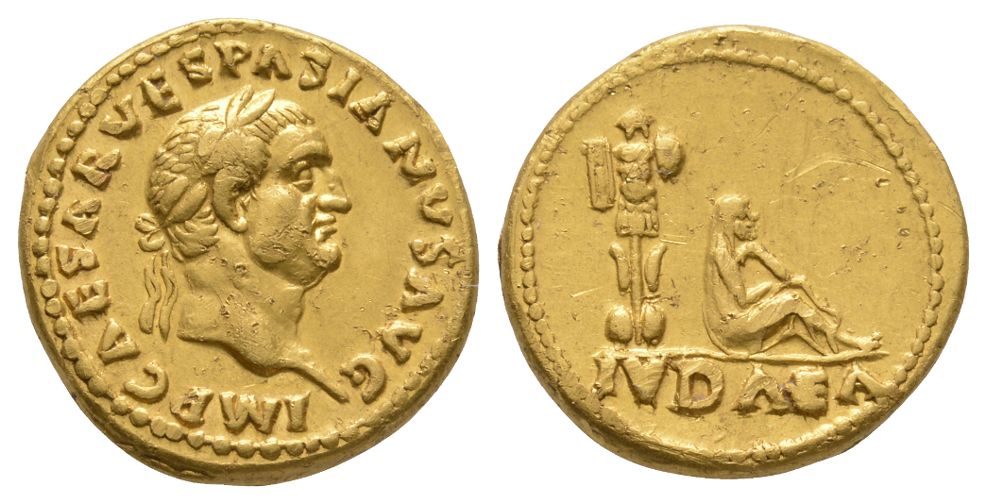
A Roman coin bought from an established saleroom, its provenance printed in the catalogue, is as lawful a thing to own as the watch on your wrist. The habit worth forming on day one is to keep that catalogue entry in the same drawer as the coin. It is the whole answer to the nervous email, and it fits on a single sheet of paper.
You can browse the current antiquities on offer, each catalogued with its provenance, in TimeLine's antiquities department.
TimeLine Auctions, 8th August 2026