Home > Stories by TimeLine Auctions
Stories by TimeLine Auctions
Italian Teens Snuck Into Their School Basement, and Found a 1,800-Year-Old Roman Mansion
Rooms from a Roman house of the mid-second century AD, their wall paintings and figural stucco surviving up to the vaulted ceilings, have been uncovered beneath the gymnasium of a high school a few minutes' walk from the Colosseum in Rome.
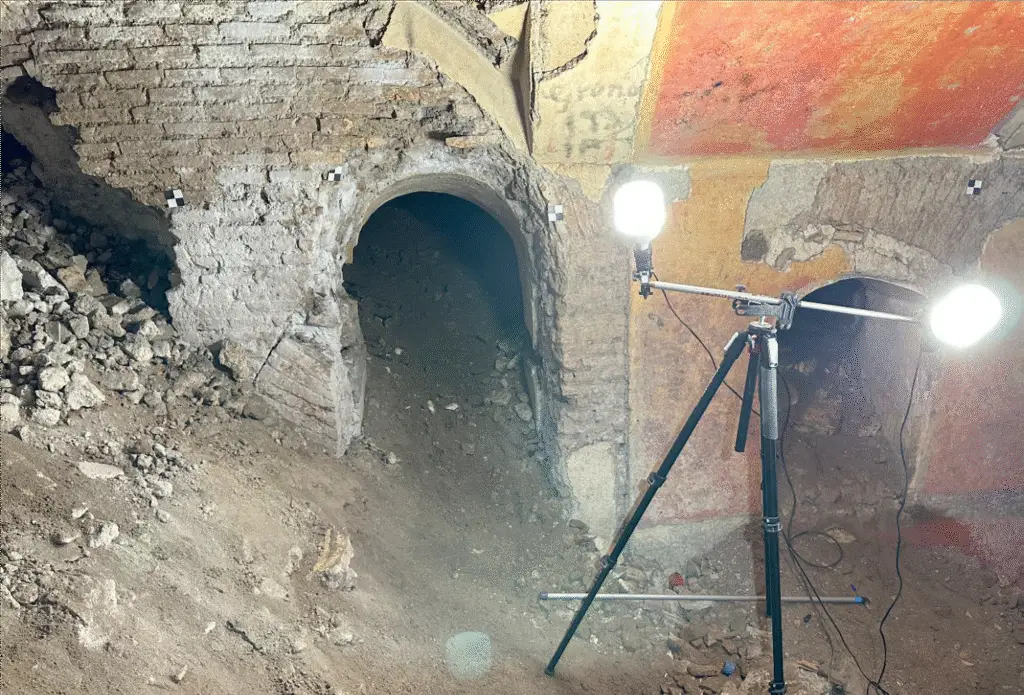
The rooms lie under the Liceo Scientifico Cavour. According to LiveScience, students had for years traded stories about hidden chambers, and several came across dark corridors and ancient masonry on unofficial trips into the basement. They reported the find to Claudia Marino, a history and Latin teacher, who passed word to Rome's Special Superintendency; the school notes that staff had reported such remains over the years. Archaeologists began the first excavation of the rooms in January 2026, and Marino and Filippo Coarelli, an archaeologist at the University of Perugia, presented the discovery to the public on 28 May.
Where the house stood
This large house stood between the Carinae and the Esquiline hill, in a central district of Rome whose residents, the Superintendency notes, once included Cicero, Pompey and the young Octavian, later the emperor Augustus. The Superintendency dates the house to the middle of the second century AD. The area, it adds, is poorly understood by archaeologists, because modern building has destroyed or buried most of the Roman ground beneath it.
What survives
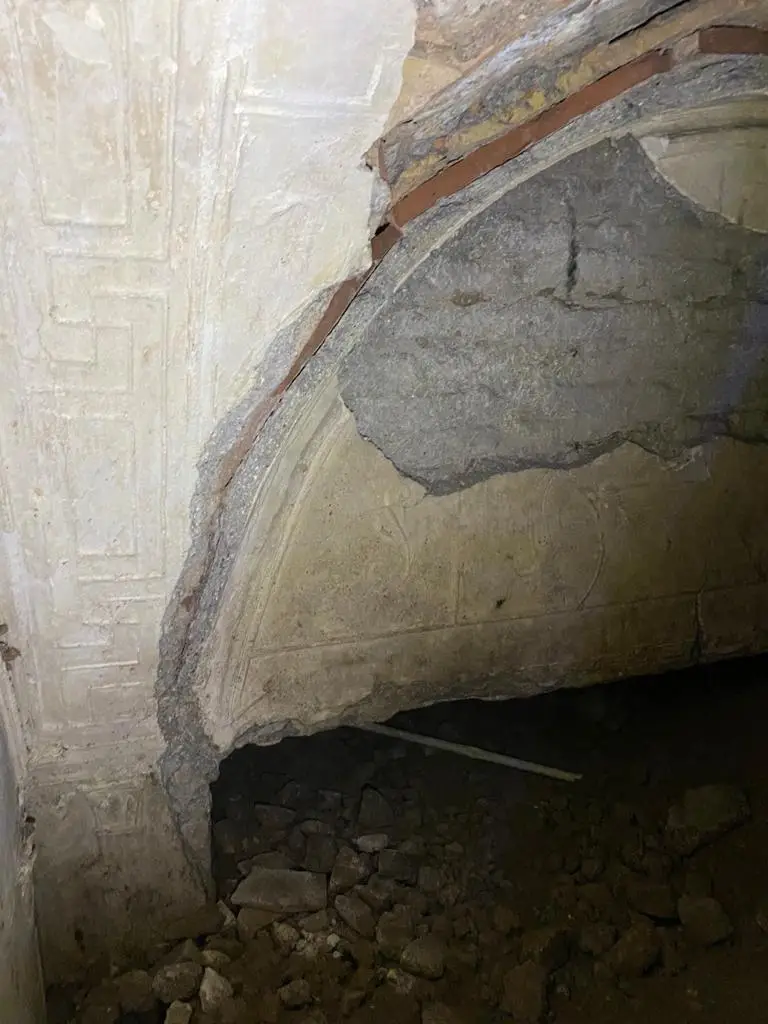
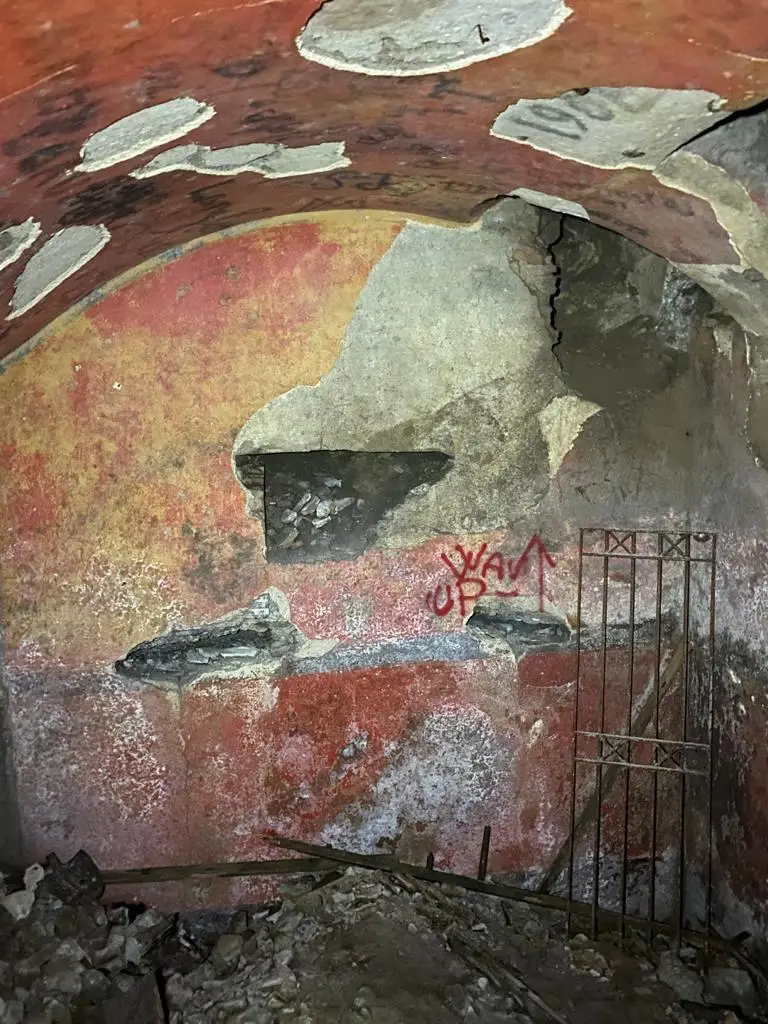
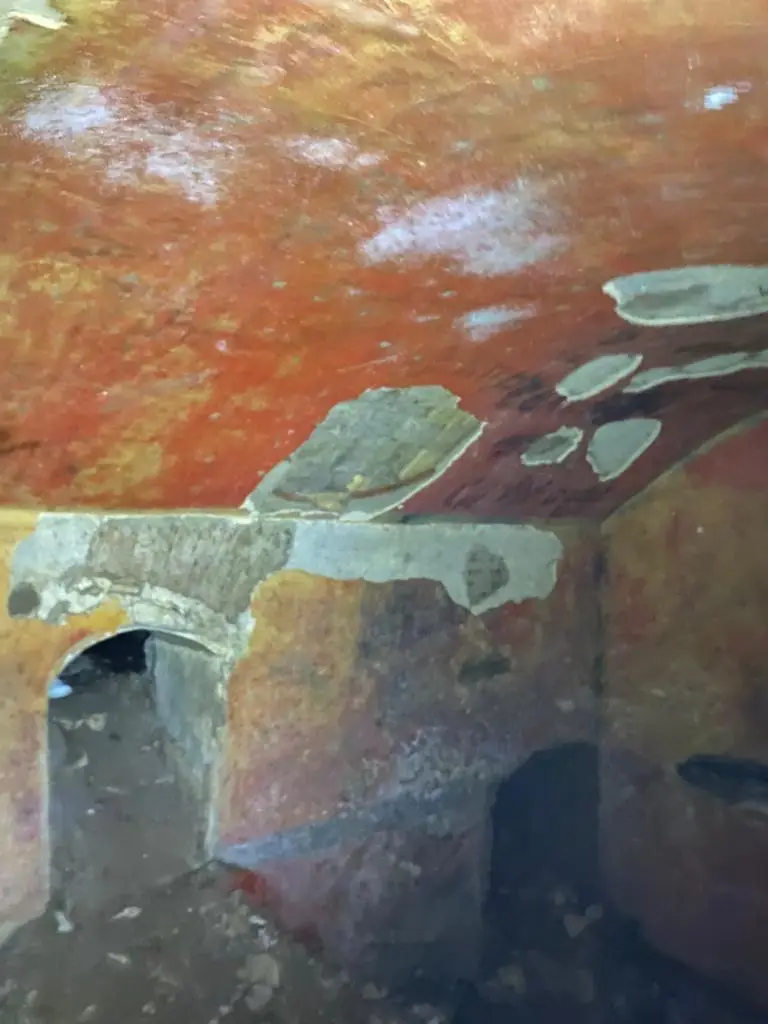
What sets the rooms apart is their condition. Filled almost to their full height by later debris, they have kept their painted walls and figural stucco, the moulded plaster relief that ran across the upper walls and vaults, up to the ceilings. The Superintendency calls this level of survival exceptional for the area: such upper decoration rarely survives in Roman houses, but here it remains because the rooms were buried rather than demolished. LiveScience has described the house as a luxurious one. Intact Roman interiors are scarce in this heavily built-over part of the city, and the current work is clearing the modern fill so the painted surfaces can be documented in full.
The question of ownership
Who owned the house has not been settled. Part of the same domus was exposed in 1895, during works to cut the nearby via degli Annibaldi, which also produced a lead pipe, or fistula; the building above it was put up for a Catholic missionary congregation in the same period. Roman pipes of this kind were often stamped with the property owner's name, and this one carried that of a member of the Umbrius family.
That single find is the only basis for the attribution. The Umbrii are barely documented, though LiveScience reports that the family may have come originally from Samnium, in south-central Italy. The excavation has yet to produce its own evidence of the owners or a firm construction date, so for now the house is being called the Domus del Liceo Cavour, after the school.
What happens next
The excavation forms part of the Superintendency's Cantieri Narranti (Narrating Worksites) programme and is funded through Italy's National Recovery and Resilience Plan. Crews are reaching the rooms by way of a descent on the nearby via Frangipane. The work covers diagnostic survey, restoration and consolidation of the structures and painted surfaces, an upgrade of the building's services, and, in time, public access. The Superintendency says the project is being developed with the staff and pupils of the Liceo Cavour, with printed and digital material to explain the site.
How much of the painted decoration has survived intact, and how far the house once extended beneath the surrounding streets, will not be clear until the rooms are emptied.
TimeLine Auctions, 23rd June 2026