Home > Stories by TimeLine Auctions
Stories by TimeLine Auctions
Pre-Roman Britain: What Metaldetectorists Found and Why It Changes Everything
Late in 2021, a metal detectorist sweeping muddy fields in northern England got a signal. He could have grabbed a shovel and started digging. Instead, he picked up the phone and called Tom Moore, an archaeologist at Durham University who had spent years studying the local landscape. That call led to one of the most significant Iron Age discoveries ever made on British soil.
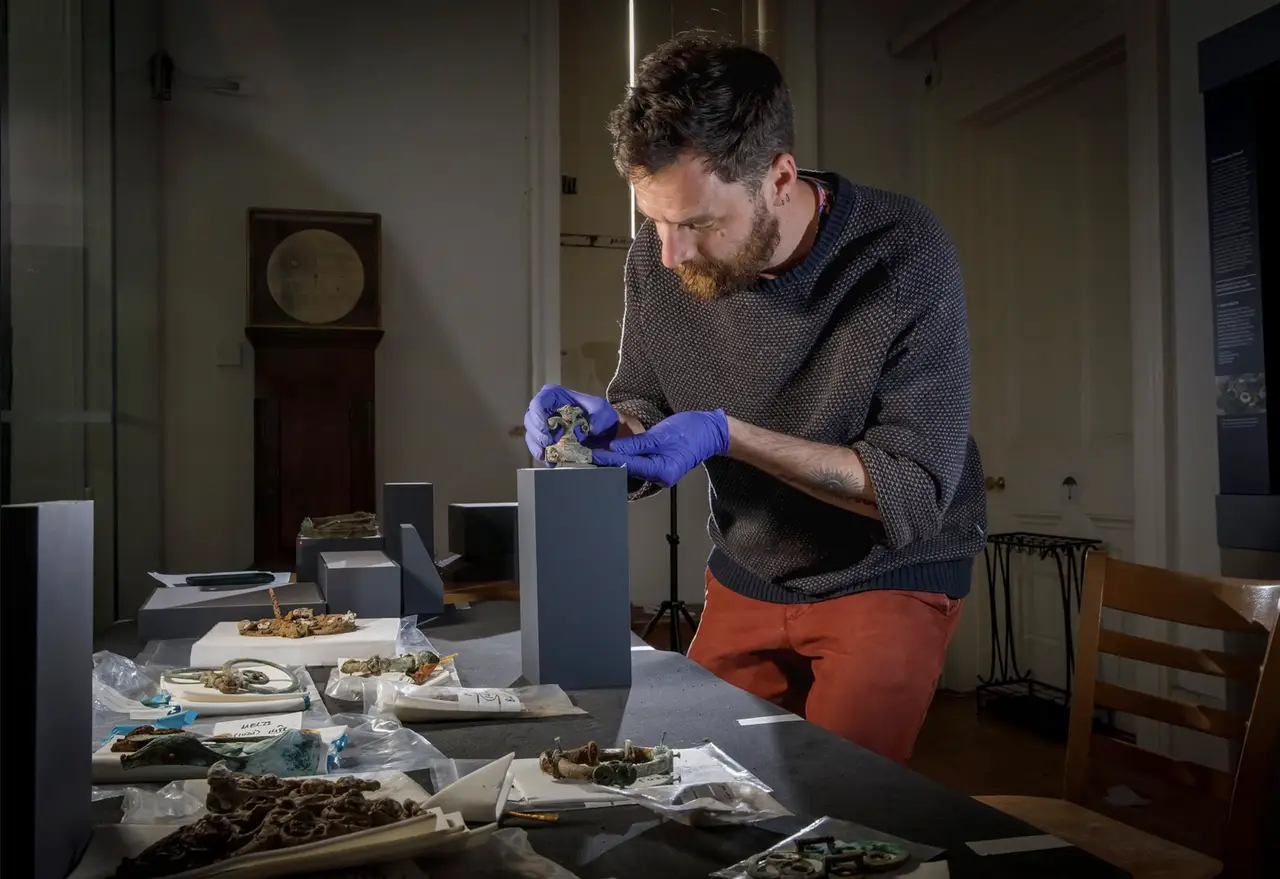
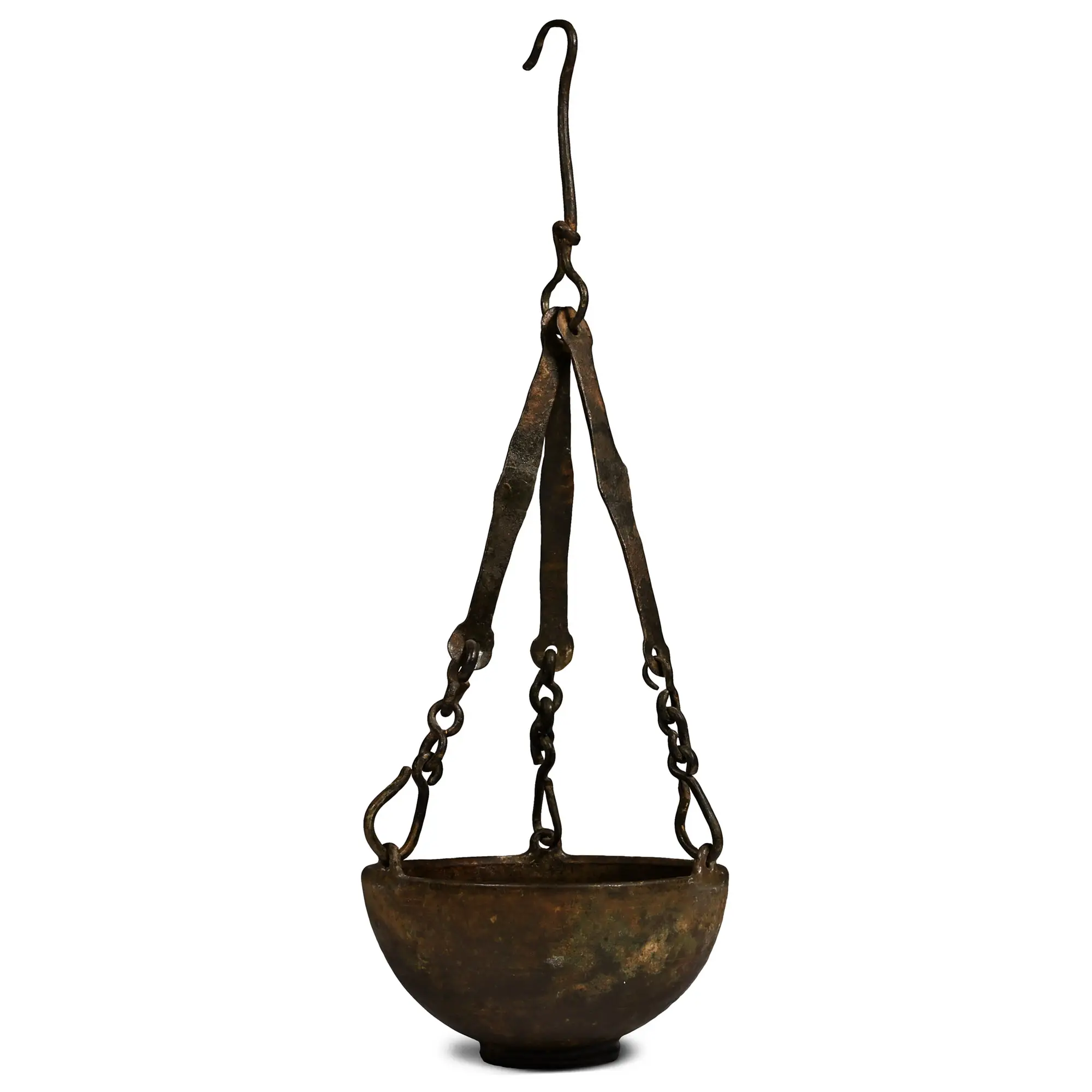
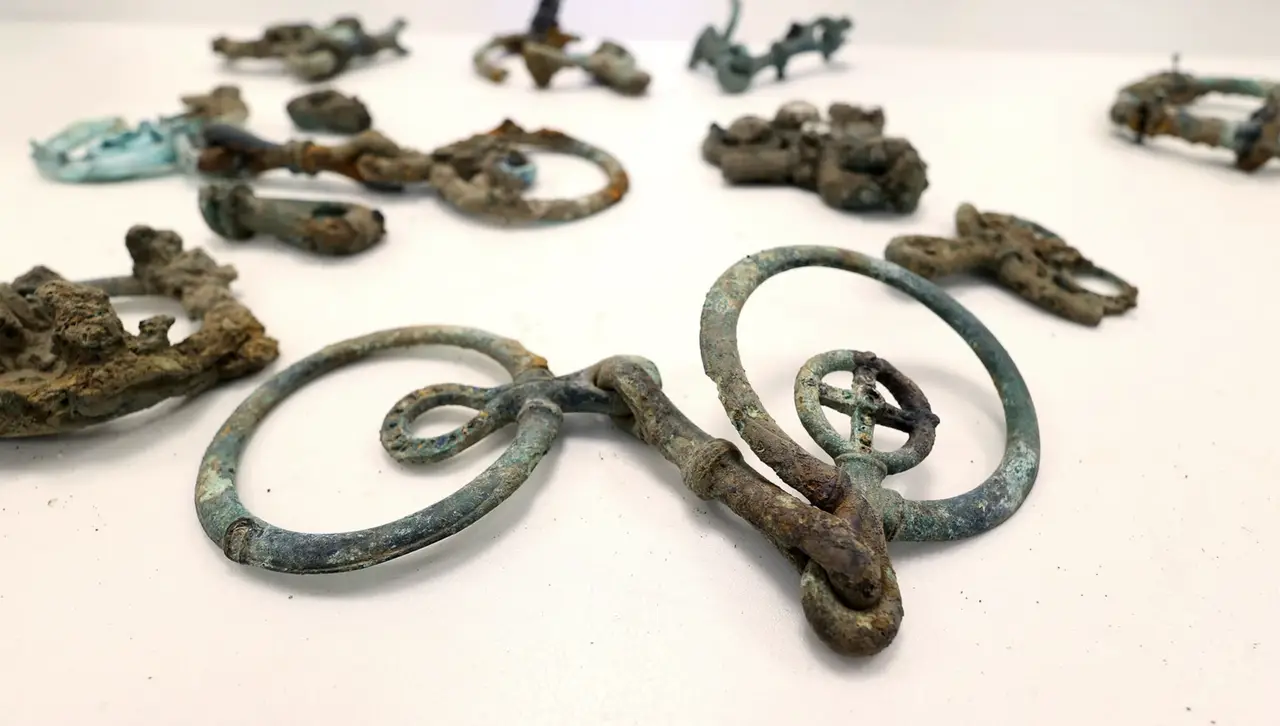
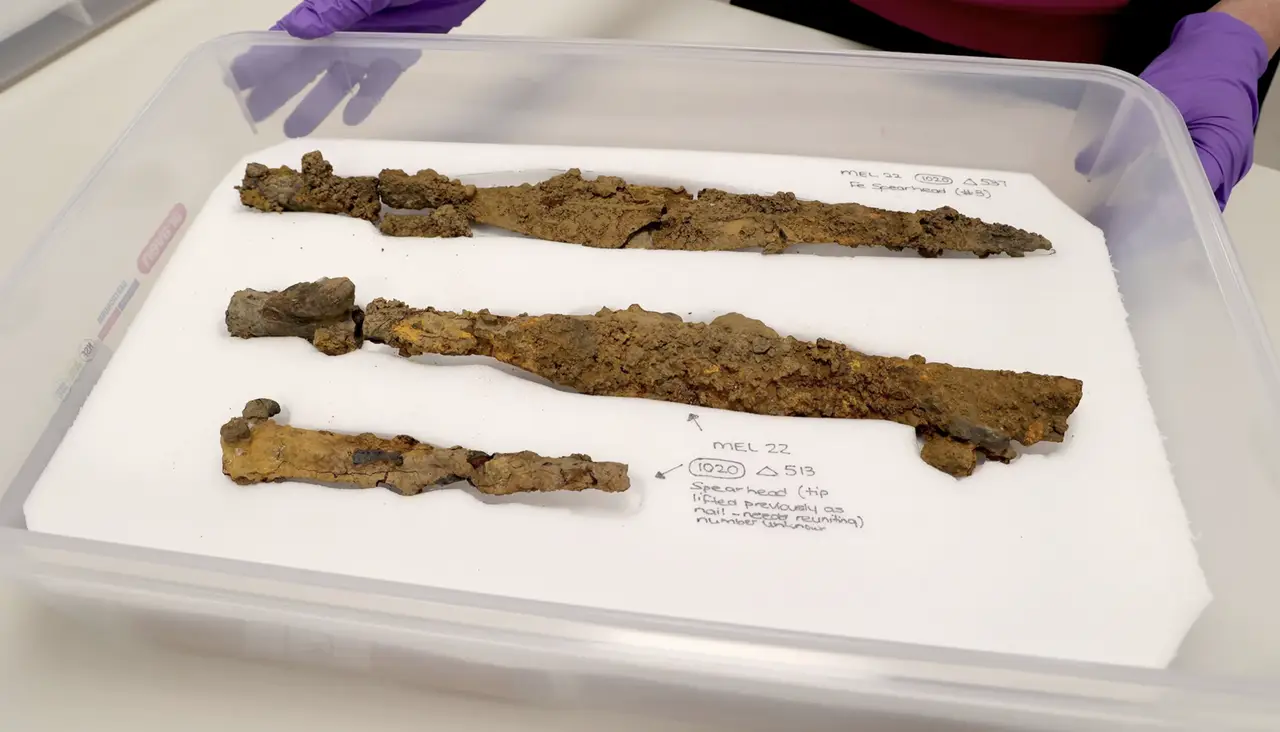
Moore and his team eventually extracted more than 900 objects from a ditch near the village of Melsonby in Yorkshire: horse harness fittings, iron wheel rims, spearheads, fragments of chariots, ornate jewelry, a large iron mirror, a flattened cauldron, and what may be a Mediterranean wine-mixing vessel. The objects date to the final decades of the British Iron Age, deposited around the turn of the first millennium, when the Roman Empire was casting its shadow across the English Channel. Even more puzzling than the hoard's sheer size is the condition of its contents. Nearly every object had been deliberately wrecked before burial. The iron tires were burned and bent. The cauldron was crushed flat. Whoever placed these treasures in the ground wanted them broken first.
![lump][lump.png]
Now known as the Melsonby Hoard, the find offers an unparalleled window into a society on the brink of transformation, one that left no written records of its own beliefs, politics, or rituals. What the ancient Britons thought about the Romans marching northward through Gaul, or why they chose to destroy and bury objects representing years of skilled craftsmanship, remains a matter of interpretation. The objects themselves are the only testimony.
A Society in Flux
The first century B.C. was a turbulent era for Britain. Settlement patterns shifted, burial customs evolved, and new types of food and drink appeared on the island. "We're looking at really rapid social change," says Rachel Pope, who studies Iron Age Europe at the University of Liverpool and was not involved in the Melsonby excavation. Hill forts, the massive earthwork strongholds that had served as social centers for centuries, began to lose their dominance. In their place rose a new kind of power center: fortified complexes that archaeologists call royal sites, or by the Latin term oppida.
The Melsonby Hoard was discovered near one of the most impressive of these sites, the sprawling earthwork complex at Stanwick. In the late Iron Age, Stanwick would have been an imposing sight, its enormous ramparts rising high against the Yorkshire sky. Excavations over the decades have turned up luxury goods imported from Rome, suggesting that whoever controlled this place was cultivating ties with the expanding empire. The site is associated with the Brigantes, a powerful confederation of tribes who dominated much of northern England.
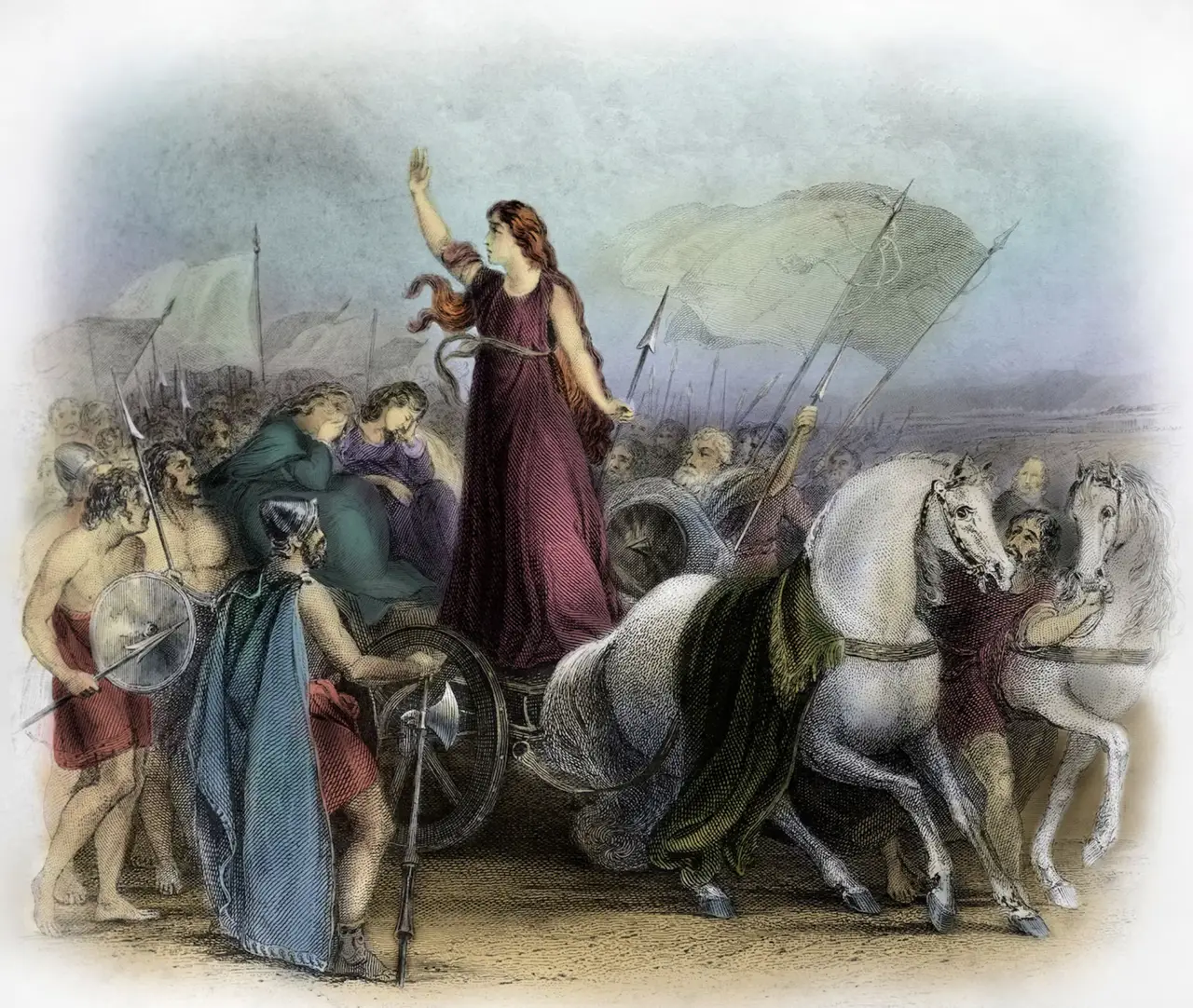
Roman sources describe the Brigantes as fractious, prone to internal conflict. The philosopher Seneca mentions that they carried blue shields. More intriguing still, the historian Tacitus identifies their leader as a woman: Queen Cartimandua. According to Tacitus, Cartimandua handed over the rebel king Caratacus to Roman authorities, a pragmatic move that aligned her with the conquerors rather than against them (a sharp contrast to her contemporary, the defiant Boudica). Tacitus, never one to resist a scandalous detail, also reports that Cartimandua later sparked civil war among the Brigantes by leaving her husband for his armor-bearer.
Beyond these fragments, our knowledge of the Brigantes is thin. They left no chronicles, no inscriptions. The Melsonby Hoard is now filling some of those gaps, its hundreds of objects forming a material record of the world that produced this formidable tribe and its powerful queen.
Inside the Hoard
The scale of the discovery became apparent almost immediately. "It truly is a spectacular, once-in-a-lifetime discovery, and we don't say that lightly," says Emily North, curator of archaeology at the Yorkshire Museum, where the hoard is currently held.
At Durham University, conservator Emily Williams was tasked with processing the objects as they arrived from the field. "Receiving the objects was a little bit like drinking from a fire hose," she says. "Every surface in my lab was covered in Melsonby objects."
The excavation team recovered two distinct deposits. The larger one resembled, in Moore's description, "a stack of tires, laid on top of each other, and in amongst that, it's just huge amounts of metalwork." The smaller deposit proved far trickier. At some point in antiquity, the objects had been bundled in textile and placed in the ditch together. Over two thousand years, the iron and copper alloy contents corroded into a single fused mass. Unable to separate the pieces on-site, the team wrapped the entire deposit in plaster bandage and lifted it from the soil in one piece, flipping it over like a Bundt cake sliding from its pan. They dubbed it "the Block."
Back in the lab, Williams used a paleontologist's tool called a velociraptor (named for its delicate vibrating action) to coax rocks and pebbles from around the Block's edges. The team also transported the entire mass, which weighed over 400 pounds, to a facility for CT scanning. The scans confirmed what they suspected: inside lay a dense concentration of objects similar to those in the first deposit. To excavate further would mean cutting through concretized metal. For now, the Block remains intact.
"It's still basically as it was when it went into the ground," Moore says. The jumbled silhouette visible in the scans, a tangle of half-recognizable shapes, offers a sense of what the people who buried these objects would have seen on that distant day: a metal boar's head, a bridle bit decorated with a starburst pattern, a leaf-shaped spearhead.
Across both deposits, researchers have catalogued horse harness equipment for at least fourteen ponies, along with the remains of multiple vehicles, including 28 iron tires. Some of those vehicle fragments suggest four-wheeled carts, a type previously unknown in Iron Age Britain. "We've never found any evidence of them at all in Britain," says Moore. "That's a first for Iron Age archaeology." Similar carts have been discovered in Germany and Denmark, where they appear to have served as funerary biers.
Craftsmanship and Continental Connections
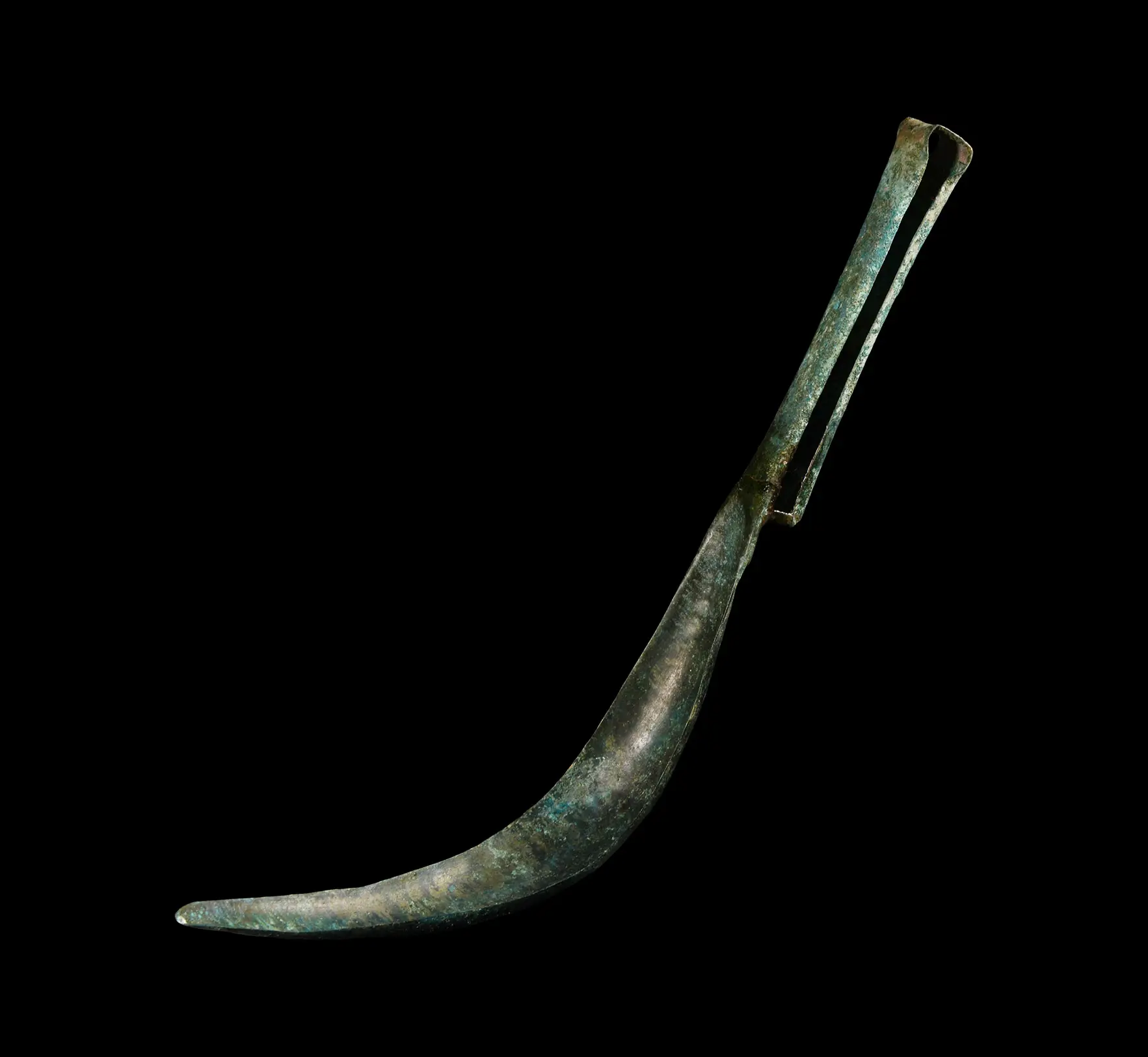
The objects in the Melsonby Hoard were not everyday tools. They were luxury items, the sort of possessions that would have signaled immense wealth and status. The copper alloy fittings are loaded with decorative elements, including coral imported from the Mediterranean, hundreds of miles to the south. The level of craftsmanship, from the intricate metalwork to the careful inlay of organic materials, represents untold hours of skilled labor.
That coral, faded now after two millennia in Yorkshire clay, points to something important: the people who assembled this hoard were connected to networks stretching far beyond the British Isles. Trade routes linked Iron Age Britain to the Continent, and through the Continent to the wider Mediterranean world. The presence of what may be a Roman-style wine-mixing vessel, if confirmed, would reinforce the picture of a society engaging with foreign goods and customs even before the legions arrived.
Yet these same people, whoever they were, chose to destroy these precious objects before consigning them to the earth. The deliberate wrecking, the burning and bending and flattening, suggests that the burial was no accident and no mere rubbish dump. This was an intentional act, laden with meaning that we can only guess at today. Ritual destruction of valuable goods appears in other Iron Age contexts across Europe, often interpreted as offerings to gods or spirits, a way of sending wealth to another world by breaking its usefulness in this one.
The Roman Shadow
The timing of the hoard's deposition adds another layer of intrigue. Julius Caesar launched military incursions into Britain in 55 and 54 B.C., probing expeditions that brought Roman soldiers to the island for the first time. Caesar's written account of the Britons drips with disdain: "Of the inlanders most do not sow corn, but live on milk and flesh and clothe themselves in skins. All the Britons, indeed, dye themselves with woad, which produces a blue color, and makes their appearance in battle more terrible."
Nearly a century passed before Rome mounted a full invasion under Emperor Claudius in A.D. 43. Even then, resistance was fierce. The revolt of Queen Boudica, who according to Tacitus burned multiple Roman towns to the ground, remains one of the most dramatic episodes in the history of Roman Britain. The Brigantes themselves would eventually clash with Rome, their independence eroding over the following decades.
Where does the Melsonby Hoard fit into this story? We cannot say for certain. The objects may have been buried in anticipation of Roman aggression, a desperate attempt to hide wealth from invaders. They may represent a ritual offering, perhaps connected to the political upheavals among the Brigantes that Roman sources describe. Or they may reflect customs and beliefs that have left no trace in the written record. The hoard's silence on its own meaning is, in some ways, its most eloquent feature.
From the Ground to the Collection
Objects like those in the Melsonby Hoard will remain in museum collections, preserved for research and public display. The Yorkshire Museum's acquisition ensures that this extraordinary assemblage stays intact and accessible to scholars for generations to come.
For collectors, however, the discovery offers a reminder of the richness of Iron Age material culture. While hoards of this magnitude are exceptionally rare, smaller objects from the same period, bridle bits, fibulae, decorative fittings, and tools, appear regularly in the marketplace. We see Iron Age metalwork pass through our cataloguing room with some frequency, from Celtic bronze pieces to later Romano-British items that reflect the cultural blending that followed the conquest.
Horse harness fittings, in particular, remain popular among collectors interested in ancient equestrianism and the warrior cultures of pre-Roman Europe. The decorative styles visible in the Melsonby material, the curvilinear patterns, the use of enamel and coral inlay, belong to a broader tradition of Celtic art that produced objects of striking beauty. Examples from this tradition, while seldom as elaborate as the Melsonby pieces, offer a tangible connection to the same world.
The hoard also underscores the importance of responsible detecting. The finder's decision to contact an archaeologist rather than excavate the material himself meant that crucial contextual information, the arrangement of objects, the stratigraphy of the deposits, the relationship between the two caches, was preserved. That information is what allows researchers to interpret the hoard as something more than a random scatter of old metal. Collectors and detectorists alike benefit when significant finds receive proper archaeological attention.
Browse our current catalogue for Celtic and Romano-British metalwork, including horse equipment, personal ornaments, and decorative fittings from the centuries when Rome and Britain first collided.
TimeLine Auctions, 19th March 2026