Home > Stories by TimeLine Auctions
Stories by TimeLine Auctions
A Roman Sarcophagus Spent Years as a Beach Bar Table Before Anyone Noticed
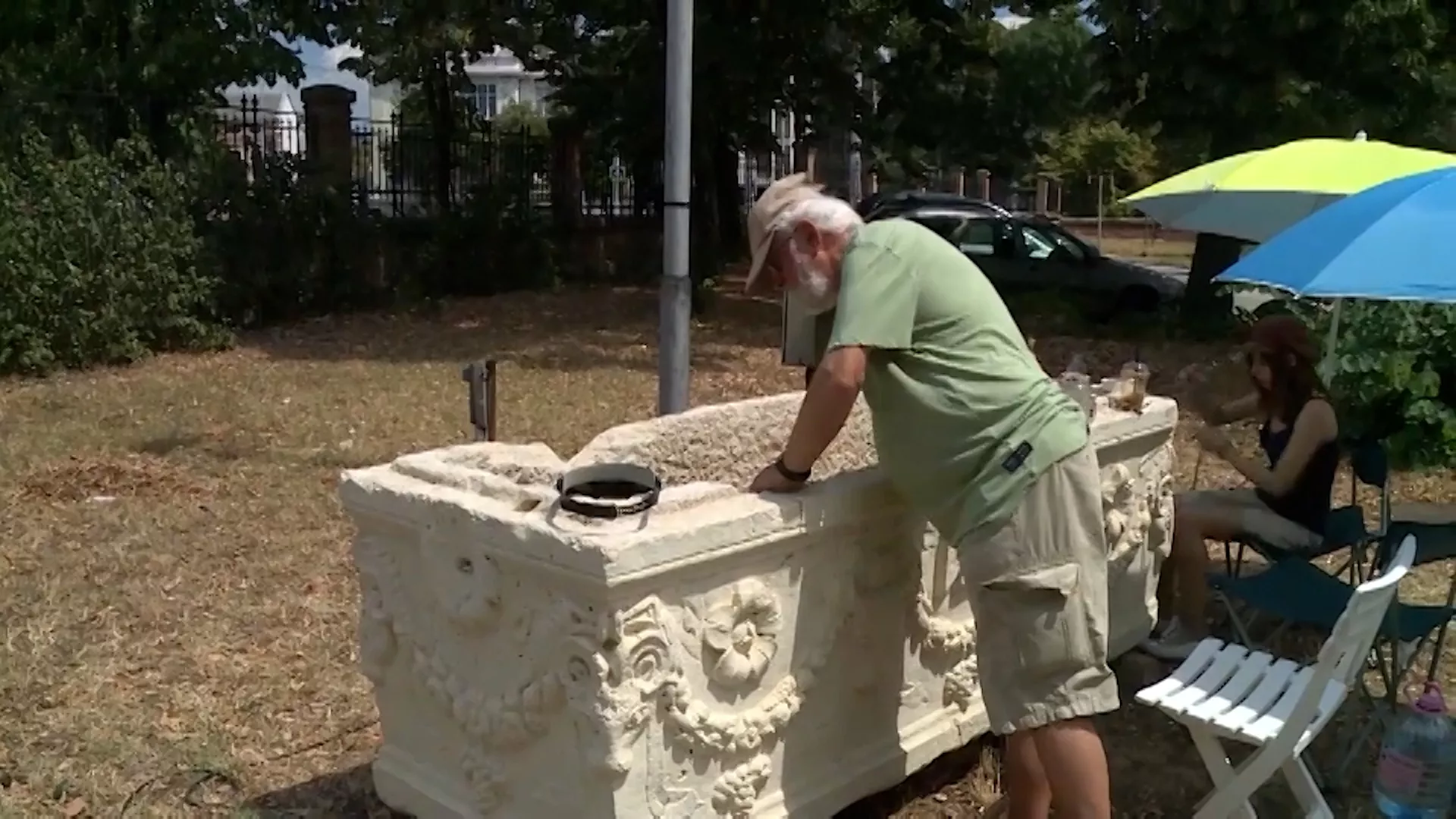
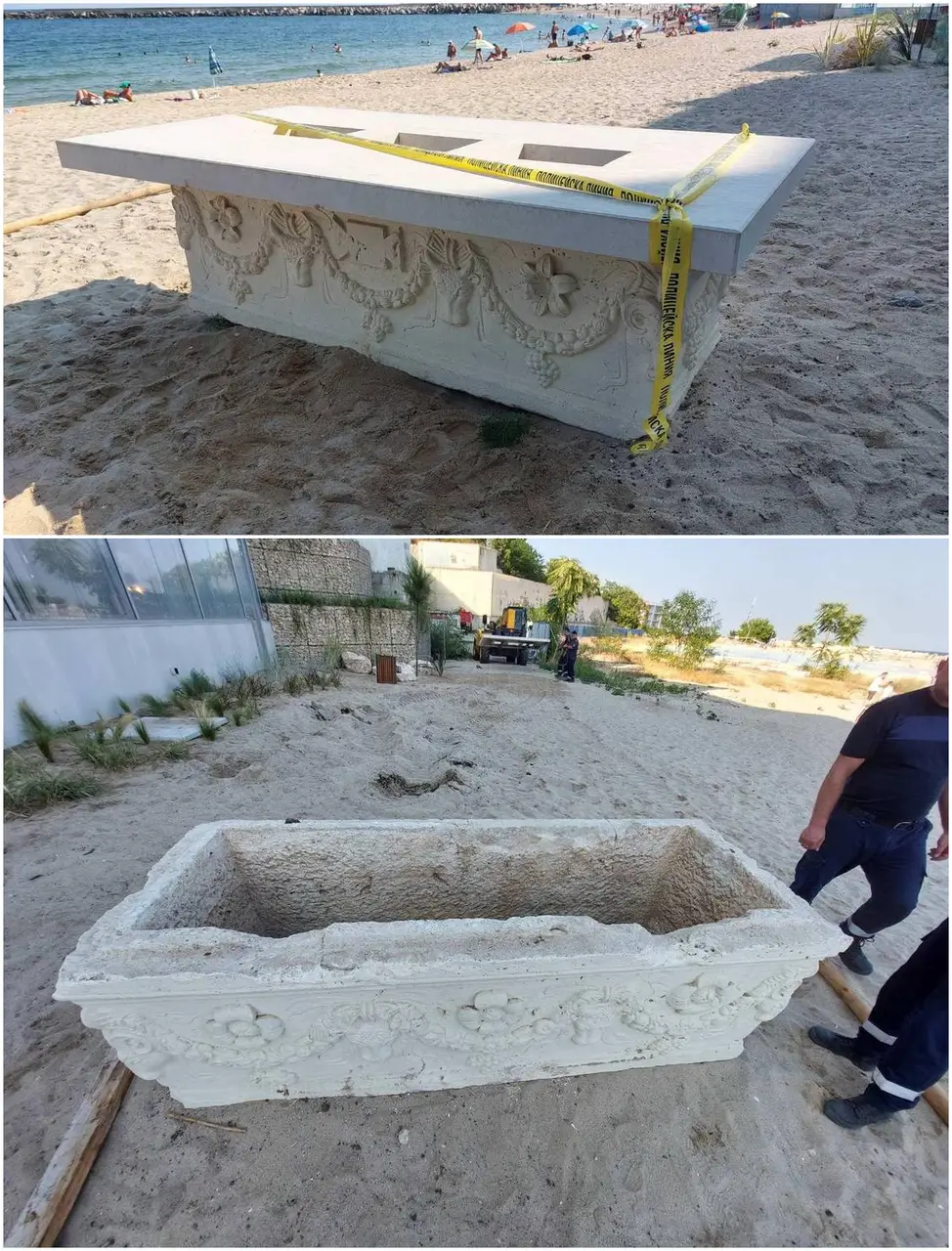
A 1,700-year-old Roman sarcophagus sat in full view of sunbathers and cocktail-sippers at a Black Sea beach club near Varna, Bulgaria, serving as an improvised bar table. For how long, no one is quite sure. The ornate stone coffin, decorated with carved garlands, animal heads, and rosettes, went unrecognised until a former police officer on holiday spotted it and alerted local authorities.
Archaeologists from the Regional History Museum in Varna subsequently examined the artefact and identified it as a "garland sarcophagus," a distinctly Roman funerary type characterised by sculpted swags of fruit and foliage draped between decorative supports. The limestone used in its construction is shelly and characteristic of quarries in northwestern Bulgaria, suggesting the coffin was carved locally during the Roman provincial period, likely in the 3rd or 4th century AD.
What the Carvings Tell Us
The sarcophagus bears relief decoration on all four sides, an indication that it was originally meant to be viewed in the round, perhaps placed in a family tomb or mausoleum rather than buried underground. Among the carved motifs is a labrys, the double-headed axe associated with religious and ceremonial symbolism across the ancient Mediterranean. Rosettes fill the spaces between garlands, a common Roman shorthand for the cycle of life, death, and rebirth.
Garland sarcophagi were popular across the Roman Empire from the 2nd century AD onward, with major production centres in Asia Minor, Greece, and the western provinces. Bulgarian examples, carved from local stone, represent a provincial tradition that adapted metropolitan fashions for regional patrons. According to archaeologist Alexander Minchev, all archaeological artefacts in Bulgaria legally belong to the state, regardless of where or how they are discovered.
From the Beach to the Museum
The case has since been referred to the Varna District Prosecutor's Office, which opened a pre-trial investigation into how a Roman coffin ended up as furniture at a seaside bar. With assistance from the Interior Ministry and heavy lifting equipment, the sarcophagus was transported to the Varna Archaeological Museum for proper conservation and study.
Minchev has called for a broader inquiry, suggesting this may not be an isolated incident. Bulgaria's Black Sea coast, home to the ancient Greek colony of Odessos (modern Varna) and numerous Roman-era settlements, is rich in buried heritage. Construction projects, beach development, and casual looting have all contributed to objects surfacing in unexpected places, sometimes ending up in private hands or, as in this case, repurposed without any recognition of their significance.
What Else Is Hiding in Plain Sight?
The Varna sarcophagus raises an uncomfortable question: how many other ancient objects are sitting unrecognised in gardens, basements, and beachfront establishments across the Mediterranean? Roman stonework, in particular, has a long history of reuse. Medieval churches incorporated Roman columns; Renaissance palaces were built with ancient spolia; Victorian rockeries were decorated with fragments of classical sculpture. The line between "salvage" and "loss" has always been blurry.
For collectors, the story is a reminder that ancient objects exist on a spectrum of visibility. Some emerge through controlled excavations and enter museum collections. Others surface through the art market, with documented provenance and legal export. And some, like this sarcophagus, simply wait to be noticed.
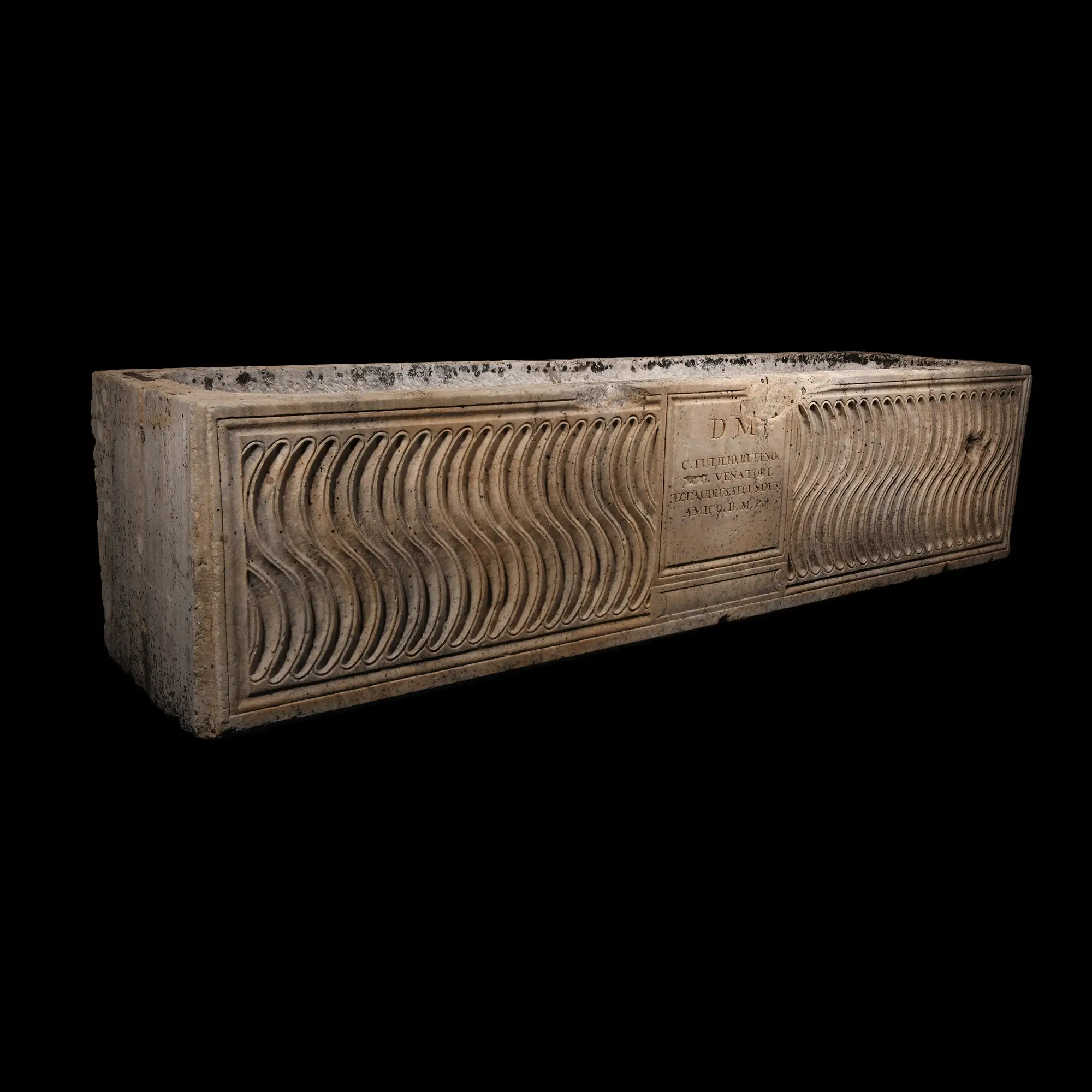
At TimeLine we usually handle sarcophagus fragments, though in 2022 were lucky enough to offer a complete Roman marble sarcophagus excavated near the Tomb of Cecilia Metella in Rome. This particular example dated to the 3rd century AD.
From the Ground to the Collection
While this particular sarcophagus will remain in Varna, smaller Roman funerary objects regularly appear in specialist sales. We see carved stone fragments, terracotta grave goods, and glass vessels from the Roman provinces pass through our cataloguing room with regularity. Bronze fittings, ceramic lamps, and coins deposited as grave offerings represent accessible entry points for collectors interested in Roman mortuary culture.
Objects like these connect us to the same world that produced the Varna sarcophagus: a world of provincial craftsmen, local patrons, and beliefs about death and memory that left a material trace across three continents.
Browse our current catalogue for Roman provincial antiquities, including funerary objects and decorative stonework.
TimeLine Auctions, 11th February 2026