Home > Stories by TimeLine Auctions
Stories by TimeLine Auctions
She Carried a Toddler Nearly a Mile Through Mammoth Territory and Left Her Footprints Behind
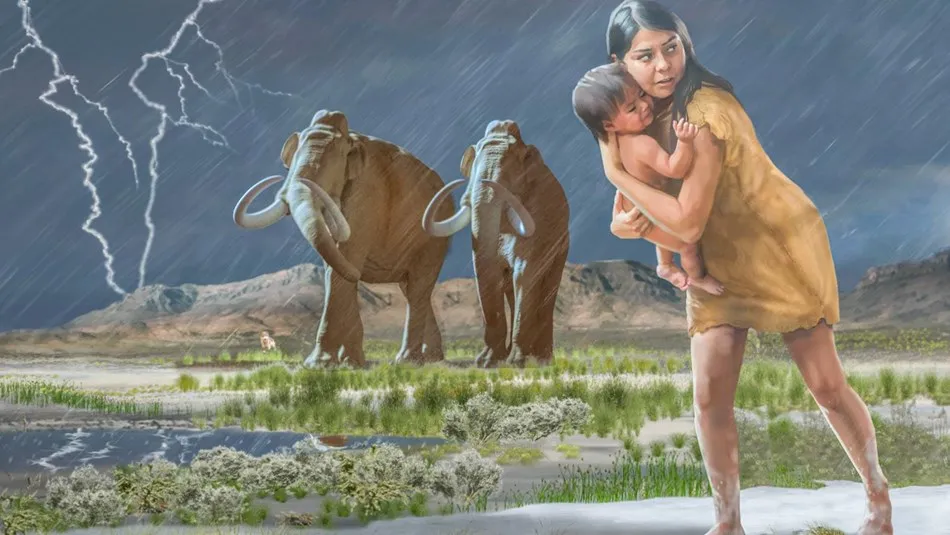
A single set of bare feet pressed into wet sand more than 10,000 years ago, each step carrying a small child northward through what is now White Sands National Park, New Mexico. The traveler moved quickly, around 3.8 miles per hour, slipping occasionally on the muddy surface as rain fell. Hours later, the same person returned south along the identical route, this time without the child.
That journey, captured in more than 400 fossilized footprints spanning nearly a mile, represents the longest human trackway of its age ever documented. A new study published in Quaternary Science Reviews details the find, which offers an unusually intimate glimpse into a single ancient life: the stride lengths, the toes sliding on slick ground, even the subtle asymmetry caused by balancing a toddler on one hip.
"I've never seen anything quite like it," says Kevin Hatala, an evolutionary biologist at Chatham University who was not involved in the research.
The trackway also preserves something the traveler likely never noticed: a woolly mammoth and giant ground sloth crossed their fresh prints while they were away, their massive footfalls now frozen in the same ancient sediment.
Ghost Tracks in the Desert
The prints belong to a larger trove of fossil trackways scattered across White Sands, an ongoing documentation effort led by David Bustos, the park's resource program manager. The impressions are notoriously difficult to spot. They appear only when moisture conditions shift just slightly, causing faint colour changes in the sediment that reveal what Bustos calls "ghost tracks."
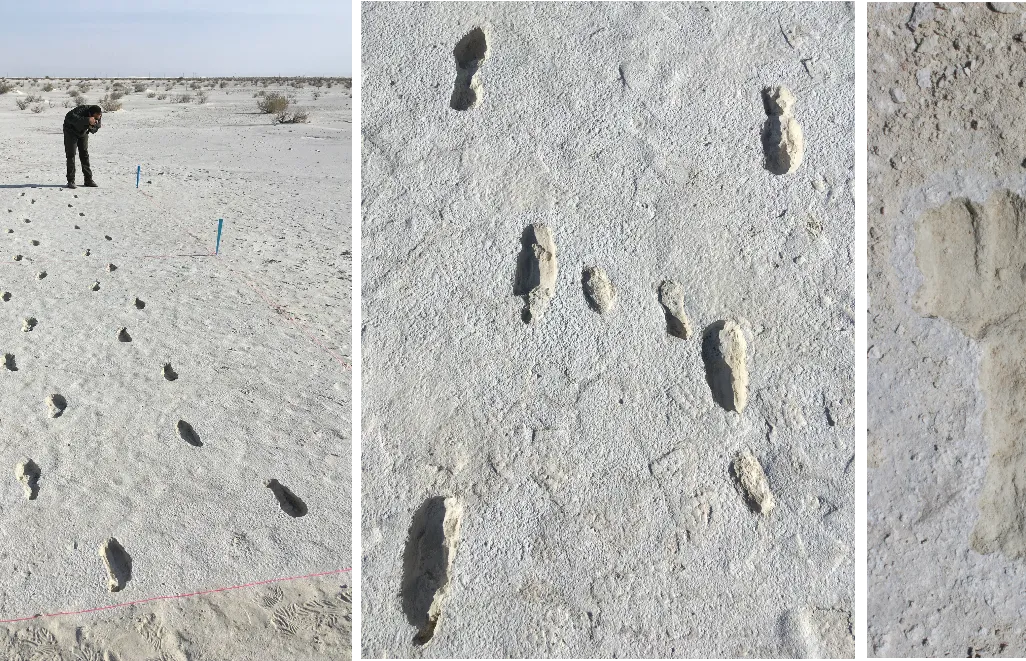
"He kept noticing these ghost tracks, these footprints, that were coming to light," says Sally Reynolds, a paleontologist at Bournemouth University and one of the study's authors.
In 2016, Bustos reached out to specialists including Matthew Bennett, a geologist at Bournemouth University, who became the lead author of the new study. Bennett and his team have since made multiple trips to the park, systematically recording prints (both human and animal) across its expanse.
The trackway in question is pressed into fine sand, held together only by a delicate salt crust. The researchers carefully excavated 140 of the prints using brushes, then raced to photograph each one before it disintegrated. Using a technique called 3D photogrammetry, they constructed detailed digital models from overlapping images.
"The minute we expose them, the race is really on to record them before they just disappear," Reynolds explains.
What the Footprints Tell Us
By analysing the size, shape, and spacing of the prints, the team reconstructed the ancient trek in striking detail. The primary track maker was likely a woman aged 12 or older, though a young man remains possible based on foot length comparisons with modern populations. At least three points along the northbound route, tiny prints appear alongside the main trackway, evidence of a child younger than three years old briefly set down on the ground.
The leftward footprints during the northbound journey are slightly larger than those on the right, a pattern consistent with carrying weight on one hip. The traveler's toes also slipped frequently on the wet surface, leaving banana-shaped drag marks. On the return trip south, the prints are more symmetrical and the slippage far less pronounced, suggesting the walker was no longer burdened.
Researchers had long speculated that asymmetrical prints might indicate load-carrying, but direct evidence remained scarce. "In this particular case, you see the footprints of a child suddenly appear partway through," Hatala notes, offering rare confirmation of the hypothesis.
The traveler's unusually long strides at certain points suggest they stepped or leapt over obstacles. "It could be puddles," Reynolds says. "It could be wet mammoth poo."
A Sloth Takes Notice
The animal tracks layered over and under the human prints allowed the team to establish a rough timeline. After the northbound leg of the journey, a mammoth ambled across the fresh impressions, apparently unconcerned about possible human presence nearby. A giant ground sloth did the same, though its behaviour differed noticeably. The sloth's prints suggest it paused, reared up on two legs, and may have sniffed the air for human scent, much like a modern bear encountering an unfamiliar trail.
"It gives us a sense of humans within their ancient ecosystem," Reynolds says. "That's an idea you wouldn't get from bone."
When the traveler returned south, their prints cut directly into the mammoth and sloth tracks, proving all the impressions were laid down within hours, before the mud fully dried. The presence of these extinct megafauna places the journey firmly in the late Pleistocene, at least 10,000 years ago.
'Just Like Us'
The destination of the trek remains unknown. The prints continue northward into what is now the White Sands Missile Range, which is off-limits to researchers. But the traveler's confident, direct path suggests familiarity with the route, perhaps heading toward the camp of another family or hunting party.
"There was no dithering around, getting lost," Reynolds says.
What happened to the child also remains a mystery. The toddler was carried north and, evidently, left behind. Whether this represented a routine exchange between caregivers or something more urgent, the trackway cannot say.
William Harcourt-Smith, a paleoanthropologist at the City University of New York who was not involved in the study, notes that the behaviour itself is unsurprising: humans carry children, as do our ape relatives. But the tangibility of the evidence creates a connection across millennia.
"It's a reminder that these people were just like us," Harcourt-Smith says. "Maybe different individual daily stresses, we don't have mammoths walking around, but they're walking around the landscape in the same way we would."
From the Ground to the Collection
Fossil footprints, unlike skeletal remains or stone tools, capture behaviour in real time. They show not what an ancient person possessed, but what they did: how they moved, how fast, what they carried, and who (or what) they encountered along the way.
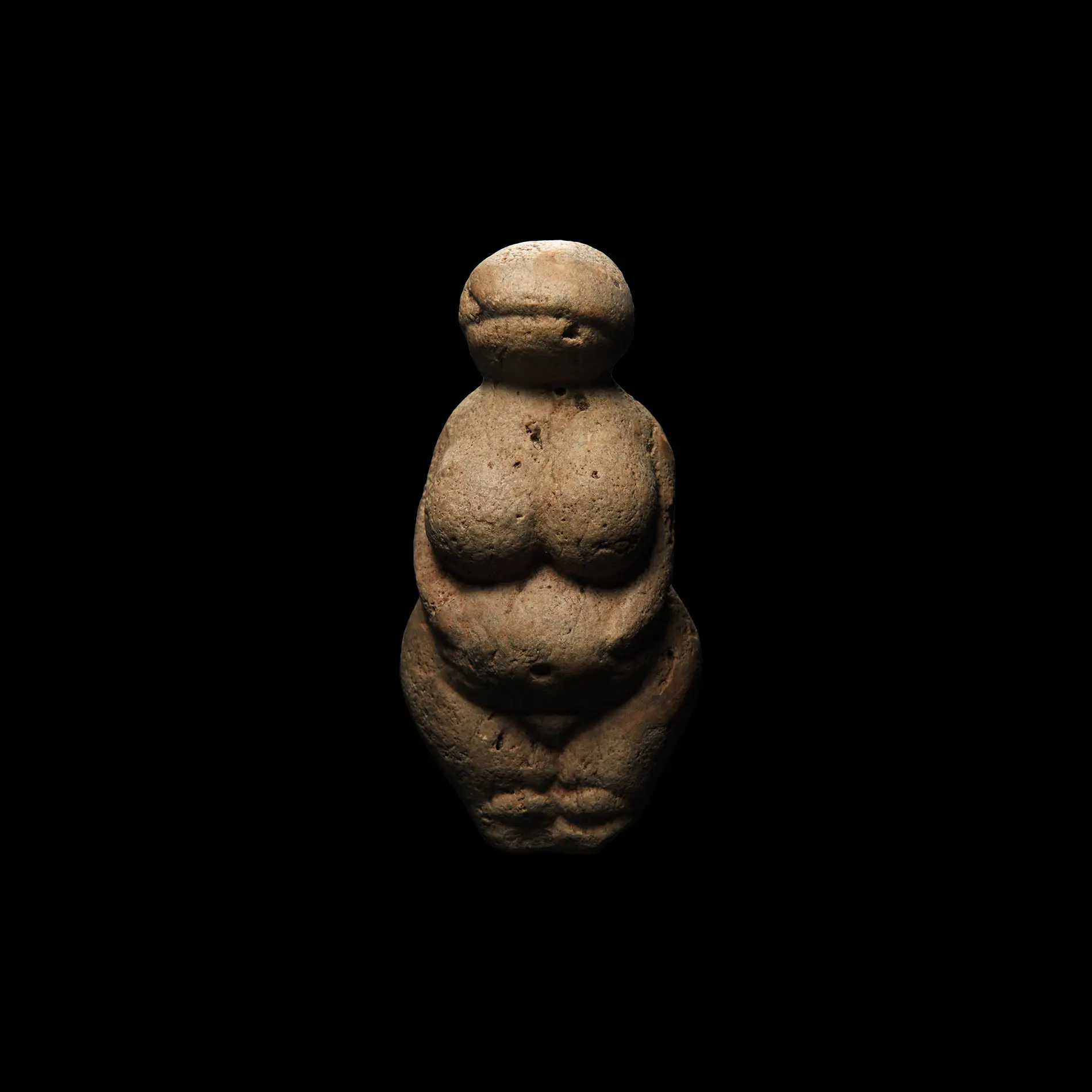
While trackways like the one at White Sands will remain preserved in situ for scientific study, the broader category of Pleistocene material does occasionally reach the market. Mammoth ivory, in particular, surfaces with some regularity, as do teeth and bone fragments from other Ice Age megafauna. We occasionally handle such pieces at TimeLine, objects that connect collectors directly to the same world this ancient traveler walked through, toddler on hip, rain in face, sloth watching from the distance.
Browse our current catalogue for prehistoric and natural history lots from similar periods.
TimeLine Auctions, 25th February 2026