Home > Stories by TimeLine Auctions
Stories by TimeLine Auctions
The Art of Finding Bargains: Hunting for Undervalued Antiquities
A word before we begin: This article assumes you've already developed a basic familiarity with the antiquities market. If you're entirely new to collecting, we'd recommend starting with our introductory series for new collectors, which covers the fundamentals of authentication, provenance, and building your first pieces. What follows requires you to have spent some time looking at objects, comparing prices, and developing an eye for what interests you. If you've done that groundwork, read on.
Why "Bargain Hunting" Isn't for Everyone
Let's be direct: we don't always recommend bargain hunting as a strategy for building a collection. Some collectors are better served by identifying the finest examples they can afford in a category they love, paying fair market value, and assembling a coherent collection over time. We've written extensively about these approaches in our "The Art of Collecting" series, which features interviews with collectors who've taken very different paths. If you haven't explored that series, it's worth your time.
That said, there's a particular satisfaction in finding something genuinely undervalued, an object whose historical significance or aesthetic quality hasn't yet been reflected in its price. For collectors who enjoy research, who find pleasure in the hunt itself, this approach can be deeply rewarding. The key is understanding that bargain hunting requires more work, more patience, and more willingness to be wrong. You'll pass on many lots. You'll occasionally misjudge. But when it works, you'll own something remarkable for far less than it deserves.
Understanding Market Trends: Where Value Hides
The antiquities market, like any market, moves in cycles. Categories fall in and out of fashion, sometimes for reasons that have nothing to do with the intrinsic quality or historical importance of the objects themselves. A major museum exhibition can spark renewed interest in a previously overlooked civilization. A prominent collector's estate sale can flood the market with a particular type of object, temporarily depressing prices. Understanding these dynamics is the first step toward finding value.
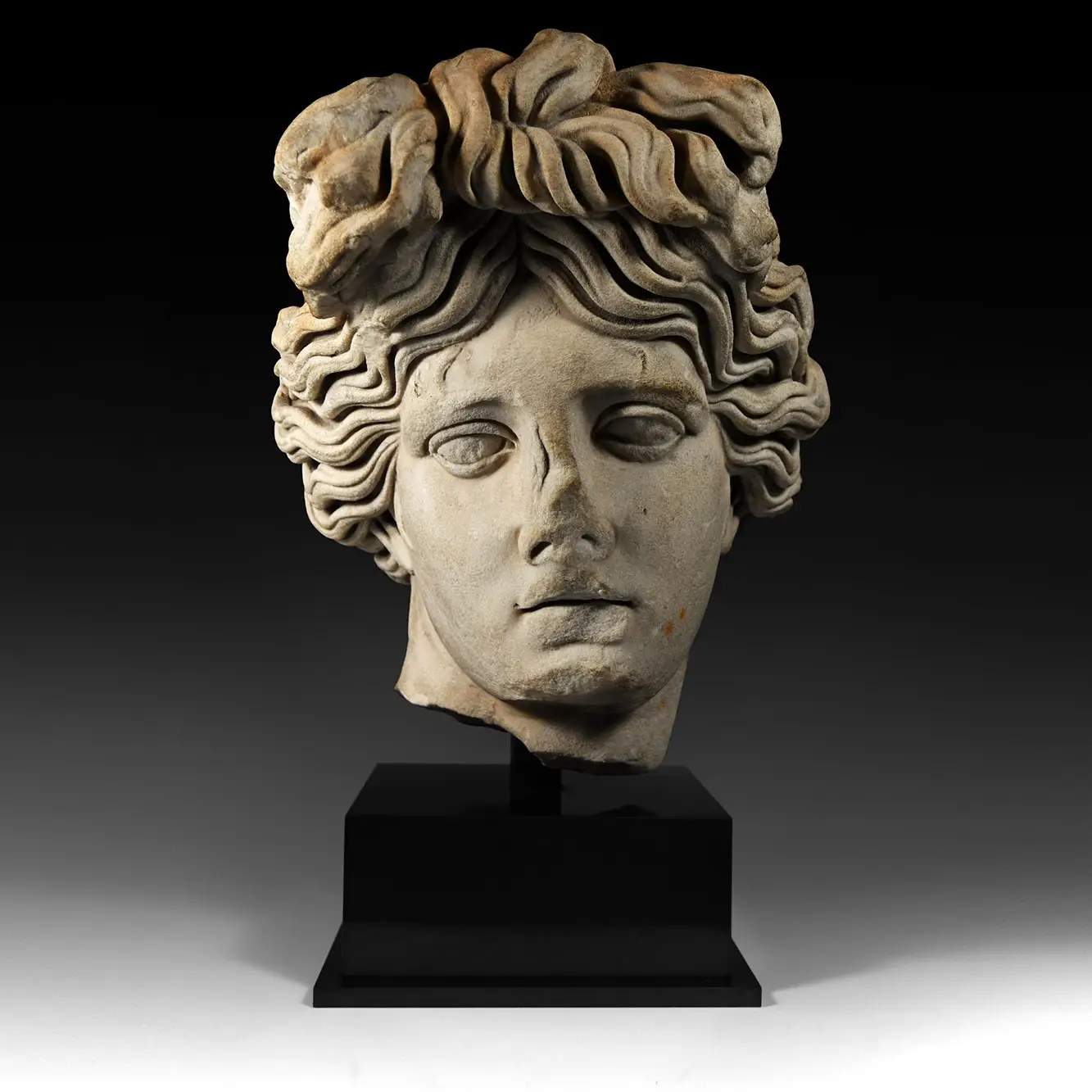
We often see new collectors gravitate toward the "famous" categories: Greek marble, Egyptian gold, Roman imperial portraits. These are beautiful objects, and there's nothing wrong with wanting them, but they're also the most competitive segments of the market. Experienced collectors and institutions are watching the same lots you are, and they have deeper pockets. Meanwhile, entire civilizations remain comparatively affordable simply because fewer people are paying attention.
Consider, for example, Greek Apulian vessels. These objects are historically significant, often beautifully made, and available at a fraction of what comparable Greek Attic or Egyptian pieces would command. Why? Fashion, mostly. The collectors who specialized in these areas a generation ago are aging out of the market, and younger collectors haven't yet discovered them. That's an exciting opportunity.
So how do you identify these pockets of value? Start by asking yourself a few questions:
- Is this category associated with a "less famous" civilization? Objects from Mesopotamia, the Levant, the Eurasian steppes, and pre-Columbian cultures often sell for less than their Mediterranean counterparts, despite being equally significant.
- Has this type of object been out of fashion for a decade or more? Market trends are cyclical. What was overlooked yesterday may be rediscovered tomorrow.
- Are there fewer specialist collectors competing for these pieces? When a field has only a handful of serious collectors, prices stay modest. When one of those collectors passes away and their collection comes to market, prices can drop further still.
We remember a client several years ago who built an extraordinary collection of Greek Apulian antiquities precisely because he recognized that the field had few active buyers. He acquired museum-quality pieces at prices that would have been impossible in more competitive categories. When scholarly interest eventually revived, his collection had appreciated significantly, but more importantly, he owned objects he genuinely loved.
Research Techniques: Doing Your Homework
Finding undervalued antiquities requires research, and we mean genuine research, not a quick glance at the lot description. The collectors who consistently find value are the ones who've invested time in understanding what they're looking at.
Auction Records
Start with auction records. Most major auction houses, TimeLine included, maintain searchable archives of past sales. When you see a lot that interests you, search for comparable pieces that have sold in the last five to ten years. What did they bring? How does the current estimate compare? If similar objects have consistently sold above estimate, that tells you something about demand. If they've frequently gone unsold or sold below estimate, that's a different signal entirely.
Be careful, though: not all comparisons are equal. An object's size, condition, provenance, and aesthetic quality all affect price. A small bronze with a chip isn't comparable to a pristine larger example just because both are "Roman bronzes." You need to develop an eye for meaningful distinctions.
Museum Collections
Museum collections are invaluable for calibrating your eye. Spend time, either in person or through online databases, looking at the finest examples of whatever category interests you. What makes a great example great? Once you can articulate what distinguishes a masterpiece from an ordinary piece, you're better equipped to recognize when something exceptional is being offered at an ordinary price.
Many museums also publish their acquisition records, which can reveal what institutions considered worth acquiring and, sometimes, what they paid. This is particularly useful for understanding provenance standards and the types of documentation that serious buyers expect.
Scholarly Resources
Academic publications can seem intimidating, but they're often more accessible than collectors assume. Look for exhibition catalogues, which typically combine beautiful photography with accessible scholarship. Corpus volumes (comprehensive catalogues of a particular type of object) are especially useful because they allow you to see the full range of what exists and where the current lot fits within that spectrum.
A word of caution: scholarly resources can also reveal when something is rarer or more significant than the auction estimate suggests. We've seen collectors acquire pieces for modest sums that turned out to be unpublished types or important additions to the scholarly record. This is the best kind of surprise.
Condition and Provenance: The Two Factors That Move Prices Most
If you want to find undervalued antiquities, you need to understand how condition and provenance affect pricing, because these two factors account for most of the variation you'll see between similar objects.
Condition
Condition is straightforward in principle but subtle in practice. Obviously, a complete, undamaged object commands a premium over a fragmentary or restored one. But the market's tolerance for condition issues varies enormously by category. Ancient glass, for instance, is expected to show iridescence and surface weathering; a "perfect" piece might actually raise suspicions. Roman bronze surgical instruments are often corroded but remain highly desirable. Greek pottery, by contrast, is judged harshly for restoration, and even expert repairs can significantly reduce value.
Before bidding on any lot, request a condition report. We can't stress this enough. Photographs, however good, don't tell the whole story. A condition report will detail any restoration, repairs, chips, cracks, or other issues that might affect value. At TimeLine, we're always happy to provide these, and we encourage you to ask questions if anything in the report is unclear. There's no such thing as a naive question when you're about to spend money.
Here's a checklist to work through before you bid:
3 Things to Check Before Bidding
- Have you requested and carefully reviewed the condition report?
- Do you understand how much restoration or damage is typical (and acceptable) for this category?
- Have you compared this object's condition to similar pieces that have sold recently, and does the estimate reflect any condition issues?
Sometimes condition issues create opportunity. An object with minor, acceptable damage may be estimated conservatively because the auctioneer anticipates buyer hesitation. If you've done your research and know that such damage is common and doesn't materially affect desirability, you may face less competition.
Provenance
Provenance (the documented ownership history of an object) has become increasingly important in the antiquities market, and rightly so. Objects with clear, documented provenance dating to before the 1970 UNESCO Convention are more desirable, more liquid, and less likely to present legal complications. This is especially true for objects from source countries with active cultural patrimony enforcement.
But provenance also creates pricing disparities that the informed collector can exploit. An object with impeccable provenance (say, a piece from a famous collection formed in the 19th century) will command a substantial premium. An object with adequate but unremarkable provenance (legally exportable, properly documented, but without a distinguished pedigree) will sell for less. If you're comfortable with "adequate," you can often acquire comparable pieces at lower prices.
We should note: "adequate" does not mean "questionable." We're not suggesting you take legal risks. We're pointing out that the market pays a premium for prestige provenance, and collectors who don't require that prestige can find value.
The Secret After the Hammer Falls: Unsold Lots
Here's something auction houses don't always advertise: the auction doesn't end when the hammer falls. When a lot fails to sell (either because bidding didn't reach the reserve or because no one bid at all), that object doesn't simply disappear. It remains available, often at a negotiable price.
This is where some of the best deals in the antiquities market can be found.
We have a friend, a dedicated collector of Apulian pottery, whose entire acquisition strategy revolves around unsold lots. He attends the auction, notes what didn't sell, and then contacts us afterward to enquire about availability. Some consignors maintain firm reserves and won't negotiate; that's their prerogative. But many are motivated sellers who would rather accept a reasonable offer than ship the object home unsold. We can always ask on your behalf, and you might be surprised how often the answer is yes.
Why do lots go unsold? The reasons vary:
- The estimate was optimistic. Sometimes we or the consignor misjudge the market. An unsold lot isn't necessarily a flawed object; it may simply have been priced too high.
- The timing was wrong. Perhaps the auction fell during a holiday period, or competing sales drew away potential bidders. Market conditions fluctuate.
- The lot was overlooked. In a large auction, some pieces simply don't get the attention they deserve. A small but fine object buried in a long catalogue may not attract the bidders it would in a more focused sale.
If you're interested in pursuing unsold lots, here's our advice: attend (or follow online) auctions in categories that interest you, even if nothing in the current catalogue excites you enough to bid. Take notes on what sells and what doesn't. After the auction, contact us to enquire about availability and pricing on the unsold lots. Be prepared to move reasonably quickly, as other collectors may have the same idea, and be realistic in your offers. This isn't a negotiation where lowballing works; consignors know what their objects are worth. But a fair offer below the failed auction estimate can often succeed.
Putting It Into Practice
The concepts we've outlined (market awareness, research, condition assessment, provenance evaluation, and post-auction negotiation) are only useful if you apply them. And the best way to apply them is to look at objects. Lots of objects.
We'd encourage you to browse the current TimeLine catalogue with these principles in mind. Pick a category that interests you and ask yourself: Is this a competitive area or an overlooked one? Look at the estimates and compare them to your sense of comparable sales. Read the condition reports. Examine the provenance statements. You don't need to bid; you're training your eye.
If you haven't already, consider registering for our upcoming auction, even if you don't plan to participate actively. Following an auction in real time teaches you things that studying past results cannot. You'll see which lots attract competitive bidding and which go quietly. You'll develop intuitions about how the market values different qualities. And when you're ready to bid, you'll do so with confidence.
A Final Thought
Bargain hunting in the antiquities market rewards patience, knowledge, and a willingness to look where others aren't looking. It's not a shortcut; if anything, it requires more effort than simply buying the best you can afford. But for collectors who enjoy the process, who find satisfaction in research and discovery, it offers a path to owning remarkable objects at prices that reflect your effort rather than just your budget.
We're here to help. If you have questions about a lot, want to discuss market trends in a category that interests you, or want to enquire about an unsold piece, get in touch. That's what we're here for.
TimeLine Auctions, 12th February 2026