Home > Stories by TimeLine Auctions
Stories by TimeLine Auctions
The Boy is Beautiful: Love, Rules, and the Evidence of Greek Vases
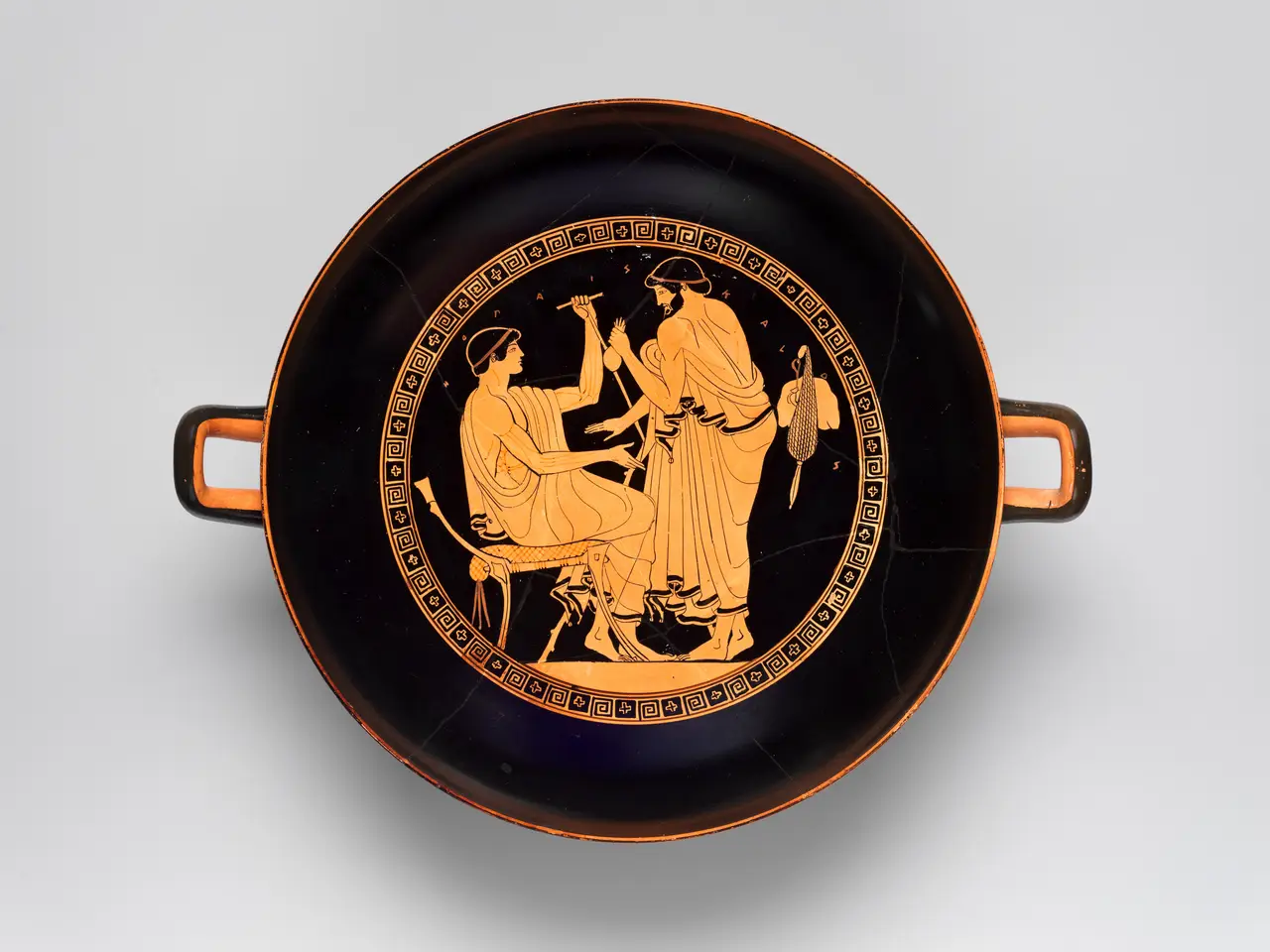
Ho pais kalos. The words appear scratched into the curved surface of a wine cup, following the outline of two figures reaching toward one another. Translated, they mean simply: "the boy is beautiful." This phrase, or variations of it, appears on approximately twenty percent of all surviving Greek vases. Twenty percent. Consider what that means: of the thousands of painted vessels that have come down to us across two and a half millennia, one in five carries this inscription, often with no apparent connection to the scene depicted. The Greeks were not subtle about what occupied their thoughts during long evenings of wine and conversation.
These inscriptions derive from a real practice. Archaeological evidence and literary references confirm that Ancient Greeks wrote "so-and-so is beautiful" on walls, trees, and any available surface, much as lovers have carved initials into bark throughout human history. When potters began adding these phrases to their work, they gave symposium guests the opportunity to read them aloud, praising either a beautiful youth depicted in the imagery or, more pointedly, a beautiful youth seated across the room. The kalos inscription is not merely decoration. It is social script, embedded in clay.
A Society Without Scripture
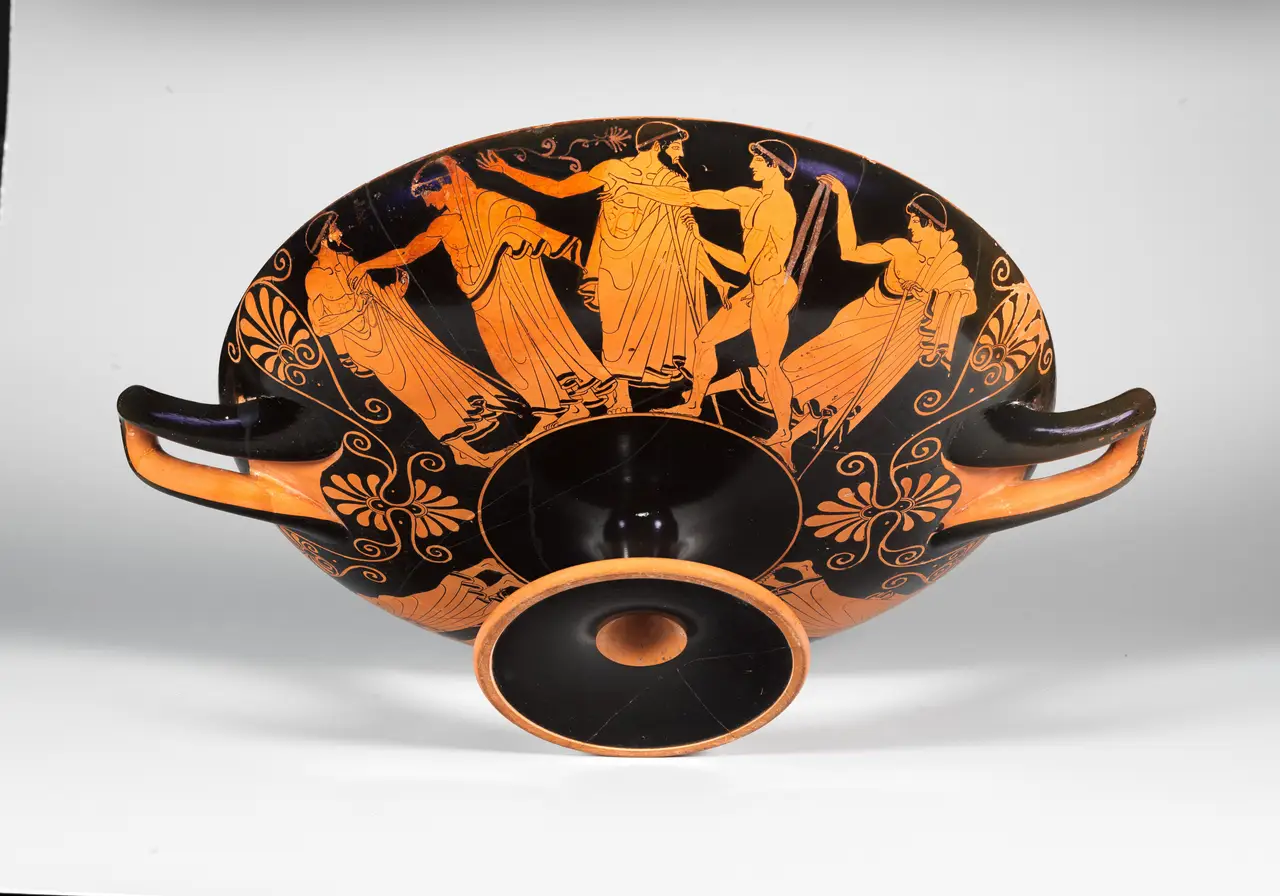
To understand what these vases show us, we must first understand what the Greeks lacked. There was no Bible in Ancient Greek religion, no central authoritative text laying down commandments about proper conduct. Ethics, while important to Greek thinkers, connected only tangentially to religious practice. The rules governing sexuality were not sanctified. Breaking them was not a sin. No one risked hellfire.
Laws about sexuality were equally sparse. In Athens, the law on hubris covered rape, though perhaps inconsistently, and there were statutes addressing adultery. Regarding same-sex relations, a man who had worked as a prostitute in his youth could not speak in the assembly, as we learn from Aeschines' famous prosecution of his political opponent Timarchus. A law from Hellenistic Beroea in Macedonia banned youths from mixing with boys in the gymnasium, possibly as protection against seduction, though the text never says so explicitly. Beyond these scattered examples, sexuality was largely not a matter for legislators.
What did the Greeks have instead? Custom. Nomos. The classicist Andrew Lear, whose research informs much of what follows, suggests a useful analogy: Ancient Greek society operated rather like a high school. What mattered was being cool. Doing, or being thought to do, whatever was cool. Those who violated custom, or were merely thought to violate it, faced the punishment that matters most to adolescents and apparently mattered equally to Athenian gentlemen: mockery, exclusion, shame.
Such a system is looser than anything codified in scripture or statute. Cool and uncool are flexible concepts. Once established as respectable, a person could often bend the rules without consequence. The boundaries existed, but they could be crossed by those with sufficient social capital.
The Iconography of Wanting
Greek vase painters developed a sophisticated visual vocabulary for depicting desire. The most common theme, appearing in over a thousand surviving examples, shows gift-giving: a bearded adult man (erastes, meaning lover) offers an animal or object to a beardless youth (eromenos, the beloved). Fighting cocks appear most frequently. Hares, useful for hunting practice, are also common. Flowers make occasional appearances, their meaning as transparent then as now.
These scenes are set in the gymnasium, indicated by the nudity of both figures and often by athletic equipment, discuses or javelins, visible in the background. The connection is deliberate. Nude athletics was one of the practices Greeks considered distinctively their own, proof of their superiority over other cultures. By embedding courtship within this context, painters placed it among the activities that defined elite Greek manhood: athletics, hunting, preparation for combat.
The scholar John Beazley identified another recurring composition, which he termed the "up and down scene." In these images, the erastes reaches with one hand toward the eromenos's chin while his other hand gestures toward the youth's genitals. The down gesture requires little interpretation. The up gesture is more interesting. In other Greek contexts, reaching for someone's chin signals supplication, a gesture of begging. The combination suggests lust paired with pleading. Literary evidence supports this reading: young men were expected to refuse suitors until they found the right one, just as women in later Western cultures were trained to do. The idealized erastes does not take. He asks.
What the Satyrs Do
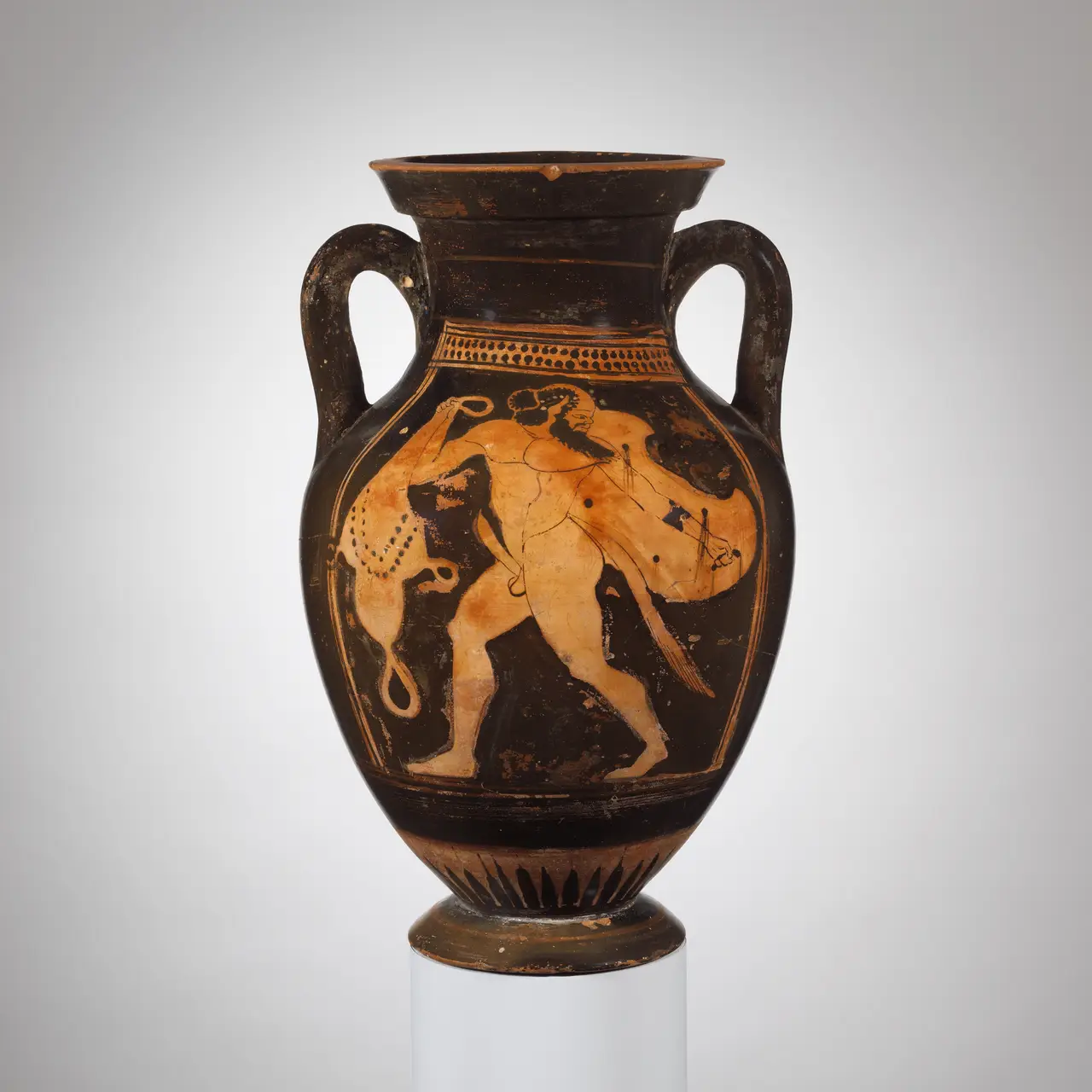
If courtship scenes show what respectable men should do, satyr scenes show the opposite. These half-man, half-goat creatures, possibly invented by artists themselves, embody the failure of self-control that Greeks considered the foundation of masculine virtue. Satyrs drink too much. They display desires that a gentleman would suppress. They attempt, like Zeus in the myth of Ganymede, to seize their objects of desire by force, but lacking divine power, they simply look ridiculous.
One visual marker separates satyrs from idealized men in courtship scenes: erections. Vase painters did not depict respectable figures aroused. Satyrs, however, routinely sport them, along with every other sign of uncontrolled appetite. The contrast establishes the boundary between acceptable and shameful desire not through written prohibition but through visual ridicule.
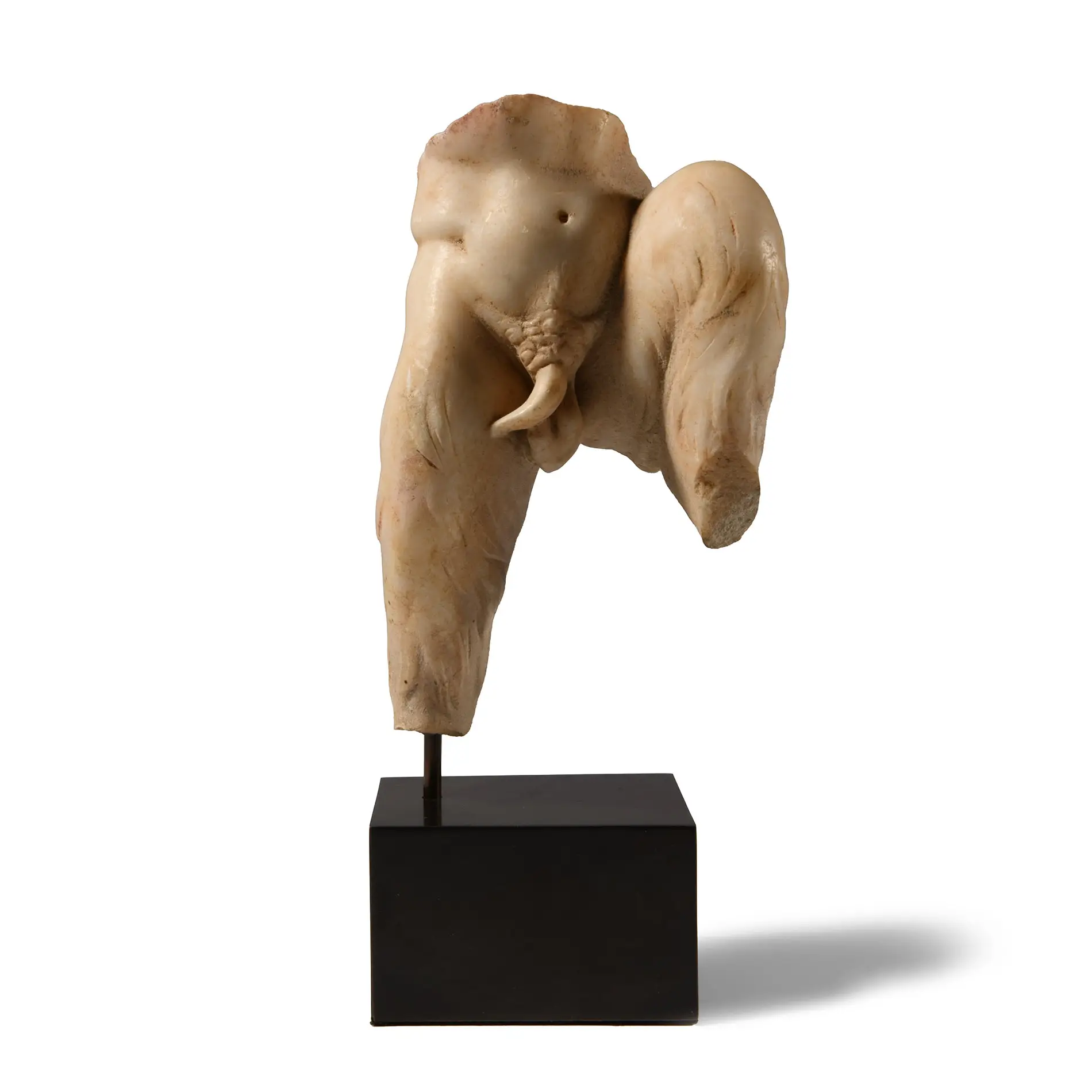
Scenes of satyr sexuality go further still. Where respectable male-male consummation, in the rare scenes that depict it, takes the form of intercrural intercourse (a type of frottage between the thighs), satyrs engage in anal penetration and fellatio, acts excluded from idealized imagery. More significantly, satyr scenes show sexual mutuality. Both partners are aroused, engaged, communicative. In one striking image, two satyrs having intercourse face one another, mouths open in conversation or expression. This is the precise opposite of how respectable consummation appears: the youth in an intercrural scene stands bolt upright, looking away, holding his courting gift, entirely uninvolved in what the erastes is doing. Each party gets what he wants. The man gets sexual access. The boy gets instruction in hunting and fighting.
What Survives, What We Hold
The painted surfaces of these vessels were never meant to last. Wine cups passed from hand to hand at symposia, used and broken and discarded. That any survive at all owes much to the Etruscan taste for Greek pottery, which led wealthy families in central Italy to place these objects in tombs, where they lay protected for centuries. When we examine a kylix or an amphora in the cataloguing room today, we are looking at something that ancient viewers handled casually, filling and refilling with wine, reading aloud the kalos inscriptions, perhaps recognizing themselves in the painted figures or mocking those who resembled the satyrs.
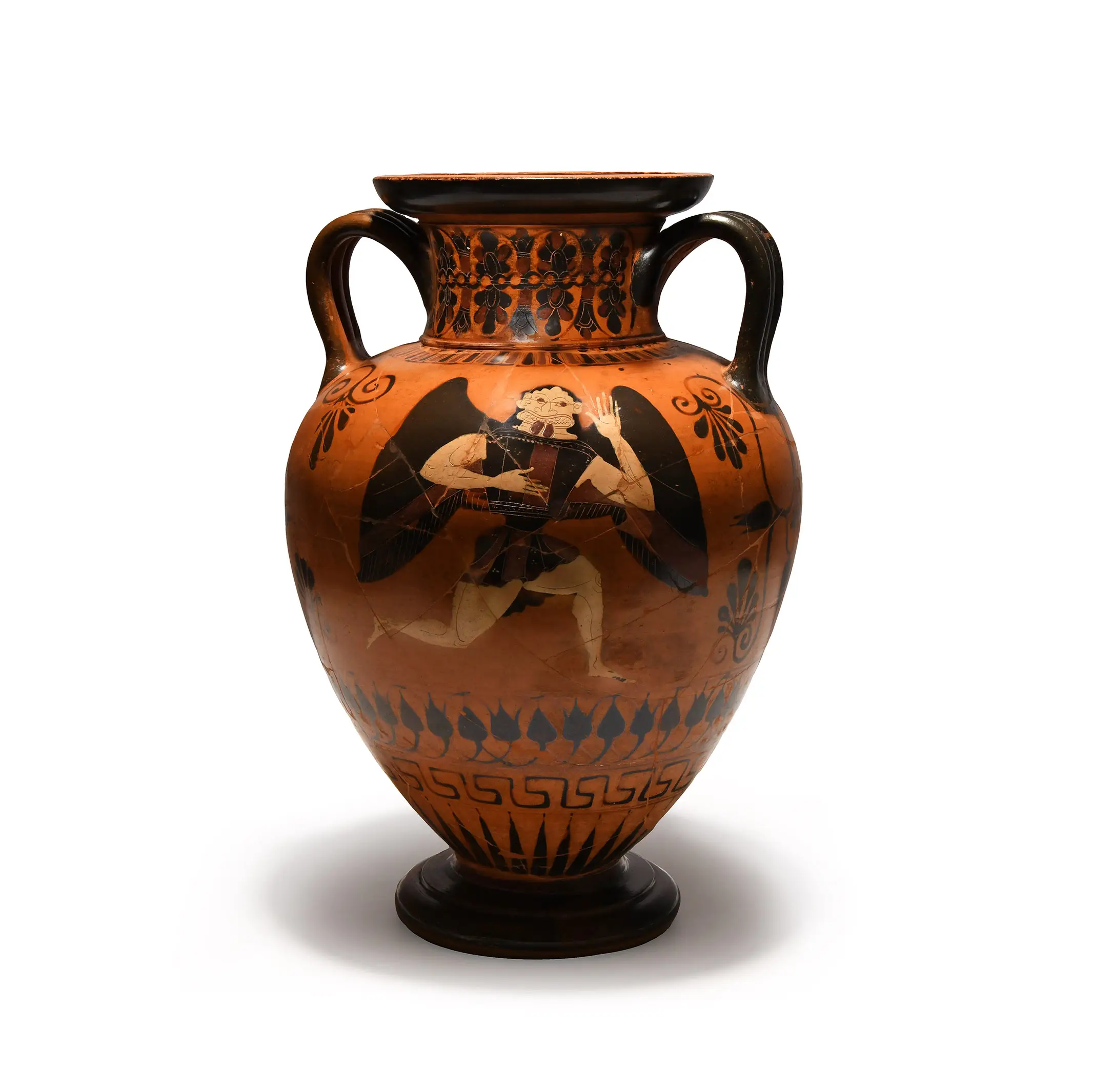
Greek vases offer something that literary sources cannot: visual evidence of social norms in operation. The repetition of certain compositions establishes ideals. The contrast with satirical scenes establishes boundaries. The kalos inscriptions, appearing on vessel after vessel, reveal how thoroughly desire permeated elite social life. These are not merely beautiful objects. They are documents of a culture working out its rules in clay and paint, creating images meant to be seen, discussed, and measured against the behavior of those present in the room.
To hold such an object is to participate, however distantly, in that conversation.
Browse our current catalogue for Greek pottery and painted vessels, or contact our antiquities department to discuss forthcoming consignments.
TimeLine Auctions, 1st March 2026