Home > Stories by TimeLine Auctions
Stories by TimeLine Auctions
The Faith Along the Nile: Christianity's Hidden Egyptian Origins
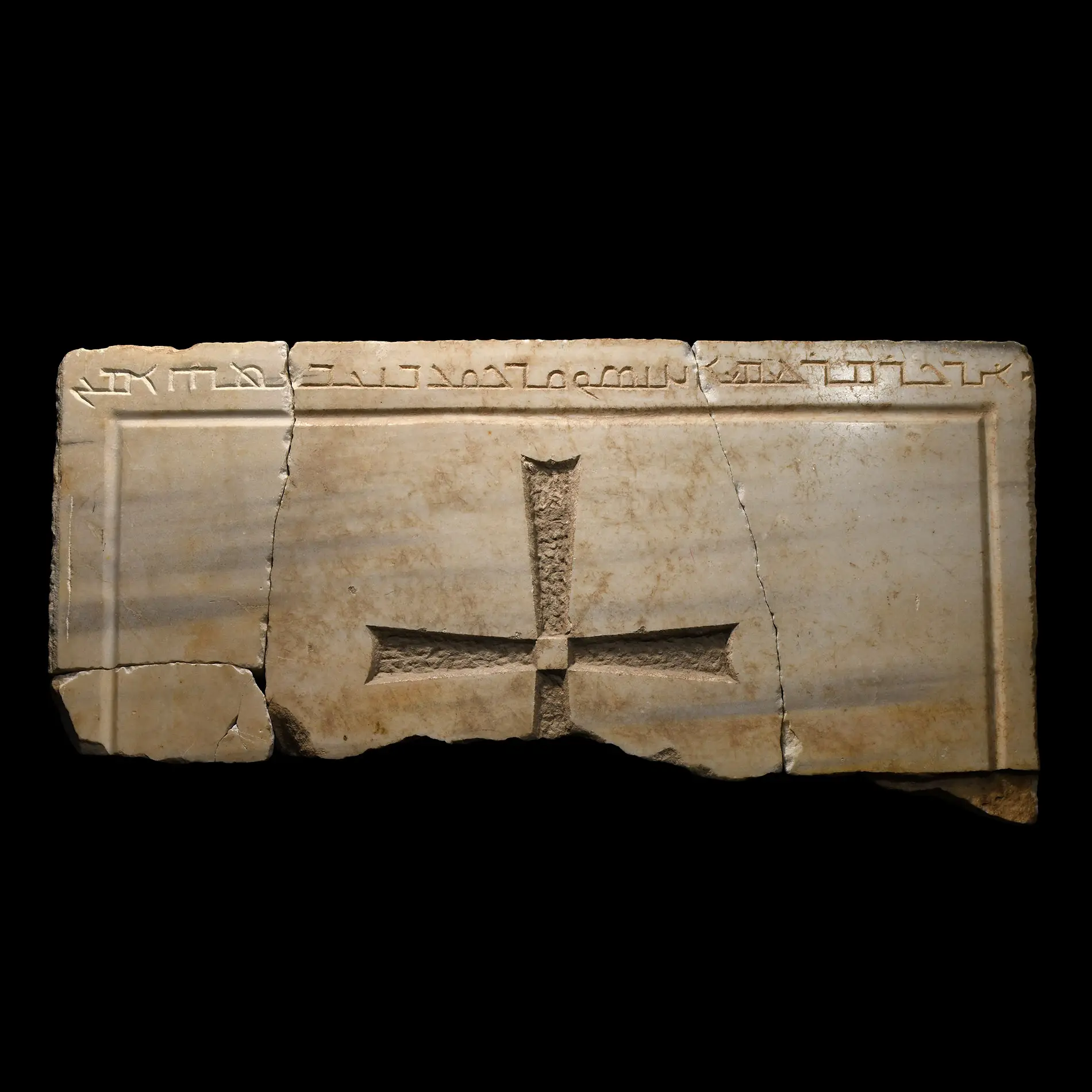
Sometime around 125 CE, a scribe in Middle Egypt bent over a sheet of papyrus. The dry desert air crackled around him. He copied, in careful Greek letters, passages from the Gospel of John: the interrogation of Jesus before Pilate, the question of truth that hangs in the air between them. When he finished, he set the manuscript aside. It would not be read again for eighteen centuries.
That small fragment, now known as Papyrus Rylands Greek 457, measures barely 3.5 by 2.3 inches. When we hold similar papyrus fragments in the cataloguing room today, we are struck by their fragility and their tenacity in equal measure. This particular scrap represents the oldest known fragment of any New Testament text, and its Egyptian provenance raises a question that has troubled historians for generations: how did Christianity arrive so early in Egypt, and why do we know so little about its first believers?
A Silence in the Sources
The traditional histories of early Christianity, from Eusebius onward, trace a clear path from Jerusalem to Rome. Luke's Acts of the Apostles follows Paul along the great highways of the Roman Mediterranean, through Asia Minor, Greece, and finally to the imperial capital. Egypt barely appears. Alexandria, one of the great cities of the ancient world, home to the legendary Library and a Jewish population numbering in the hundreds of thousands, receives almost no mention in the canonical accounts of the faith's expansion.
This silence is strange. Egypt lay close to Palestine, connected by well-traveled trade routes. Jews had lived along the Nile since the Persian period, and Alexandria's Jewish community had produced the Septuagint, the Greek translation of Hebrew scripture that would become the Old Testament of the early Church. If Christianity spread rapidly through the eastern Mediterranean in the decades following Jesus' death, Egypt should have been among its earliest destinations.
C. Wilfred Griggs, in his study of Early Egyptian Christianity, argues that the silence of traditional sources does not reflect historical reality. Instead, it reflects the priorities of later Catholic historians who traced their lineage through Rome and Antioch rather than Alexandria. The manuscript evidence tells a different story.
What the Sands Preserved
The climate of Upper Egypt is remarkable. South of the Nile Delta, the air grows so dry that organic materials can survive indefinitely if kept above the annual flood level. Papyrus, which would rot within decades in the humid Mediterranean, lasts for millennia in the desert sand. Over the past century and a half, archaeologists and treasure hunters have recovered thousands of manuscripts from Egyptian sites, texts spanning a thousand years from the establishment of the Ptolemaic dynasty to the Arab conquest and beyond.
Among these discoveries, biblical manuscripts have emerged in striking abundance. Roberts' catalogue of early Christian texts from Egypt lists at least eight Old Testament manuscripts that can be dated to the second century, all written in codex form rather than the traditional Jewish scroll, all bearing the distinctively Christian contractions known as nomina sacra. The Gospel of John fragment is only the earliest of many New Testament texts. A fragment of an unknown gospel, now held by the British Museum, has been dated to the early second century based on comparison with documents bearing precise dates from the reigns of Trajan and Domitian. The style of its miracle narratives, blending Johannine and Synoptic elements, suggests an author who knew all four canonical gospels yet was not bound by any single tradition.
What emerges from this evidence is a portrait of Egyptian Christianity in its earliest phase that looks nothing like the hierarchical church that would emerge in later centuries. As Griggs notes, these early Egyptian Christians "were not bound by a centralized ecclesiastical organization nor did they have a stringent and well-defined doctrinal tradition." They copied and circulated texts freely, choosing the codex format that would become standard throughout Christendom while most pagan literature still circulated on scrolls. They developed their own literary and theological traditions, often at variance with what was being taught in Rome or Antioch.
The Schools of Alexandria
The catechetical school of Alexandria is often cited as evidence of an established Christian community in the second century, though the details of its founding remain obscure. What is clear is that by the time of Pantaenus, who taught there in the late second century, the school had developed a distinctive intellectual character. Eusebius describes Pantaenus as "a man having a great reputation for his education," influenced by Stoicism and capable of traveling as far as India to preach. His successor Clement was even more eclectic, drawing on Plato and the Greek poets as readily as on scripture.
The most famous of Alexandria's teachers, Origen, embodies the tension between this freewheeling intellectual tradition and the emerging ecclesiastical hierarchy. Born around 185 CE to Christian parents, Origen took charge of the catechetical school while still a young man. He was a prodigious scholar who learned Hebrew to study the Old Testament in its original language and who produced commentaries, homilies, and theological treatises by the hundreds. He also castrated himself, reportedly taking literally Jesus' words about those who become eunuchs for the kingdom of heaven.
Origen's relationship with Demetrius, the bishop of Alexandria, deteriorated over decades. The sources suggest multiple causes: Origen's self-mutilation, his foreign ordination by bishops in Palestine, his willingness to teach doctrines that later generations would condemn as heretical. But the deeper issue may have been structural. The school had operated with considerable independence from the bishop's authority; as Demetrius consolidated his control over Egyptian Christianity, that independence became intolerable. In 231 CE, Origen left Alexandria permanently. He compared his departure to the Israelites' escape from Egypt.
The Gnostic Question
No discussion of early Egyptian Christianity can avoid the question of Gnosticism. The term itself is problematic, applied by later heresiologists to a bewildering variety of teachers and texts that may have had little in common beyond their rejection by orthodox authorities. But Egypt was certainly home to many of these teachers. Basilides taught in Alexandria during the reign of Hadrian. Valentinus, perhaps the most influential of all the "Gnostic" thinkers, was educated there before traveling to Rome. Carpocrates and his son Epiphanes developed their distinctive teachings somewhere in Egypt.
The discovery of the Nag Hammadi library in 1945 transformed scholarly understanding of these movements. Buried in a sealed jar near the Upper Egyptian town of that name, fifty-two tractates in Coptic translation survived intact, including gospels, apocalypses, and theological treatises that had been known previously only through the hostile summaries of their opponents. The Gospel of Thomas, with its collection of 114 sayings attributed to Jesus, some paralleling the canonical gospels and others wholly unfamiliar, has generated more scholarly literature than perhaps any other single discovery of the twentieth century.
What the Nag Hammadi texts reveal is the extraordinary diversity of Egyptian Christianity in its early centuries. Some texts are clearly dualist, positing an evil creator god distinct from the true divine source. Others seem almost indistinguishable from what would become orthodox teaching. Many defy easy categorization. The lines between "Gnostic" and "orthodox" that seemed so clear to Irenaeus or Epiphanius blur considerably when we read the texts themselves rather than their enemies' accounts.
The Desert Fathers
While bishops in Alexandria struggled to impose doctrinal uniformity, a different kind of Christianity was taking root in the Egyptian desert. Monasticism, that peculiar institution that would shape medieval Christianity throughout Europe and the Byzantine world, had its origins in the wastes south and west of the Nile.
Anthony, the most famous of the desert fathers, was a native Egyptian who spoke no Greek. According to the biography composed by Athanasius, he withdrew into the desert around 270 CE, first to the edge of his village, then to an abandoned fort, and finally deep into the eastern desert near the Red Sea. Others followed, seeking his counsel or simply his example. By the time of his death, reportedly at the age of 105, communities of hermits dotted the Egyptian wilderness.
Pachomius took a different approach. A former soldier, he organized his followers into communities governed by a detailed rule, perhaps the first such monastic rule in Christian history. The Pachomian monasteries became significant economic and social institutions, with members numbering in the thousands. They also became centers of Coptic literacy, producing the translations and original texts that would define Egyptian Christianity for centuries to come.
The relationship between the monks and the Alexandrian bishops was always complicated. The bishops needed the monks' support, both for theological controversies and for the raw political power that thousands of disciplined, celibate men could represent. But monasticism had its own logic, its own authority derived from ascetic achievement rather than ecclesiastical appointment. When Athanasius wrote to the monk Dracontius urging him to accept ordination as a bishop, he had to counter arguments that the monastic life was superior to clerical service. "Perhaps there are some who are advising you to hide," Athanasius wrote, "because you have sworn an oath not to accept the office if you are elected." Some monks, it seems, had sworn never to leave their communities for the corruptions of church administration.
Athanasius and the Struggle for Unity
Athanasius, who served as bishop of Alexandria from 328 to 373 CE (with several interruptions for exile), represents the culmination of one strand of Egyptian Christianity: the drive to bring all Egyptian Christians under the authority of a single bishop adhering to a single creed. His long struggle against the Arians, who denied the full divinity of Christ, has made him a hero to orthodox Christians ever since. But viewed from another angle, Athanasius appears as the architect of a centralized ecclesiastical power that had not existed in Egypt before.
He spent seventeen years of his episcopate in exile, banished by emperors sympathetic to his Arian opponents. During these periods, he often took refuge with the monks of the Egyptian desert, who remained loyal to him despite the shifting winds of imperial favor. His biography of Anthony helped cement the alliance between Alexandrian orthodoxy and Egyptian monasticism. His festal letters, sent annually to announce the date of Easter, also served to communicate his theological positions and ecclesiastical authority to Christians throughout Egypt.
The Melitian schism, which predated Athanasius' episcopate but persisted throughout it, illustrates the resistance he faced. Meletius of Lycopolis had appointed bishops during the Diocletian persecution without the approval of Alexandria, creating a parallel hierarchy that persisted for generations. Papyri from the fourth century preserve correspondence among Melitian monks, showing their network of communities stretched from Memphis to the Thebaid. They joined forces with the Arians against their common enemy, though their theological concerns were quite different. The Melitians represented local Egyptian Christianity resisting Alexandrian centralization; the Arians represented a different theology gaining ground throughout the eastern Mediterranean.
The Road to Chalcedon
The forces that would eventually separate Egyptian Christianity from the rest of the Christian world were already visible in the fourth century. Canon III of the Council of Constantinople in 381 established that city as second only to Rome in ecclesiastical dignity, a direct challenge to Alexandria's traditional preeminence in the East. The appointment of Antiochene clergy to the see of Constantinople deepened the rivalry between the two cities.
The great Christological controversies of the fifth century brought these tensions to a breaking point. The question of how divinity and humanity were united in Christ divided theologians throughout the Mediterranean world, but the divisions mapped onto existing rivalries between sees and schools. When Nestorius, patriarch of Constantinople, was condemned at the Council of Ephesus in 431, the Alexandrian patriarch Cyril led the attack. When Eutyches, an archimandrite of Constantinople, was accused of the opposite error, denying that Christ had two distinct natures, Cyril's successor Dioscorus defended him at the "Robber Council" of Ephesus in 449.
The Council of Chalcedon in 451 attempted to settle the matter, defining Christ as existing "in two natures, without confusion, without change, without division, without separation." But Dioscorus refused to accept the definition. He was deposed and exiled. Most Egyptian Christians followed their patriarch rather than the council. The Coptic Church, as it came to be called, separated from Catholic Christianity. It has remained separate ever since.
What Survives
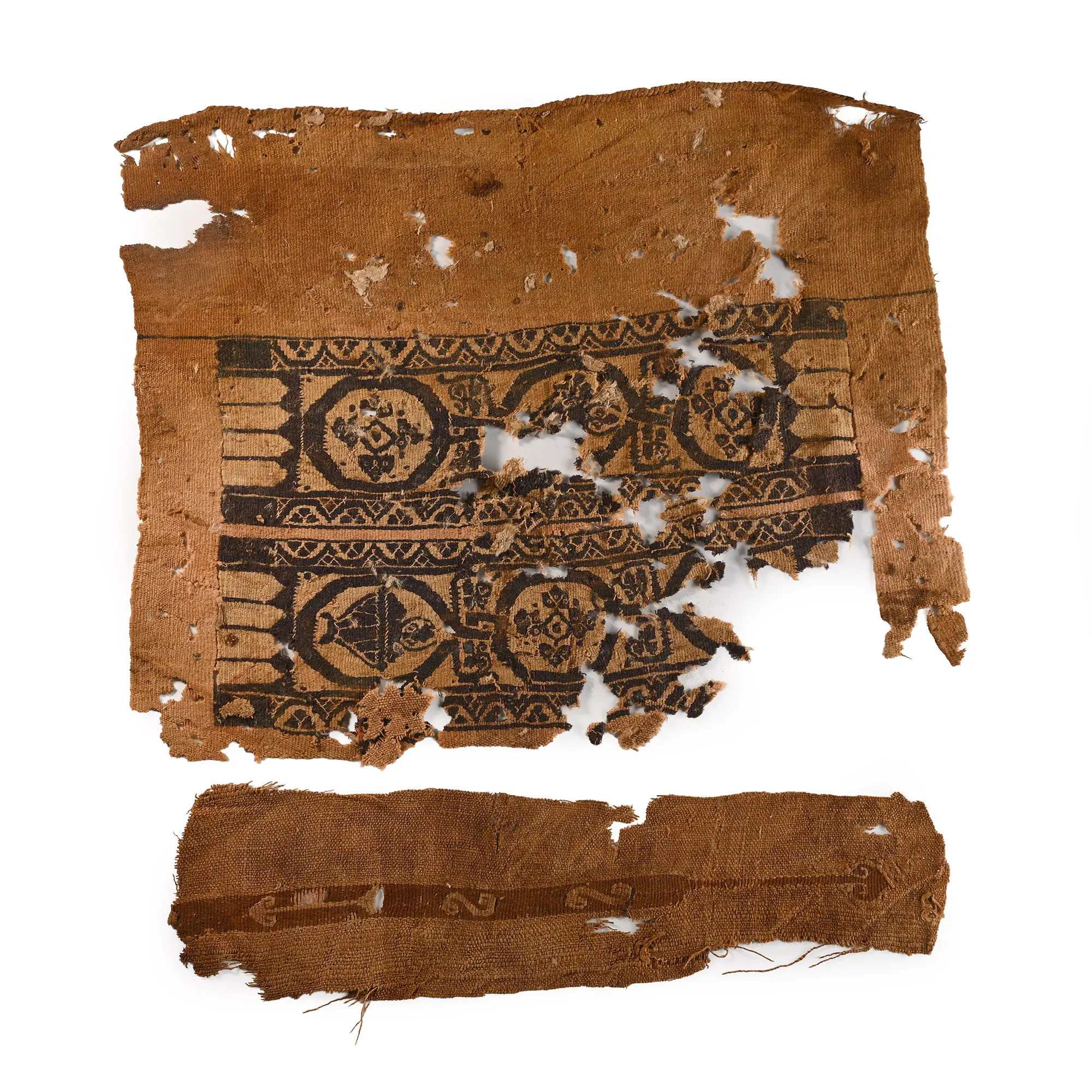
When we examine objects from this period, we hold in our hands the material remains of these struggles. A Coptic textile might bear Christian symbols that an Alexandrian bishop would recognize alongside motifs that hint at older Egyptian traditions. A bronze lamp from a monastic cell illuminated scriptures copied by monks who spoke Coptic rather than Greek, who traced their spiritual lineage to Anthony and Pachomius rather than to Rome. A papyrus fragment might preserve words from a gospel that the council fathers at Nicaea would have rejected as heretical, yet which some Egyptian Christian treasured enough to copy and save.
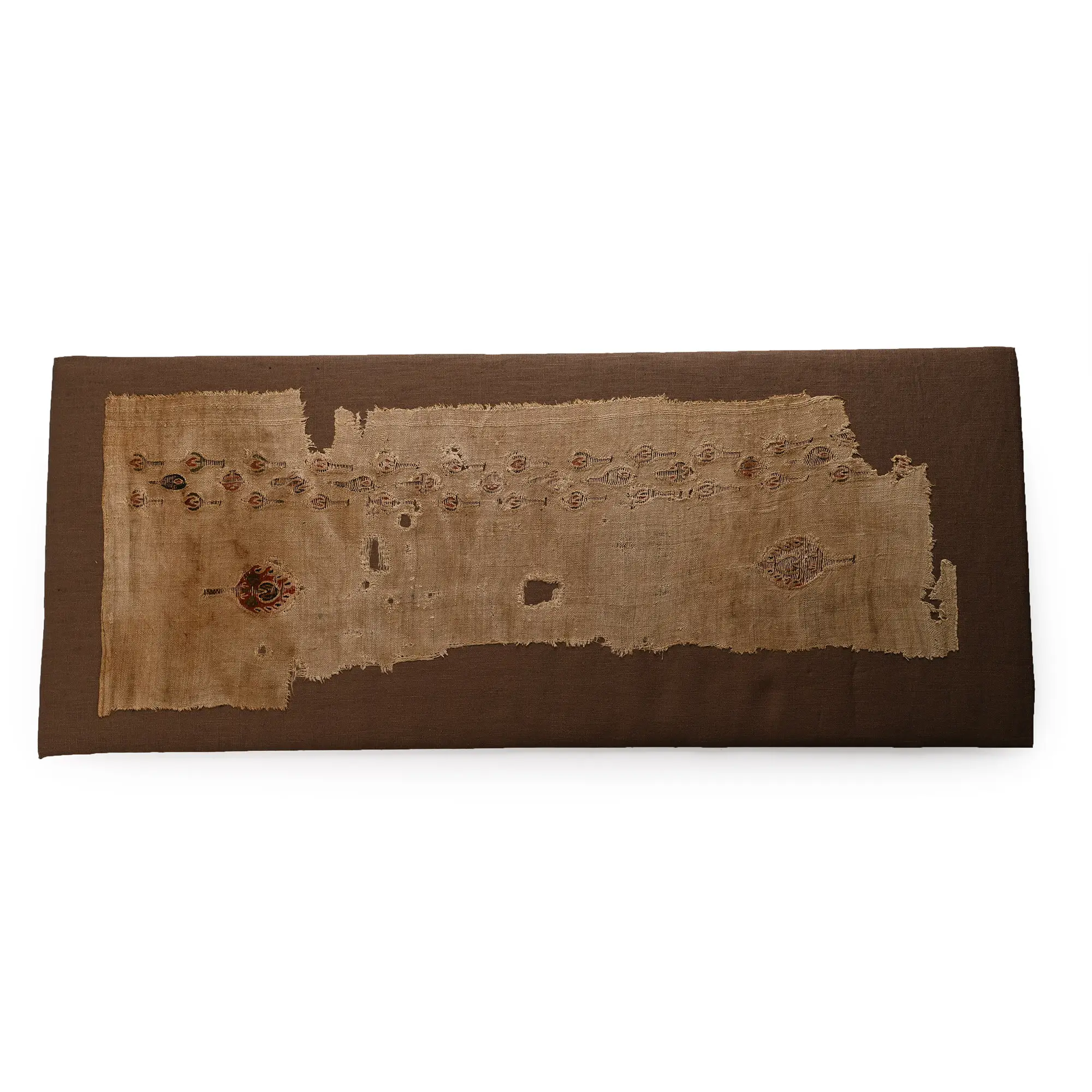
The survival of these objects is itself remarkable. Egypt's dry climate preserved what damp European soils destroyed. The isolation of Upper Egypt from the great cities protected manuscripts and artifacts from the systematic destruction that later religious conflicts might bring. And the conservatism of Coptic Christianity, holding fast to traditions that Rome and Constantinople abandoned, kept these objects in continuous use or veneration for centuries before they entered the hands of collectors and museums.
Browse our current catalogue to see Egyptian Christian antiquities spanning nearly a millennium of faith along the Nile. Each piece carries within it the traces of believers whose names we will never know, whose prayers were offered in languages we can only partially reconstruct, whose understanding of their faith might surprise or challenge our own assumptions. This is history that you can hold, connections across centuries made tangible in bronze and linen and faded ink on papyrus.
This article draws substantially on C. Wilfred Griggs, "Early Egyptian Christianity: From Its Origins to 451 CE" (Brill's Scholars' List), particularly his analysis of manuscript evidence for the early arrival of Christianity in Egypt and the development of distinctive Egyptian Christian institutions.
TimeLine Auctions, 20th March 2026