Home > Stories by TimeLine Auctions
Stories by TimeLine Auctions
The Gods of War: How Divination Shaped History in Assyria and Greece
The Liver in the Lamplight
Somewhere in the Syrian desert, around 1775 BC, a man named Asqudum crouches over a freshly slaughtered sheep. The army of Zimri-Lim, king of Mari, waits in the darkness behind him. No torches burn; the ritual requires secrecy. Asqudum's fingers, slick with blood, probe the animal's liver, searching for the marks that Shamash, the sun god, has inscribed there during the night. The king's question hangs in the air: Should we march against Babylon?
Asqudum was no ordinary priest. He was married to a princess, commanded military expeditions, and owned a house covering more than a thousand square metres, a scaled-down palace that testified to his extraordinary wealth and status. When we read his name in cuneiform tablets recovered from the royal archive, we encounter a man who could literally win or lose wars. His salary matched that of the army's commanding general. His predictions, recorded on clay and sent to the king, survive in fragments that scholars still puzzle over today. In one letter, he reports that he performed extispicy to determine whether the army should advance. The answer was favourable. The troops marched.
This scene, or something very like it, repeated itself across two civilizations and more than a thousand years of military history. From the palace complexes of Nineveh to the blood-soaked plains before the walls of Troy, from the court of Esarhaddon to the tent of Alexander the Great, generals and kings refused to commit their armies to battle without first consulting the gods. The stakes were too high, the uncertainties too vast. War, as Thucydides would later write, is hard to predict. Divination was how the ancient world managed that uncertainty, transforming the chaos of combat into a dialogue between mortals and immortals.
Reading the Tablet of the Gods
The Mesopotamians believed the universe was a text. The gods had written their intentions into the fabric of reality itself, encoding messages in the movements of stars, the patterns of oil on water, the flight of birds, and above all, in the entrails of sacrificed animals. A trained diviner could read these signs the way a scribe read cuneiform. The liver, in particular, was called the "tablet of the gods," a physical medium on which Shamash and Adad, the lords of judgment and inspection, inscribed their verdicts.
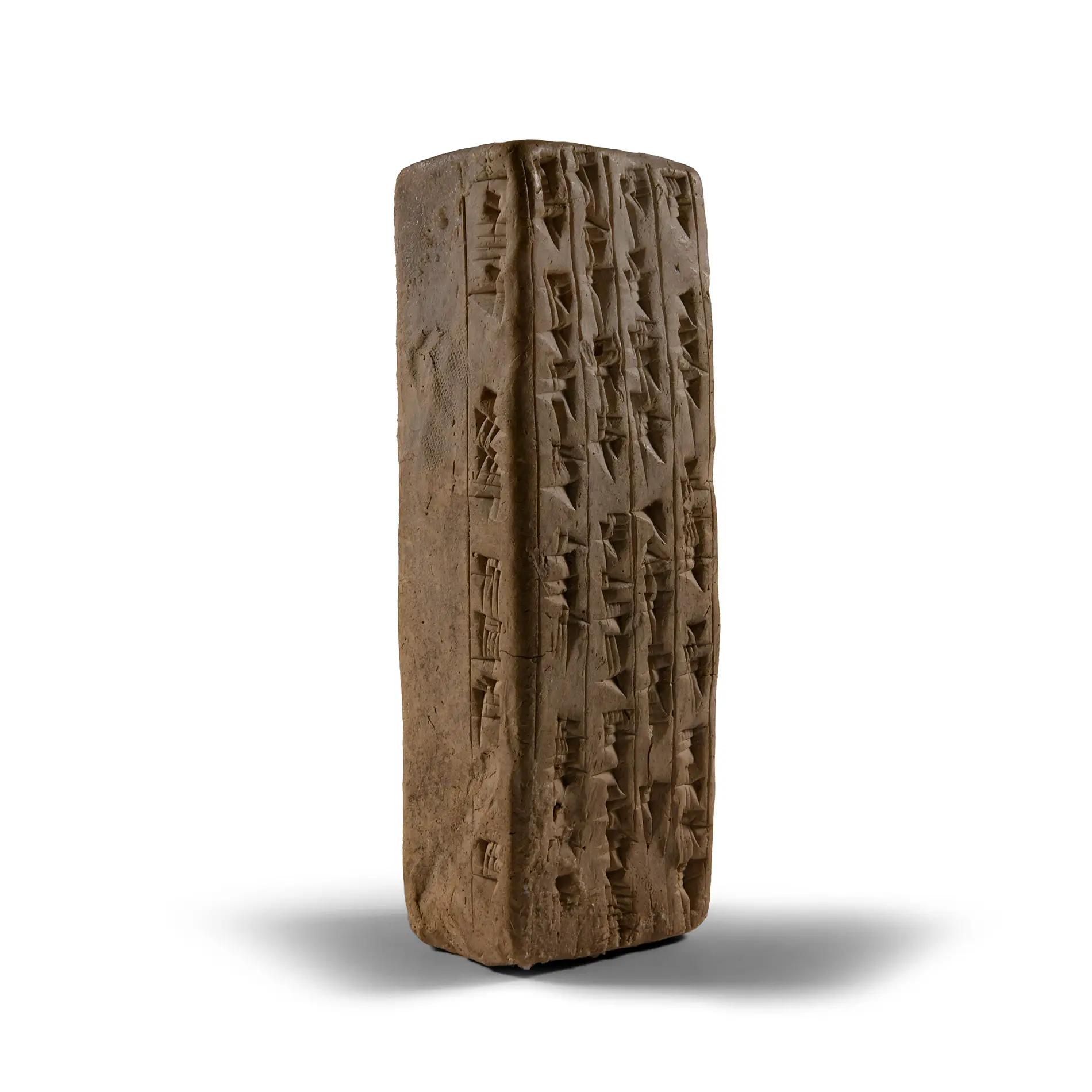
This was not metaphor. The Babylonians developed an elaborate technical vocabulary for the liver's anatomy, identifying dozens of distinct features and assigning specific meanings to their shapes, colours, and positions. Texts from the library of Ashurbanipal at Nineveh, dating to the seventh century BC, preserve thousands of such interpretations, organized into vast compendia that scholars studied for years. Out of 3,594 "Babylonian literary and scientific texts" in that library, nearly half dealt with divination. This was the single largest category of scholarly writing in ancient Mesopotamia, dwarfing literature, mathematics, and medicine combined.
The questions posed to the gods reveal what mattered most to Assyrian kings. Military concerns dominate the surviving tablets. Should we attack this city? Will the enemy breach our walls? Is this general loyal? Will our troops return safely? The queries are remarkably specific, betraying an intimate familiarity with the realities of warfare. One Old Babylonian text, dating to the reign of Hammurabi, asks whether the army should take the eastern route along the Tigris to capture the city of Kasalluḫḫu. It then lists every conceivable method of conquest: "by disturbing, overturning, pushing, by revolt, by trickery, by siege, by smooth talk, by undermining, by sheer might, by encircling, by heaping up earth, by causing distress, by cutting off food supply, by breaching the walls, by siege tower, by battering ram, by claw, by ladder, by boring engines, by cutting through the wall, by ramp, by spreading confusion, by causing panic."
This is probably the most detailed record of siege techniques from the ancient world. The Greeks possessed little such equipment before the Hellenistic age. When we hold a fragment of one of these query tablets, we hold the accumulated military wisdom of a civilization that had been waging organized warfare for two thousand years.
The Seer Who Walks Before the Army
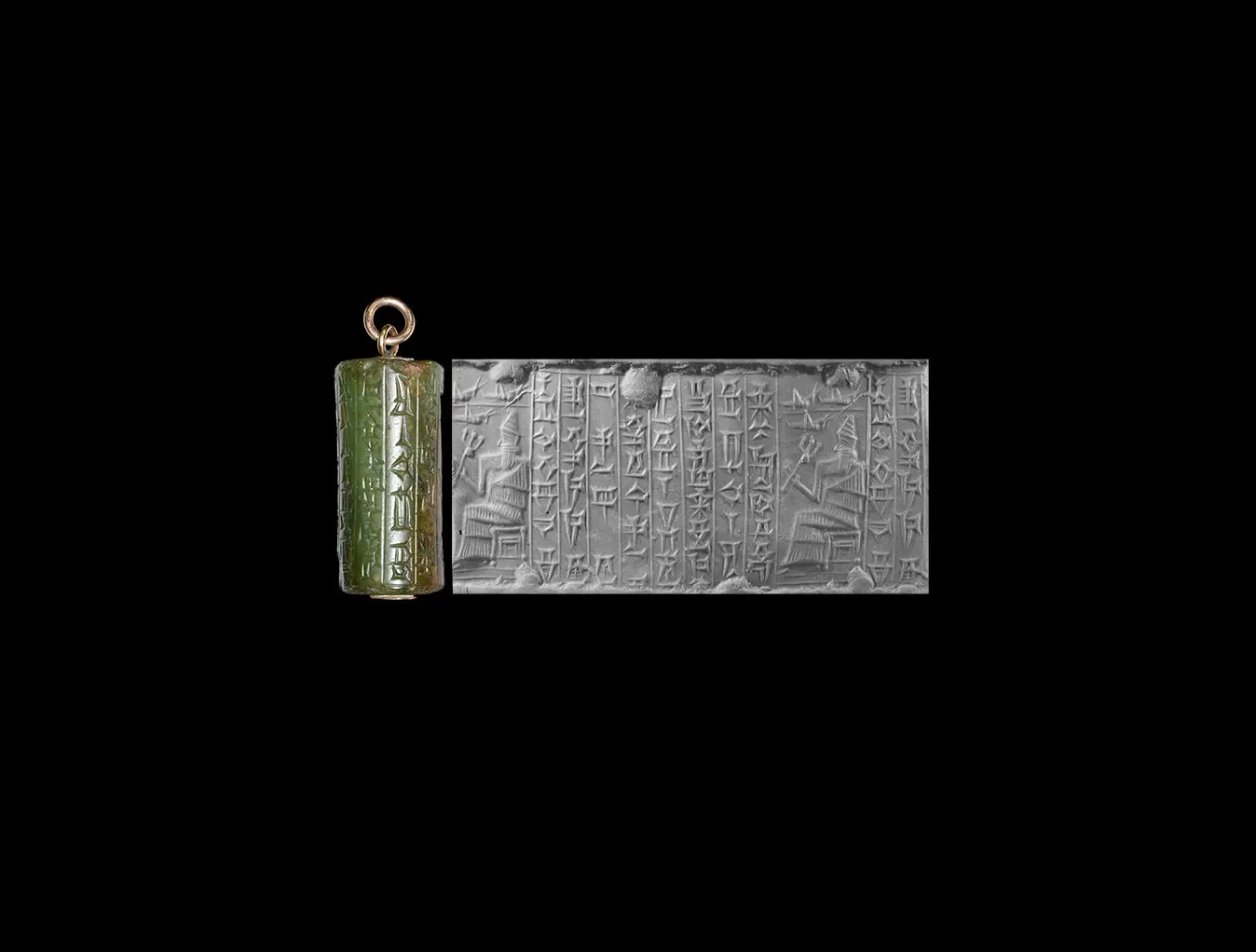
The diviner occupied a peculiar position in Mesopotamian society: simultaneously priest, scientist, and military officer. From the Old Babylonian Period onward, we find references to the diviner as "the one who walks in front of the army." This was not merely honorary. At Mari, diviners led troops into battle. They accompanied embassies to foreign courts. They garrisoned fortresses on dangerous frontiers. Every region at risk of war had to have its own diviner on staff.
The relationship between king and diviner was one of mutual dependence. The king needed divine sanction for his campaigns; the diviner needed royal patronage for his livelihood. This created tensions that the surviving correspondence hints at but rarely makes explicit. What happened when the omens were unfavourable but the king wanted to fight anyway? The legend of Naram-Sin, told and retold across a millennium, provided the cautionary answer. When this ancient king of Akkade ignored the warnings inscribed in the sheep's liver and attacked despite unfavourable signs, disaster followed. His army was destroyed. His dynasty crumbled. The moral was clear: rulers who defied the gods paid the highest price.
Yet the Mesopotamians did not believe in unalterable fate. A bad omen was a warning, not a sentence. Through rituals called namburbi, trained priests could appeal the verdict, petitioning the divine court for a revision of the individual's destiny. The gods who sent the signs also created the means to avert them. "Ea has done, Ea has undone," wrote the scholar Balasi to his king. "He who caused the earthquake has also created the apotropaic ritual against it."
This theological flexibility had profound implications for military planning. An unfavourable omen did not necessarily mean the campaign must be cancelled. It might mean that additional rituals were required, that the timing should change, that a different route should be taken, or that a substitute king should temporarily assume the throne to absorb the predicted evil. During the reign of Esarhaddon alone, the substitute-king ritual was invoked at least four times, typically in response to lunar eclipses whose shadows fell across Assyrian territory.
When the Gods Spoke Greek
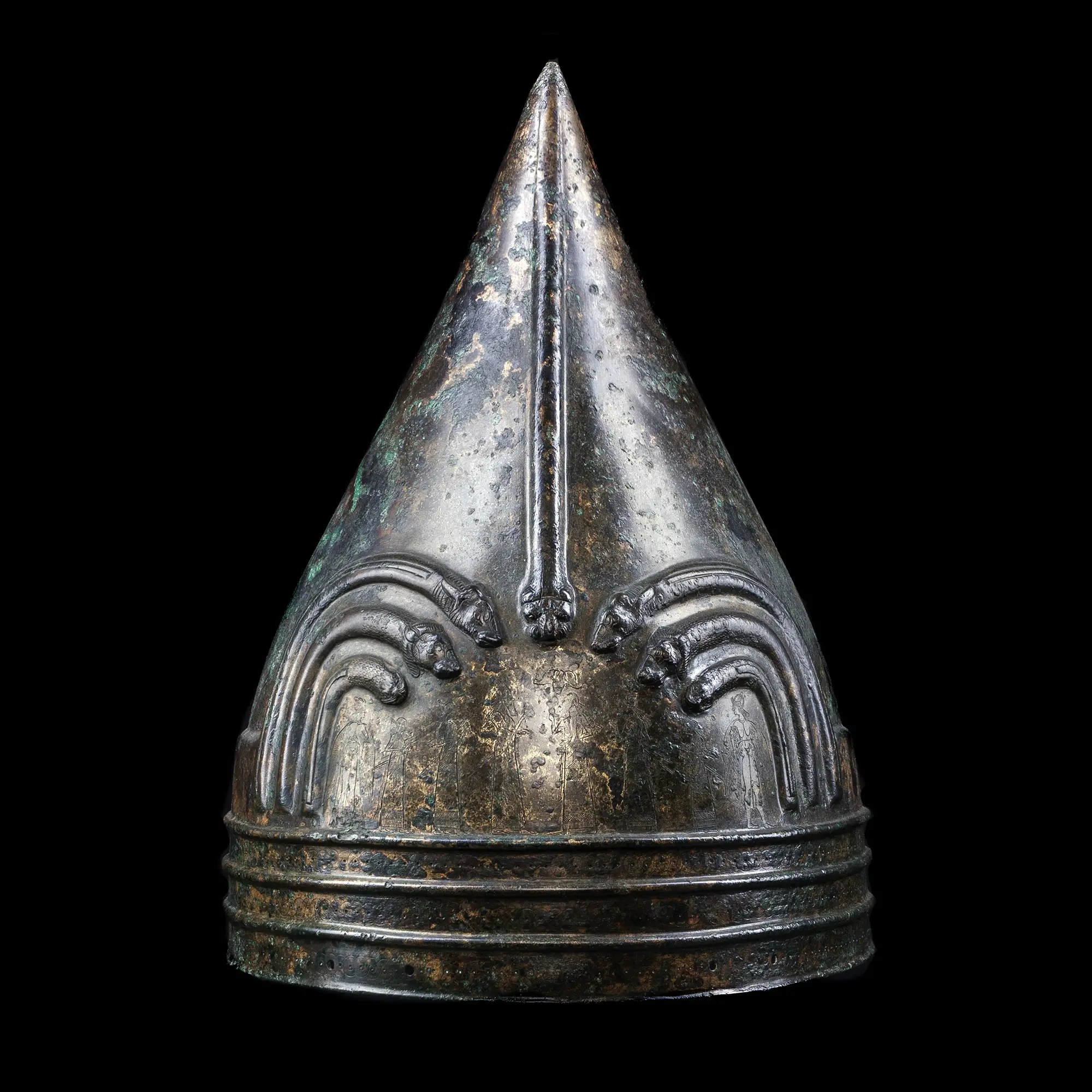
A thousand miles to the west, and several centuries later, a different civilization developed remarkably similar practices. The Greeks, too, refused to begin campaigns without divine approval. They, too, employed professional diviners who inspected animal entrails before battle. They, too, believed that the gods communicated through signs that trained specialists could interpret. The similarities are striking enough that scholars have long debated whether Greek divination derived from Mesopotamian models or developed independently from common Indo-European roots.
The Greek term for diviner was mantis, a word that carries connotations of ecstatic possession as well as technical expertise. Unlike the Babylonian bārû, who worked primarily through the systematic examination of physical signs, the mantis claimed a more direct connection to divine knowledge. Plato would later distinguish between "technical" divination (the interpretation of signs) and "inspired" divination (direct communication with gods), though in practice the distinction was never sharp. A Greek seer might read bird flights in the morning and fall into prophetic trance by afternoon.
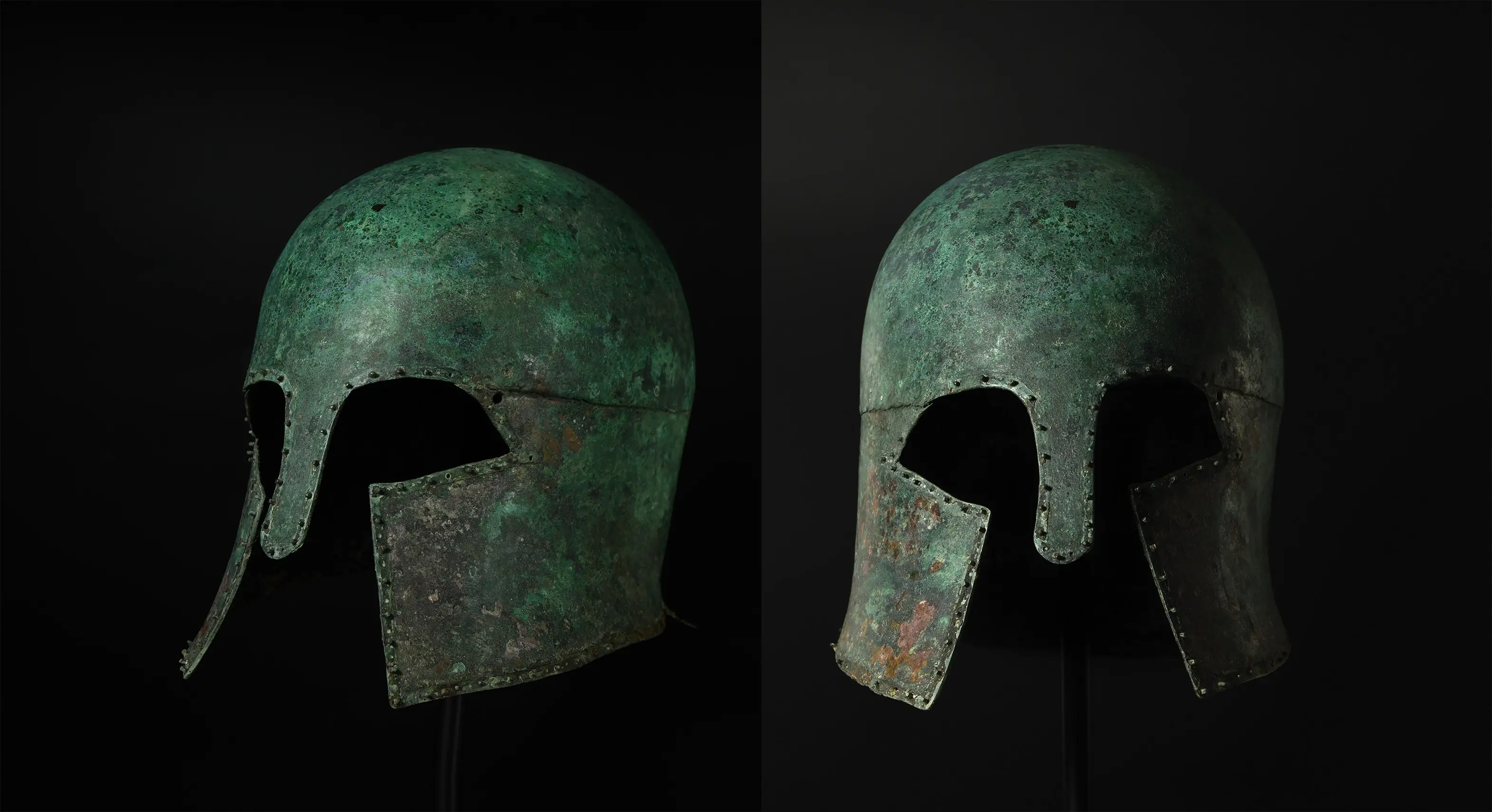
What united Greek and Mesopotamian diviners was their indispensability to military operations. No Greek army marched without its mantis. No battle began without preliminary sacrifices (sphagia) performed at the moment the armies drew up against each other. Xenophon, that most practical of Greek generals, repeatedly emphasizes the importance of divine consultation in his accounts of military campaigns. "If anyone is surprised that I have written so often about working with divine favour," he writes in his treatise on cavalry command, "I can assure him he will be less surprised if he is going to be often in peril." The gods, Xenophon explains, know all things. They warn whomever they want through sacrifices, omens, voices, and dreams. The wise commander listens.
The difference between Greek and Mesopotamian attitudes to fate is instructive. In Greece, no one could escape destiny. The oracles might warn you of disaster, but your attempts to avert it would only bring about the predicted result. Oedipus, warned that he would kill his father and marry his mother, fled from the man he thought was his father and thereby ensured the prophecy's fulfilment. This tragic inevitability pervades Greek literature. The will of Zeus determines the fate of cities. Those who resist their doom only accelerate its arrival.
The Battle That Shamash Won
In the year 671 BC, the Assyrian king Esarhaddon was preparing to invade Egypt. The campaign would be his greatest military undertaking, requiring the army to cross the Sinai desert, a logistical nightmare that had defeated previous attempts. Before committing his forces, Esarhaddon did what Assyrian kings had done for centuries: he consulted Shamash.
The queries preserved from this period reveal the depth of Esarhaddon's dependence on divination. He asked about the loyalty of subject kings, the intentions of foreign powers, the safety of specific cities, the timing of specific operations. He asked whether to send messengers to potential allies and whether those messengers would be seized and killed. He asked about marriage alliances and succession arrangements. Nothing was too important or too trivial for divine consultation.
The Egyptian campaign succeeded. Esarhaddon captured Memphis, forced the pharaoh to flee, and installed Assyrian governors across the Nile Delta. His victory inscriptions credit the gods with every success. "Shamash and Adad, the lords of the oracle, revealed to me through their reliable 'Yes!' " one text proclaims. The gods had spoken, and Assyria had triumphed.
This pattern of divine consultation followed by military success was not coincidental. Modern scholars have noted that Assyrian kings seem never to have lost a battle, at least in their own accounts. The official propaganda of the empire forbade the representation of Assyrian military defeats. When campaigns went badly, the records fall silent, or the disaster is attributed to the king's failure to heed divine warnings. The theology was unfalsifiable: victory proved the gods' favour, while defeat proved the king's impiety.
Blood Before the Battle Lines
Greek warfare was equally saturated with religious ritual. Burkert, the great historian of Greek religion, described war as "a ritual, a self-portrayal and self-affirmation of male society." The parallels to sacrifice are unmistakable. The sequence of procession, violent blow, spilling of blood, and burning of flesh that structured the sacrificial ritual found its echo in the sequence of march, combat, funeral pyre, and truce (the Greek word for truce, spondai, literally means "libations") that structured battle. The woman's cry at the moment of sacrifice (ololugmos) had its counterpart in the soldiers' battle-cry (alalagmos). Even the garlanding of victors after battle borrowed from sacrificial practice.
The most dramatic moment came just before combat, when the opposing armies had drawn up within sight of each other. At this point, the Greek generals performed the sphagia, cutting the throats of young animals and examining their entrails for signs of divine favour. The army that received favourable omens advanced; the army that did not held back, hoping for better signs tomorrow. Accounts of Greek battles routinely note these preliminary sacrifices, and military narratives sometimes pivot on their results.
Xenophon's account of the retreat of the Ten Thousand provides numerous examples. Again and again, the Greek mercenaries find their advance blocked by unfavourable sacrifices. The soldiers grow impatient, then desperate, as their supplies dwindle and enemies close in. Yet Xenophon insists on waiting for the gods' approval, even when tactical considerations demand immediate action. When the omens finally turn favourable, he orders the charge with confidence that the gods are with them.
How much of this was genuine religious feeling, and how much calculated manipulation? The question has exercised scholars since antiquity. Cicero, writing in the first century BC, argued that Roman generals used divination cynically, adjusting the interpretation of signs to match their predetermined plans. Modern historians have been more charitable, suggesting that the participants genuinely believed in divine communication even as they sometimes bent the rules. The truth probably lies somewhere in between. A commander who had decided to fight would likely find favourable signs; a commander who had decided to retreat would likely find unfavourable ones. The gods, it seems, usually confirmed what their worshippers had already chosen.
Objects of Divine Consultation
The material culture of ancient divination survives in remarkable quantity. Clay models of sheep livers, inscribed with omen texts and anatomical labels, were used to train Babylonian diviners. Bronze liver models, some marked with Etruscan inscriptions, testify to the westward spread of hepatoscopy. Terracotta figurines of seers and priests were deposited at sanctuaries across the Greek world. Coins bearing images of Apollo, the god of prophecy, circulated from Syracuse to the Black Sea.
When we hold such objects in our cataloguing room at TimeLine, we hold the material remains of humanity's oldest attempt to manage uncertainty. A bronze figurine of a robed priest, his hands raised in supplication, may have stood in a household shrine where anxious families asked about the fate of sons marching to war. A terracotta model showing a diviner examining entrails may have served as a teaching tool for apprentice seers. A silver coin depicting the tripod of Delphi, where the Pythia delivered Apollo's prophecies, connected its user to the most famous oracle in the ancient world.
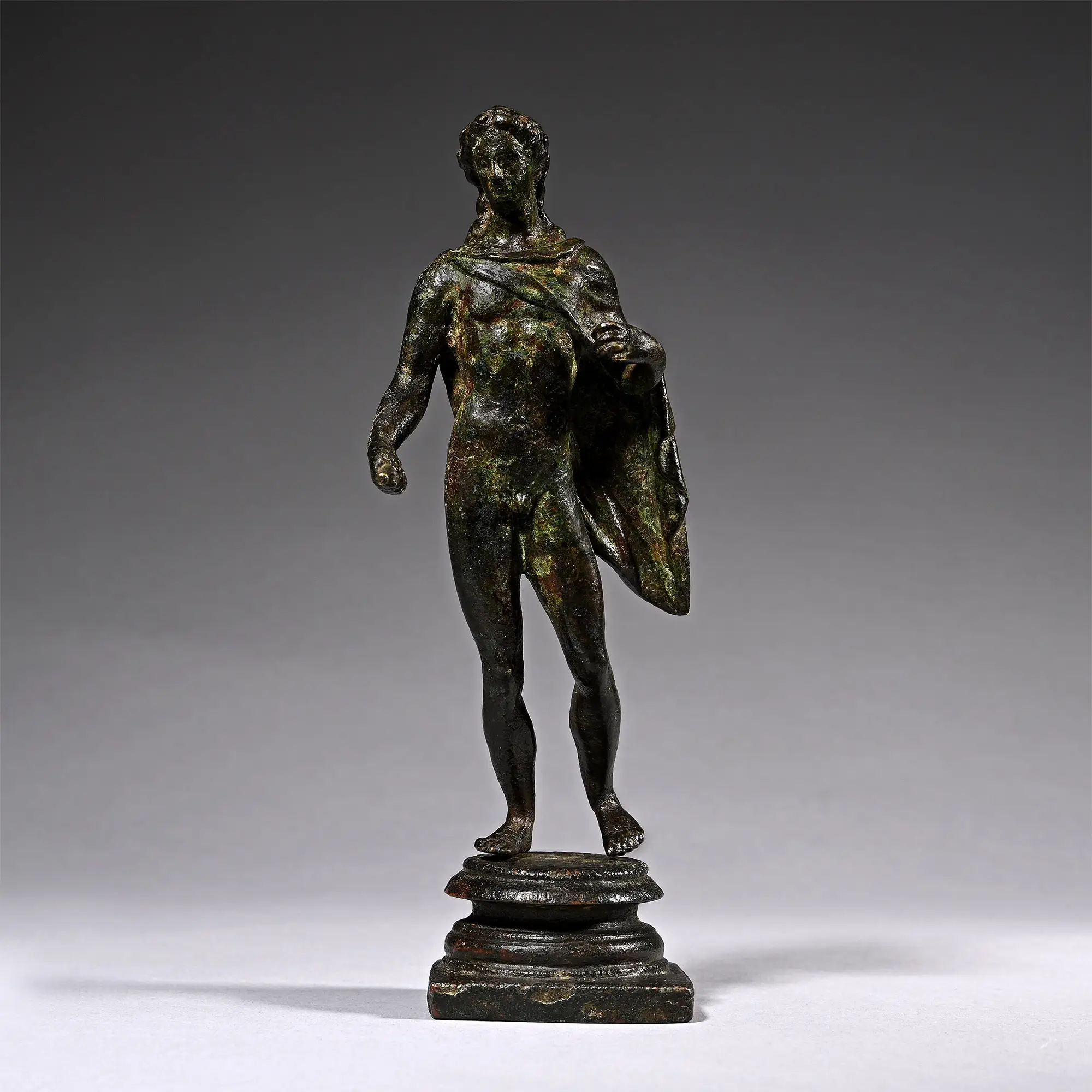
These objects were not merely decorative. They were functional tools of religious practice, employed in rituals that shaped the fates of empires. The Greeks who dedicated a bronze seer at Olympia believed that their offering would win divine favour. The Assyrian who inscribed a clay liver model with omen texts believed he was preserving sacred knowledge revealed by the gods themselves. This was history that mattered, recorded not in chronicles but in the objects through which humans and gods communicated.
The Legacy of the Liver-Readers
The divinatory traditions of Mesopotamia and Greece did not disappear with the empires that created them. Etruscan haruspices advised Roman generals for centuries. The practice of reading bird omens, developed independently in both cultures, merged in the Mediterranean world to create the augury that influenced Roman politics until the Christian era.
In the armies of Alexander the Great, the traditions converged. Alexander employed Greek seers who sacrificed before battle and interpreted the flights of birds. He also retained Babylonian priests who performed their own rituals and offered their own predictions. When the omens conflicted, Alexander sometimes accepted the Greek reading, sometimes the Babylonian. What mattered was divine approval, however it was obtained. The night before his greatest victory, at Gaugamela, Alexander reportedly sacrificed to the god Fear, acknowledging through ritual the emotion that every soldier feels before battle.
The Weight of Uncertainty
War remains unpredictable. Modern generals consult intelligence analysts rather than liver-readers, but the fundamental problem persists: no one knows what will happen when the fighting starts. The ancient solution, attributing outcomes to divine will and seeking divine guidance before action, had the merit of acknowledging this uncertainty honestly. A king who asked Shamash whether his army would return safely was admitting that he did not know the answer himself. A general who delayed his attack until the omens turned favourable was accepting that forces beyond his control would determine the battle's outcome.
The objects that survive from this world of anxious consultation retain something of that emotional charge. A bronze figurine that once stood in a military camp, receiving offerings from soldiers about to march into danger, carries the weight of prayers spoken in fear and hope. A clay liver model, its surface marked with the observations of countless sacrifices, preserves the accumulated experience of generations who watched for signs in the entrails of sheep.
At TimeLine Auctions, we regularly offer objects connected to the religious practices of ancient warfare. Each piece represents a moment when human beings, facing the terrifying unpredictability of combat, reached out to powers they believed could see what they could not. The questions they asked, the answers they received, the rituals they performed: all of this shaped the history we inherit. Browse the current catalogue to find objects that once participated in these ancient conversations between mortals and gods.
The Silence of the Oracles
The oracles have fallen silent. No smoke rises from the altars at Delphi. No priest examines the liver of a sheep in the shadow of the ziggurat at Babylon. The professional seers who once advised kings and generals have vanished from the earth, their skills forgotten, their texts preserved only in fragments that scholars labour to understand.
Yet the objects remain. In museums and private collections, in auction houses and archaeological storerooms, the material culture of ancient divination survives. A bronze tripod that once supported a sacred cauldron. A terracotta figurine of a god whose favour meant victory. A coin that passed through the hands of men who believed the future could be read in the flight of birds.
When we hold these objects, we hold the physical residue of faith. Not faith in any modern sense, but the practical, anxious faith of people who faced death in battle and wanted to know if the gods were with them. They asked their questions. They received their answers. They marched or retreated, fought or fled, lived or died. The objects they left behind carry the memory of those moments, waiting for anyone who will listen.
TimeLine Auctions, 16th April 2026