Home > Stories by TimeLine Auctions
Stories by TimeLine Auctions
The Swimming Pool and 1,500 Antiquities: Inside the Ricard Collection
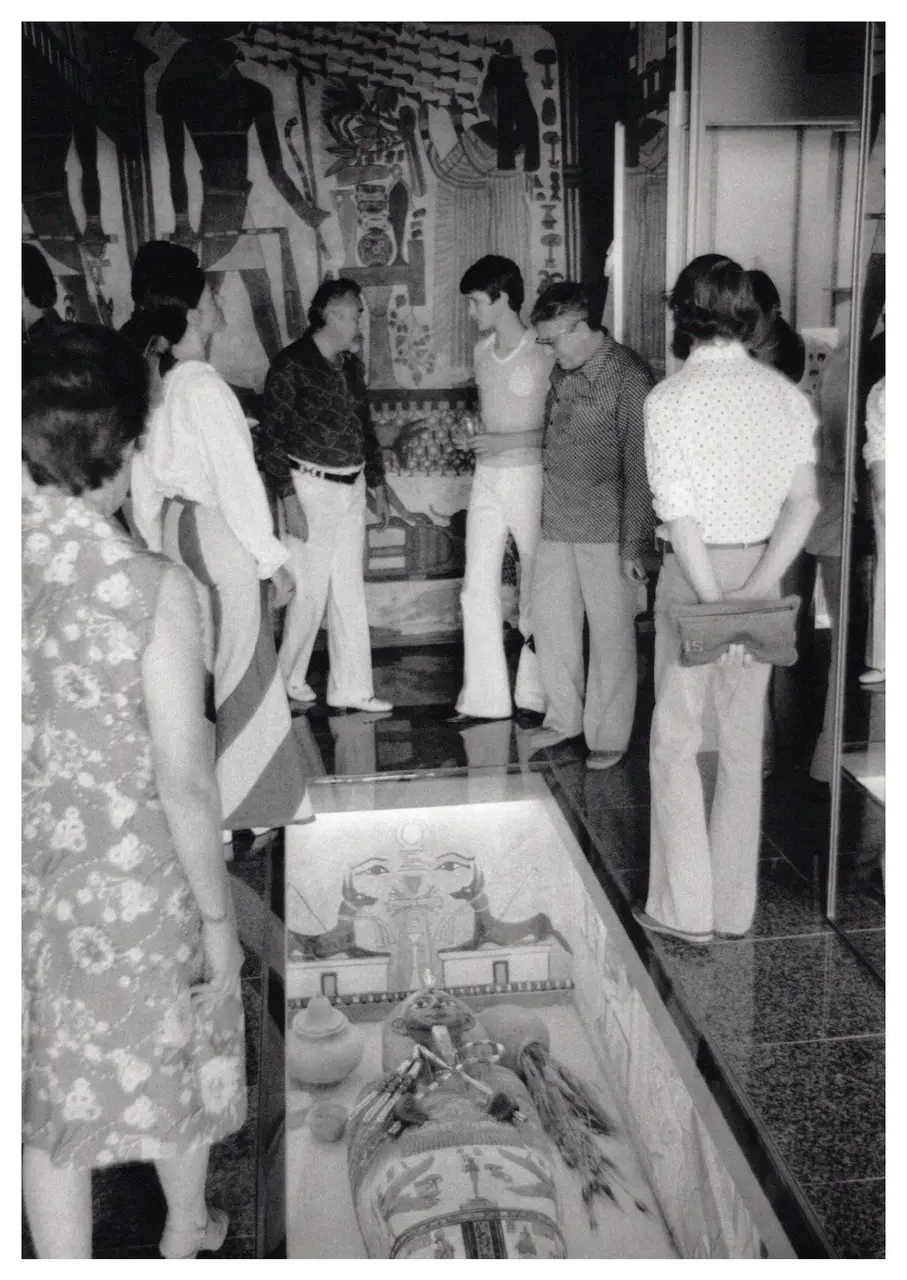
In a photograph from 1975, French entrepreneur Georges Ricard stands beside Princess Grace and Prince Rainier of Monaco. He is wearing white bell-bottoms. The occasion is the opening of his museum, the Musée de l'Égypte et le Monde Antique, Collection Sanousrit, and everything about the image radiates the particular confidence of a man who has just realized a lifelong ambition.
Ricard had spent years acquiring Egyptian, Greek, Roman, and Near Eastern antiquities from small French auction houses and dealers. His goal was never to hoard. He wanted to share his passion for the ancient world, and Monaco would be the stage. Over 1,500 objects went on display that June.
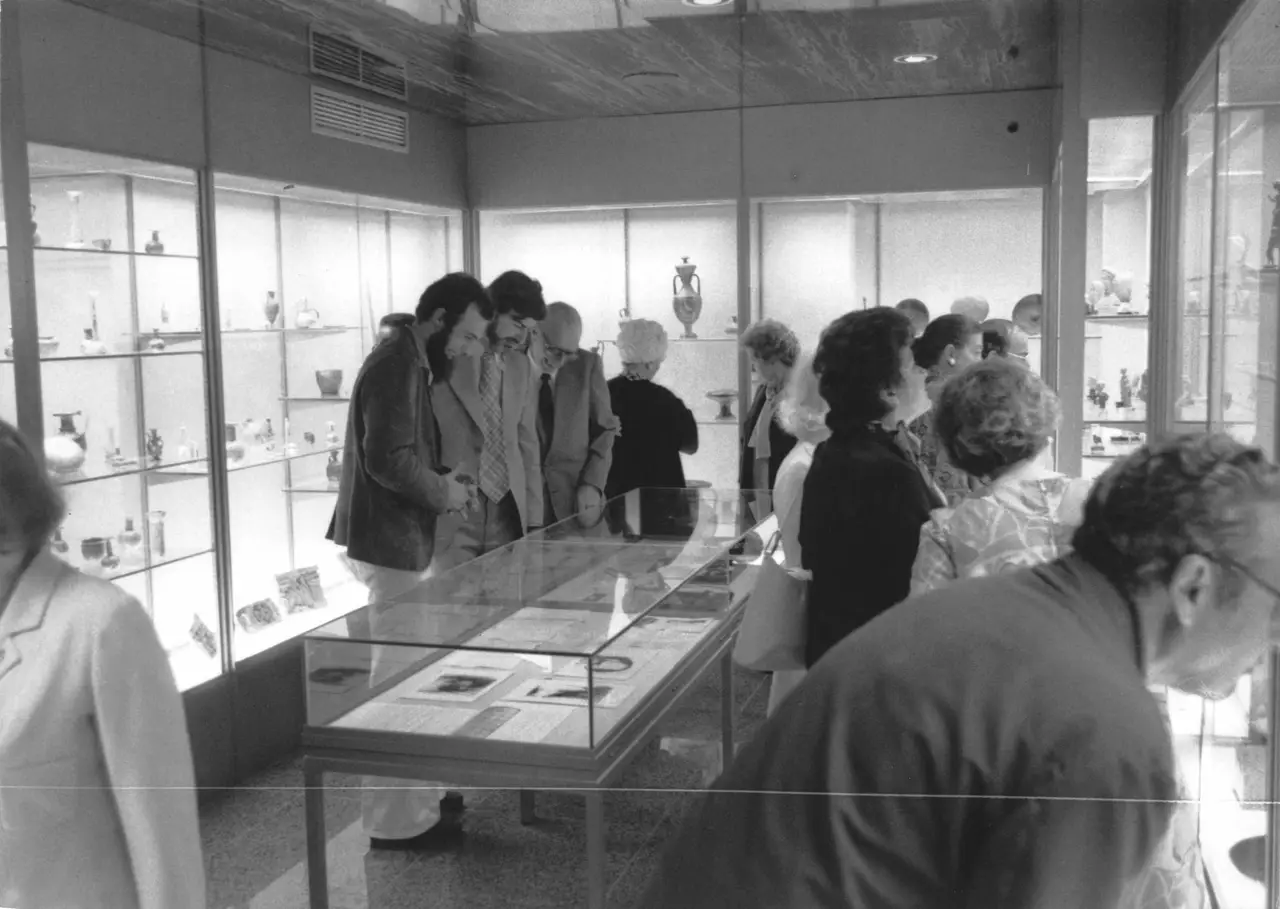
The museum lasted three years.
By 1978, conservation concerns forced its closure. The building's conditions were damaging the collection. A decade later, the Ricard family relocated to Santa Barbara, California, in part because Georges' son was attending UCSB. Plans emerged to exhibit the collection at the university. State budget cuts killed them. And so, for decades, one of the most significant private collections of antiquities in the Western Hemisphere lived in a house that had once been a pool pavilion.
The Vault Beneath the House
The Ricard family home in Santa Barbara was originally the pool pavilion on the estate of businessman George Owen Knapp. Before the Ricards arrived, the pool had been drained, covered with flooring, and roofed over to expand the living space. But the shell of the pool remained beneath the house, and this became what the family called "the vault."
When staff from Emory University's Carlos Museum first descended into this space in 2018, they found an ingenious storage system. Wooden shelving lined the walls, built so that the sides could unlatch and fold down. Everything sat on egg crate pads, a California solution for earthquake country. Annie Shanley, Assistant Registrar and Provenance Researcher at the Carlos, had never encountered earthquake-proof antiquities storage before. It was, she later recalled, an eye-opener for someone who had always lived on the East Coast.
Georges Ricard had died. Mudslides were ravaging Santa Barbara. The family was downsizing, and they wanted the collection to find a permanent home where it could serve teaching and public outreach. The Carlos Museum was offered all 1,500 objects, and given months to decide.
The Question Every Collector Faces
How do you evaluate the provenance of 1,500 antiquities in a matter of months? The honest answer is that you cannot, not completely. But this does not mean the task is impossible.
The Ricard family had maintained a robust database with detailed entries for each object, including provenance information and purchase details where known. Georges had been buying in the 1970s, which is relatively recent for antiquities, and the collection had been publicly visible since its Monaco debut. It had been online since 1997, an eternity in internet terms. Based on records and conversations with the family, the Carlos team developed confidence that Georges had collected in good faith. There were no red flag names in the purchase documents, no associations with dealers known to have trafficked looted material.
Most significantly, curator Melinda Hartwig contacted the Egyptian Ministry of Culture directly. She provided a list of objects under consideration and asked, plainly, whether Egypt had any objections. This kind of proactive dialogue, Shanley believes, represents the future of ethical collecting. The Egyptians reviewed the list and gave their blessing to proceed, with one exception we will return to later.
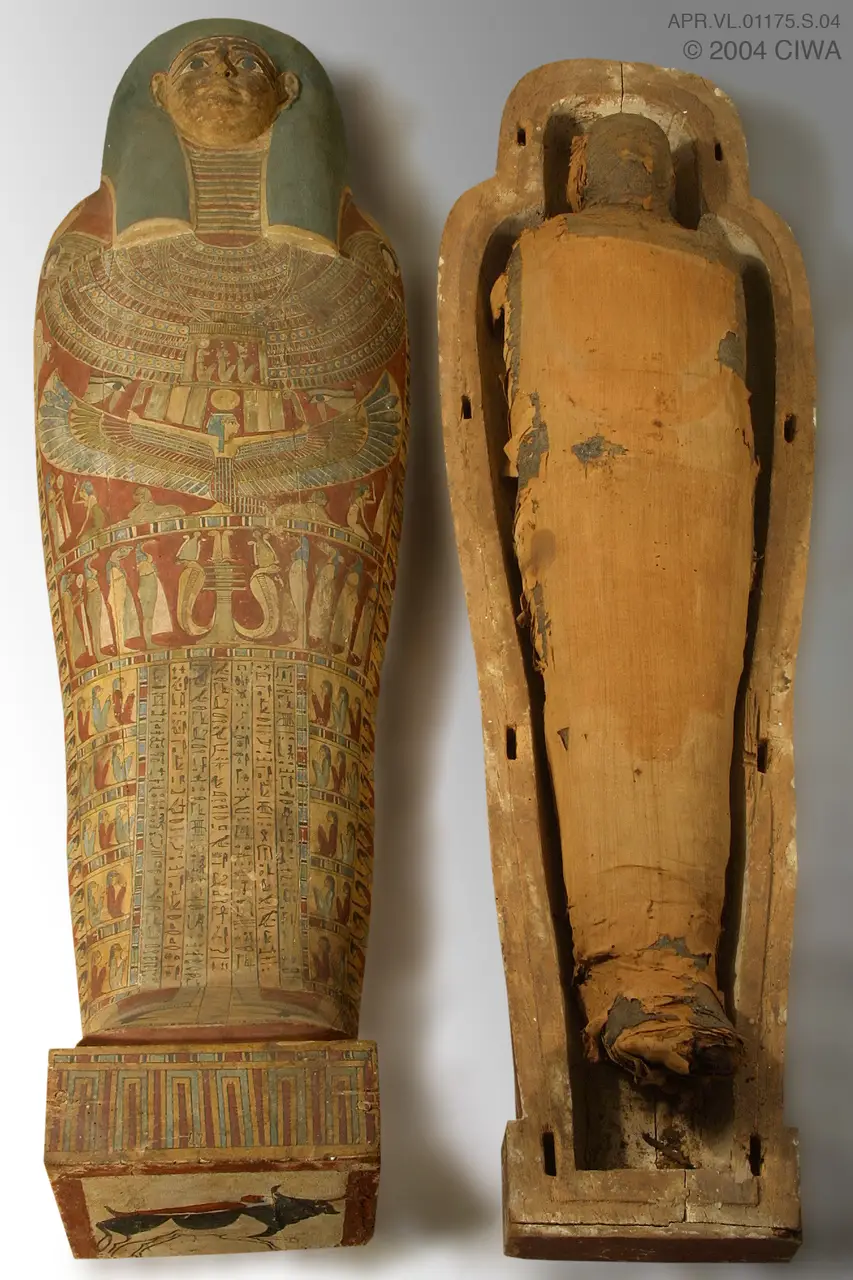
Two weeks of work followed in Santa Barbara. Conservators stabilized objects for cross-country travel. Staff packed smaller pieces into boxes. Professional craters arrived to handle the larger works. In one photograph from this period, a mummy named Taosiris is being carried up the stairs from the swimming pool on what looks like a medical stretcher. As one does with a coffin.
What Provenance Research Actually Looks Like
When Shanley describes her job, she talks about trust issues. This is not self-deprecation. It is method.
Provenance research seeks to trace the ownership history of an object from creation to the present day. Who owned the work? When? How did they part with it? Was it sold, bequeathed, or stolen? Which collectors, dealers, agents, and auction houses played a role in each transition? For a collector considering a purchase, understanding this process illuminates both the risks and the rewards of acquiring antiquities.
The work begins with the object itself. Shanley examines every surface for labels, markings, stickers, and old accession numbers. A pot that once belonged to the Toledo Museum of Art still bears their number, written in a style that becomes recognizable after years of practice. A relief of a dog named Heaven came with a backboard bearing a Christie's sticker, providing another link in the chain.
Then come the files: object records, accession documents, conservation notes, museum archives. Correspondence from dealers, former collectors, other institutions, and scholars can all provide useful evidence. Auction catalogues, exhibition catalogues, and excavation reports offer additional threads to follow. And increasingly, as more collections go online, a significant portion of provenance research involves systematic searching through digitized records.
The Carlos Museum owns a marble Aphrodite that exemplifies the ideal. Publications trace her to a French collection in 1836, meaning she has been out of her source country for nearly 190 years. For a classical antiquity, this kind of documentation is exceptional. Shanley holds her up as the standard to which all acquisitions should aspire.
Most objects will never be Aphrodite.
The Forger Who Aged His Stickers
Not every provenance document tells the truth. Shanley offers a case study that should give any collector pause.
A small Egyptian wooden face arrived at the Carlos with a certificate of authenticity from a gallery called Antiquis 2000. The certificate stated that the piece had been donated to the Dover Museum and Philosophical Institute in the UK by a Mrs. Bainbridge-Smith in 1894, later sold to a John Heel of South Norwood in 1951, and eventually acquired from his daughter. On the back of the face was an old, worn, slightly torn sticker written in period-appropriate ink.
Everything looked legitimate. During the pandemic, Shanley emailed the Dover Museum to verify. The registrar there was delighted to investigate something new. Mrs. Bainbridge-Smith was real. She had indeed given a small collection of Egyptian objects to the museum. But nothing in her donation resembled this head. She had given shabtis and amulets.
Further research revealed that the face had passed through the hands of John C. Andrews, a notorious art forger who traded under many names. Andrews did not merely forge art. He forged provenance evidence, creating aged stickers and fabricated documentation to support his fakes. Mrs. Bainbridge-Smith was a real person, which made the deception all the more convincing.
The lesson is clear: triple-check everything, then check it again. Provenance is only as reliable as its verification.
From Monaco to Denmark: Tracing a Palmyrene Portrait
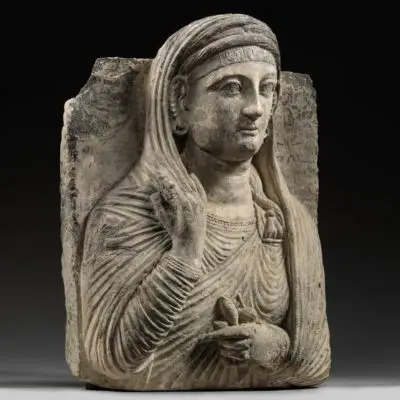
The year after the main acquisition, the Ricard family gifted the Carlos two Palmyrene funerary reliefs. These came with no paperwork, no provenance information whatsoever. Under normal circumstances, this might be disqualifying. But the circumstances of Palmyra are far from normal.
Palmyra, the ancient Syrian site, was largely destroyed during the civil war in 2015. The tower tombs that once held portraits like these were demolished by the Islamic State. (The Tower of Elahbel, one of the most elaborate, no longer exists.) The illegal trade in Palmyrene objects has surged since the destruction, making provenance research both more urgent and more fraught.
What the donors did have were photographs of the reliefs installed in the Monaco museum in the 1970s. Georges Ricard's trousers alone date the images conclusively. This evidence proved that the portraits were not products of the 2015 looting. The Carlos accepted them with the understanding that if research indicated they should be repatriated, they would be.
The breakthrough came through collaboration. Conservation intern Elena Bowen contacted the Palmyra Portrait Project, a database initiative based at Aarhus University in Denmark. Originally created in 2012 to catalog the approximately 2,500 known Palmyrene portraits as a corpus for study, the project evolved after 2015 into a resource for tracing what had been lost, stolen, or destroyed.
The project found the female portrait in their records: PS 652. They provided evidence that she had belonged to Emile Bertone, an architect and artist who worked at Palmyra in the mid-1890s and took several reliefs home with him. After his death, his collection, including this portrait, sold at auction in Paris in 1931. Archive pages from that sale show her clearly, though she has since lost her nose.
The Carlos learned where their portrait had been for over a century. The Palmyra Portrait Project found a relief they had lost track of after the 1931 sale. This kind of mutual benefit, Shanley argues, is exactly what provenance research can accomplish when institutions and researchers share information openly.
The Sailors Who Were Not Original
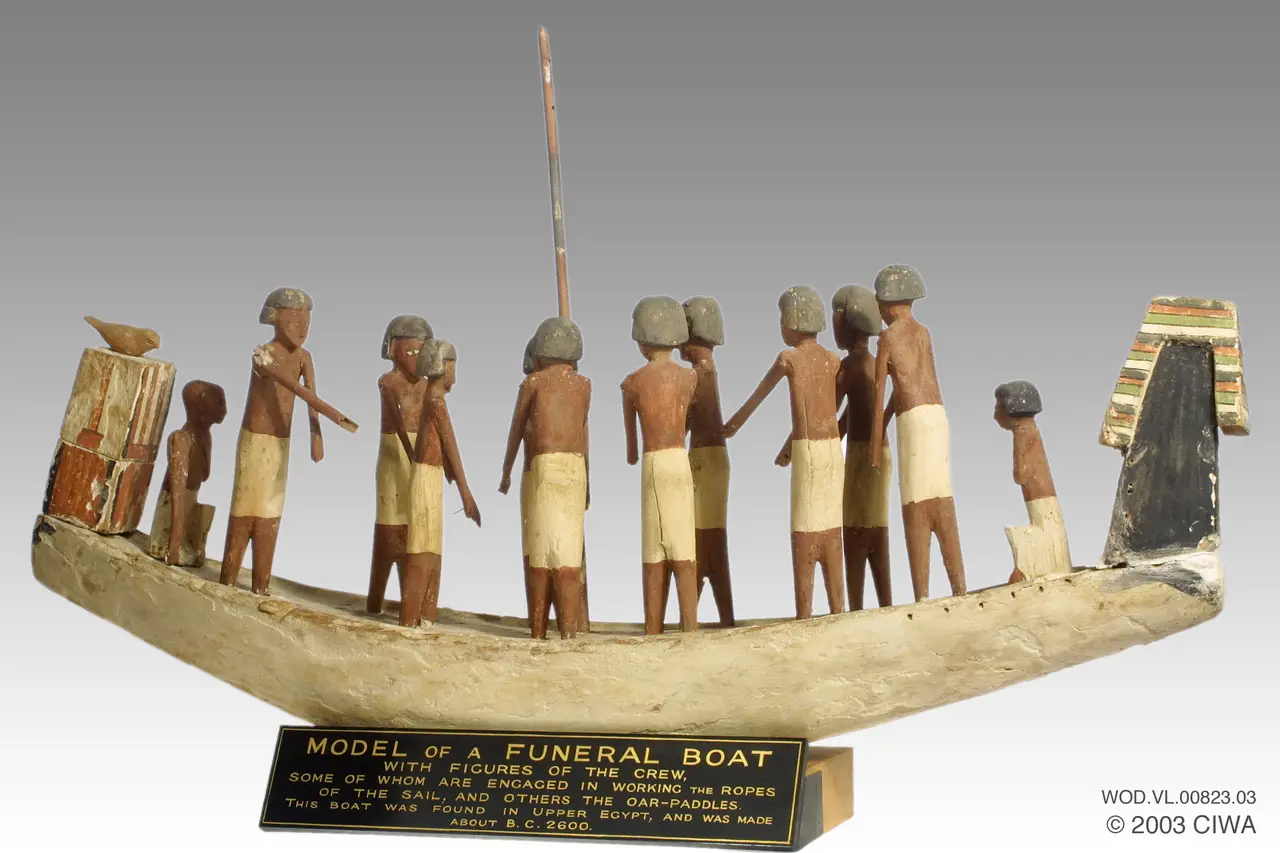
Some objects remain mysteries. A wooden solar boat from the Ricard collection is currently on display at the Carlos, and its provenance is genuinely unknown.
The donor's database claimed it was ex-collection Henrietta Zannen of Monte Carlo from the early 1900s, and that it had been on loan to the British Museum in the mid-twentieth century. Shanley has found no evidence supporting either claim. She has no idea who Henrietta Zannen was. A former keeper at the British Museum confirmed there is no record of the boat ever being on loan there, and noted that the museum was not taking loans from private individuals during that period.
What researchers have discovered, through CT scanning, is that the sailors on the boat are not original. Many, if not all, were added in modern times. The scans reveal modern drill holes made with modern tools. It is entirely possible, even probable, that a dealer added the figures to make the boat more attractive to buyers. Only a handful of these boats exist, and at least one other shows similar additions. Tracking down the dealer who made these modifications could, paradoxically, help establish the boat's provenance.
The work continues.
When Egypt Asked for One Thing Back
The Amarna Period relief is among the most beautiful objects in the Ricard collection, and it is the one piece Egypt requested be returned.
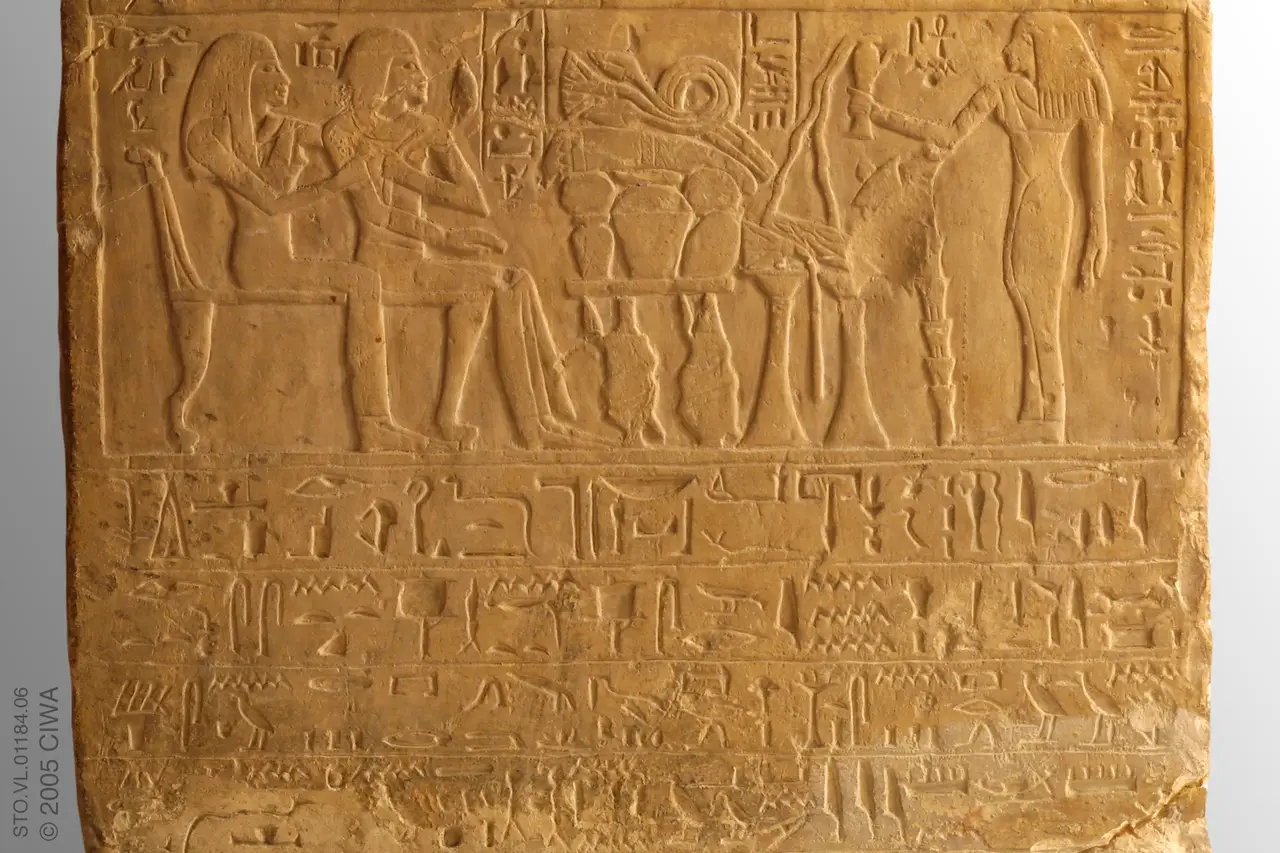
When the Carlos approached the Egyptian Ministry of Culture before accepting the collection, the response was not what some museums fear. Egypt did not demand everything back. They have plenty of shabtis, Shanley notes, and do not want more. They asked for this single relief, and the Carlos agreed without hesitation.
This outcome illustrates a model that Shanley and her colleagues are working to promote. Too many American museums avoid conversation with source countries out of fear that dialogue will open floodgates. The Ricard experience suggests otherwise. Proactive communication, transparency about holdings, and genuine cooperation can produce outcomes that serve everyone's interests.
The relief will return to Egypt. The rest of the collection remains at the Carlos, where it supports teaching and public engagement exactly as Georges Ricard intended.
What Collectors Can Learn
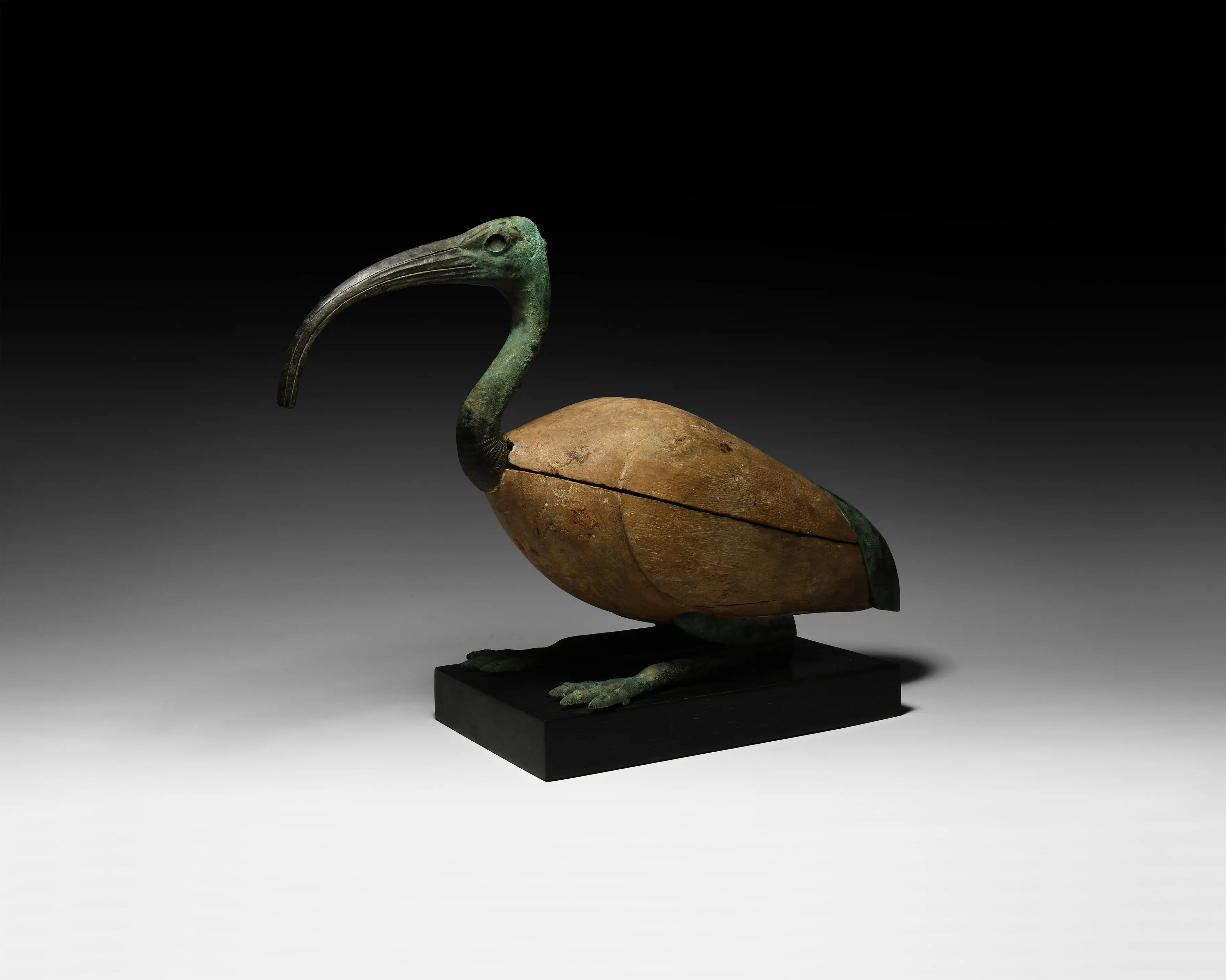
The Ricard collection's journey from Monaco to a swimming pool to a major university museum offers several lessons for private collectors.
Documentation matters. Georges Ricard maintained detailed records for decades, and this database proved crucial when the collection's future hung in the balance. Purchase receipts, dealer correspondence, exhibition history, and publication references all contribute to an object's story. Collectors who keep robust records are protecting both themselves and the long-term integrity of their holdings.
Gaps in provenance are not automatically disqualifying. The Association of Art Museum Directors' guidelines, developed in response to looting in Iraq and Syria, allow museums to exercise informed judgment based on exhibition history, publication history, the nature of the object, and communication with source countries. Objects that have been publicly visible for decades, even without complete ownership chains, can be acquired ethically if the circumstances warrant.
Collaboration advances everyone's interests. The Palmyra Portrait Project exists because researchers recognized that scattered knowledge becomes powerful when pooled. Private collectors who share information about their holdings contribute to a larger scholarly effort and often learn more about their own objects in return.
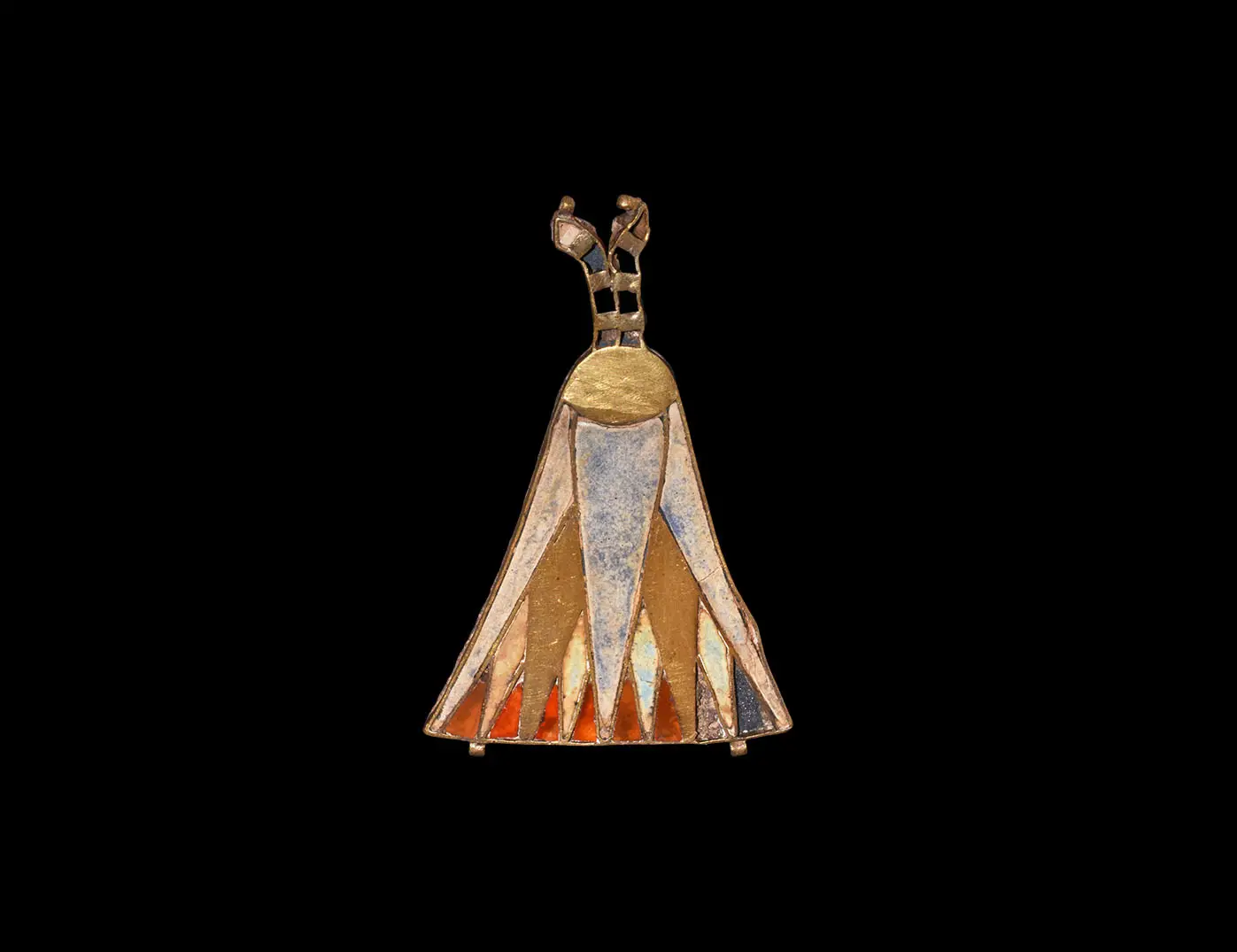
And finally: the Ricard story normalizes collecting while demonstrating its responsibilities. Georges Ricard was not a professional archaeologist or a museum curator. He was an enthusiast who fell in love with the ancient world and wanted others to share that love. His collection survived because he cared for it, documented it, and ultimately ensured it would continue to serve the public. Private collecting, done thoughtfully, can be part of the broader effort to preserve and understand our shared human heritage.
The objects pictured in this feature represent the kinds of antiquities that appear regularly at auction. Egyptian funerary items, Roman glass, Greek pottery, and Near Eastern sculpture all have legitimate markets where collectors can acquire pieces with documented histories.
For collectors interested in building their own documented holdings, provenance research begins at the point of purchase. Ask dealers for whatever documentation exists. Request condition reports and publication references. Keep your own records meticulously. The object you acquire today may, decades hence, find its way to a museum, and the paperwork you preserve will tell its story.
Browse our current catalogue to explore available antiquities with established provenance.
TimeLine Auctions, 27th April 2026