Home > Stories by TimeLine Auctions
Stories by TimeLine Auctions
The Workshop and the Stone: Roman Marble Sculpture
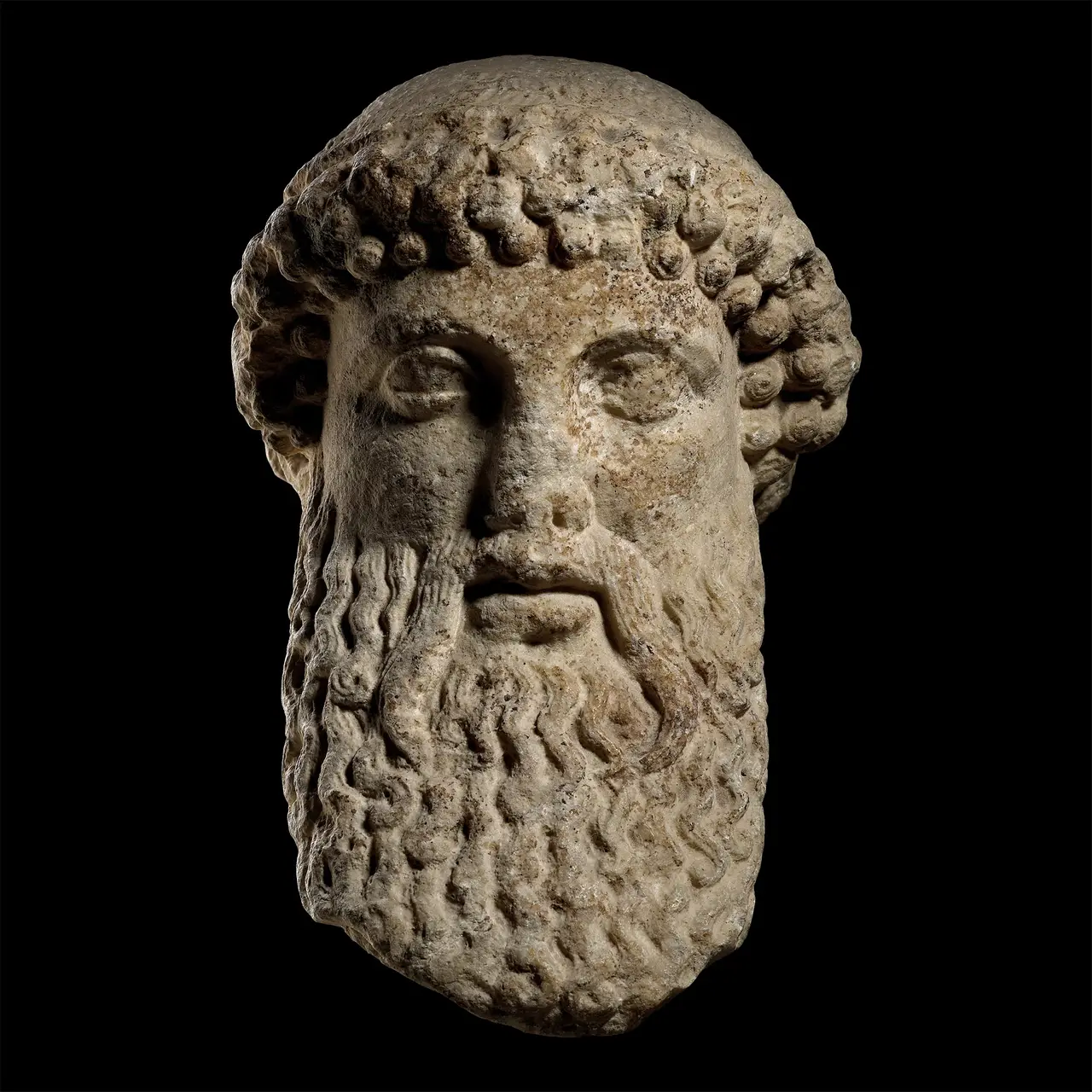
The life-size head of Hermes (Lot 0131) is a Roman copy of a fifth-century B.C. Greek type, the Hermes Propylaios attributed to the sculptor Alkamenes, and it repays close looking. The beard is tiered and loosely curled, each wave of distinct from the next. The front of the head is worked with care and clarity; the sides and rear show a more economical finish. This is characteristic of Roman workshop method. Where Greek sculptors typically worked a block from all sides at a roughly even rate, Roman carvers drew their design onto the stone's front face and carved inward, from front to back. The primary viewing angle dictated where the labour went. It is a practical approach, and it produced results that read well in the settings for which they were intended: niches, colonnades, domestic interiors where a visitor would encounter the sculpture more or less head-on.
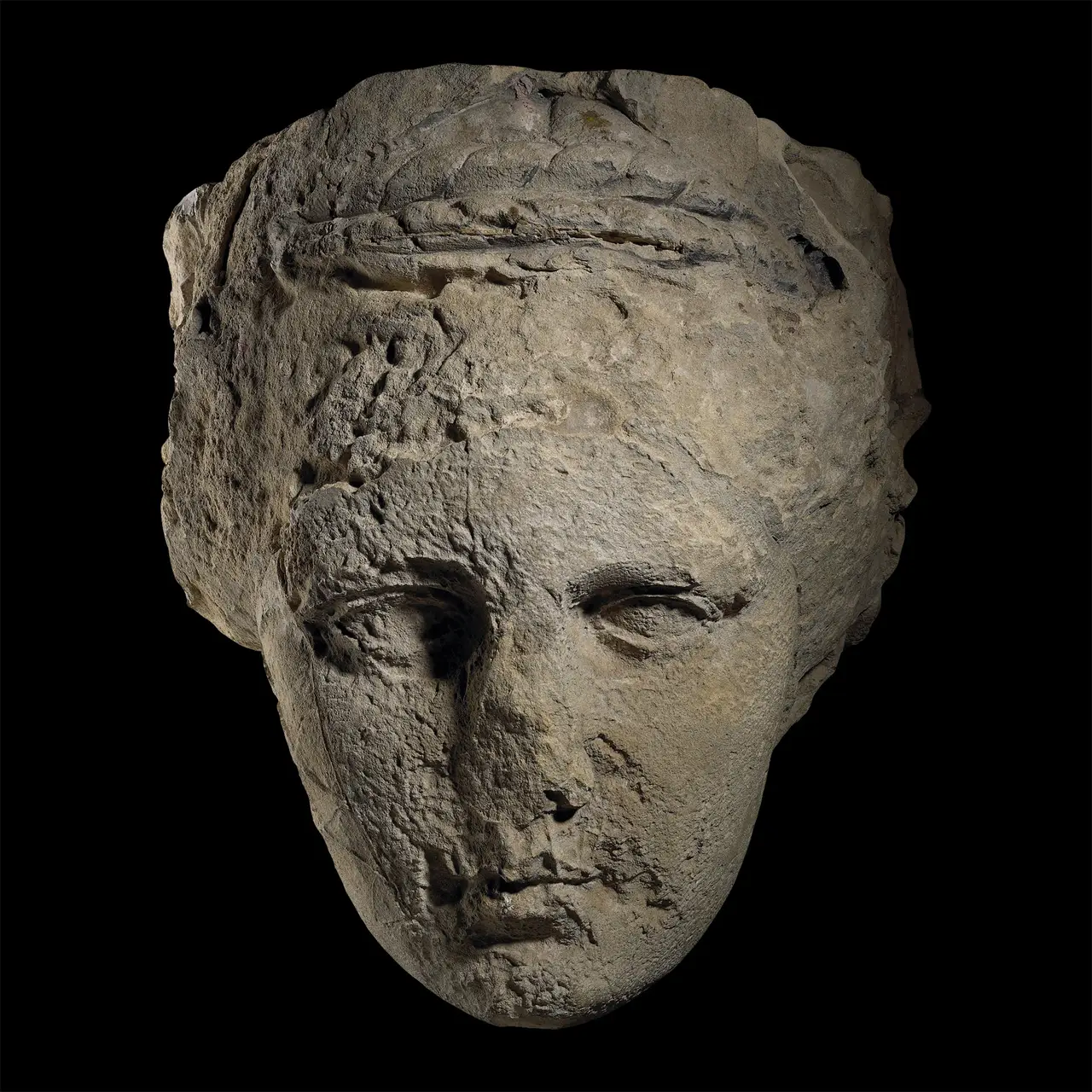
That Roman pragmatism shows itself across a range of scales and functions. The colossal head of Diana (Lot 0130), three times life-size and weighing close to a hundred kilograms, was not conceived as a freestanding portrait. The top of the head has been cut flat, scored with a T-shaped indentation, and the back sheared perpendicular to the face. These are the marks of an architectural setting: the head was almost certainly a corbel or caryatid element, projecting from a wall and meant to be seen from below. The front is carefully finished, with transverse braids across the brow and a double-rowed laurel wreath, but no sculptor would waste time polishing stone that sat against masonry. What we have, then, is a fragment removed from its original programme, perhaps from a bath complex or public portico, now readable only as an isolated face with deep-set eyes and composed features.
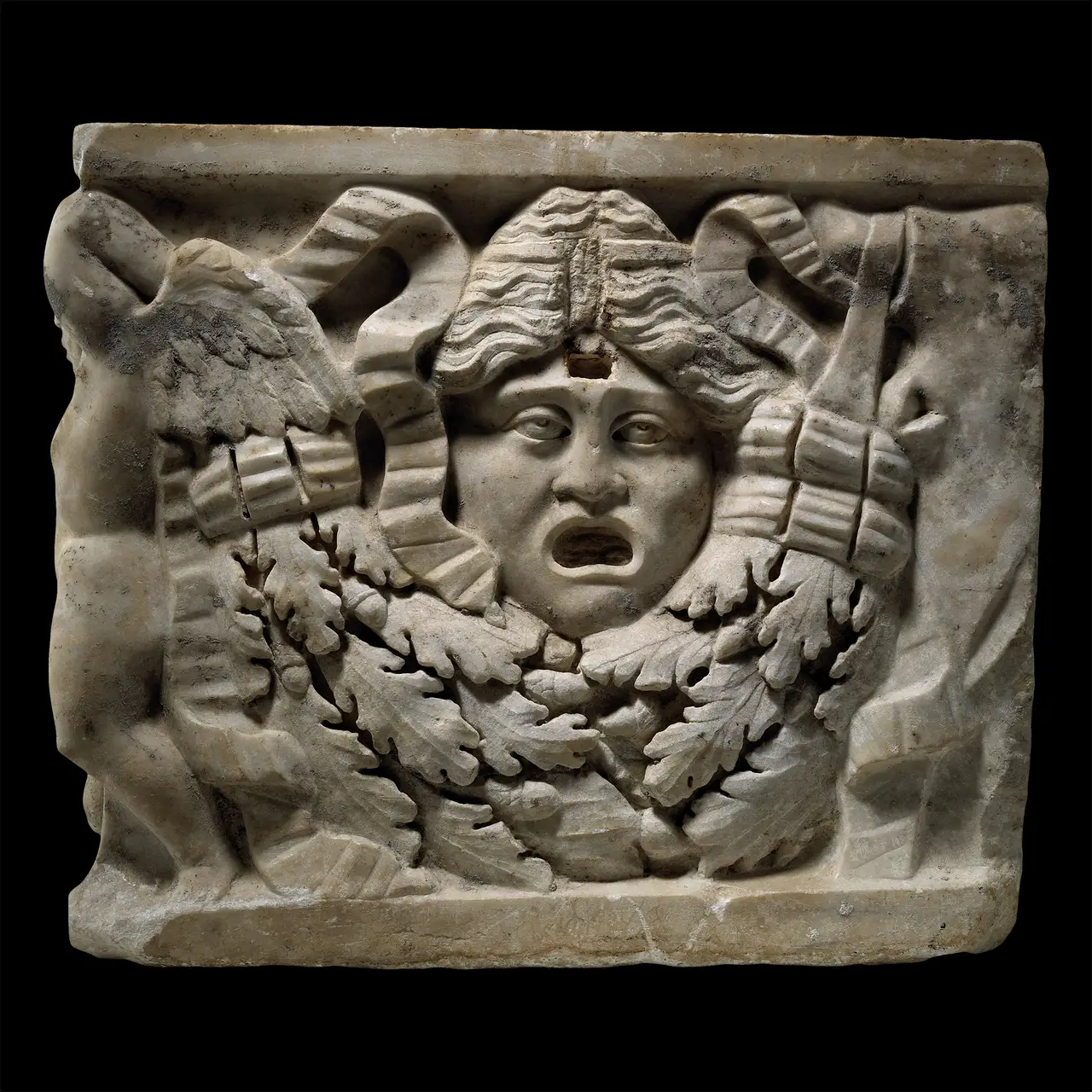
The garland sarcophagus panel (Lot 0134), dated to approximately 135 A.D., demonstrates one of the Roman sculptor's most important tools: the drill. This rectangular panel formed the right end of a sarcophagus and is organised around a theatrical mask with open mouth and deeply drilled eyes, a winged Eros to the left supporting a heavy garland of oak leaves and acorns, and a boukranion (ox skull) to the right. The running drill has likely been used throughout, its scalloped channels visible in the recesses between the leaves and in the undercut areas behind the garland, where stone has been removed to make the carved forms project sharply from the background. Sarcophagus production was an industry in the Roman Imperial period. Coffins were frequently sold ready-made with standard decorative schemes, and the Hadrianic date of this panel places it within the peak period of garland sarcophagi production in Roman Italy. Herdejürgen's catalogue of the Stadtrömische und italische Girlandensarkophage (1996) includes a close parallel.
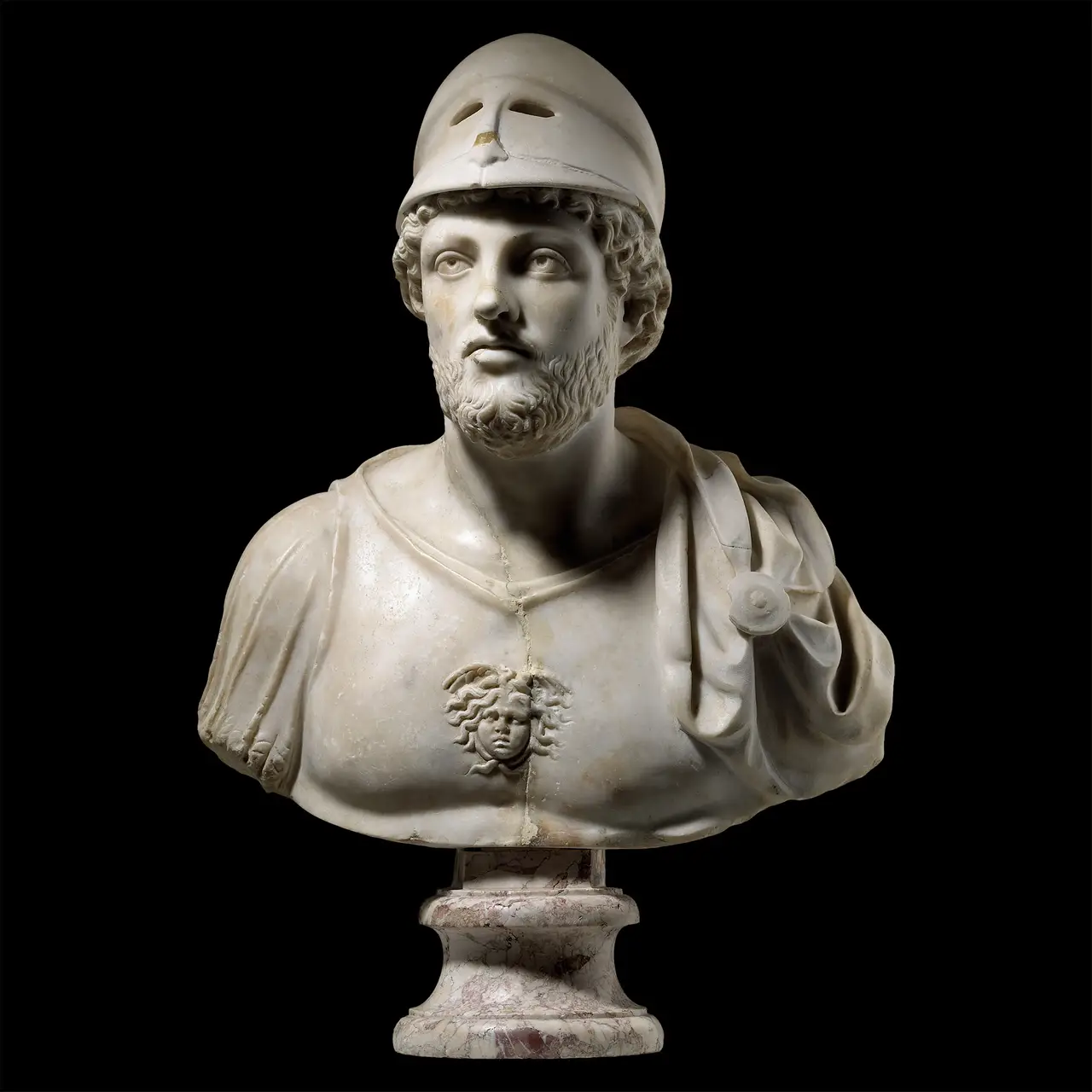
The bust of Mars (Lot 0133) comes from a very different moment: the late fourth century A.D., among the last generations of pagan sculptural production. Mars wears a Corinthian helmet pushed back from his forehead, a military cuirass with a small gorgoneion at its centre, and a chlamys fastened at the left shoulder. The eyes have incised irises and drilled pupils, a convention that became standard from the Hadrianic period onward, replacing the earlier practice of painting eyes onto smoothed marble. The bust extends below the shoulders, following the pectoral muscles, a format that had been normative since about A.D. 100. Its back was hollowed out in modern times, which suggests it may once have formed part of a circular tondo or clipeus relief. That later reworking is itself informative; post-antique alteration of Roman marbles, whether for restoration, display, or reuse, is part of most ancient sculptures' history.
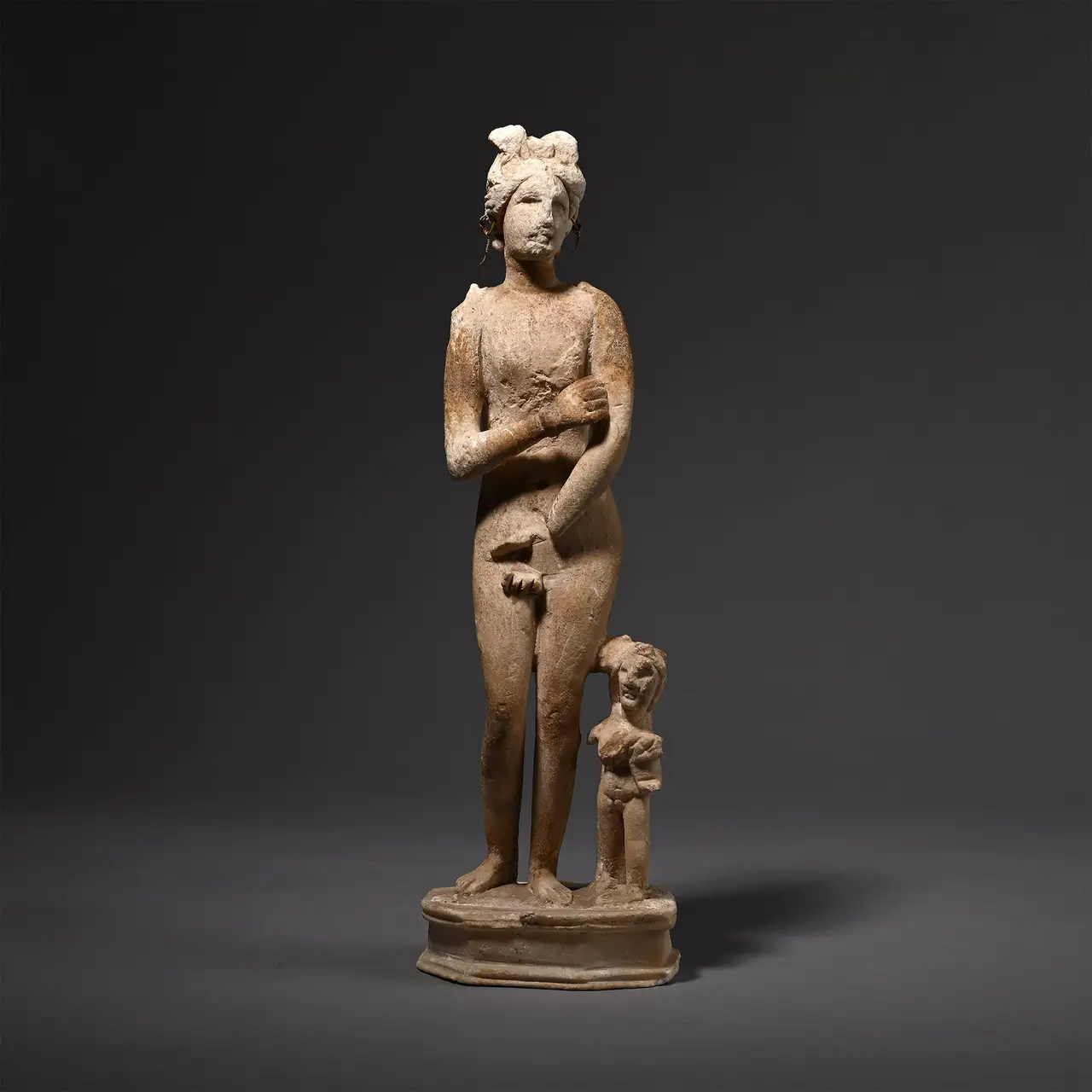
Against these larger and more heavily worked pieces, the auction features an Aphrodite (Lot 0095) which offers a reminder that much Roman-period sculpture was made at domestic scale. Standing just under thirteen inches high and weighing 1.2 kilograms. The figure adopts the familiar pudica pose, with a putto at her left knee and her hair gathered into a chignon. The marble retains small voids drilled for the attachment of miniature gold earrings; metal accessories like these were common in antiquity, and the drilled holes are often the only evidence that a figure once wore jewellery. Produced somewhere in the Eastern Greek sphere in the first century B.C. or first century A.D., the piece sits at the border between the Hellenistic and Roman worlds, where workshop traditions overlapped considerably.
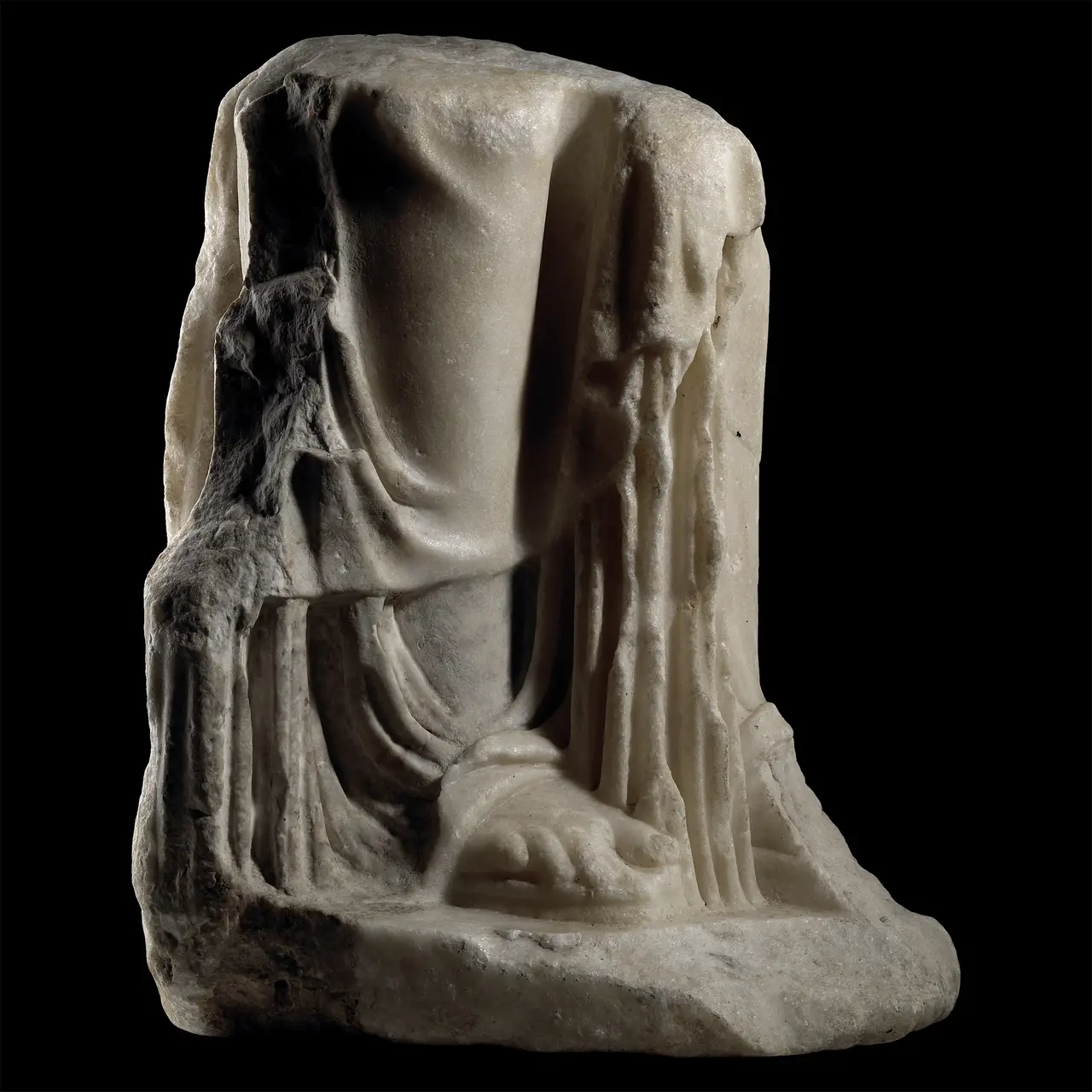
The fragmentary Isis (Lot 0138) introduces a different kind of stylistic borrowing. This lower half of a standing figure, extant only from the knees down, wears a chiton and himation rendered in deep, heavy vertical folds that echo the stiff patterned drapery of sixth-century B.C. Greek sculpture. The style is termed Archaistic: a second-century A.D. sculptor adopting the formal vocabulary of a much earlier period. Fullerton's study of the Archaistic style in Roman statuary (1990) provides the essential framework for understanding pieces of this kind. The right foot advances slightly, wearing a detailed sandal, and the whole figure carries its considerable weight (nearly sixty-seven kilograms) that suits both its religious function and its archaic aesthetic.
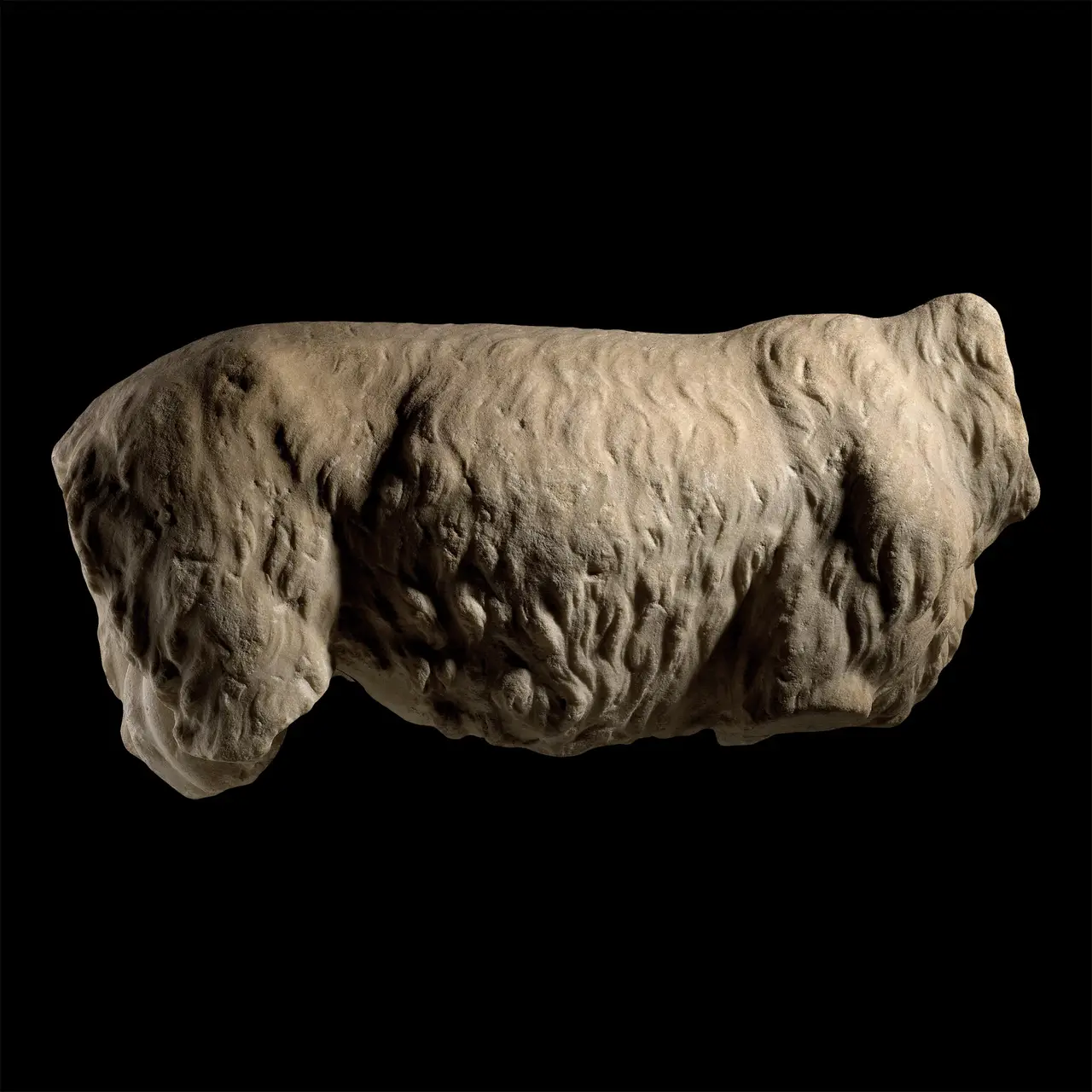
Roman sculptors were equally capable with animal subjects. The life-size ram torso (Lot 0135), at 155 kilograms the heaviest piece in this group, has been carved to render thick, shaggy wool with convincing naturalism; the surface texture is irregular and layered, quite distinct from the patterning used for human hair or drapery folds. Whether the animal represents the mythological goat Amalthea or a sacrificial ram, it is a substantial piece of sculptural work that would have required a large, sound block and the skill to handle it.
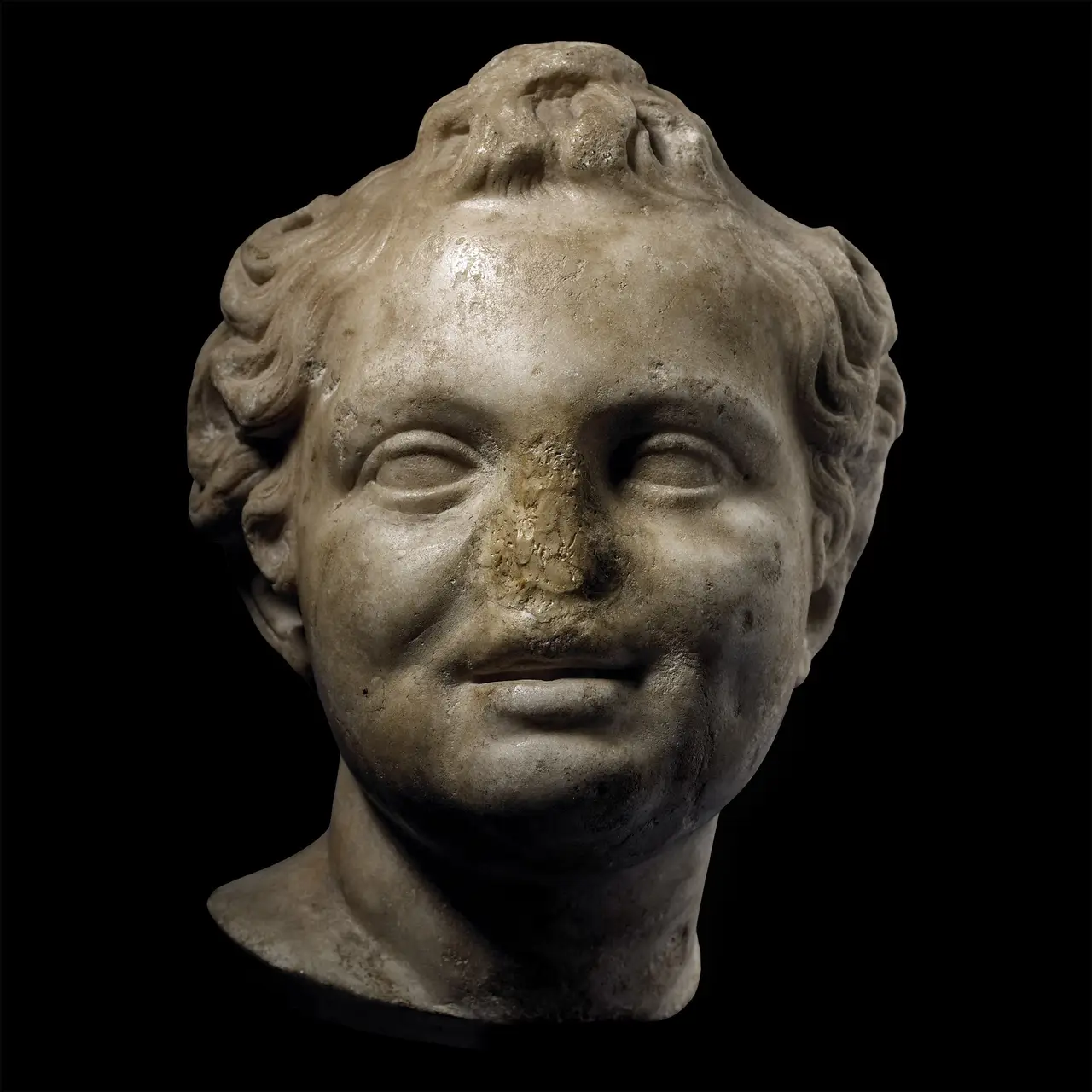
A final head completes the group and illustrates a softer mode of surface treatment available to the Roman carver. The youthful Eros (Lot 0129) is plump-cheeked and slightly open-mouthed, with short tight curls; its forms are rounded, and the tool marks are largely smoothed away in favour of gentle modelling. Roman sculptors routinely exploited contrast between polished skin and more energetically worked hair within a single figure, and this example leans decisively toward the polished end of that spectrum.
These eight pieces span roughly five centuries and range from just over a kilogram to more than a hundred and fifty. They are working examples of Roman sculptural production: its adaptability, its workshop efficiency, its willingness to draw on the Greek past while serving Roman purposes. The sarcophagus panel was made for the dead. The Aphrodite was likely made for a private room. The Diana was made for a building whose plan we cannot reconstruct. Each carries, in its surfaces and its fractures and its tool marks, the residue of practical decisions made by craftsmen whose names are lost.
All eight lots are offered in TimeLine Auctions' sale beginning 3rd March 2026.
TimeLine Auctions, 18th February 2026