Home > Stories by TimeLine Auctions
Stories by TimeLine Auctions
Understanding What Makes an Antiquity Truly Important
You're browsing an auction catalogue, and two Roman oil lamps catch your attention. They're from the same period, roughly the same size, and the estimates are within £50 of each other. One sells for £180. The other fetches £2,400. What happened?
This scenario plays out in our salerooms constantly, and it confuses new collectors more than almost anything else. The difference between those two lamps isn't random, and it certainly isn't about one bidder simply having deeper pockets. The expensive lamp possessed something the other lacked: importance. That word gets thrown around loosely in the antiquities world, but it has specific, learnable meanings. Once you understand them, you'll see auction catalogues (and your own collection) with entirely new eyes.
We've spent years helping collectors develop this kind of vision, and we can tell you with confidence that it isn't mysterious. Importance isn't some ineffable quality that only scholars can perceive. It breaks down into concrete categories that you can learn to recognise, and that's precisely what we're going to cover here. By the end of this guide, you'll have a practical framework for evaluating any object you encounter, whether in our catalogue, at a museum, or at a competitor's sale.
First Principles: The Typology Problem
Before we discuss what makes something important, we need to address a concept that underpins the entire antiquities market: typology. Nearly every ancient object belongs to a category, a family of similar items produced across a region and time period. Near Eastern oil lamps. Attic black-figure pottery. Egyptian bronze figures. Roman marble portrait busts. Luristan bronze finials. Cypriot bichrome ware.
Why does this matter? Because importance is always relative to type. When we say a piece is "exceptional," we mean exceptional compared to others in its category. A perfectly ordinary Egyptian scarab isn't competing against a perfectly ordinary Roman fibula; it's measured against the thousands of other Egyptian scarabs that have survived. This sounds obvious when stated plainly, but we see new collectors stumble over it regularly.
Understanding typology also protects you from a common mistake: assuming that unfamiliarity equals rarity. We once had a client who was convinced he'd found something extraordinary because he'd never seen anything like it. The object was a type of Byzantine bronze weight that appears at auction several times a year; he simply hadn't been looking long enough to recognise it. Familiarity with typologies comes from exposure, which is why we always encourage new collectors to spend months browsing catalogues before they spend money bidding.
A practical suggestion: Pick one typology that genuinely interests you. Greek coins, Roman glass, Egyptian amulets, whatever draws your eye. Spend three months tracking every example that appears at auction, noting condition, estimates, and hammer prices. You'll develop an intuitive sense of what's common, what's scarce, and what's genuinely rare within that category. This baseline knowledge is worth more than any book.
The Four Pillars of Importance
Through years of cataloguing, researching, and advising collectors, we've found that importance in antiquities rests on four distinct pillars. An object can possess one, several, or (rarely) all four. Understanding each pillar helps you evaluate pieces systematically rather than relying on gut feeling alone.
Pillar One: Mastery of Craft
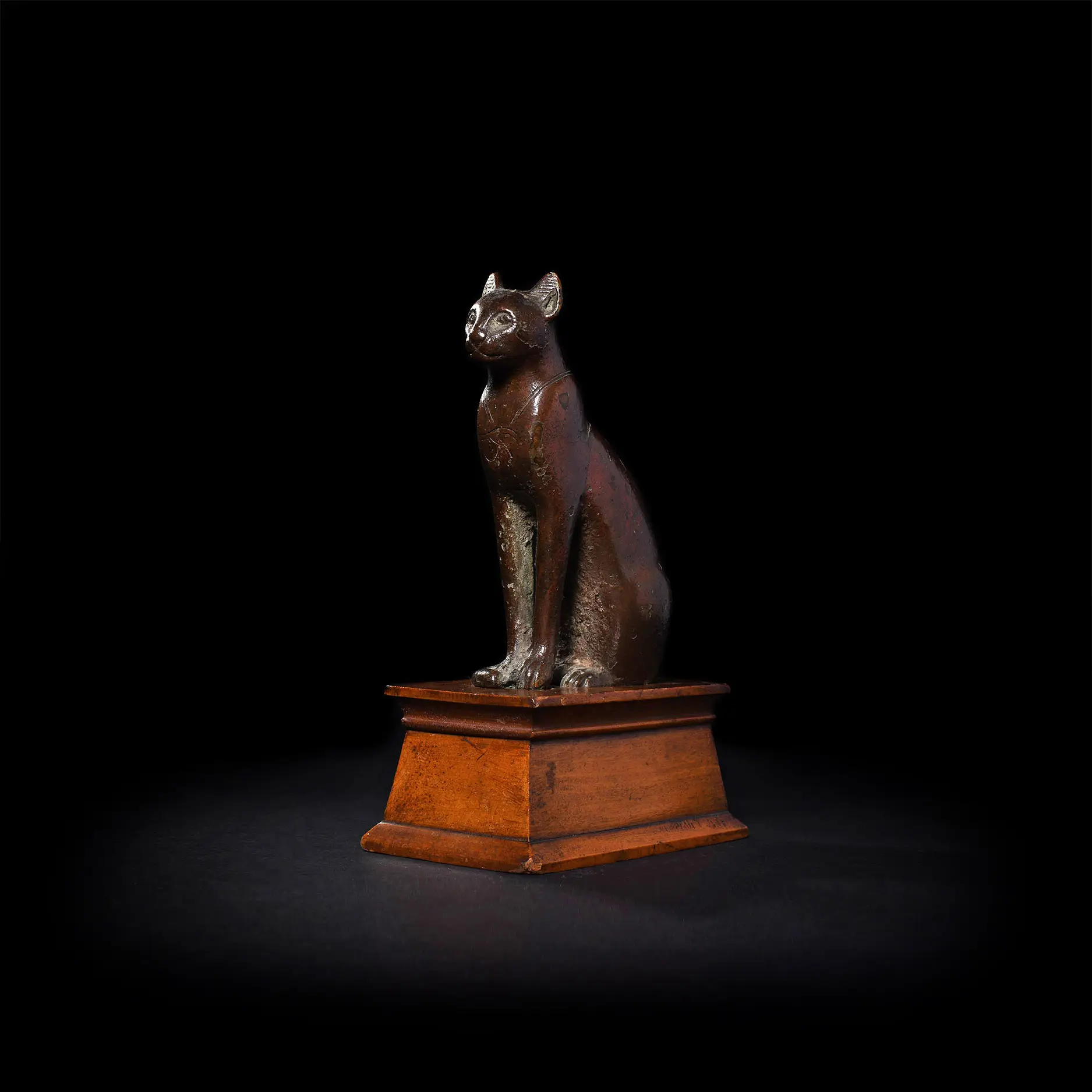
The ancient world had bad artists, competent artists, and masters, just as we do today. A mass-produced Roman lamp churned out by an apprentice in a provincial workshop is a fundamentally different object from one shaped by a skilled artisan working at the height of their abilities. Both are "ancient Roman lamps." Both are authentic. But they occupy different positions in the hierarchy of importance.
How do you recognise mastery? Look for precision in execution. On a Greek vase, examine the brushwork: are the lines confident and fluid, or hesitant and wobbly? On a bronze figure, consider the proportions and the handling of detail. Does the piece display anatomical understanding? Is there life in the posture, or does it look stiff and formulaic? On a carved gemstone, note the fineness of the engraving. Could the craftsperson render a complex scene in a space smaller than your thumbnail?
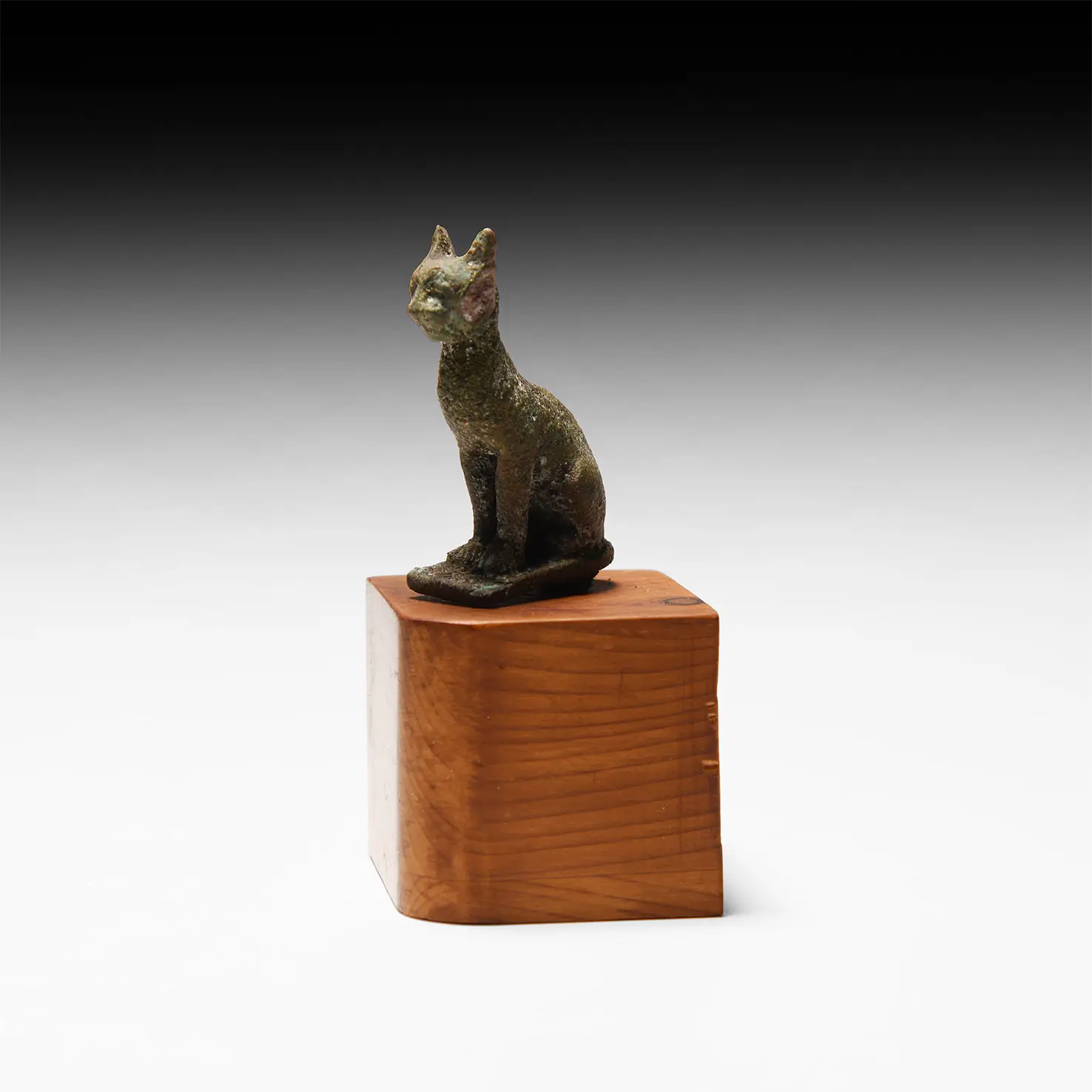
We remember examining two Egyptian bronze cats, both from the Late Period. The first had the general shape right (ears, tail, seated posture) but lacked definition. The face was flat, the legs thick, the overall impression lumpy. The second possessed extraordinary sharpness: you could see the individual ribs beneath the skin, the muscles of the haunches, the delicate modelling of the face. The first was the work of a competent craftsperson meeting market demand. The second was made by someone who genuinely understood both the material and the subject. The price difference reflected that gap, with the first selling for £975 and the second fetching £23,400.
What to look for:
- Line quality: On painted or incised decoration, confident lines flow smoothly. Hesitant work shows starts, stops, and corrections.
- Proportional understanding: Skilled artisans understood how bodies (human and animal) actually work. Amateur work often gets proportions subtly wrong.
- Fine detail in small spaces: The ability to render complex scenes or features at miniature scale indicates advanced skill.
- Surface finish: On bronzes and marbles, look for the final polish and attention to less-visible areas. Master craftspeople cared about the whole object.
One caveat: don't confuse elaboration with mastery. Some highly decorated pieces are actually rather mediocre in execution, while some simple objects demonstrate extraordinary control. A plain Greek kylix with perfect proportions and flawless potting may represent higher craftsmanship than a heavily decorated piece with uneven walls and sloppy painting.
Pillar Two: State of Preservation
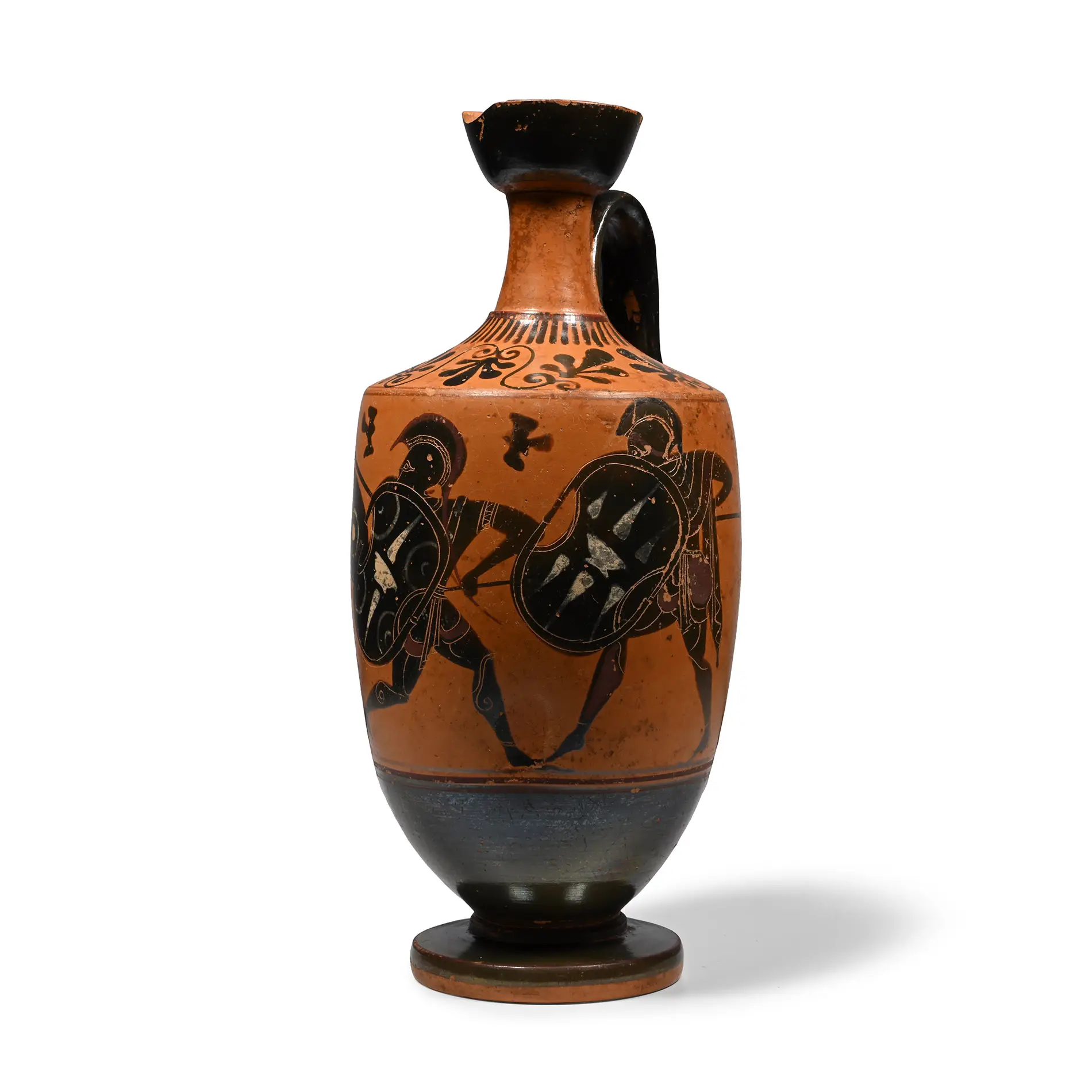
Condition matters enormously, but the relationship between condition and importance is more nuanced than "perfect equals valuable." What collectors and scholars actually prize is preservation that allows them to appreciate the object as its maker intended.
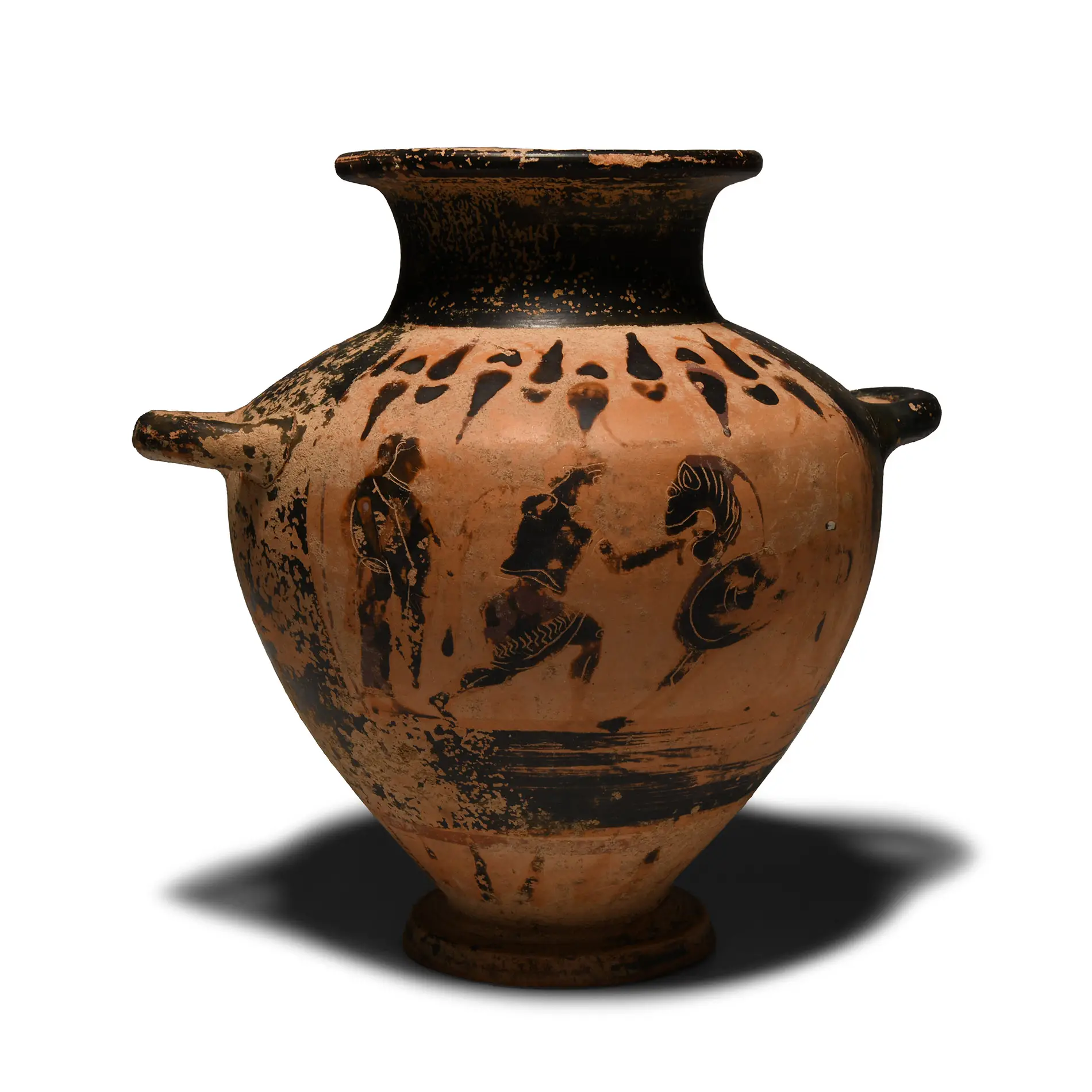
Consider a painted Greek vase. If it survives intact with vivid, unfaded pigments, you can see exactly what the artist created. You can study the brush technique, appreciate the colour choices, and understand the composition. That same vase, broken and reassembled with 40% restoration and faded colours, still has archaeological value, but much of its aesthetic and art-historical importance has been compromised. You're no longer seeing the artist's work; you're seeing what remains of it.
Excellent preservation can elevate an otherwise ordinary piece into something genuinely important. We've handled Roman glass vessels that were unremarkable in form (standard unguentaria, produced by the thousand) but possessed such extraordinary iridescence and structural integrity that they became showpieces. The iridescence itself, that rainbow patina that develops over centuries of burial, wasn't intentional. Ancient Romans never saw their glass that way. But for modern collectors, a vessel with exceptional iridescence becomes beautiful in a way the maker never anticipated.
The condition questions to ask:
- How much of what I'm seeing is original versus restored?
- Does the preservation allow me to appreciate the craftsmanship?
- Are the significant features (decoration, surface treatment, inscriptions) intact?
- For metal objects: is the patina stable, or is active corrosion threatening the piece?
- For ceramics: are the joins stable? Is there visible overpaint?
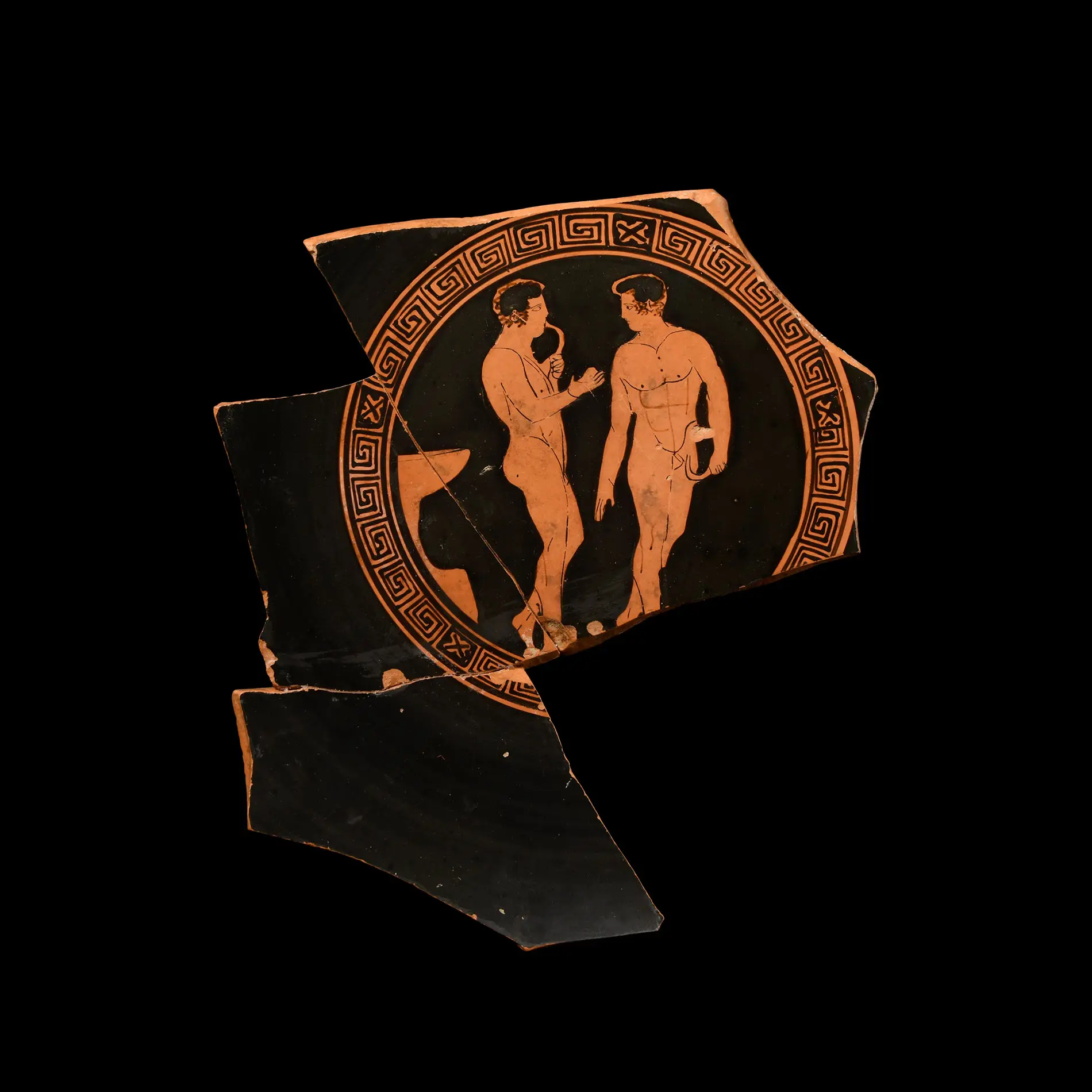
A word about damage: don't automatically dismiss pieces with condition issues. A fragmentary Athenian red-figure vase by a known painter may be more important than a complete vessel by an anonymous hack. Context matters. But when comparing like with like (same artist, same period, same type), condition becomes a major differentiator.
Pillar Three: Contextual Rarity
Here's where new collectors most often go wrong. Rarity, on its own, means nothing. Something can be unique and utterly unimportant. The question isn't "how many of these exist?" but rather "why does the scarcity matter?"
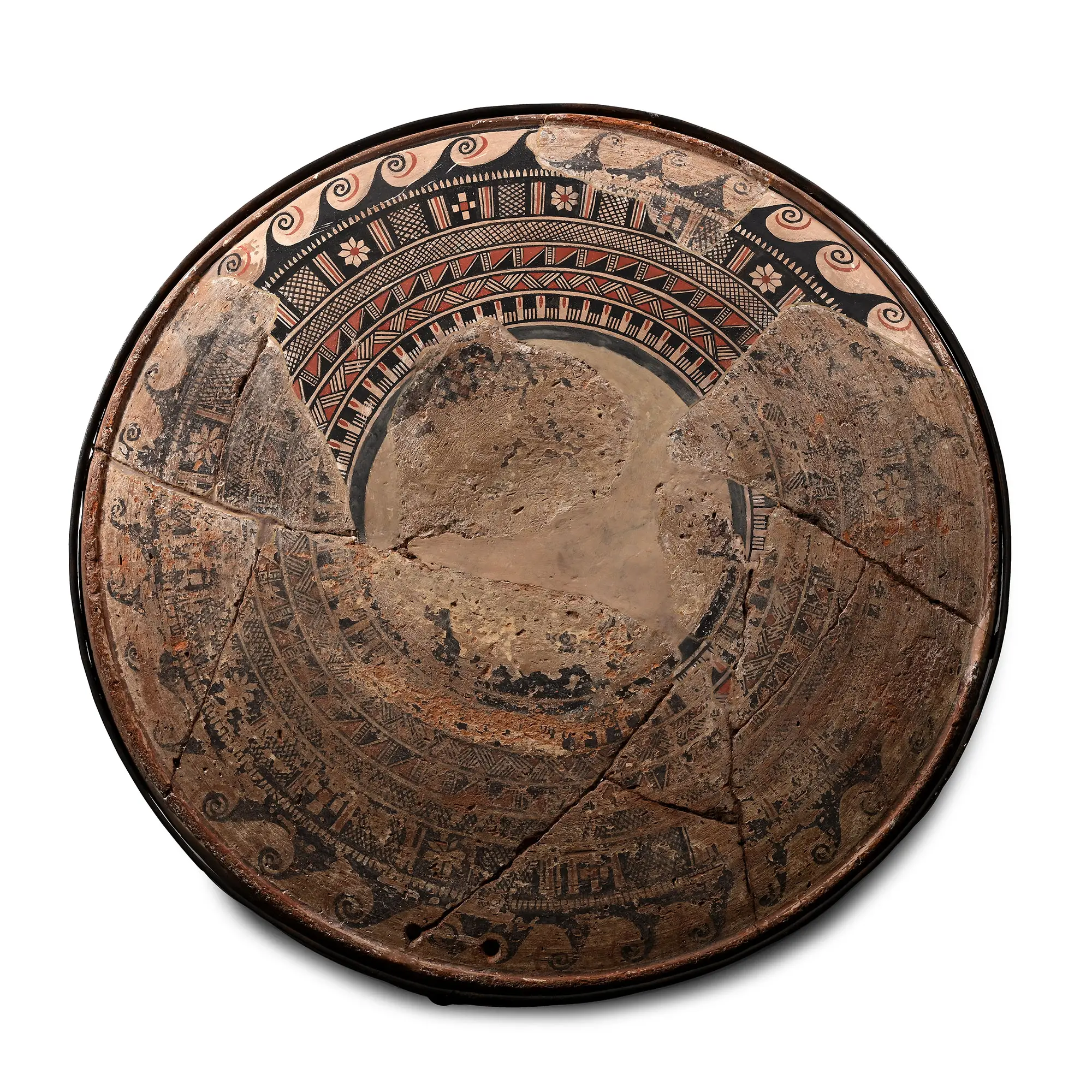
We learned this lesson vividly a few years ago with a Cypriot bichrome plate that came through our hands. The piece measured 53cm wide, far larger than typical examples, and displayed unusual decorative motifs. It was so rare, so outside normal parameters, that we consulted three archaeologists and a museum curator. None of them could agree on whether it was genuine or a modern fabrication. The combination of unusual size and atypical decoration made everyone suspicious, precisely because genuine examples were so scarce that nobody had a solid reference point.
Thermoluminescence testing ultimately confirmed the plate was authentic.
The point of this story isn't just that rare objects can be hard to authenticate (though they can). The point is that this plate's rarity meant something. It wasn't rare in some trivial sense; it represented a departure from established production norms, which raised genuine archaeological questions. Why was it so large? Was it made for a specific purpose? Did it come from a particular workshop experimenting with new forms? The rarity opened up avenues of inquiry.
Compare that to a Roman lamp with an unusual maker's mark. Yes, the mark might be rare. You might not find another example in any published corpus. But what does that rarity tell us? Probably just that this particular lampmaker wasn't very successful and didn't produce many lamps. The rarity doesn't illuminate anything about Roman lighting technology, religious practice, trade networks, or artistic development. It's rare in a way that doesn't matter.
Questions to assess meaningful rarity:
- Does this object's scarcity tell us something about ancient production, trade, or society?
- Is it rare because it represents an early or experimental form?
- Is the rarity related to survival rates (many were made, few survived) or production numbers (few were ever made)?
- Does the unusual feature connect to documented historical circumstances?
- Would a museum want this because it fills a gap in understanding, or just because they don't have one?
Pillar Four: Historical Significance
The fourth pillar is the most straightforward to understand but often the hardest to document: direct connection to historical events, figures, or contexts.
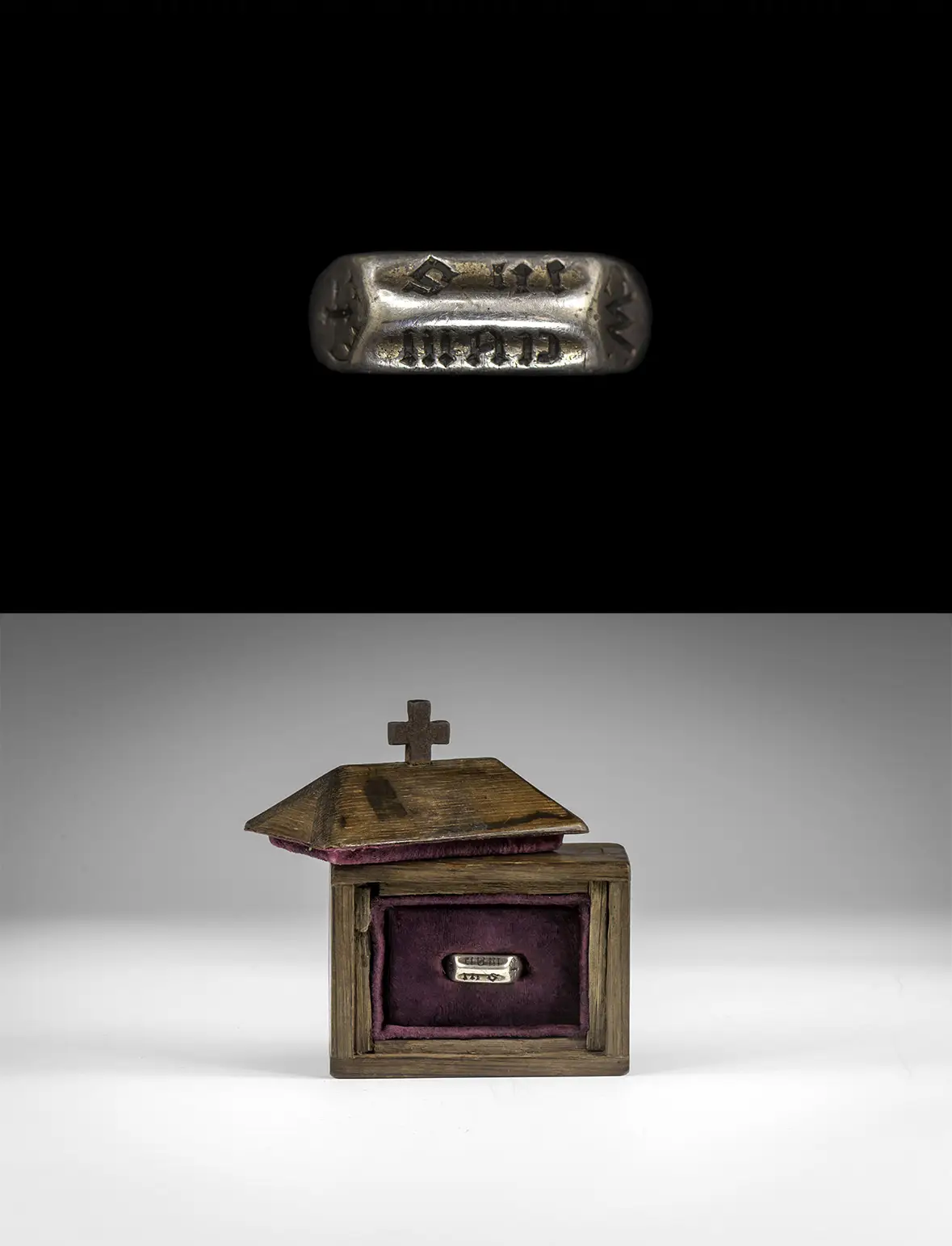
Historical significance can attach to an object in two ways. The first is original significance: the object mattered in its own time. A coin minted to commemorate a specific military victory carries the weight of that event. A seal belonging to a named official connects us to an actual person who walked through the ancient world. An inscription recording a dedication tells us exactly why the object was made and for whom.
The second type is acquired significance: the object gained importance through its post-antiquity history. This is where provenance becomes crucial. The same type of ushabti figure acquires vastly different levels of importance depending on whether it has no documented history or whether it came from the tomb of Tutankhamun. The archaeological context transforms an anonymous servant figure into a direct connection with one of history's most famous individuals.
We've seen this play out dramatically with objects from famous excavations and collections. The physical properties of such pieces might be entirely ordinary. Their importance derives entirely from where they've been and whom they've belonged to.
Types of historical significance to look for:
- Named individuals: Objects inscribed with or attributable to specific historical persons
- Documented events: Pieces commemorating battles, dedications, treaties, or religious occasions
- Important find-spots: Objects from significant excavations or documented archaeological contexts
- Distinguished collections: Pieces with ownership history connecting them to notable collectors, scholars, or institutions
- Published examples: Objects that appear in academic literature, exhibition catalogues, or standard reference works
Putting It Into Practice: A Framework for Evaluation
Theory is useful, but you need a practical approach when you're actually looking at objects. Here's the framework we recommend to collectors developing their eye.
Step One: Identify the Typology
Before anything else, figure out what you're looking at. What category does this object belong to? If you're not sure, that's your first research task. You cannot evaluate importance without knowing the baseline.
Questions to answer:
- What type of object is this?
- When and where was it made?
- How common are examples of this type?
- What are the defining characteristics of high-quality examples?
Step Two: Assess Each Pillar
Work through the four pillars systematically. Not every object will excel in all categories, and that's fine. You're looking for strengths.
Craftsmanship:
- Is this a well-made example of its type?
- Does it display skill beyond the ordinary?
- What specific features demonstrate mastery (or lack thereof)?
Preservation:
- What is the overall condition?
- How much original surface survives?
- Can I appreciate what the maker intended?
- What has been lost or altered?
Rarity:
- Is there anything unusual about this piece?
- If so, why does that unusualness matter?
- What questions does the rarity raise?
Historical Significance:
- Is there any documented provenance?
- Are there inscriptions, maker's marks, or other identifiers?
- Has this piece been published or exhibited?
Step Three: Weigh the Combination
Here's where judgment comes in. An object can be important for excelling in one pillar alone (an extraordinarily well-preserved but otherwise ordinary piece, a magnificently crafted but common type). More often, importance compounds when pillars combine. A rare form executed with mastery becomes more important than either quality alone would suggest. An object with documented provenance preserved in excellent condition attracts more interest than the same piece would in poor condition without provenance.
Step Four: Consider Your Goals
This might seem odd in a discussion of objective importance, but it matters. A collector focused on aesthetic pleasure will weight craftsmanship and preservation heavily. A collector interested in historical questions will prioritise significance and meaningful rarity. Neither approach is wrong; they're simply different.
We encourage collectors to be honest with themselves about what they want from their collections. If you're buying for visual impact, a beautifully preserved example of a common type may serve you better than a historically important but visually unremarkable piece. If you're building a study collection, the opposite might be true.
Frequently Asked Questions
Q: I keep hearing dealers describe pieces as "museum quality." What does that actually mean?
Honestly, it often means very little. We try to avoid the phrase ourselves because it's become marketing language rather than a meaningful description. Different museums have different acquisition criteria, and many museums hold objects ranging from masterpieces to study fragments. When we use the term at TimeLine, we mean the piece is of a standard that would warrant inclusion in a public collection, but even that is subjective.
More useful questions: Would a curator specialising in this field find this piece interesting? Does it have potential for display, or is it primarily of research interest? Is it complete and presentable enough to show alongside existing museum holdings?
Q: How much should provenance affect the price I'm willing to pay?
This depends entirely on the nature of the provenance. Documentation showing legal export and legitimate ownership is valuable because it provides security. You know the object won't be subject to future claims. Provenance connecting the piece to important collections or excavations adds historical significance and commands a premium for that reason.
As a rough guide, we've seen comparable pieces sell for 30% to 200% more when distinguished provenance is present. The premium depends on how famous the associated name is and how complete the documentation.
Q: You mentioned that rarity without context is meaningless. But won't rare things always be worth more, just because there are fewer of them?
Not necessarily. The market does tend to value scarcity, but only when there's demand. A unique variant of an object nobody wants to collect remains unsold regardless of its uniqueness. Rarity adds value when collectors care about the category in the first place and when the rarity confers some additional interest (aesthetic, historical, or intellectual).
Think of it this way: a rare stamp is valuable to stamp collectors, but to non-collectors, it's just a small piece of paper. If nobody collected that particular type of stamp, its rarity would mean nothing. The same logic applies to antiquities.
Q: How do I develop my eye for craftsmanship? I can tell obvious quality differences, but subtle ones escape me.
Exposure and comparison. Look at as many examples as possible, ideally in person. Museum collections let you study pieces at close range (bring a magnifying glass if allowed). When you see a masterwork next to competent work next to mediocre work, the differences become apparent.
We also recommend studying the techniques involved. Learn how Greek vases were painted, how bronzes were cast, how gems were carved. Understanding the process helps you appreciate the skill required to do it well.
Q: What if I disagree with the catalogue description about importance?
Good. That means you're thinking critically. Catalogue descriptions represent our assessment, based on our expertise and the information available to us. We work hard to be accurate, but cataloguing is interpretive work, and reasonable people can disagree.
If you see something we might have missed (or believe we've overstated something), you're welcome to contact us. We've had clients point out connections and attributes we hadn't noticed. Collaborative knowledge benefits everyone.
Common Mistakes to Avoid
We've worked with enough collectors to see patterns in how newcomers stumble. Here are the traps we see most often.
Mistake #1: Chasing "Investment" Pieces Before Understanding the Market
We understand the appeal of buying objects that will appreciate in value. But the collectors who do best financially are invariably those who developed genuine knowledge first. They can spot undervalued pieces because they know the field. They avoid overpaying because they've tracked prices for years. They make good decisions because they understand what they're buying.
Trying to "invest" without that foundation is speculation, not collecting. You'll overpay for things that seem important but aren't, and you'll miss genuine opportunities because you can't recognise them.
Mistake #2: Overvaluing Rarity, Undervaluing Quality
New collectors often get excited about unusual features without asking whether those features matter. The result is a collection of oddities that fails to cohere aesthetically or intellectually. A common piece of exceptional quality will bring more lasting satisfaction than a rare piece of mediocre quality.
Mistake #3: Ignoring Condition Issues That Will Bother You Later
In the excitement of acquiring a piece, collectors sometimes overlook condition problems they'll notice every time they look at the object afterward. That crack, that restoration, that area of loss. Live with the images for a few days before bidding. Ask yourself whether you can accept the flaws.
Mistake #4: Buying Outside Your Knowledge Base Without Research
Every experienced collector has made this mistake at least once: buying something in a category they don't understand, assuming their eye will transfer from one field to another. It rarely does. If you want to branch into a new area, take the time to study it first. Talk to specialists. Look at many examples. Don't assume that expertise in Greek pottery translates automatically to expertise in Egyptian bronzes.
Mistake #5: Assuming High Prices Mean High Quality
Prices reflect what two people were willing to pay and accept on a particular day. Sometimes prices accurately reflect importance. Sometimes two bidders get competitive about a mediocre piece and drive it beyond any reasonable level. Use prices as data, not as judgments of worth.
Building Your Evaluation Skills: A Checklist
Before you bid on a piece, work through this checklist. You don't need to write out formal answers, but you should be able to answer each question in your head.
Typology:
- [ ] I know what type of object this is
- [ ] I have a reasonable sense of how common or scarce this type is
- [ ] I have seen other examples for comparison (in person, in catalogues, or in reference works)
Craftsmanship:
- [ ] I have examined the execution quality (line work, proportions, detail)
- [ ] I can articulate what I like or don't like about the craftsmanship
- [ ] I have a sense of where this falls on the quality spectrum for its type
Condition:
- [ ] I understand what is original versus restored
- [ ] I have considered how condition affects my ability to appreciate the piece
- [ ] I can accept the condition issues present (I won't regret them later)
Rarity:
- [ ] If there's something unusual about this piece, I understand why it matters (or doesn't)
- [ ] I'm not paying a premium for rarity that has no real significance
Historical Significance:
- [ ] I know what provenance documentation exists
- [ ] I understand whether the provenance adds genuine interest
- [ ] I've checked whether the piece has been published or exhibited
Personal Fit:
- [ ] This piece aligns with my collecting goals
- [ ] I genuinely want to own this object (not just win it)
- [ ] The estimate and my maximum bid reflect the piece's importance as I assess it
Learning by Looking
We've given you a lot of theory here, but the best way to develop your eye is practice. The next time you browse our catalogue, pick a few pieces and work through the evaluation framework. Ask yourself:
- What makes the expensive lot in this section more important than the less expensive ones?
- Can I spot the quality differences between similar objects?
- What provenance information is provided, and how does it affect the estimates?
You'll find that with each catalogue, the patterns become clearer. Objects that initially looked similar will reveal their differences. Your ability to assess importance will sharpen.
If you haven't already, consider registering for an upcoming auction even if you don't plan to bid. Following the bidding in real time teaches you what the market values. When a piece exceeds its estimate by five times, ask yourself why. When something fails to sell, consider what was missing. Each auction is a lesson if you pay attention.
A Final Thought
Collecting antiquities is ultimately about understanding the past through physical objects. The question of importance matters because it helps us distinguish between objects that genuinely illuminate that past and objects that merely survive from it. Both have value, but they have different kinds of value.
The four pillars we've discussed (craftsmanship, preservation, contextual rarity, and historical significance) give you a vocabulary and a framework. Use them as tools, not as rigid rules. Every piece presents its own combination of strengths and weaknesses, its own arguments for attention.
What we've found, working with collectors over the years, is that the process of evaluation becomes genuinely rewarding in itself. When you learn to see what makes one object more important than another, you're developing a form of connoisseurship that enriches every encounter with the ancient world. The Roman lamp that once looked identical to its neighbour reveals itself as the product of a skilled hand or an unusual workshop or an interesting context. The Egyptian amulet becomes not just a charm but a document of belief and practice. The Greek coin speaks of events and individuals and artistic traditions.
That kind of seeing takes time to develop. We hope this guide accelerates the process. And when you have questions, as you inevitably will, we're here to help. That's what we do.
TimeLine Auctions, 24th February 2026