Home > Stories by TimeLine Auctions
Stories by TimeLine Auctions
Wahibre: Separated in Stone, Reunited at Auction
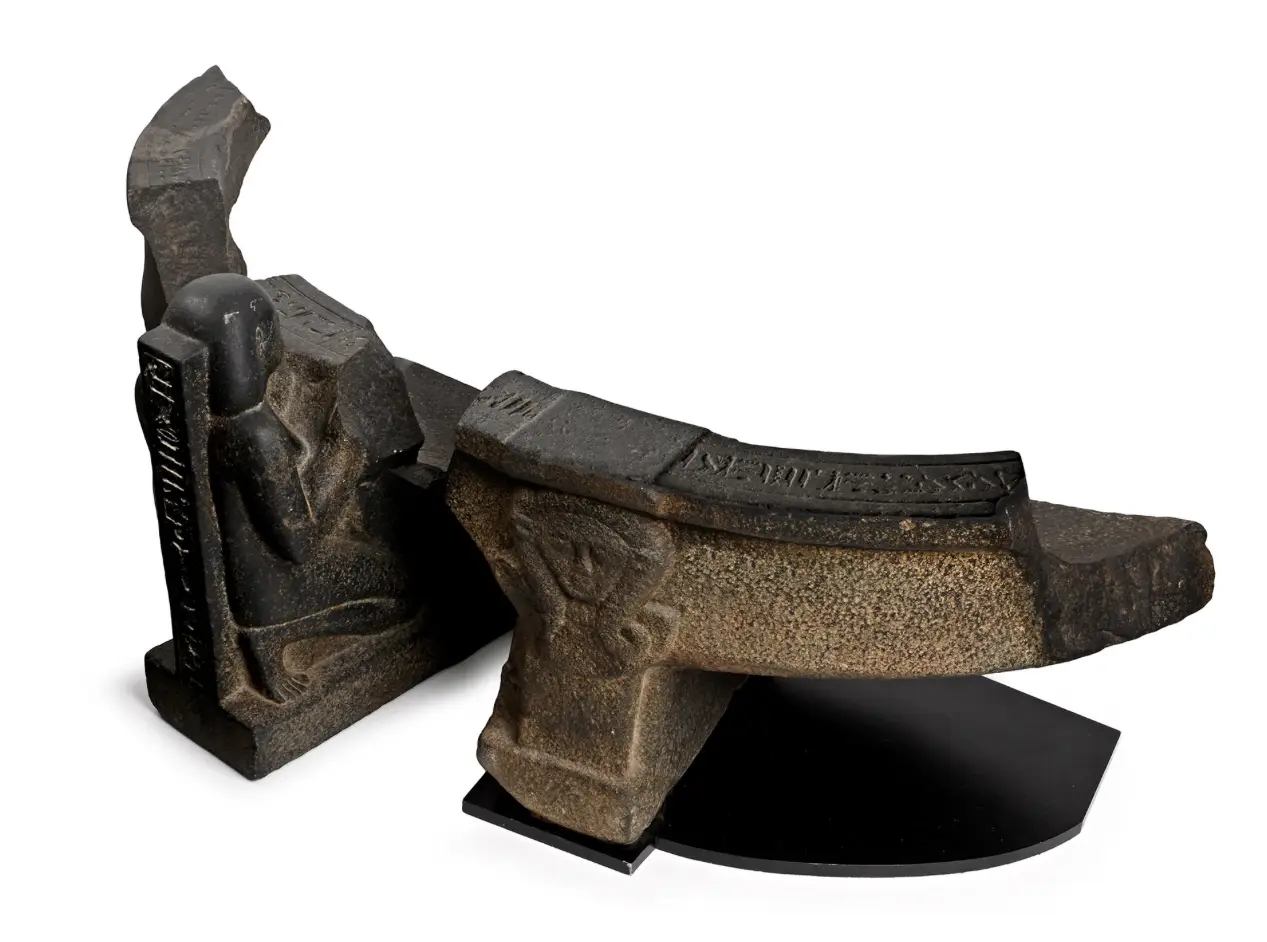
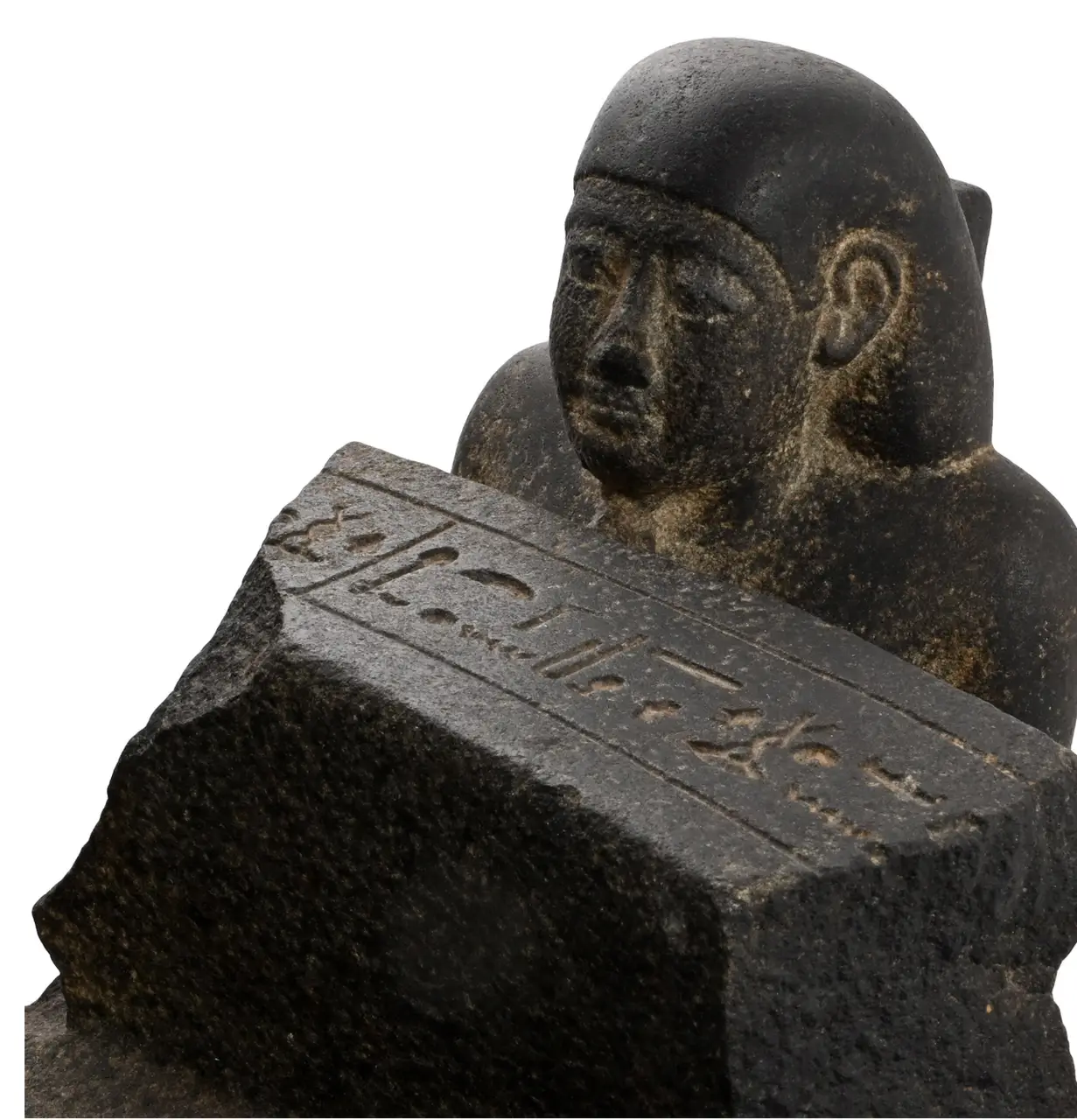
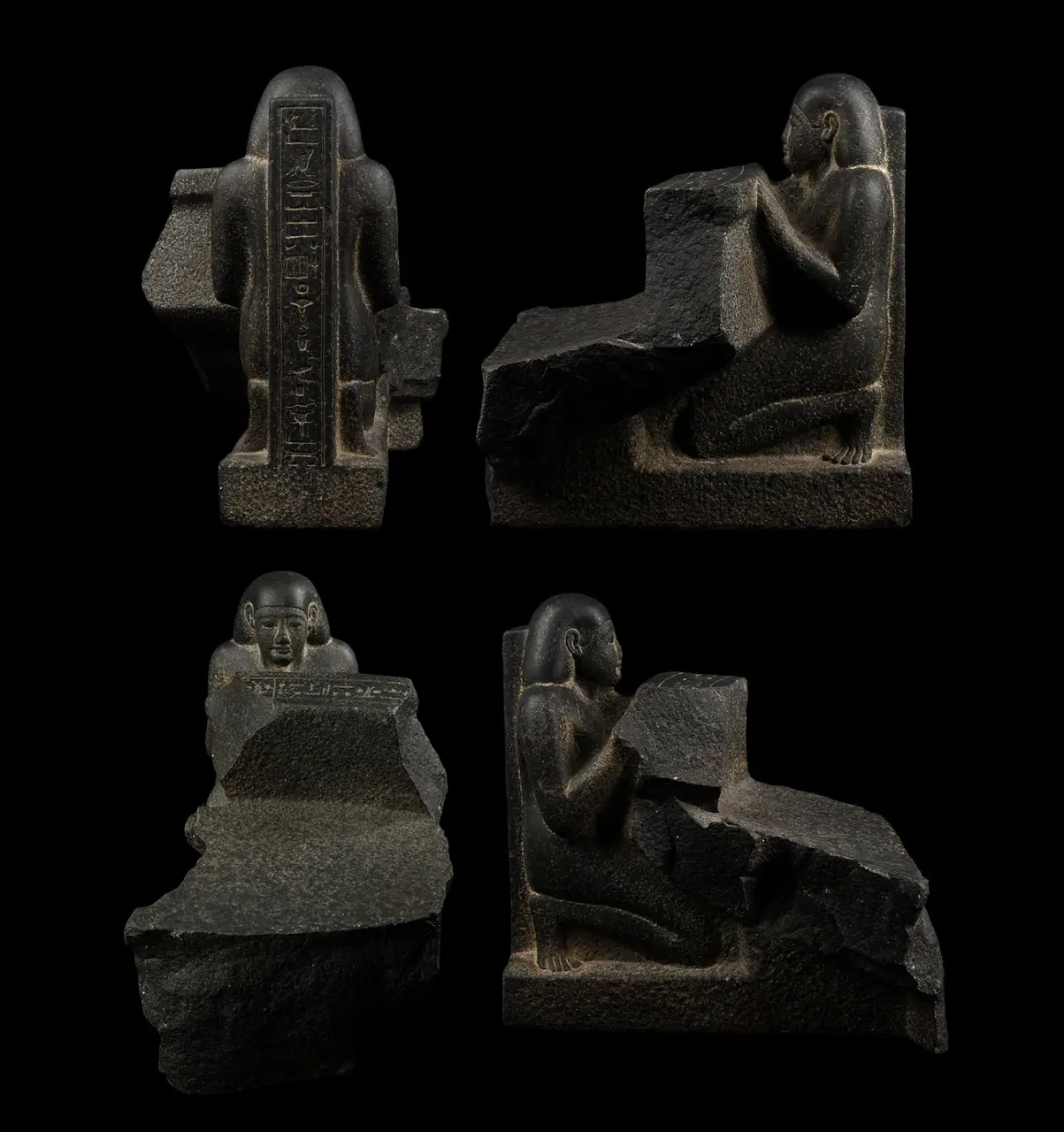
The figure kneels in dark basalt, forty centimetres high. He has a broad rounded wig set low on the forehead in the Saite manner, his hands held forward at waist height. A column of hieroglyphs runs down the dorsal pillar behind him and identifies him: Count; Overseer of the Entrance to the Hill Countries; Chief Supervisor of the Shrines of Neith; Wahibre, son of Paeftchawy. The work was made under Amasis, in the 26th Dynasty, between roughly 570 and 525 B.C.
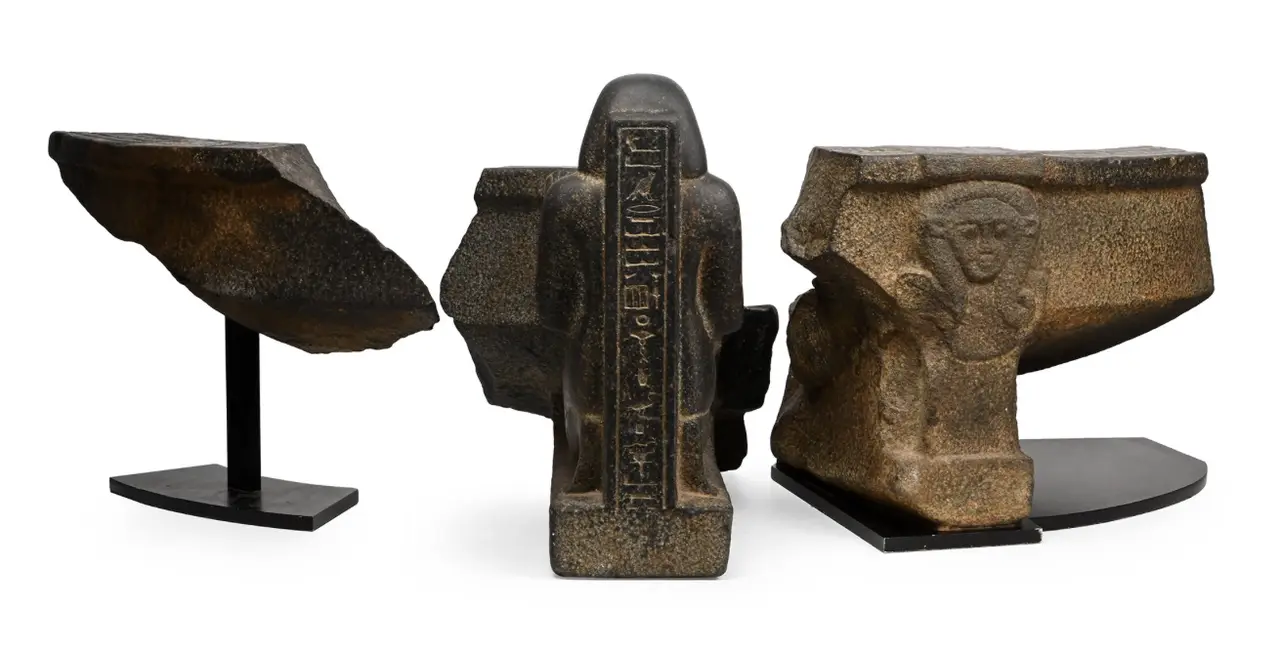
About the man himself we have only what the inscription says. The most informative of his titles is imy-r ḫꜣswt, "Overseer of the Entrance to the Hill Countries," the office of a chief customs official. By Amasis's reign the Saite state was managing an unusually active border trade and an unusually mixed population: Greek merchants concentrated at Naukratis in the Delta, Carian mercenaries garrisoned across the country. Men in Wahibre's position handled what came in, what went out, and who passed through. They raised the revenues and watched the foreigners.
His second title was religious. As Chief Supervisor of the Shrines of Neith he had duties in the cult of the goddess whose main seat was at Sais (modern Sa el-Hagar), the home city of the 26th Dynasty, where its kings were buried in chapels in her temple courtyard. The combination of customs at one end and Neith at the other is typical of senior Saite officials, who commonly held civil, military and priestly offices together. The revenues a man like Wahibre raised at the frontier flowed back, in part, to the temples he also administered.
The figure first appears in a European private collection by the mid-19th century. It stayed in private hands for over a century. In June 2001 it was sold at Christie's, New York; in February 2005 it was sold again at Drouot-Richelieu, Paris, where it entered the European collection from which it has now come.
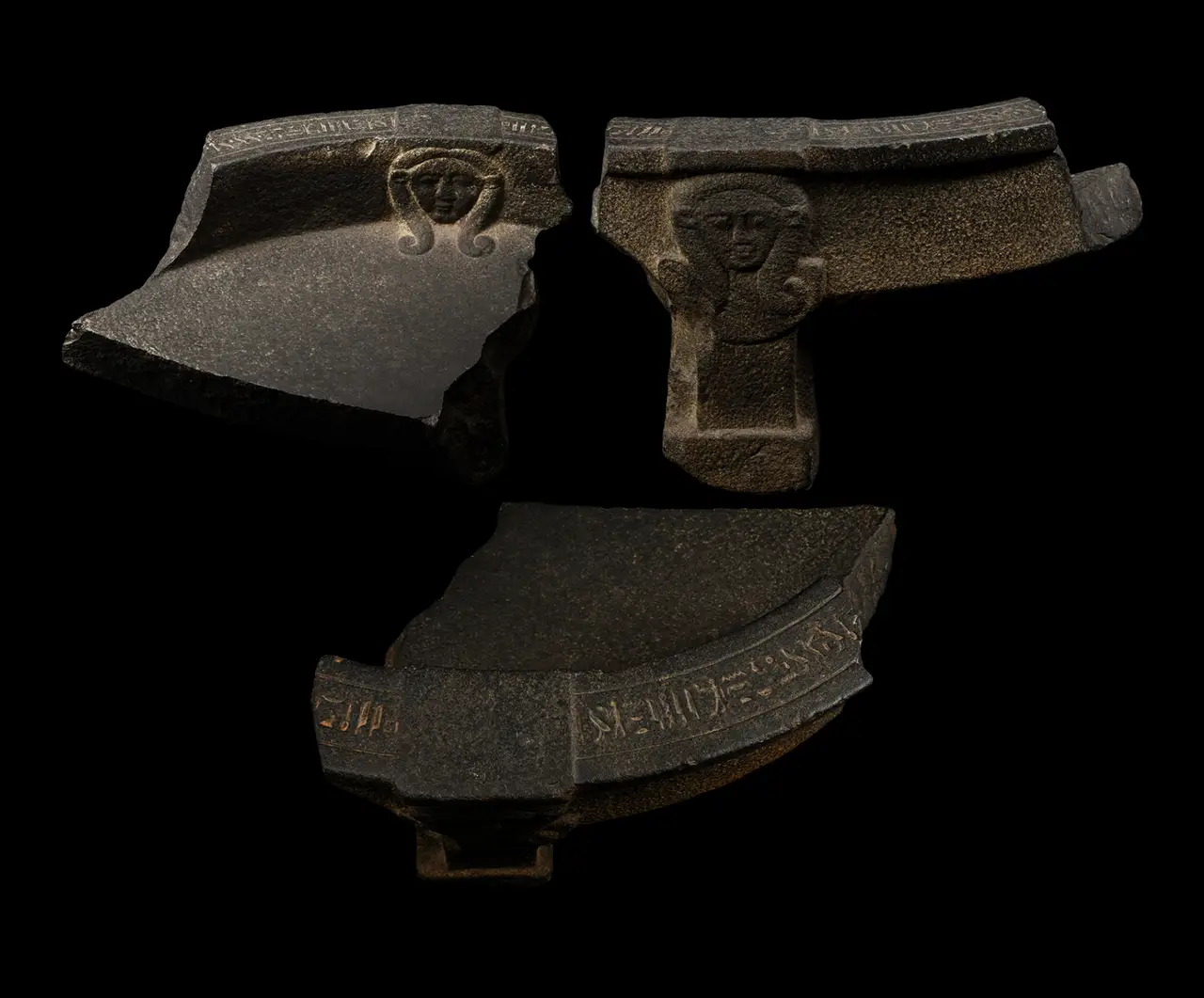
For all of that journey, the figure was incomplete. The hands have always rested where they rest now, still gripping a small surviving fragment of the wide stone basin once extended out from the body. The rest of the vessel, the part that gives this kind of statue its name as a bassinophore, was missing. The basin was the working part of the monument. Into it a priest would pour an offering, along its rim ran a ritual formula meant to be spoken aloud at the moment of pouring.
The function explains why a customs official would want such a thing. Once carved and set up in a sacred precinct, the statue stood in for him: it was permanently present before the deity, kneeling, hands forward, basin held out, while Wahibre went on with the work at the border. A priest, or a junior on his behalf, would carry out the rite. The man at the gate was, by way of his image, also at the altar.
The basin itself survives, in two fragments, between 47 and 58 cm across. Its modern history runs on a different track from the figure's. It first appears in a UK private collection formed across the 1970s and 1990s; from there it passed to a princely collection, where it stayed until 2014; then to a private foundation; and most recently to Rupert Wace, London. At no point during the figure's sales in 2001 and 2005, or during the basin's separate movements through London, was the connection between them made.
The two pieces come up at TimeLine Auctions on 2 June 2026 as lot 61, with an estimate of £80,000–100,000, offered as a single piece for the first time since its parting.
TimeLine Auctions, 19th May 2026