Home > Stories by TimeLine Auctions
Stories by TimeLine Auctions
When Goddesses Crossed the Aegean: The Lost World of Bronze Age Brides
Sometime around 1400 BC, a princess from northwestern Anatolia may have boarded a ship bound for the shores of Mycenaean Greece. She carried with her more than a dowry of islands disputed between empires. She brought gods.
We know this because fragments of her existence survive in the clay tablets of Hattusa, the Hittite capital, and in the Linear B records scratched into the accounting ledgers of Pylos. When scholars puzzle over a curious phrase in those Pylian tablets, po-ti-ni-ja a-si-wi-ja, they are reading across three thousand years the religious footprint of a vanished Anatolian kingdom called Assuwa. The phrase translates, roughly, as "the Lady of Assuwa," a goddess who had no business being worshipped in a Mycenaean palace some two hundred years after Assuwa itself was crushed by Hittite armies, unless someone had carried her there. That someone, Ian Rutherford has compellingly argued, may have been a royal bride.
A Marriage Inscribed in Cuneiform
The letter is damaged, as so many are. It sits catalogued as KUB 26.91 among the thousands of tablets excavated from the Hittite archives at Boğazköy, and it speaks of a dispute over islands, a claim rooted in something that happened generations before. The Ahhiyawan king (and we may as well call him Mycenaean Greek, for that is almost certainly what he was) reaches back to a "betrothal" arranged long ago between his ancestors and the ruling house of Assuwa, that powerful Anatolian confederation destroyed by the Hittite king Tudhaliya I around 1430 BC. The Hittite verb used is hamakta, "to bind," the same word employed in Hittite law for the moment a bride price is paid and a marriage sealed.
The islands, perhaps Lesbos among them, were evidently part of the arrangement. The Hittites wanted them. The Greeks claimed them as inheritance from that ancient union. The letter, whatever its resolution, preserves something extraordinary: evidence that the Bronze Age Aegean and Bronze Age Anatolia were not two separate worlds but a single web of dynastic ambition, religious exchange, and strategic alliance.
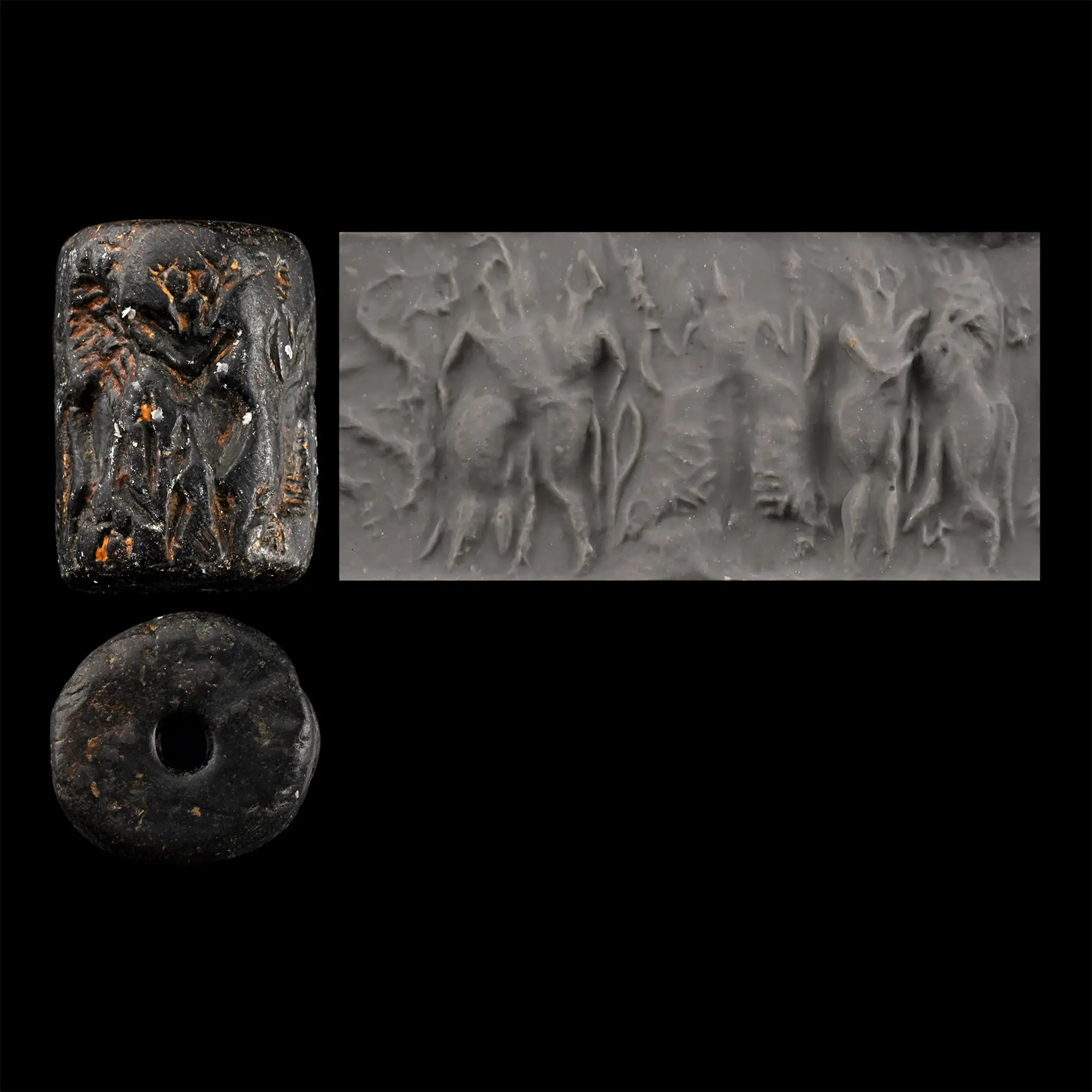
When we hold an old anatolian cylinder seal in the cataloguing room, we are handling an object from this interconnected world, a time when a Mycenaean king could write to a Hittite emperor as something approaching an equal, and an Anatolian princess could reshape the religious landscape of a Greek palace.
The Goddess Who Raged
She went by many names. In North Syrian Karkemish, she was Kubaba, a Hurrian deity whose consort was the stag-god Karhuhas. In the mountains of Phrygia, she became Matar Kubeleya, the "Mother of the Mountain Peak," the goddess who inspired κυβηβεῖν, the ecstatic frenzy that caused her devotees to throw themselves headlong in divine possession. The Greeks eventually knew her as Cybele, but they were not always certain where she came from, and ancient lexicographers debated whether the word κύβηβος described her priests or their madness.
The confusion was ancient and, as Rostislav Oreshko has demonstrated, probably deliberate. The "Cube Goddesses," as scholars sometimes call this constellation of related (and unrelated) divine figures, represent the meeting point of two traditions: an Aegean-Balkanic cult of frenzied worship and a North Syrian goddess absorbed into the Luwian religious landscape. By the time Greek colonists were minting coins at Amisos on the Black Sea coast, they depicted a seated goddess they called Κύβηβος, her name grammatically masculine because it derived not from the Syrian Kubaba but from the Greek word for the frenzy she inspired. She looked like Cybele. She was not quite Cybele. She was something older and stranger, a theological palimpsest written across centuries of migration, marriage, and mercantile contact.
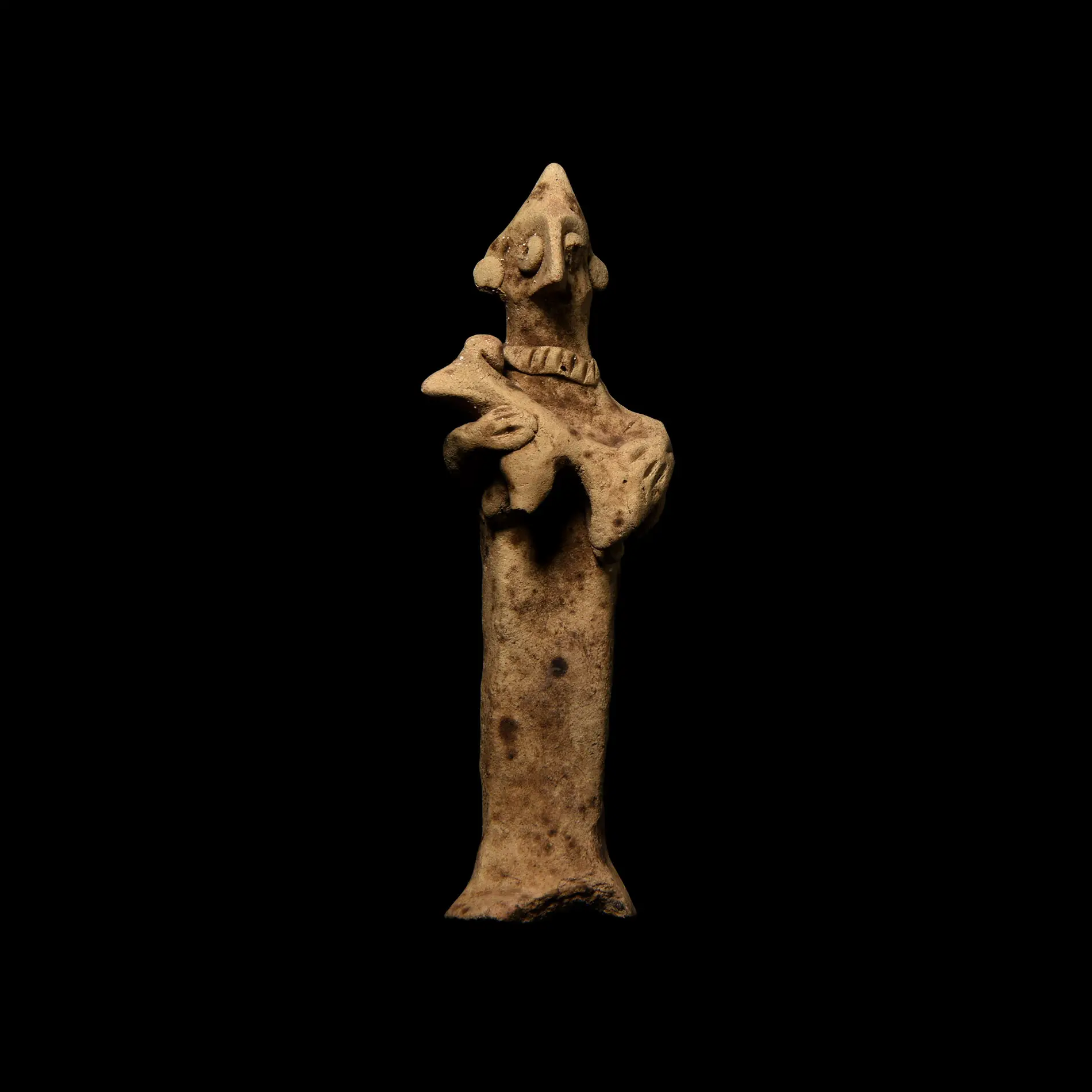
Objects of cultic significance from Iron Age Anatolia and Archaic Greece carry this complexity within them. A terracotta figurine is never simply an artwork; it is a witness to the religious negotiations of peoples whose gods travelled the same trade routes as their grain and purple dye.
The Storm God's Dominion
The Storm God never left Anatolia. He was Tarhuntas to the Luwians, Trqqas to the Lycians, Trqδ to the Carians, a divine constant in a landscape of linguistic flux. When we read the hieroglyphic inscriptions of Karatepe or decipher a fragmentary Carian text, his name appears again and again, as dependable as the thunder that rolled across the Taurus Mountains in spring. He was the god who gave kings their power, the god who sent rain to the fields, the god whose bull was sacrificed at every treaty.
But if Tarhuntas stayed home, other gods wandered. Apaliuna, attested in a Hittite treaty with the city of Wilusa (almost certainly Homeric Troy), has long intrigued scholars because of his resemblance to Apollo. Was Apollo originally Anatolian? Did he cross to Greece in the Bronze Age, perhaps in the train of a princess, perhaps in the songs of wandering poets? The answer remains uncertain, but the question itself tells us something important: the gods of the Archaic Greeks did not spring fully formed from Olympus. They accumulated, layer upon layer, Aegean and Anatolian and Near Eastern sediment compressed into the figures who populate the Iliad.
What a Clay Tablet Could Not Tell You
The scribes of Pylos recorded offerings to the Potnia Aswiya. They recorded quantities of oil and wool, the names of landholders, the obligations of craftsmen. What they did not record, because they did not need to, was what every inhabitant of that Mycenaean palace already knew: who the Lady of Assuwa was, why she mattered, what prayers were proper to her worship. That knowledge vanished when the palace burned around 1180 BC, taking the last generation of literate administrators with it.
This is the challenge of Bronze Age history. We possess inventories, diplomatic correspondence, treaties, and the occasional royal boast carved in stone. We do not possess the conversations that gave those documents meaning. The Hittite king complains about Piyamaradu's raids; he does not explain who Piyamaradu is, because his correspondent already knows. The Ahhiyawan king invokes a marriage several generations old; he does not name the bride, because her identity was common knowledge, now irrecoverably lost.
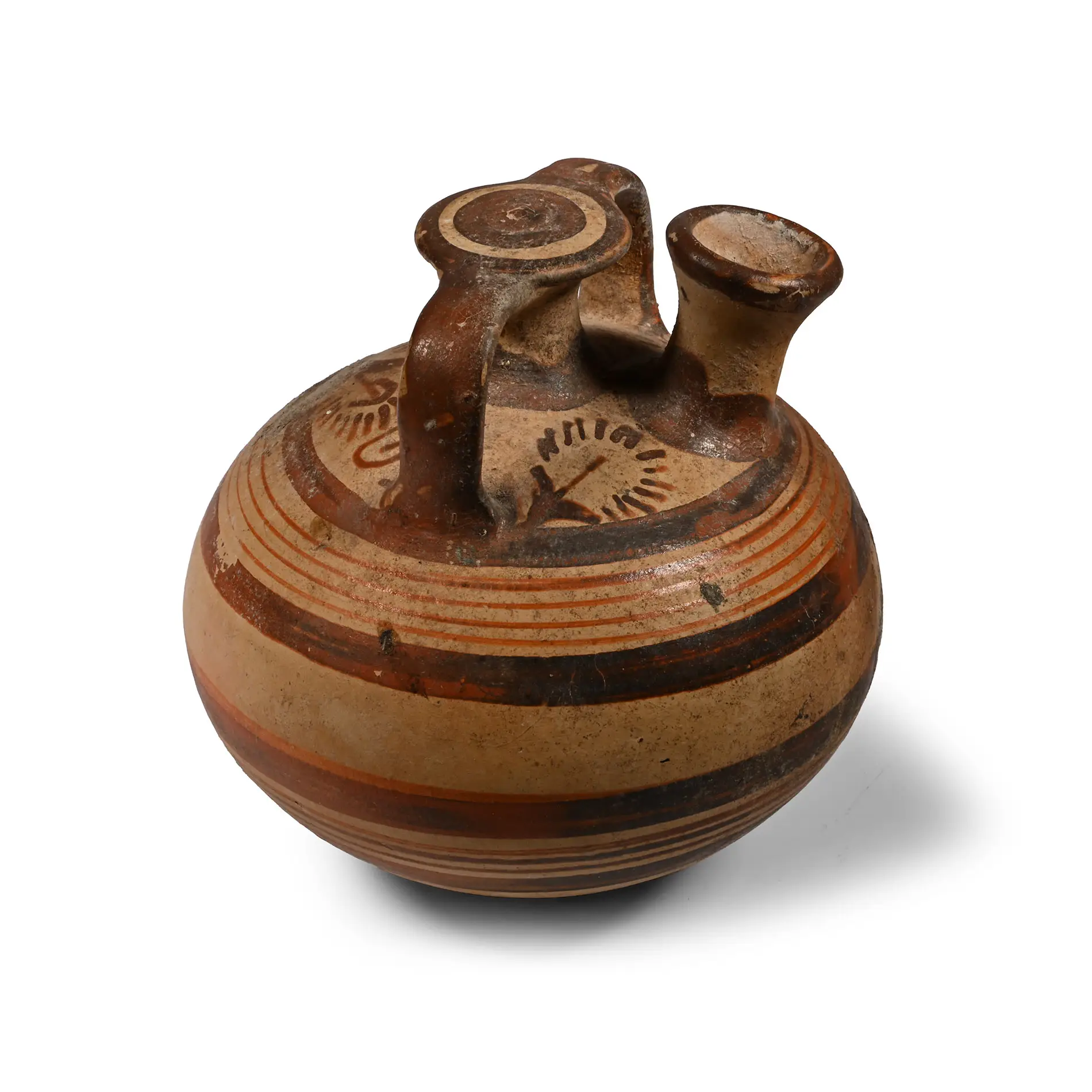
What survives, increasingly, are the objects themselves. A mycenaean stirrup jar asks no questions of context. It simply exists, a thing made by hands that understood the world in ways we can only partially reconstruct. When we examine such an object in our cataloguing room, turning it under the light to catch the marks of its making, we are as close as we will ever come to the unrecorded life of the Bronze Age Aegean.
Owning the Ancient Conversation
The scholarship on Greek-Anatolian interactions has entered what Michele Bianconi calls a new era, one shaped by advances in the decipherment of Hieroglyphic Luwian and the patient accumulation of textual parallels between Hittite diplomatic formulas and Homeric poetry. The Oxford symposium from which much of this research emerged bore a telling name: "In Search of the Golden Fleece." The reference was deliberate. Jason's voyage to Colchis, his marriage to the Anatolian sorceress Medea, his return to Greece with foreign gods and foreign magic trailing in his wake, this is the mythological echo of a historical pattern now increasingly visible in the archaeological and textual record.
Medea brought her gods to Iolcus. An Assuwan princess may have brought hers to Pylos. The Phrygian cult of the Mountain Mother eventually reached Rome itself. Religion, in the Bronze Age Mediterranean, was portable. It moved with brides and exiles, with merchants and mercenaries, with the slow drift of peoples across a sea that connected far more than it divided.
The objects that survive from this world, the bronzes and terracottas, the seals and sherds, the weapons and ornaments, are not mute. They speak to the persistence of human hands across millennia, to the continuity of craft traditions that outlasted empires. They offer something that no museum vitrine can provide: the weight of antiquity in your palm, the texture of a surface worn smooth by centuries of handling, the knowledge that you are not the first to wonder at this thing nor will you be the last.
Browse the near eastern category in our current catalogue to find objects from this interconnected Bronze Age world. History, as these pieces remind us, is not only written in clay tablets. It is made in workshops and shrines, carried in dowry chests and offering baskets, buried in graves and foundation deposits. It waits, patiently, for the collector willing to listen.
For further reading on Greek-Anatolian interactions in the Bronze Age, see the essays collected in Linguistic and Cultural Interactions between Greece and Anatolia: In Search of the Golden Fleece, edited by Michele Bianconi (Brill, 2021).
TimeLine Auctions, 24th April 2026