Home > Stories by TimeLine Auctions
Stories by TimeLine Auctions
Where Do Museums Get Their Antiquities? Ten That the Private Market Saved This Century
In 1812 the Crown Prince of Bavaria, the future Ludwig I, bought seventeen marble figures through an agent at an auction he did not attend. They were the pedimental sculptures from the temple of Aphaia on Aegina, knocked down on the island of Zante for some £6,000, then shipped to Rome for Thorvaldsen to restore. They became the centrepiece of the Munich Glyptothek when it opened to the public in 1830. Two centuries later, in a field in the Chew Valley south of Bristol, seven friends out with metal detectors turned up 2,584 silver pennies struck on either side of the Norman Conquest. In 2024 the find was valued at £4.3 million, the highest figure ever set on a Treasure case in Britain, and bought for the Museum of Somerset in Taunton.
Different centuries, different objects, one mechanism. Both went from private hands into a public gallery by being paid for at a market price. The honest answer to where museums get their antiquities is that almost everything behind the glass was once for sale, and most of it still arrives the same way: through finders, collectors, dealers and the auction room.
That cuts against the version of the story most people know, which is a run of scandals. The Metropolitan Museum bought a gilded Egyptian coffin in 2017 for around four million dollars and returned it to Egypt in 2019 once a Manhattan prosecutor showed it had been looted in 2011 and sold on a forged export licence. Italy, Greece, Turkey and Iraq have all clawed objects back out of museum cases. That story is real, and it is not this one. What follows is the other half: ten things museums acquired in this century lawfully, with documented histories, and put on public display. Most came through the open market, or through a reward paid to the person who pulled them out of the ground. All of them can be visited.
The museum has always shopped
The great classical collections were assembled by buying, and the dealers who supplied them were not shy about it. Pyotr Sabouroff, the Russian minister in Athens through the 1870s, put together a vast holding in under a decade and sold it off in 1884: the sculpture, vases, bronzes and gems went to the Berlin Antikensammlung for 340,000 marks, and about 170 Tanagra figurines to the Imperial Hermitage for another 200,000. Edward Capps, writing in 1899, noted that the Athenian dealers by then "do business directly with the management of museums on both sides of the Atlantic." One dealer's house on Lycabettus Street was listed among the city's museums in Murray's Handbook and could be viewed by card between two and five in the afternoon.
Even the institution founded to stop the outflow was a buyer. The Archaeological Society of Athens, set up in 1837 to keep finds in Greece, competed in the same salerooms as the foreigners for the best Tanagra figurines, and usually lost, outbid by museums in Berlin and London that would pay thousands of francs for a single statuette. The objects a country wants to keep and the objects a museum wants to display have always moved through the same market, and the price has always been set there.
That open trade had an ugly side, and the twentieth century spent a long time reckoning with it: looted pieces laundered through invented ownership histories, forgeries sold to the credulous, source countries stripped while the law looked away. The reckoning produced rules. The 1970 UNESCO Convention drew a line that the museum world slowly adopted as a rule of thumb, that a piece should have a documented history reaching back to 1970 before a serious institution will buy it; the American museum directors' association wrote that into formal guidance in 2008. In Britain a second instrument did something subtler. The Treasure Act of 1996, with the voluntary Portable Antiquities Scheme running alongside it, turned metal detecting from a heritage problem into a heritage pipeline.
The mechanism is the engine behind half this list. A detectorist who finds qualifying treasure and reports it sets a process in motion. An independent panel, the Treasure Valuation Committee, sets the object's full market value. If a museum wants it, the museum pays that sum as a reward, normally split between the finder and the landowner. The finder is paid what the object would fetch on the open market; nothing is confiscated. What the museum gets in return is the cleanest history an antiquity can carry: found last decade, in a recorded field, by a named person, declared and paid for in daylight.
Found in a field: the Treasure saves
1. The Staffordshire Hoard
In July 2009 an unemployed man named Terry Herbert was working a recently ploughed field near Hammerwich in Staffordshire with a secondhand detector when he began pulling gold out of the soil. He kept finding it for days. The Staffordshire Hoard runs to roughly 4,600 items, about 5.1 kilograms of gold and 1.4 of silver, with some 3,500 garnets cut for cloisonné settings. It is the largest hoard of Anglo-Saxon gold and silver metalwork found, and its character is strange: it is almost entirely martial, sword-hilt collars and pommels and helmet fittings, with hardly a domestic or feminine object in it, and only two or three Christian pieces, one of them a strip of gold carrying a misspelt biblical line, "Rise up, O Lord, and may thy enemies be scattered." It forced specialists to revise upward their sense of how much gold a seventh-century Mercian king could command.
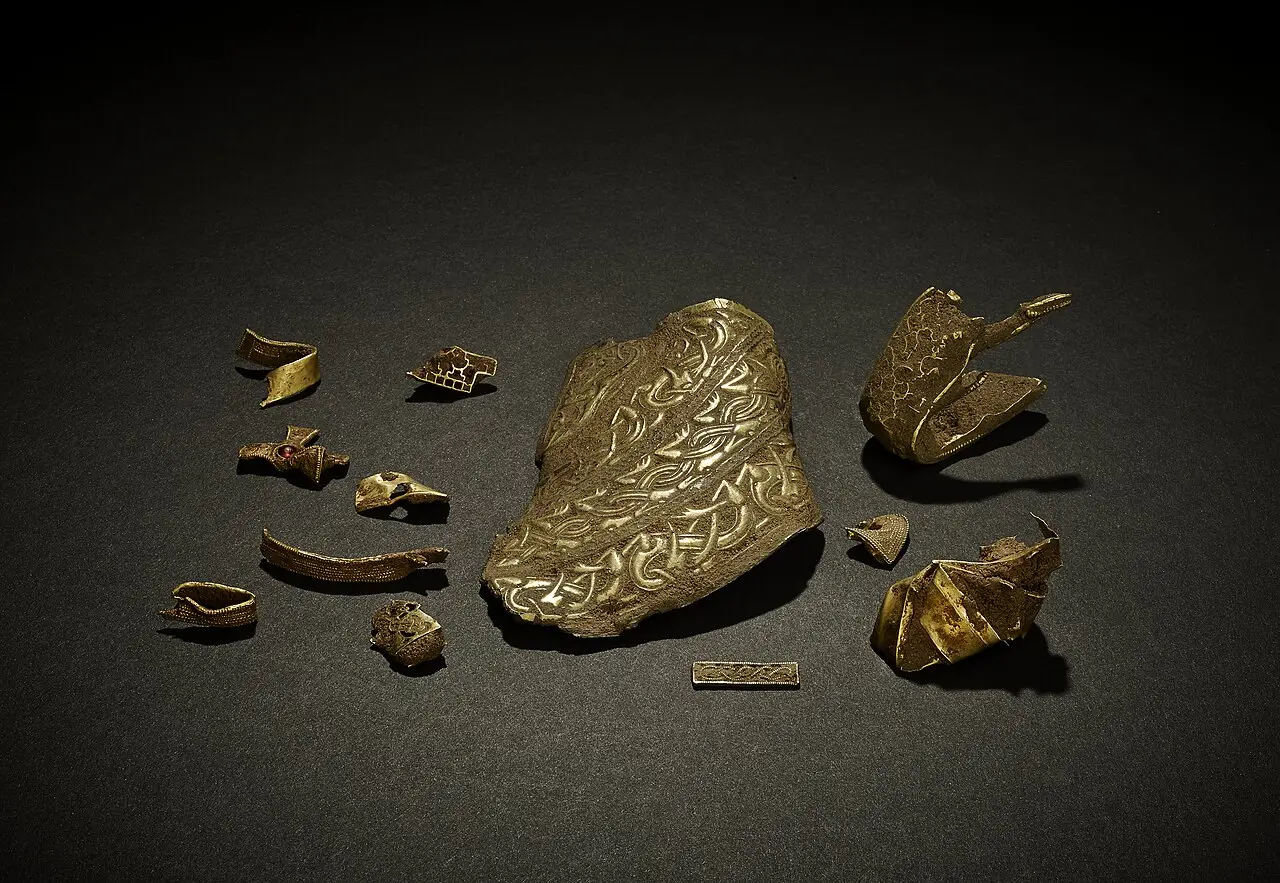 Gold sword-hilt fittings from the Staffordshire Hoard, found near Hammerwich in 2009. The hoard is almost entirely war-gear, the gold stripped from weapons. Photo: Portable Antiquities Scheme / Trustees of the British Museum, CC BY-SA 4.0, via Wikimedia Commons.
The Valuation Committee set the figure at £3.285 million in late 2009, split between Herbert and the landowner Fred Johnson. The National Heritage Memorial Fund put in £1.285 million of it; an Art Fund public appeal and thousands of small donors raised the rest, and in 2010 the hoard was bought jointly for Birmingham Museums and the Potteries Museum in Stoke-on-Trent, the two cities nearest the find. It is the whole argument in a single object: an amateur, a fair valuation, and a nationally important find kept for two regional museums rather than scattered abroad.
2. The Chew Valley Hoard
The 2,584 pennies from the Chew Valley are the find from the opening of this piece, and they earn their place twice over. They are a financial record, valued in 2024 at £4.3 million, the highest sum ever placed on a Treasure case in Britain; the committee was pricing historical significance, rarity and condition, not bullion. They are also a documentary record of a single political instant. Roughly half the coins are pennies of Harold II, killed at Hastings, and half are of William the Conqueror, with a scattering of forger's "mules" that married the dies of both kings. The hoard catches English money at the exact hinge of 1066.
It was found in January 2019 by a group of seven detectorists led by Lisa Grace and Adam Staples, on land where they had permission, and the reward was split evenly with the landowner. The National Lottery Heritage Fund paid the bulk, £4,420,527, with £150,000 from the Art Fund and local contributions. The coins went on show at the British Museum from late 2024 before a tour and an eventual permanent home at the Museum of Somerset.
3. The Galloway Hoard
The Galloway Hoard was buried around the year 900 and lifted from a field at Balmaghie in Dumfries and Galloway by Derek McLennan in September 2014. National Museums Scotland describes it as the richest collection of Viking-age objects found in Britain or Ireland, and the contents bear the claim out: more than a hundred items in stacked, deliberately separated parcels, including silver "ribbon" arm-rings several of which carry runes, gold ingots, a bird-shaped gold pin, a rock-crystal jar, and a lidded silver-gilt vessel that came up still wrapped in textiles. The organic survivals are the rarest part, wool and linen and the earliest silk yet found in Scotland, material that almost never lasts a thousand years in the ground.
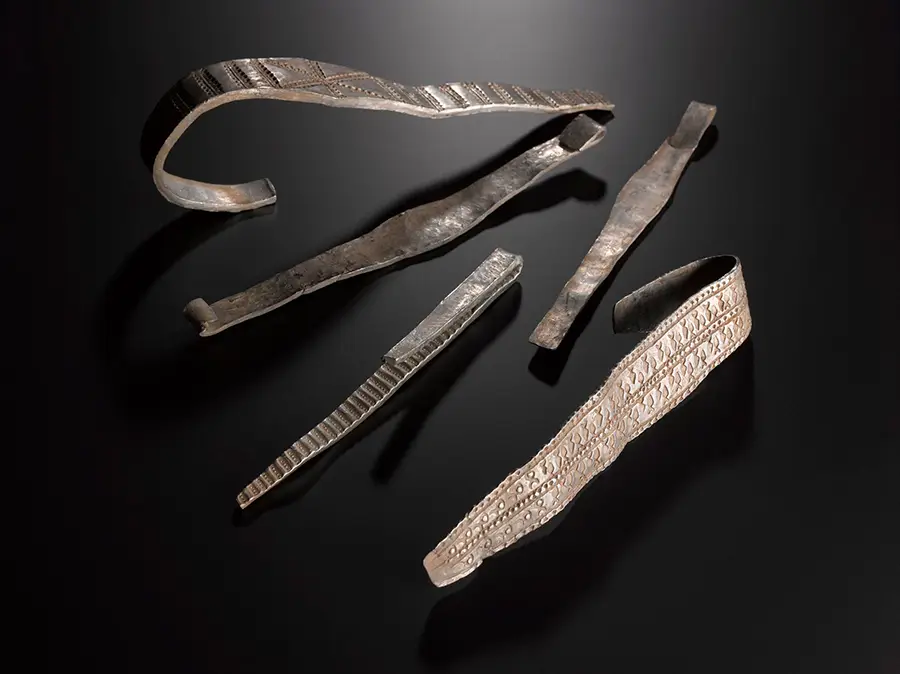 Silver "ribbon" arm-rings from the Galloway Hoard, several incised with runes. The hoard was buried around 900 and lifted at Balmaghie in 2014. Photo: National Museums Scotland, CC BY-SA 4.0, via Wikimedia Commons.
Scotland runs a separate system from the English Treasure Act, the Crown right known as Treasure Trove, and through it the hoard was allocated to National Museums Scotland in 2017 once the museum raised £1.98 million in six months: a million from the National Heritage Memorial Fund, £400,000 from the Art Fund, £150,000 from the Scottish Government, and more than 1,500 public donations. For transparency, the Church of Scotland, which owned the land, raised a separate civil claim over its share of the reward; that was an argument about the split, not about who would keep the hoard. A decade on it is still producing research, which is the strongest case for keeping such things whole and public.
4. The Vale of York Hoard
In January 2007 David and Andrew Whelan, a father and son out detecting near Harrogate, found a lead-lined mass and did the right thing: they stopped and reported it without trying to empty it. Inside was a gilt silver vessel, a piece of Frankish or Carolingian church plate from the middle of the ninth century, packed with 617 coins and 67 other objects, ornaments and ingots and chopped "hack-silver." The metals had travelled from Afghanistan to Ireland before they were buried together around 927, in the years when Athelstan was absorbing Viking Northumbria. The whole connected world of Viking trade sits inside one cup.
The British Museum and the Yorkshire Museum bought it jointly in 2009 for £1,082,000, with help from the Heritage Memorial Fund, the Art Fund and the British Museum Friends. The gilt vessel, with its hack-silver still tumbling out, makes that whole economy legible at a glance.
5. The Ringlemere Cup
Some finds are saved precisely because the field is being destroyed. The Ringlemere Cup, an Early Bronze Age vessel of about 1700 to 1500 BC, was raised by sheet metalworking from a single piece of gold, fitted with a riveted handle, and given a corrugated body and a rounded base that means it cannot stand on its own; it was a high-status object never meant for daily use. By the time Cliff Bradshaw found it in a ploughed-down barrow at Ringlemere Farm in Kent in November 2001, the plough had already crushed it. It is one of only about seven such gold cups known from all of Bronze Age Europe and the second found in Britain.
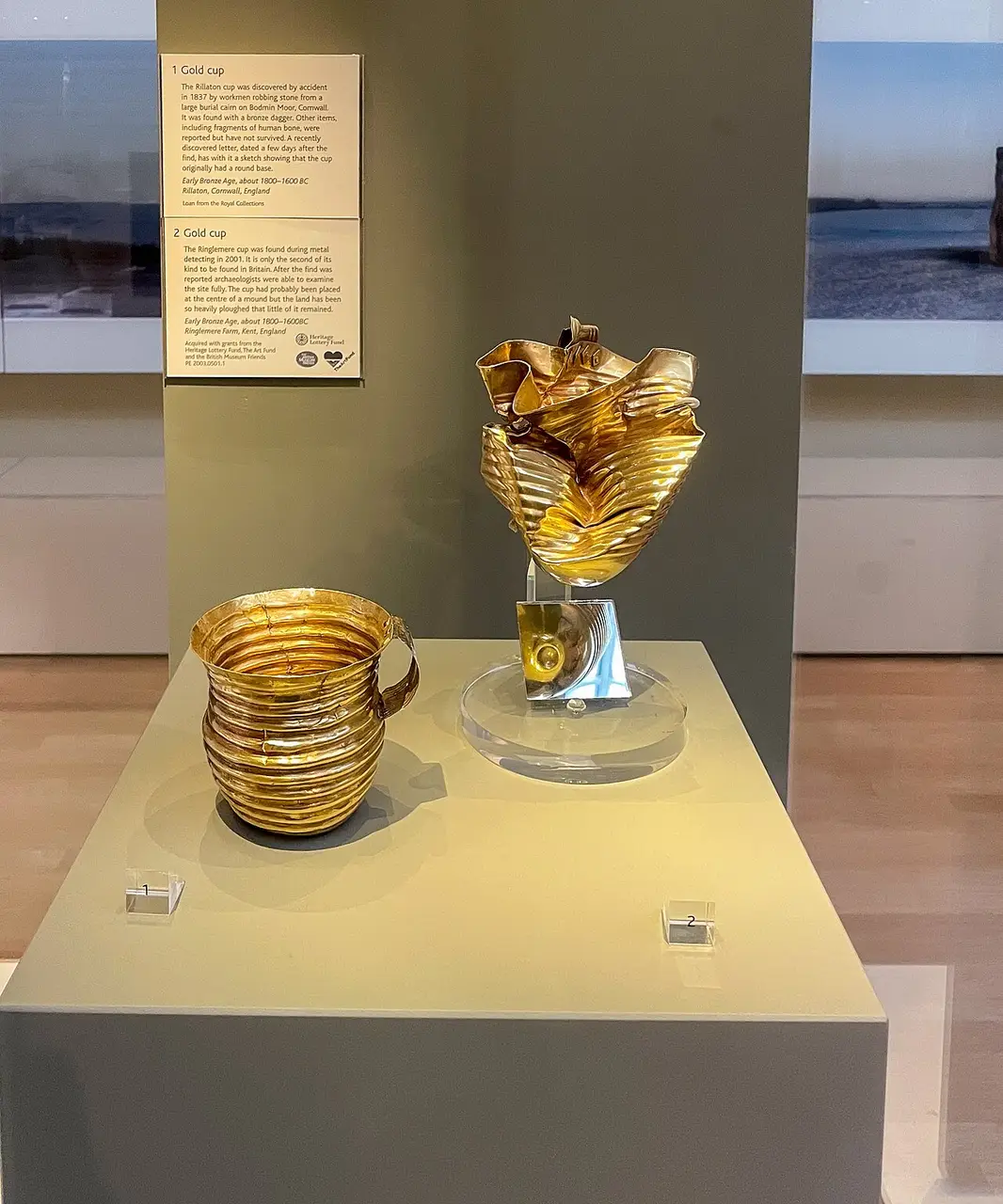 The Ringlemere cup, right, crushed by the plough, beside the intact Rillaton cup at the British Museum. Both are Early Bronze Age gold, about 1700 to 1500 BC. Photo: Mike Peel, CC BY-SA 4.0, via Wikimedia Commons.
The British Museum bought it in 2003 for £270,000 and put it beside the Rillaton Cup, the only other British example, found in 1837. The pairing is a quiet lesson in how the country's habits changed. The Rillaton cup, dug up in the reign of William IV, drifted into royal hands and is said to have spent years on a king's dressing table holding collar studs. The Ringlemere cup was valued, paid for, and accessioned for the public within two years of coming out of the ground.
The same machinery has saved a long row of objects that did not make this ten. Kevan Halls, a retired florist, found the Winchester Hoard in 2000, two matched sets of gold jewellery worked in Mediterranean techniques unknown to native British smiths, which let scholars read it as a diplomatic gift to a British chief before the Roman conquest rather than loot taken after it; its £350,000 valuation was the largest Treasure reward paid at the time. When Dave Crisp struck the Frome Hoard in 2010, more than 52,000 Roman coins in a single pot, he stopped digging and called archaeologists, so the deposit was excavated in stratigraphic layers rather than wrenched out, and stayed in Somerset. The Newark Torc, an Iron Age neck-ring that Jeremy Hill of the British Museum called probably the most significant find of Celtic gold jewellery in fifty years, was bought in 2006 for the very town beside which it was found. The Leekfrith torcs, declared in 2017, are, in the words of the British Museum's Iron Age curator Julia Farley, probably the earliest Iron Age gold yet found in Britain.
Bought on the paperwork: old collections and dealers
The second route is the open market in objects that have been above ground for a century or more, where the selling point is the paper trail. Here the British Museum, which rarely makes blockbuster antiquities purchases and leans on Treasure and donations instead, has bought carefully and well.
6. The Jennings Dog
The marble hound the British Museum bought in 2001 is a Roman copy, of the second century AD, of a lost Hellenistic Greek bronze: a life-size Molossian guard-dog, seated, ears back, alert. As sculpture it is good rather than singular. Its value is its biography. It belonged to Henry Constantine Jennings, an eighteenth-century connoisseur who bought it cheaply in Rome on the Grand Tour, for 400 scudi, and brought it home to become a talking point of Georgian collecting; the nickname "the Dog of Alcibiades" is antiquarian folklore attached to it later. For a collector this is the instructive object on the list, because what the museum paid for was the ownership history itself.
It cost £679,683, with £100,000 from the Art Fund, and it was bought from the Duncombe estate after a deferred export licence held it in the country long enough for a domestic buyer to match a bid from the Museum of Fine Arts in Houston. A documented line of ownership, the thing a careful collector builds and keeps, is exactly what turned a competent Roman copy into an object a national museum would fight to keep.
7. The Nimrud Ivories
In 2011 the British Museum made what it called its largest acquisition since the Second World War, and it was a purchase of excavated material with a backstory worthy of the objects. The Nimrud Ivories are Neo-Assyrian carvings of the ninth to seventh centuries BC, furniture inlays and horse-trapping ornaments, dug up at Nimrud in northern Iraq by Sir Max Mallowan across the 1950s and 60s; his wife, the novelist Agatha Christie, helped clean them on site. The Museum bought one third of the corpus, around a thousand complete pieces and some five thousand fragments, for £1.17 million, and the seller, the British Institute for the Study of Iraq, donated a further third in recognition of decades during which the Museum had stored them.
It is provenance of the strongest kind, an excavation record running back to named digs, and it kept a major study collection together and available rather than dispersed.
8. The Barber Cup
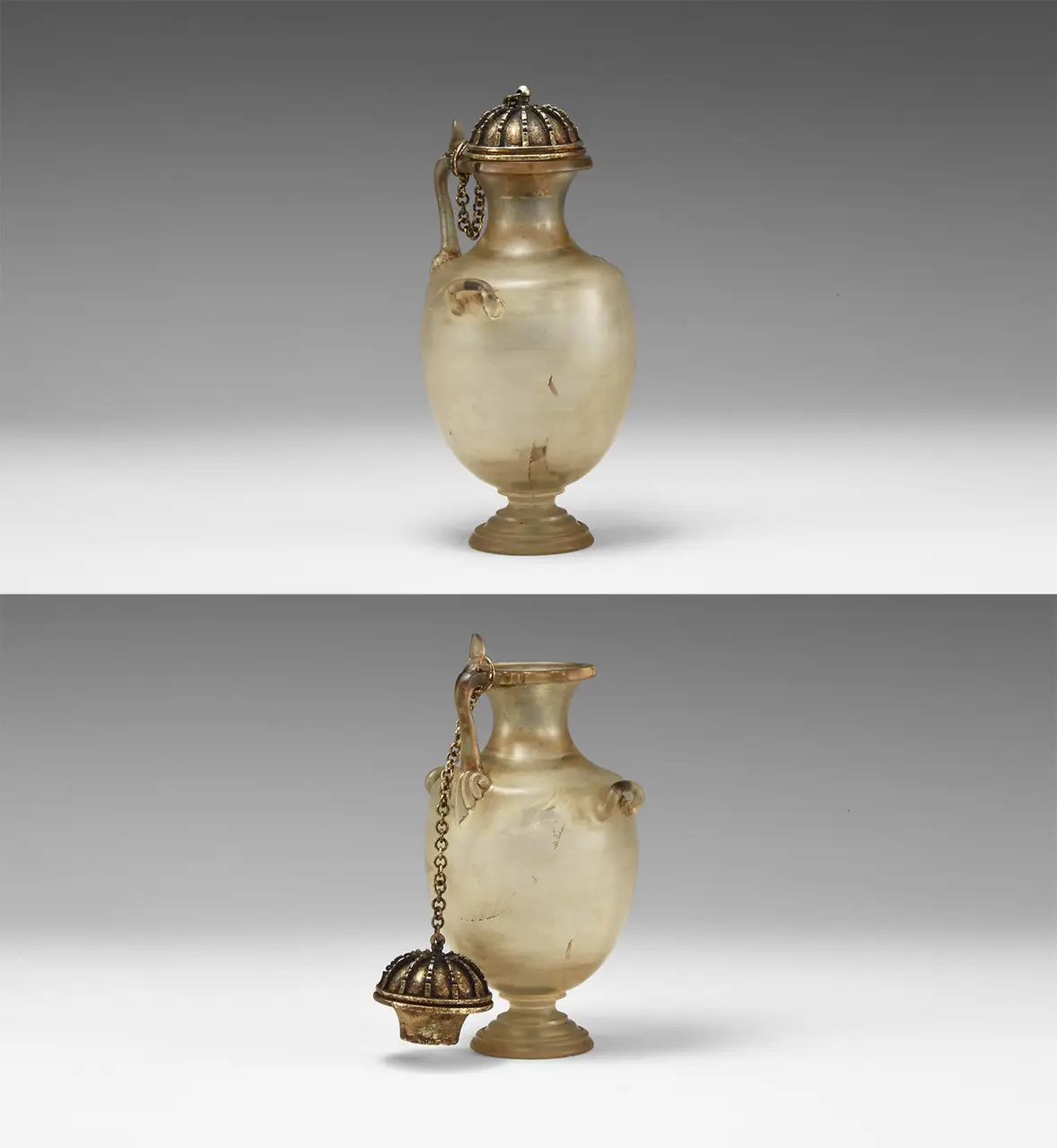
The smallest object here is in some ways the strangest. The Barber Cup is a Roman one-handled cup of the later first century AD carved from a single piece of fluorspar, the banded purple-and-white stone the Romans called murrina and prized above almost any other luxury; Pliny reports Nero paying a million sesterces for a single murrine cup. Low-relief vines run across the body and a bearded head, probably Dionysos, sits under the handle. It was found long ago in a tomb in Cilicia, on the modern Turkish-Syrian border, and came to the British Museum in 2004 for about £150,000 from the estate of the Brussels collector Baron Adolphe Stoclet. It joined the Crawford Cup, a near-twin the Art Fund had given the Museum in 1971. Carved stone vessels of this material are genuinely rare survivals, and this one arrived with a named collection behind it.
9. The Getty Sangiorgi gems
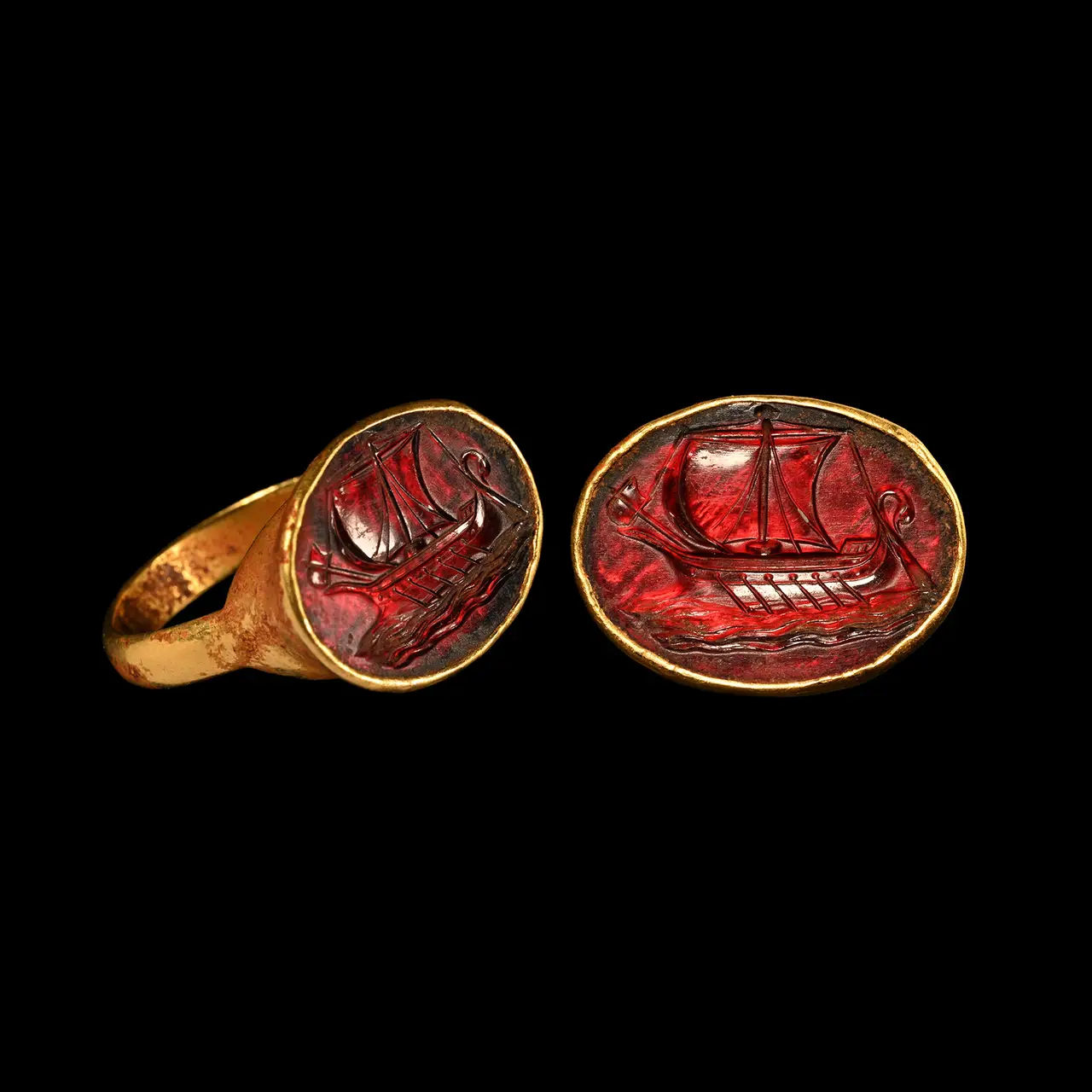
No institution had more to prove in this century than the J. Paul Getty Museum, whose buying in the 1980s helped define the scandal era. In April 2019, at Christie's in New York, the Getty bought seventeen ancient engraved gems out of a group of around forty on offer, for roughly 7.94 million dollars. These are miniature things, intaglios and ringstones a centimetre or two across, some still in their ancient gold rings, spanning Minoan, Greek, Etruscan and Roman work; the two stars are an intaglio portrait of Hadrian's companion Antinous, which made 2.12 million dollars, and an amethyst portrait of Demosthenes signed by the master cutter Dioskourides, at 1.58 million.
What the Getty bought, alongside the gems, was a pedigree. They had been assembled before the Second World War by the scholar-dealer Giorgio Sangiorgi, with individual stones descending from the Marlborough, Boncompagni-Ludovisi, Pasqualini and Arndt cabinets; Sangiorgi took them to Switzerland in the 1950s, and his heirs held them until the 2019 sale. A continuous, named, pre-1970 ownership history is the thing the modern market is built to value, and Apollo named the purchase its Acquisition of the Year. The reformed buyer and the well-documented object met in the same saleroom.
Objects with histories like these reach private collectors as well as museums. The same dealers and auction rooms that supplied the Getty's gems and the Met's Canosan head-vase put Roman intaglios, Greek pottery and Roman bronzes in front of private collectors every season, at every level of the market, and the documentation a museum demands is the same documentation that protects a private buyer.
Bought back: a nation and its silver
10. The Sevso Treasure
The last object is the one that most fully tests the argument, and survives it. The Sevso Treasure is fourteen pieces of late-Roman silver from Pannonia, in western Hungary, made around the turn of the fifth century AD: a hunting dish whose hexameter inscription names its owner, Seuso, and invokes his descendants, with ewers, basins, a casket and a toilet box, plus the copper cauldron they were buried in. It is one of the largest hoards of late-antique silver in existence.
Its early history is exactly the kind a careful buyer fears. The silver surfaced in London around 1980 on export papers that were later discredited, and three countries, Hungary among them, went to court in New York claiming ownership. They lost. In 1993 and 1994 the court found none of the claims proven and left the Marquess of Northampton, whose consortium had backed the pieces, the lawful possessor. That ruling is what made the next move possible and clean. Rather than litigate forever, Hungary simply bought its heritage back on the open market from the man the law recognised as the owner: seven pieces for fifteen million euros in 2014, the remaining seven for twenty-eight million in 2017, around forty-three million in all. The Sevso silver has been on permanent show at the Hungarian National Museum in Budapest since 2019. A nation brought its treasure home by cheque rather than by seizure, which is the version of repatriation the market makes possible.
Who gets to own the past
Two more objects sit just outside the ten, and they make the closing point between them. The Ryedale Roman Bronzes, four cast figures including a small bust of Marcus Aurelius, were found near Ampleforth in Yorkshire in 2020. Because they are copper alloy rather than precious metal, they fell outside the Treasure Act entirely and were sold openly at auction in 2021, for £185,000 to the London dealer David Aaron. The Yorkshire Museum then bought them from that dealer, helped by the collector Richard Beleson and the Art Fund, and put them on display. A find that the Treasure system could not touch was saved for the public anyway, by an auction, a dealer and a collector working in sequence.
The Crosby Garrett Helmet fell through the same gap and went the other way. A near-complete Roman cavalry helmet with a youthful face-mask and a griffin crest, found in Cumbria in 2010, it too was a single copper-alloy object and so was not Treasure. At Christie's that October it sold for £2,330,468 against an estimate of two to three hundred thousand. Tullie House Museum in Carlisle, backed by the British Museum, ran a public appeal and bid to around 1.7 million, and was outbid by an anonymous private collector. The helmet remains in private hands, and is lent out for exhibition from time to time.
That last fact is easy to read as a defeat, and it is not one. The finder and landowner were paid the full market price the helmet commanded; a private individual now owns a Roman cavalry helmet of national importance, lawfully, and shares it with the public when asked. Museums and collectors draw on the same market as two kinds of owner, and that market is the reason a girl in Birmingham can stand in front of Mercian gold and a collector in London can hold a Greek intaglio cut two thousand years ago. TimeLine's own sales of ancient coins, engraved gems and Roman bronzes run in the same channel these museums buy through, and anyone curious about owning a piece of it can start in a saleroom catalogue.
The face-mask on the Crosby Garrett helmet still looks out from behind glass when its owner lends it, which is more than the Rillaton cup managed in the century it spent holding a king's collar studs.
TimeLine Auctions, 18th July 2026