Home > Stories by TimeLine Auctions
Stories by TimeLine Auctions
Your First £10,000: Three Approaches to Starting a Collection
Buying your first ancient coin, your first piece of Roman glass, or your first Egyptian amulet can feel overwhelming. You've done the reading, you've browsed online galleries, and you've probably watched a few auction lots close at prices that made you wince. But here's the thing: you don't need to spend decades or drain your savings to build something meaningful. With £10,000, and a clear sense of what you're actually trying to achieve, you can put together the foundation of a collection that will give you genuine satisfaction for years to come.
We've seen hundreds of collectors start exactly where you are now. Some have gone on to assemble museum-quality holdings; others have built modest but deeply personal groups of objects that bring them daily pleasure. The difference between them often isn't money, but rather clarity. So before bidding, let's talk about who you are as a collector, and what that means for how you spend your first pound.
What Kind of Collector Are You?
This isn't a personality quiz, but it is an important question. In our experience at TimeLine, collectors do not neatly fall into any specific category, however as a starting point, we often see three broad approaches that help shape collecting strategies.
The Archaeological Collector
You're fascinated by context. When you look at a neolithic arrowhead, you don't just see an object; you see the hand that knapped it, the bow it was fitted to, the animal it was meant to bring down. You want to know where it was found, what else was discovered nearby, and what the scholarly literature says about similar examples.
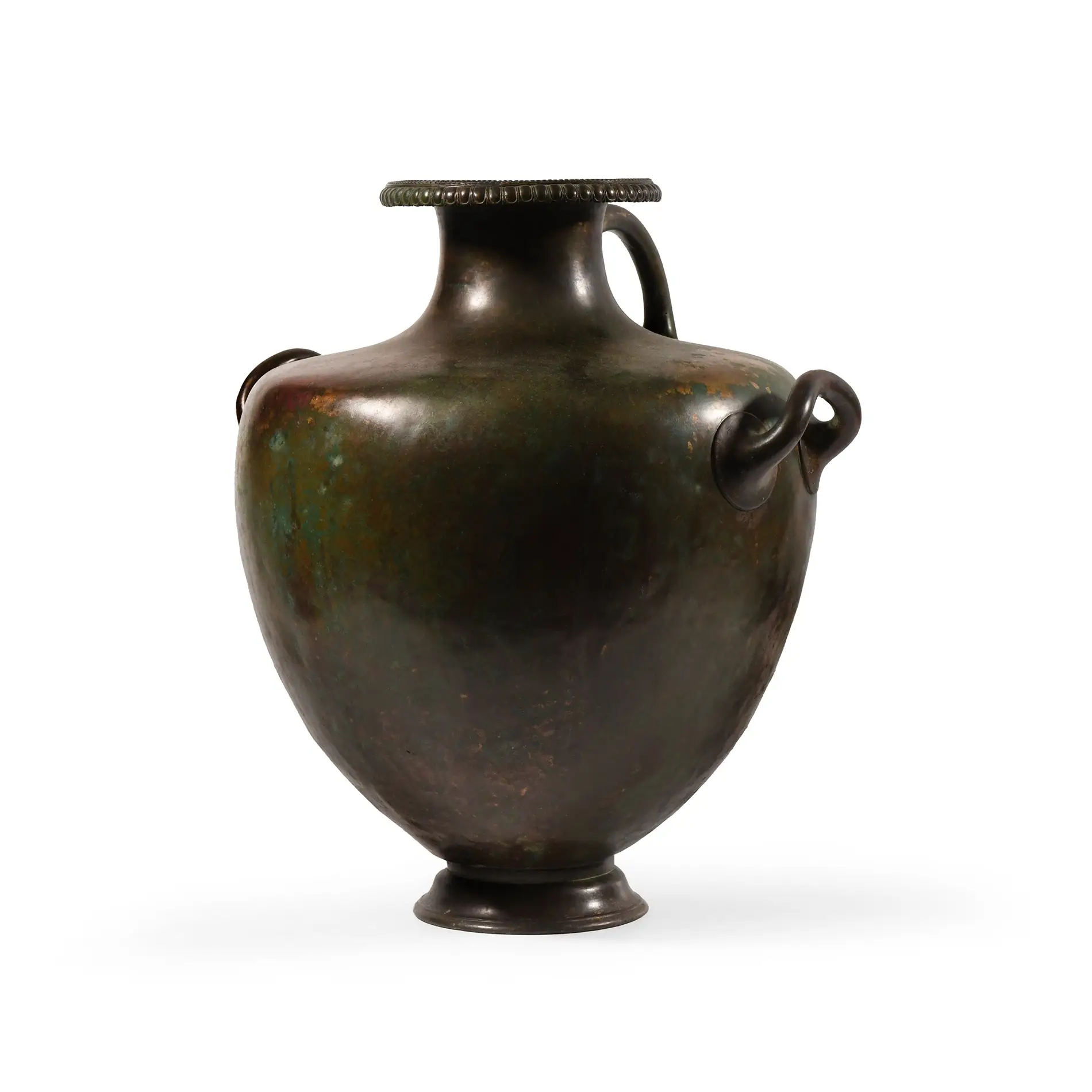
Archaeological collectors tend to gravitate toward specific cultures or time periods. Maybe you're captivated by the Etruscans, or you can't stop reading about ancient Levantine lands. Your collection becomes a kind of private study aid, a physical library you can hold in your hands. For you, the documentation matters almost as much as the object. Provenance records, excavation notes (where available), and comparative references are part of the appeal.
If this sounds like you, your budget should prioritise pieces with strong collecting histories and clear cultural attribution. You might spend less on visual impact and more on scholarly interest.
The Aesthetic Collector
You respond to beauty. When you walk into a gallery, certain objects simply stop you in your tracks, and it's not always the ones with the most impressive historical pedigree. A Roman glass vessel catches the light in a way that makes you catch your breath. A Greek terracotta figure has a posture, a gesture, that feels oddly alive.
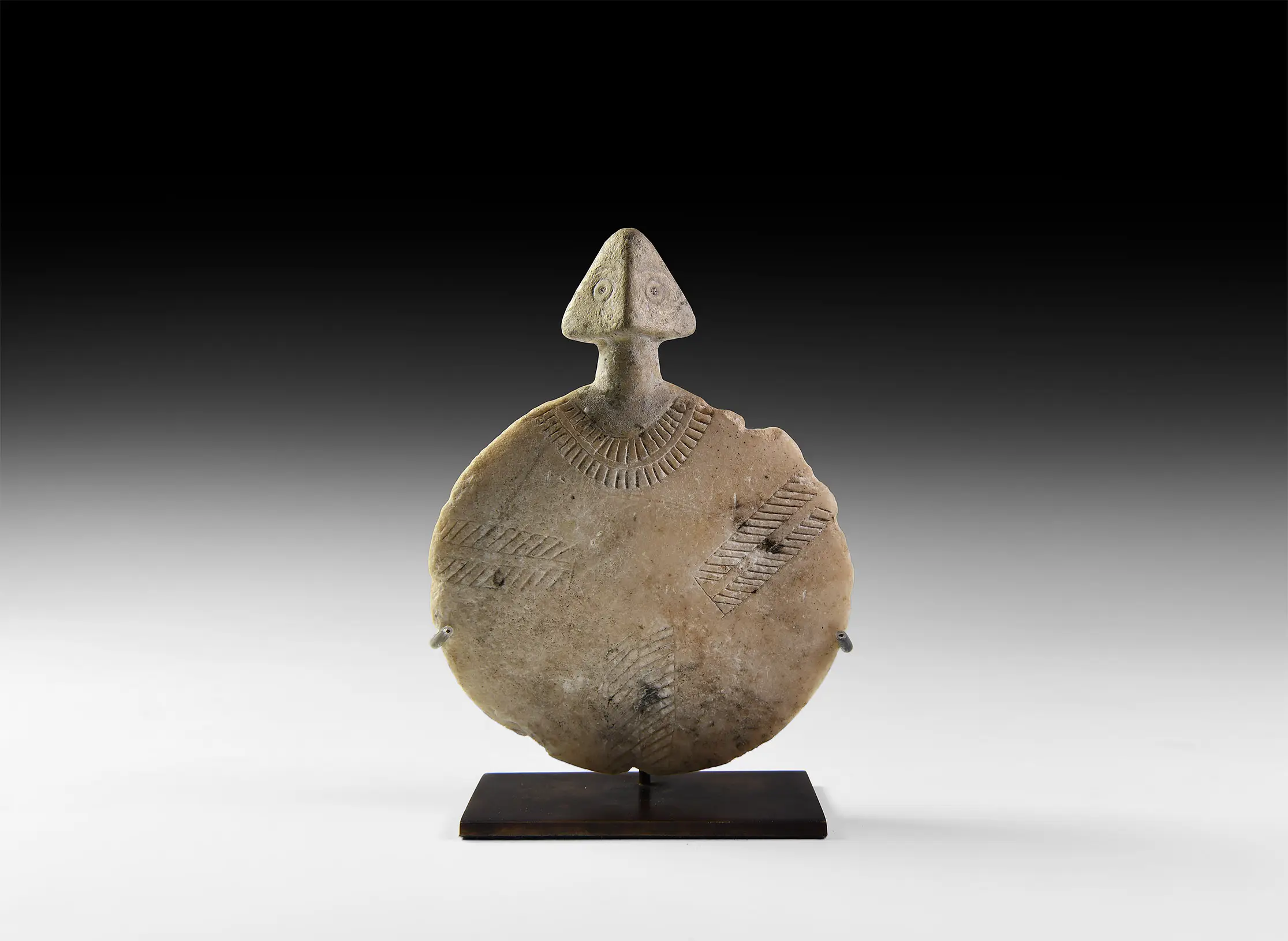
Aesthetic collectors often build more eclectic holdings. Your collection might span multiple cultures and periods because you're chasing a feeling, not filling gaps in a research programme. There's nothing superficial about this approach; understanding why certain objects move us is a legitimate form of engagement with the past. But it does mean you'll need to develop your eye, and the only way to do that is to look at a lot of material.
For aesthetic collectors, we often recommend spending time with objects in person whenever possible. Photographs can deceive. A piece that looks ordinary on screen might be extraordinary in the hand, and vice versa.
The Completionist
You want to build something systematic. Perhaps you're aiming to collect one example of every standard Roman coin denomination, or you want to assemble a study series of Attic black-figure pottery shapes. Maybe you're drawn to portrait heads across cultures, building a kind of gallery of ancient faces.
Completionists find deep satisfaction in the architecture of their collections. Each new acquisition isn't just an object; it's a puzzle piece that makes the whole picture more coherent. This approach requires patience and discipline. You might pass on a stunning piece because it doesn't fit your framework, and you might wait years for the right example to appear.
If you're a completionist, your budget planning needs to account for specific gaps. What pieces do you already have? What's missing? How rare are the items you still need, and what do they typically sell for?
Building Your Strategy: Three Questions to Answer First
Before you spend anything, sit down with a notebook and work through these questions honestly.
1. What's Your Monthly Budget?
Not your total budget. Your monthly budget. Collecting isn't a sprint; it's something you'll quickly find yourself doing for years, possibly decades. Knowing what you can comfortably set aside each month helps you plan intelligently.
Let's say you have £10,000 to spend over your first year. That's roughly £830 per month. But here's the reality: auctions don't follow your calendar. You might go three months without seeing anything that excites you, and then find three perfect pieces in a single sale. Mentally, you need to budget for the year, not the month, while making sure you don't blow everything in January. At TimeLine we host antiquities auctions on a quarterly basis! Planning ahead for these cycles can help.
We remember a client who set himself a strict monthly limit and then watched, frustrated, as a rare Etruscan mirror sold for just above his threshold. He'd already spent his allowance on two decent but unremarkable pieces earlier that month. He learned to keep a reserve fund for unexpected opportunities. You should too.
2. Where Will These Objects Live?
This sounds mundane, but it matters enormously. Do you have space for a proper display case? Do you have young children or pets who might knock things over?
Your storage and display options will shape what you can realistically collect. Large stone sculptures require space, stable surfaces, and some pieces may need climate control. Coins and small bronzes can fit in a drawer. Textiles need dark, dry, stable environments. Glass is fragile. Pottery can be restored but shows its repairs under certain lighting.
Be honest with yourself. If you live in a small flat, an ambitious collection of Roman marble heads probably isn't practical, no matter how much you love them. But a focused collection of intaglios or gem impressions? That could work beautifully.
3. What Are You Trying to Build?
Not "what do you want to buy next?" but "what do you want your collection to look like in ten years?" This is harder to answer, but it's the most important question.
Some collectors want a single, stunning display that impresses visitors. Others want a private study collection they can handle and examine. Some are building an inheritance for their children; others plan to donate to a museum eventually. Your goals affect everything: what you buy, how much you spend, how you insure and document your holdings.
The Anchor and Filler Strategy
Here's a principle we've found consistently useful, especially for collectors working with a defined budget: put a significant portion of your money into one exceptional piece, then use the remainder for what we call "supporting pieces" that give your anchor context and visual breathing room.
This might sound counterintuitive. Wouldn't you want to spread your budget across as many objects as possible? Not necessarily. Here's why.
A collection of ten mediocre pieces is just that: mediocre. But one genuinely excellent piece, displayed thoughtfully alongside a few well-chosen supporting items, creates something greater than the sum of its parts. The supporting pieces aren't lesser; they're contextual. They help your eye understand what it's seeing and help create visual rhythm.
We worked with a collector a few years ago who'd acquired an incredible 53cm wide and rare Cypriot plate. On its own, displayed on a metal plinth, it was impressive but somehow incomplete. When he added a small collectin of smaller Cypriot plates (all good quality, but none individually remarkable) the large plate came alive. The contrast between the pieces helped highlight the individuality and craftsmanship of the large plate. The total cost of the supporting pieces was perhaps a fifth of what he'd spent on the large plate, but they transformed the collection.
Getting the Ratio Right
There's an art to this. Too many supporting pieces, and your anchor gets lost in the noise. Too few, and it looks isolated, like a single painting in an empty gallery. The wrong supporting pieces (items from the wrong period, the wrong culture, the wrong aesthetic register) can actively undermine your main piece.
As a rough guide, we often suggest something like 60% of your budget on one or two anchor pieces, and 40% on supporting material. But this varies enormously depending on what you're collecting. A coin collection, for instance, doesn't really work this way; you're building a series of equals. A collection centred on a major bronze figure might put 80% into the bronze and use the remainder for related small finds.
The key is intentionality. Every piece should earn its place. Ask yourself: does this object make my collection stronger, or am I just buying it because I can?
Practical Tips for New Collectors
Now let's get into the mechanics. Knowing what you want is only half the battle; you also need to know how to evaluate what's on offer.
Understanding Provenance
Provenance is simply the ownership history of an object. Where has it been? Who owned it before? How did it enter the market?
For ancient and antiquarian objects, provenance matters for legal, ethical, and practical reasons. You want to be confident that what you're buying was legally exported from its country of origin and hasn't been recently looted. Reputable auction houses do significant due diligence on this, but you should still ask questions.
What to look for:
- Named previous collections
- Published references in academic catalogues or journals
- Old collection labels, inventory numbers, or photographs
- Clear documentation of how the piece entered its current country
Don't be afraid to ask for more information.
Reading Condition Reports
Every auction lot comes with a condition report, either in the catalogue description or available on request. Learning to read these carefully will save you from expensive surprises.
Key things to check:
- Is the object complete, or are there missing elements?
- Has it been restored? If so, how extensively?
- Are there cracks, chips, repairs, or areas of damage?
- For bronzes, what's the condition of the patina? Is it stable?
- For pottery, has it been reassembled from fragments?
Condition issues aren't necessarily dealbreakers. Most ancient objects have survived millennia; some wear and tear is expected. But condition may affect value significantly. A heavily restored piece might be beautiful, but it's not worth the same as an intact example.
Three things to check before bidding:
- Have you read the full condition report, not just the headline description?
- Have you looked at all available photographs, including detail shots?
- Have you asked any clarifying questions you need answered?
Building Your Network
Collecting can feel like a solitary pursuit, but the best collectors we know are deeply connected to others who share their interests. Other collectors, academics, dealers, and museum curators can all become valuable resources and, often, friends.
How do you build these connections? Start by showing up. Attend auction viewings in person when you can. Ask questions of the specialists; that's what we're here for. Join relevant societies or collector groups.
We've seen collectors transform their understanding (and their holdings) through a single conversation with someone more experienced. Knowledge in this field is often shared generously, but you have to seek it out.
Putting It All Together
So, you have £10,000, a sense of what kind of collector you are, and a plan for how to allocate your budget. What now?
Start looking. Seriously, that's the next step. Browse current auction catalogues. Attend viewings. Handle objects if you can. The more material you see, the better your eye becomes. Even if you don't plan to bid for months, tracking prices and observing what sells (and what doesn't) is an education in itself.
You might consider registering for an upcoming auction even if you're not ready to participate. Following the sale in real time, watching the bidding, seeing where estimates are met or exceeded, teaches you things you can't learn from a book.
Collecting ancient and antiquarian objects is one of the most intellectually rewarding hobbies there is. You're not just buying things; you're building a personal relationship with the past. Your first £10,000 is the beginning of something that could occupy and enrich the rest of your life.
Take your time. Ask questions. Trust your instincts, but verify them with research. And remember: every great collection started with a single piece and a willingness to learn.
We'll be here when you're ready.
TimeLine Auctions, 17th April 2026